
Owens Corning Radiant Barrier Installation: The San Marcos Owner’s Guide
We install Owens Corning-compatible radiant barrier systems in San Marcos homes for $1,800-$3,400 depending on attic square footage and whether your top plates and can-light penetrations need sealing first. Most jobs we price in writing during the first visit and complete within one working day. Homeowners usually figure out something’s wrong when their summer electric bill jumps $80-$140 over the previous year, or when they walk into the attic in August and the air feels closer to a convection oven than a storage space.
Which Owens Corning Models This Applies To
Owens Corning doesn’t sell radiant barrier as a standalone branded kit the way they sell Pink Fiberglas batts. What San Marcos homeowners are typically working with is one of two setups: an Owens Corning attic insulation system that was spec’d with a radiant barrier component by the original builder or insulation contractor, or a retrofit where OC-certified contractors layered reflective sheeting over existing OC blown-in or batt insulation. The compatibility question isn’t model numbers on a box - it’s whether the radiant barrier was installed as a continuous sheet, a perforated breathable sheet, or a foil-faced OSB roof deck product.
To identify what you’ve got, check the roof deck from inside the attic. Foil-faced OSB will show Owens Corning branding stamps on the panel edges. Loose reflective sheeting may carry a printed edge stripe with manufacturer data, though attic heat often fades it within five Texas summers. If you’re seeing bare plywood with loose foil draped between rafters, that’s almost always aftermarket Reflectix or a generic equivalent, not an Owens Corning system. We stock both OC-compatible perforated barrier for vented attics and non-perforated for sealed envelope applications, and we carry Reflectix equivalents when the original spec calls for it.
The OEM-versus-aftermarket decision here is simpler than with mechanical parts: radiant barrier is a sheet good, not a precision component. What matters is the emissivity rating - how much heat the surface reflects rather than absorbs - and whether the perforation pattern matches your attic’s ventilation strategy. We source from Owens Corning, Johns Manville, Knauf, Rockwool, CertainTeed, Icynene, Demilec, and GreenFiber, so we’re not locked into one supplier’s markup.
Signs Your Owens Corning Radiant Barrier Installation Is Failing
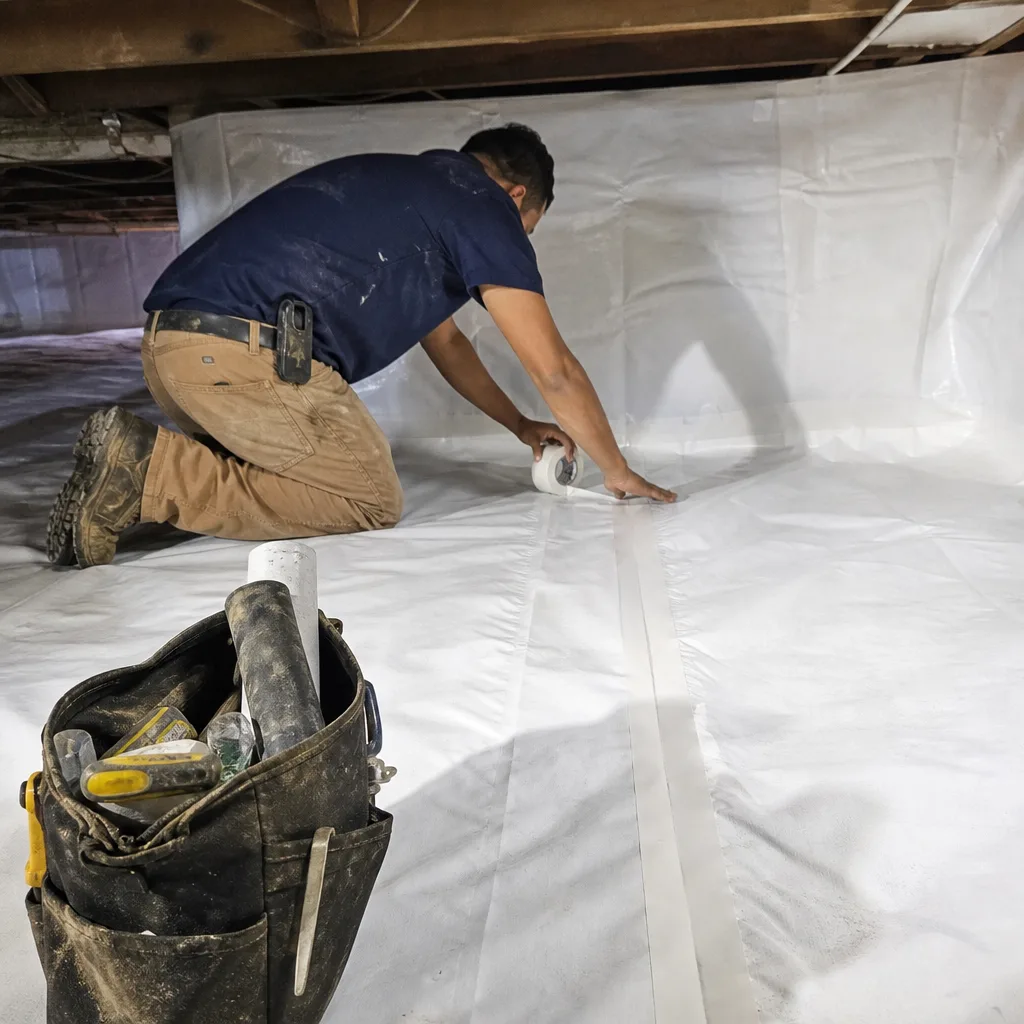
- Attic air temperature within 15°F of outdoor peak. A functioning radiant barrier should drop attic surface temperatures 20-35°F below unshaded roof deck readings. When the gap narrows, the reflective surface has oxidized, accumulated dust, or detached from its mounting points.
- Visible dust coating on the reflective face. In San Marcos, caliche dust pulled through soffit vents cakes onto horizontal radiant barrier sheets within three to five years. Once the emissivity drops below 0.75, you’re paying for shiny attic decor, not heat rejection.
- Sagging or torn sheets between rafters. Staple fatigue is common in attics that cycle above 140°F daily. The barrier pulls away from fasteners, creating gaps where radiant heat transmits straight through to insulation below.
- Hot spots on your ceiling during 3-6 PM. This means the barrier has failed in specific zones - often where a previous installer cut around a junction box or HVAC trunk and never sealed the gap. Infrared cameras find these fast; we document them with photos.
- Insulation compression directly beneath the barrier. When radiant barrier fails, the heat load shifts downward. Blown-in fiberglass or cellulose beneath it mats and loses loft, which drops its R-value even if the barrier itself looks intact.
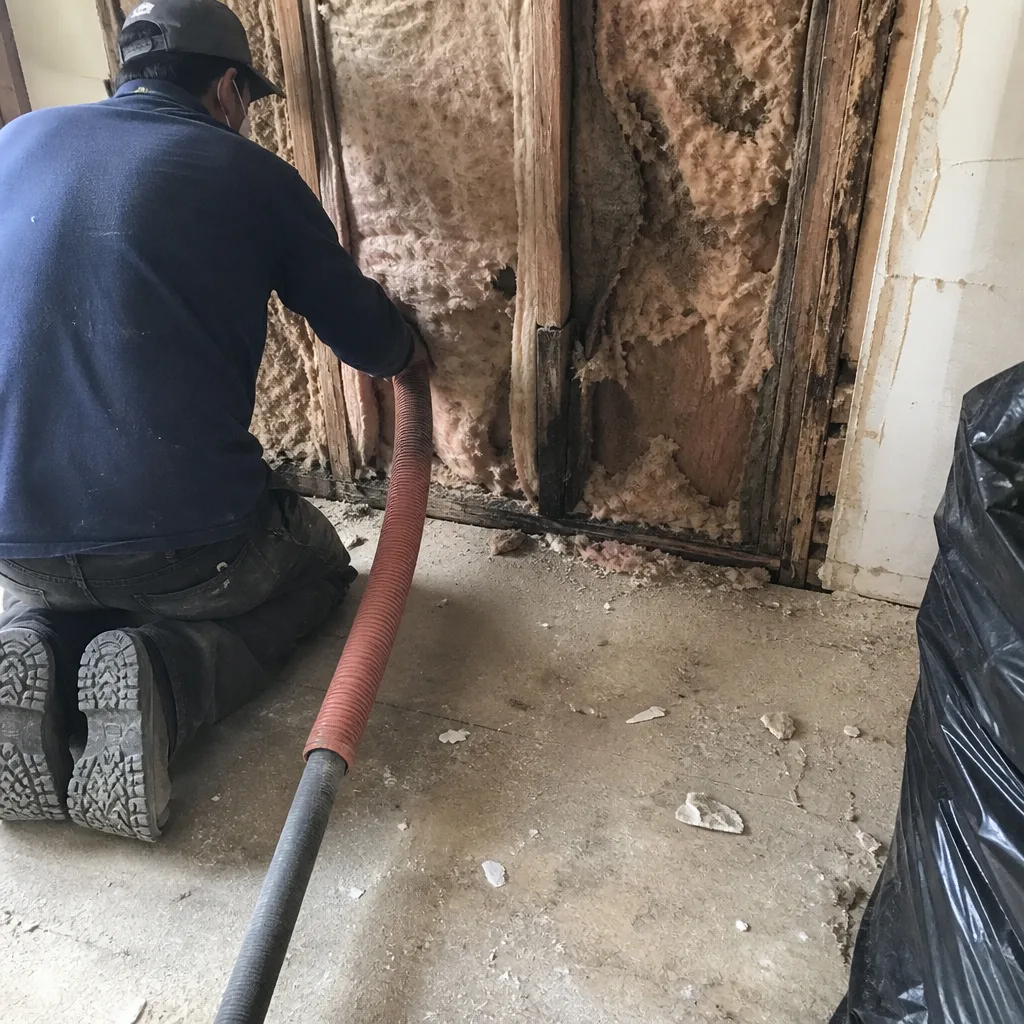 Before
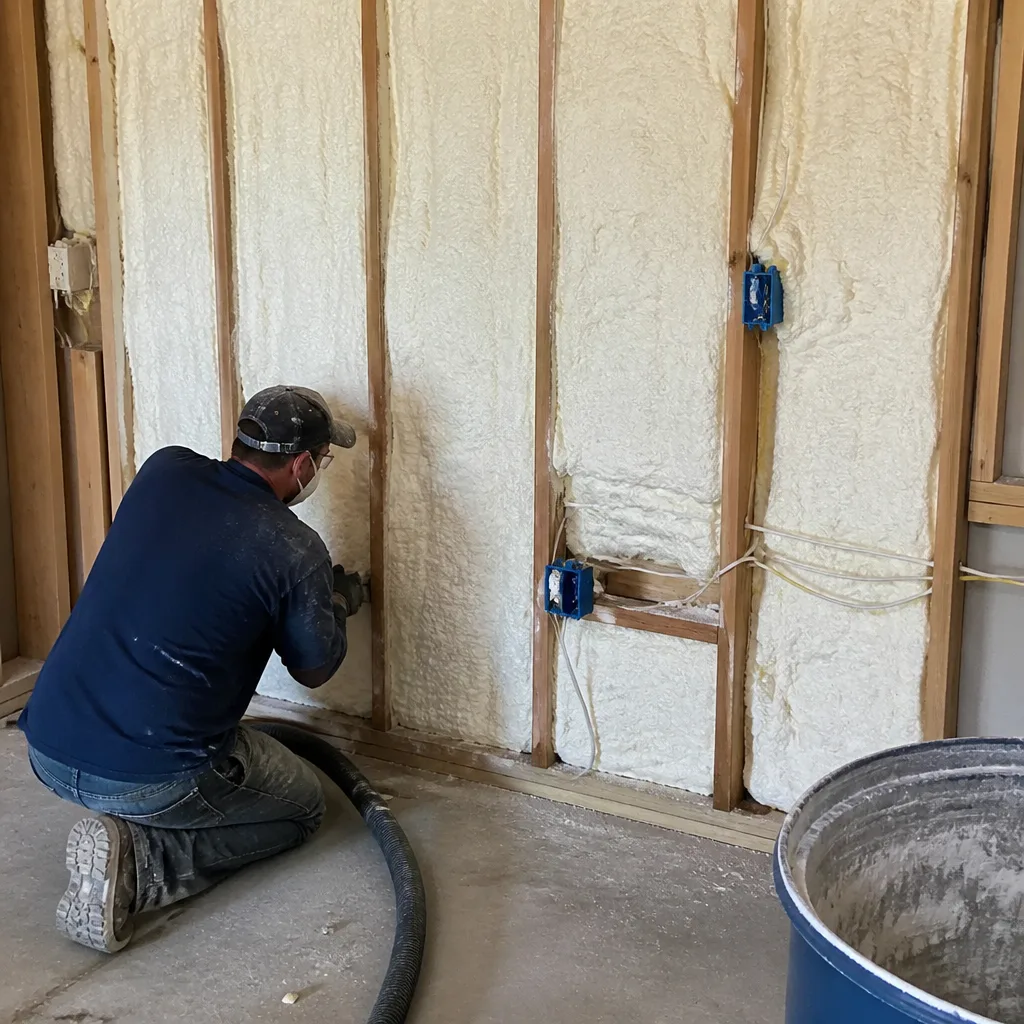 After
AfterReplacement Cost & What’s Included
Most Owens Corning-compatible radiant barrier replacements in San Marcos run between $1,800 and $3,400 installed. The low end covers a straightforward swap in a 1,200-1,600 square foot attic with good access, intact existing insulation, and a vented attic that doesn’t require perforation pattern changes. The high end accounts for larger footprints, steep pitches that slow crew movement, and the air-sealing prerequisite we won’t skip - top plates, can lights, bath fan housings, and any chimney or chase penetrations sealed before new barrier goes in.
That price includes removal of failed material, disposal, new perforated or non-perforated barrier cut to your rafter or deck configuration, mechanical fastening with corrosion-resistant staples, and a Documented Photo Record of the completed work. On jobs where we’re also air sealing, you’ll get before-and-after blower-door numbers - a pressurization reading that shows, in one figure, how much conditioned air your building envelope was losing. The 365-Day Done Right Promise applies. We deliver a written price before anyone lifts a tool; no work starts without it.
DIY or Call Us?
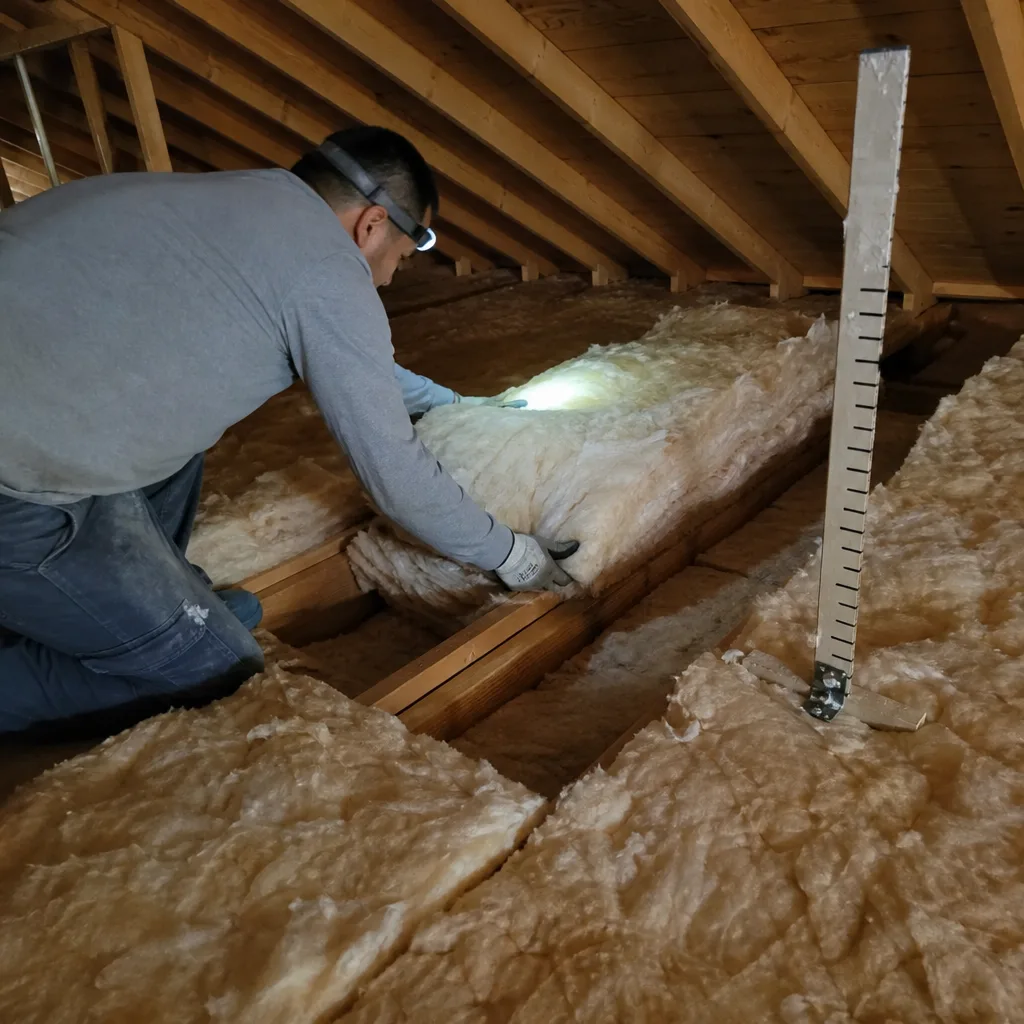
There’s nothing inherently dangerous about radiant barrier material - it’s lightweight sheeting, not high-tension hardware or live electrical. What goes wrong in DIY is the sequencing and the detail work. Homeowners often staple new barrier over unsealed penetrations, which traps moisture and can breed mold in San Marcos humidity. They also tend to compress existing insulation while crawling, which destroys more R-value than the new barrier adds.
What you can safely check: whether your attic ventilation is balanced (soffit intake matching ridge or gable exhaust), whether any barrier sheets are visibly detached, and whether your insulation depth matches the original spec. What we handle: blower-door-guided air sealing, proper perforation selection for your ventilation strategy, and installation without compressing what’s below. Call (737) 337-8049 and we’ll read your attic with you - free second opinion on any written estimate you’ve already collected.
FAQs
In the Texas Hill Country, a properly installed perforated radiant barrier lasts 15-25 years before emissivity degradation becomes significant. Dust accumulation accelerates this - we’ve found 7-year-old barrier in San Marcos performing like 20-year-old barrier because caliche dust wasn’t factored into the ventilation design. Annual attic inspection, or at least a look during HVAC filter changes, catches this early. Call (737) 337-8049 for an exact condition check - estimates are free.
Spot re-stapling of detached sheets is possible if the material itself is clean and the reflective coating intact. We don’t recommend patching torn sections - the seams create thermal bypasses that defeat the purpose. In most San Marcos attics we inspect, partial failure indicates systemic installation issues (wrong perforation, inadequate fastening pattern, skipped air sealing) that spot repair won’t fix. Call (737) 337-8049 and we’ll show you what’s actually failing with photos.
A typical 2,000 square foot attic with one crew takes four to six hours after air sealing is complete. We don’t install barrier the same day we seal - the caulk and foam need cure time - so plan on two visits within a 48-hour window. Same-day pricing and scheduling is available; call (737) 337-8049.
We stock perforated and non-perforated reflective barrier in standard widths, plus Reflectix equivalents, on every San Marcos crew truck. Owens Corning branded foil-faced OSB is a special-order roof deck product - we don’t carry full sheets on the truck, but we can source it with three business days’ lead time if your repair requires matching existing deck material. Most radiant barrier replacements use roll goods, which we have now. Call (737) 337-8049 to confirm what your attic needs.
Topside Attic Insulation San Marcos is an independent service provider - not affiliated with Owens Corning, though we source materials from them and install to manufacturer-compatible specifications.
Wes Okafor, our owner, grew up on Chicago’s South Side and trained in building science and weatherization at Dawson Technical Institute before putting in over two decades of field work diagnosing why attics fail - not just filling them. He and our crew have served the San Marcos area for years, including older slab-on-grade homes near the Texas State University corridor where air sealing at the top plate is routinely skipped and always felt in the utility bill. The R-value tells you how slow heat moves through the material - the blower-door number tells you whether any of that matters.
Ready to stop paying for attic heat you shouldn’t be fighting? Call (737) 337-8049. A live person answers 24/7. We’ll schedule a free written estimate, deliver the price before any work starts, and leave you with documentation you can hold in your hand.
Written by Wes Okafor, Owner, Topside Attic Insulation San Marcos at Topside Attic Insulation San Marcos, serving San Marcos and nearby areas.