
Johns Manville Attic Insulation: The San Marcos Owner’s Guide
We stock and install Johns Manville-compatible blown-in fiberglass attic insulation in San Marcos, with most retrofits for a 1,200-2,400 square foot home running between $1.80 and $3.20 per square foot installed depending on existing depth and air-sealing needs. Same-day service is available when we have your R-value target and attic square footage by phone. Most San Marcos homeowners realize their Johns Manville insulation is underperforming after a summer utility bill spikes, a room over the garage won’t cool below 78 degrees, or they spot compressed, discolored batts during a ductwork inspection - the material hasn’t vanished, it’s just doing its job poorly.
Which Johns Manville Models This Applies To
Johns Manville produces several attic insulation lines, and the part you need depends on what’s currently in your San Marcos attic and what condition it’s in. The Climate Pro loose-fill fiberglass - the blown-in product most common in Central Texas retrofits - comes in R-19 through R-60 bags, with R-38 being the code minimum for new construction in Hays County. If you have existing batts, they’re likely Formaldehyde-free™ Kraft-faced batts in R-13 or R-19, or the unfaced R-30 batts used in floor assemblies.
To identify your exact product, check the paper facing for the printed JM logo and R-value, or look for a bag remnant in the attic corner with the lot number. The critical compatibility gotcha in San Marcos: Johns Manville loose-fill requires a minimum settled depth of 12 inches to achieve R-38, but many installers stop at 10 inches because the attic floor looks full. We measure with a depth gauge at twelve points, not a visual guess. We also stock Reflectix radiant barrier products for attics where the roof deck needs thermal reflection, not just cavity fill.
OEM Johns Manville bags are what we install, though we don’t claim exclusive or preferred status with the manufacturer. Topside Attic Insulation San Marcos is an independent service provider, not affiliated with Johns Manville. The alternative some contractors push is a generic loose-fill with similar nominal R-value but different density - 0.5 pounds per cubic foot versus JM’s 0.6 - which settles faster in the humidity swings we get between San Marcos summers and winter cold snaps.
Signs Your Johns Manville Attic Insulation Is Failing
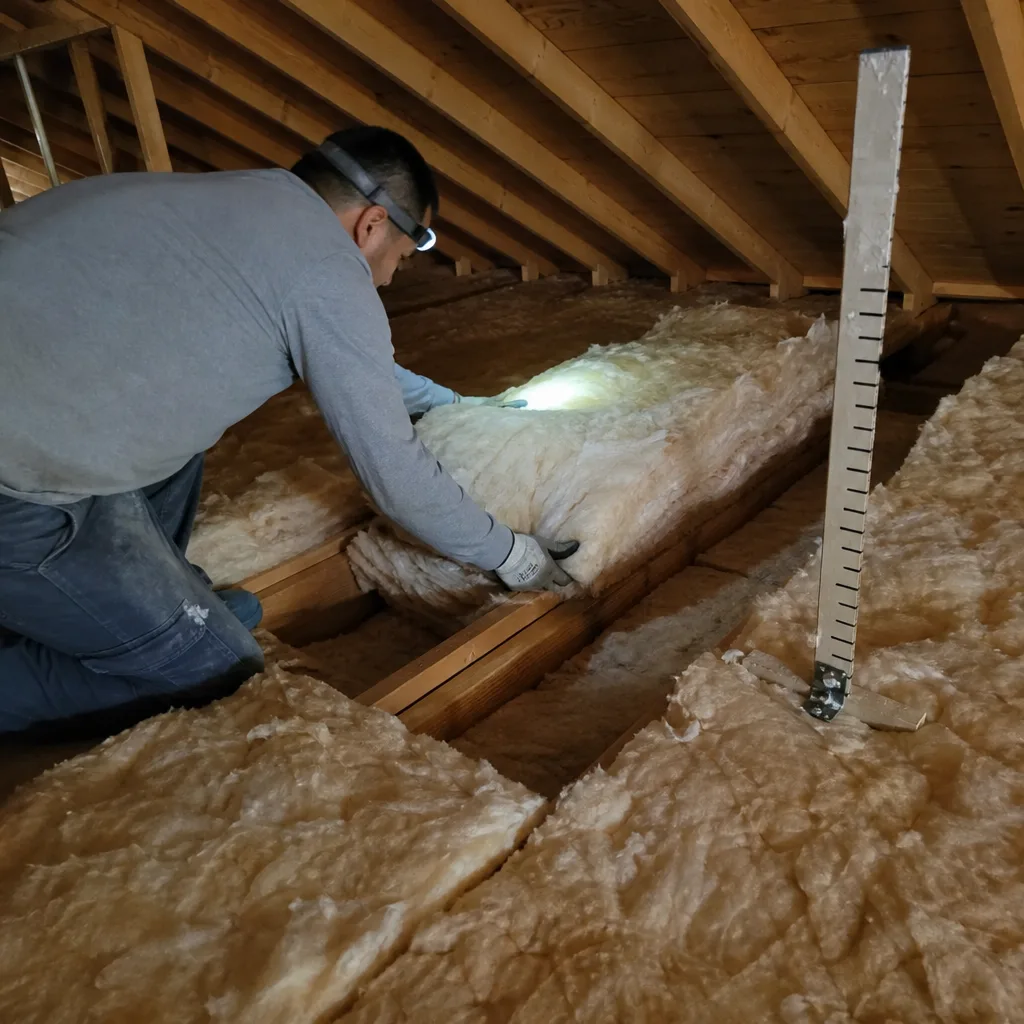
- Uneven temperatures room-to-room. The insulation has shifted or settled, creating thermal bypasses. In San Marcos slab homes near the Texas State corridor, we regularly find the top plate - where wall framing meets ceiling drywall - completely unsealed, letting conditioned air escape around the insulation rather than through it.
- Spiking summer electric bills with no rate change. Fiberglass doesn’t degrade chemically, but it compresses. A 20% reduction in lofted depth cuts effective R-value disproportionately, and San Marcos attic temperatures hitting 140°F in August magnify every missing inch.
- Visible moisture staining on ceiling drywall below the attic. This indicates the vapor retarder failed or was omitted, or that bathroom exhaust ducts terminate in the attic space rather than outside. Johns Manville Kraft-faced batts are not a substitute for proper exhaust routing.
- Cold spots in winter where ceiling meets exterior walls. The insulation batt was cut too short or pulled away from the top plate during installation. Thermal bridging through the framing becomes noticeable when the attic air sealing was skipped.
- Pest activity or rodent trails compressed into the material. Fiberglass provides no food value but makes excellent nesting. Compressed tunnels destroy the air gap structure that traps heat; the insulation looks present but performs like it’s half the thickness.
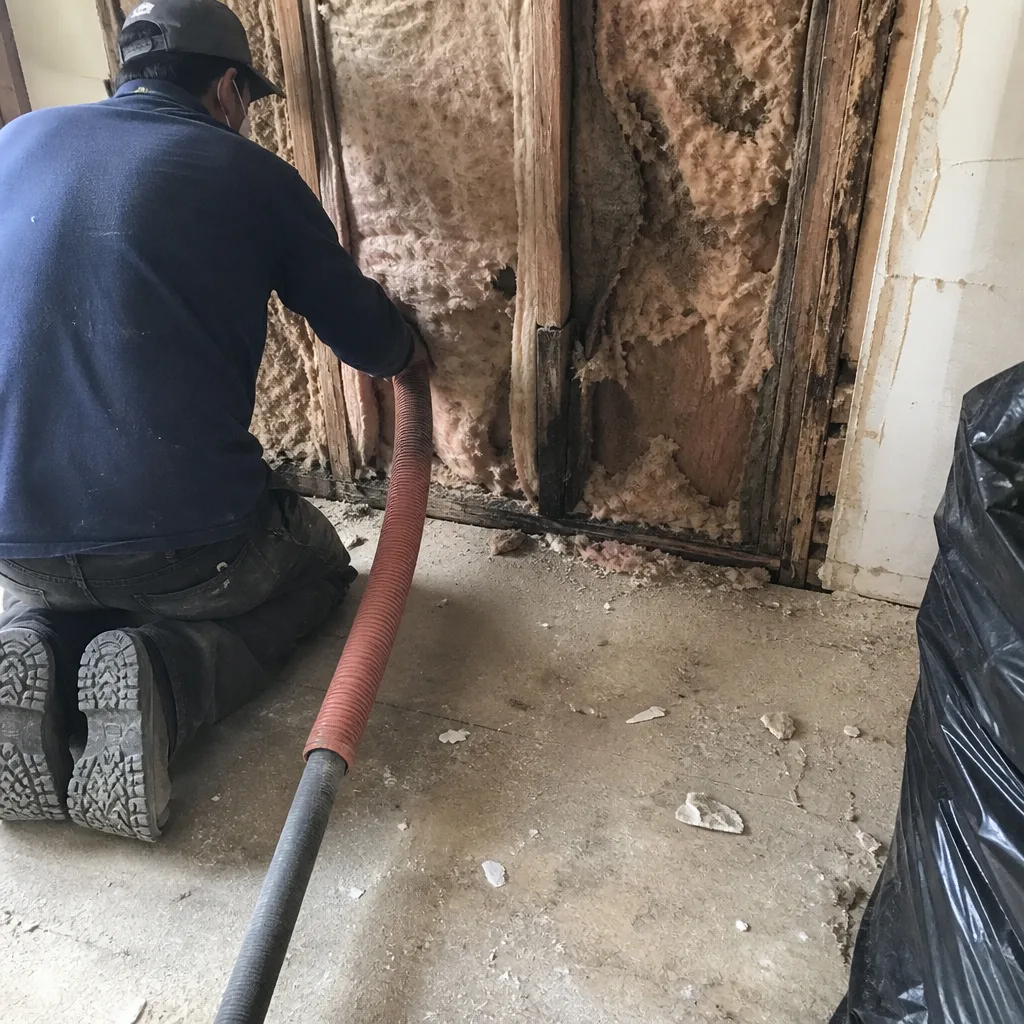 Before
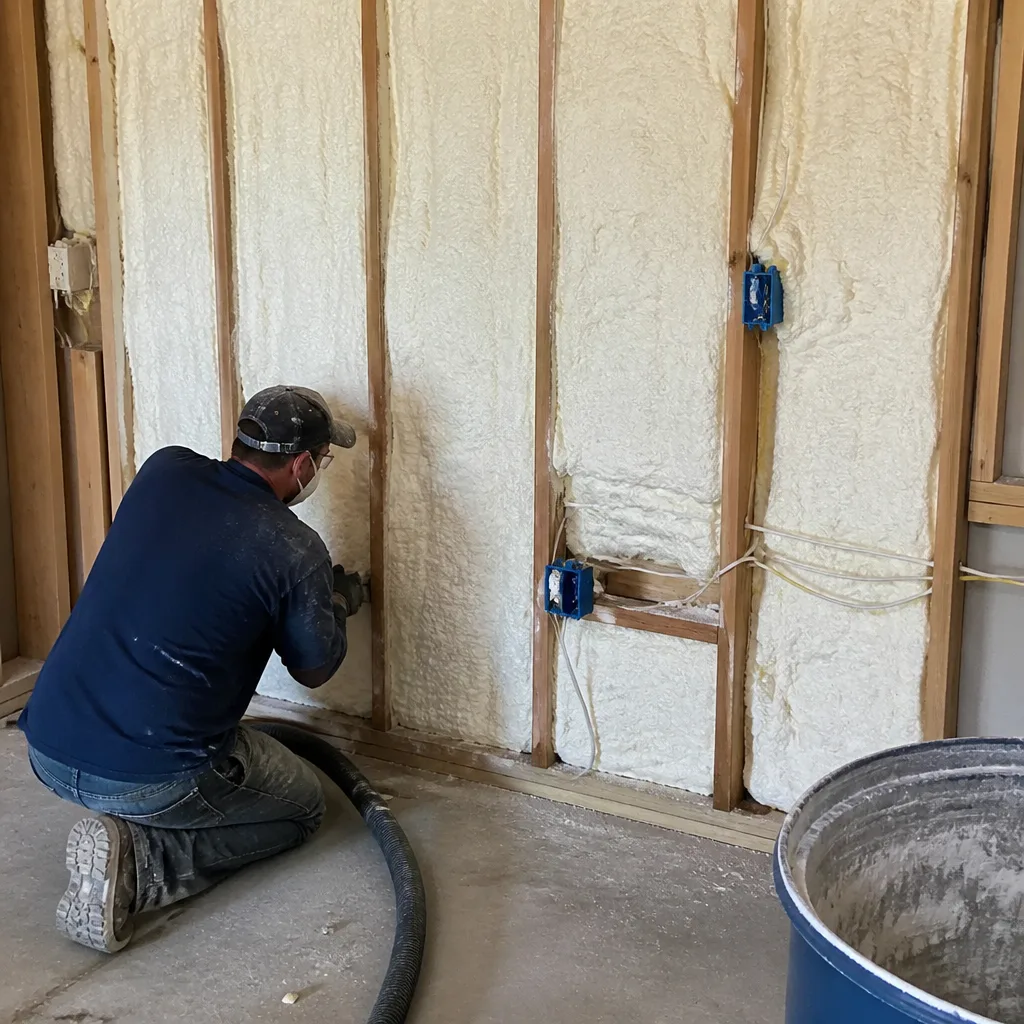 After
AfterReplacement Cost & What’s Included
Most Johns Manville attic insulation jobs in San Marcos run between $2,200 and $4,800 for a complete removal and replacement in a 2,000 square foot home, or $1,400 to $2,600 for a top-off over existing material that tests dry and pest-free. The range depends on three factors: whether we remove old material, how much air sealing the attic floor needs, and whether we add baffles at the eaves for vented attics.
Every job includes the written price before any work starts - Haven Standard Clause 1 - plus a Documented Photo Record showing before condition, air-sealing work at top plates and penetrations, and finished insulation depth. On applicable jobs, we run a blower-door test - a pressurization reading that shows, in one number, how much air your building envelope is losing - before and after, then hand you a single printed page with the air-changes-per-hour figure. The 365-Day Done Right Promise covers all completed work.
Materials come from our supplier network including Johns Manville, Owens Corning, Knauf, and others - no proprietary lock-in means we match the product to your attic, not our inventory.
DIY or Call Us?
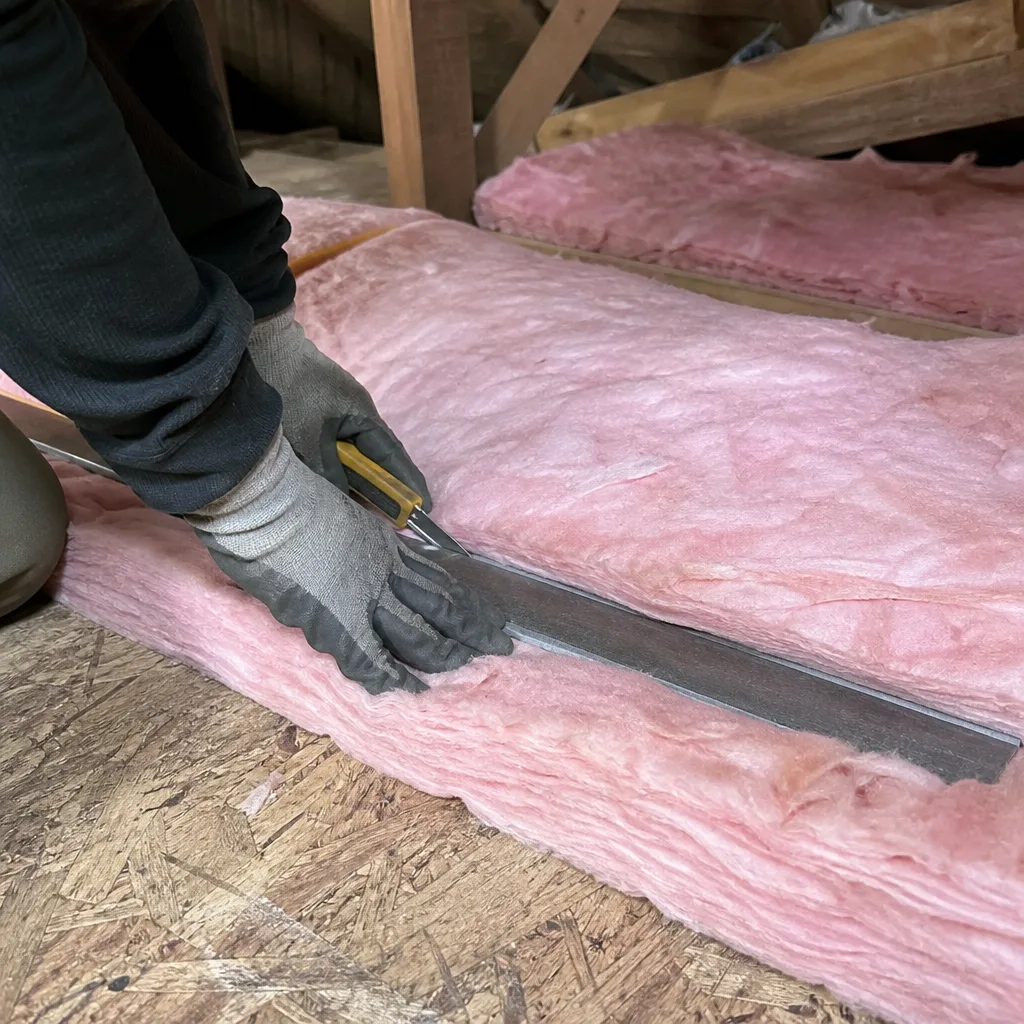
There’s no high-tension danger in handling fiberglass insulation, but there are genuine ways DIY goes wrong in San Marcos attics. You can safely check your current depth with a tape measure, photograph any discolored sections, and verify that bathroom exhaust fans actually vent outside - not into the attic space, which we find in roughly one of three older homes we inspect.
Where DIY fails: blowing new insulation over an unsealed attic floor, which is the default mistake. The R-value tells you how slow heat moves through the material - the blower-door number tells you whether any of that matters. Without sealing top plates, can lights, and plumbing penetrations first, you’re paying for insulation that conditioned air flows right past. We also see homeowners install baffles incorrectly, blocking soffit vents and trapping moisture. If your attic has active knob-and-tube wiring or a gas appliance with a atmospheric vent, stop and call - combustion safety and insulation don’t mix without a trained eye.
Call (737) 337-8049 for a free estimate. We’ll read your existing situation with you, including any competing quote you’ve received.
FAQs
Fiberglass itself doesn’t expire, but its performance degrades when compressed, moisture-damaged, or installed over unsealed air leaks. In San Marcos, we find insulation installed before 2010 is often performing at 40-60% of labeled R-value due to settling and the skipped air sealing that was standard practice at the time. Call (737) 337-8049 and we’ll measure what you actually have - estimates are free.
Partial top-offs work if the existing material is dry, uncompressed, and pest-free. We add loose-fill to achieve target depth after air sealing. If there’s moisture staining, rodent contamination, or pre-1990 material that may contain vermiculite, full removal is the only safe path. We document the condition with photos before recommending either approach.
Most residential attic jobs in San Marcos take one day for air sealing plus insulation, or two days if full removal is required. Crews arrive with materials on the truck, and we don’t start without the written price signed. You’ll get a text when the technician is en route.
We stock Climate Pro loose-fill in R-38 and R-49 equivalent bags, plus Kraft-faced batts for wall and floor applications. For less common R-values or specialized assemblies, we pull from our San Marcos supplier within 24 hours. Same-day installation is available when your target R-value and attic square footage are confirmed by phone.
Written by Wes Okafor, Owner, Topside Attic Insulation San Marcos at Topside Attic Insulation San Marcos, serving San Marcos and nearby areas.