
Knauf Radiant Barrier Installation: The San Marcos Owner’s Guide
Knauf radiant barrier installation in San Marcos typically runs $1.40-$2.10 per square foot of attic deck, with most single-family homes falling between $1,800 and $3,400 total for a complete retrofit including air sealing at the top plate. We stock Knauf EcoSeal and Insulation Shield radiant barrier products on our trucks and can usually schedule installation within 48 hours, same-day for attic-accessible jobs under 1,500 square feet. Most San Marcos homeowners discover their radiant barrier is failing when summer utility bills spike 20-40% above prior years, or when they notice the existing foil has oxidized to a dull gray, torn at staple lines, or been displaced by rodent activity in the attic.
Which Knauf Models This Applies To
Knauf manufactures radiant barrier products under two main lines we install in the San Marcos market: the EcoSeal Radiant Barrier, a perforated foil laminate designed to allow moisture vapor passage while blocking 97% of radiant heat, and the Insulation Shield, a heavier-duty woven product with reinforced scrim for attics with active ductwork or maintenance traffic. The critical compatibility gotcha in our climate: Knauf’s perforated products must be installed with the perforations facing down toward the attic floor, not up toward the roof deck, or condensation will collect on the foil underside during our humid spring months and drip onto insulation below.
To identify what you currently have, check for the Knauf logo and product code printed along one edge of the foil, usually in 2-inch repeating intervals. Codes beginning “ES-RB” indicate EcoSeal; “IS-RB” indicates Insulation Shield. If your existing barrier is unmarked, measure the mil thickness: EcoSeal runs 3.5-4.0 mil, while Insulation Shield is 6.0-7.5 mil and noticeably stiffer. We also stock Reflectix radiant barrier as an alternative for homeowners who need a non-perforated, double-bubble product for specific building-code requirements.
Topside Attic Insulation San Marcos is an independent service provider with no affiliation to Knauf. We source through standard distribution channels and do not claim exclusive or preferred status with any manufacturer.
Signs Your Knauf Radiant Barrier Installation Is Failing
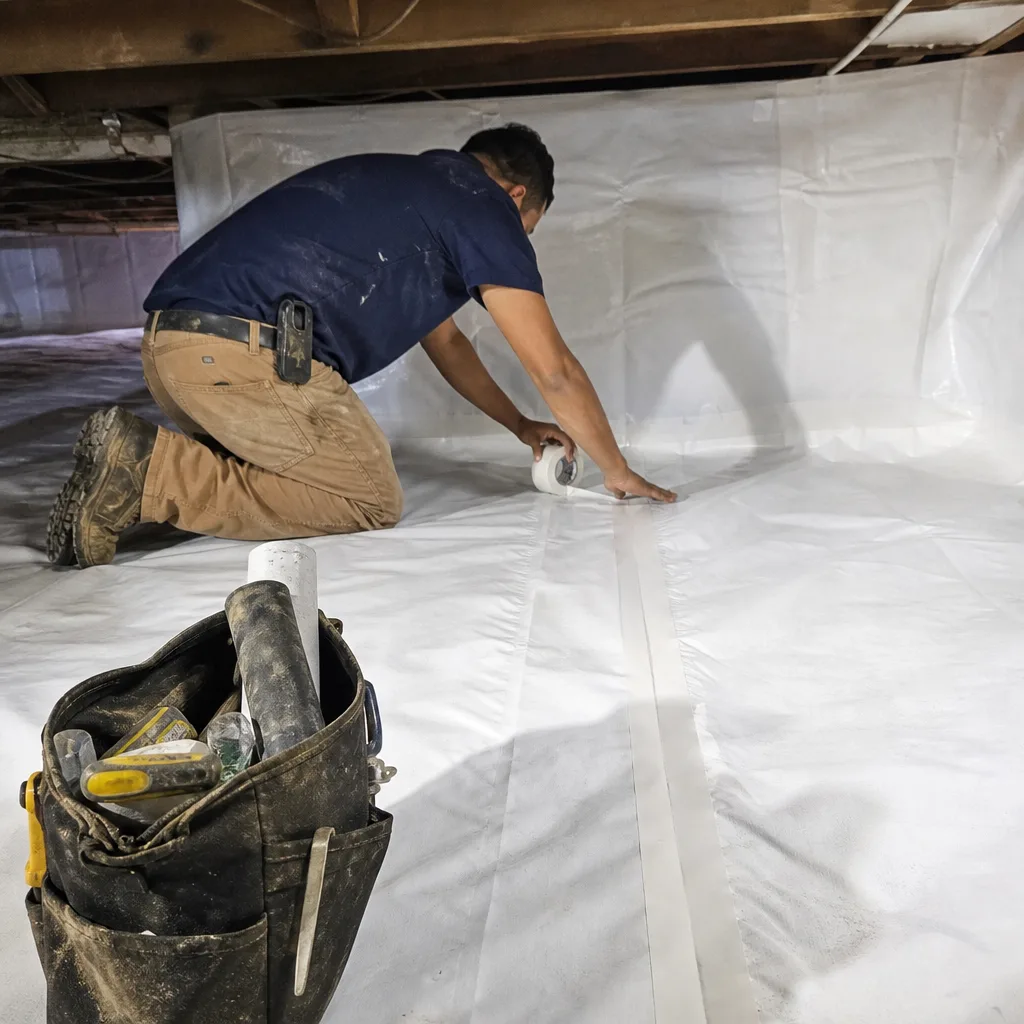
- Visible oxidation or discoloration. The bright aluminum surface has dulled to gray or brown, which drops reflectivity from 97% to roughly 60-70%. In San Marcos, this typically appears after 8-12 years of attic heat cycling above 140°F, accelerated if your roof color is dark or your ventilation is marginal.
- Tearing along staple or fastener lines. Mechanical attachment points concentrate stress; Knauf’s lighter EcoSeal product is particularly prone to this if installed with standard roofing staples rather than the plastic-cap fasteners Knauf specifies. The tear propagates, the sheet sags, and eventually it drapes onto insulation where it becomes useless.
- Displacement or bunching near eaves or peaks. Wind washing through soffit vents, or pressure imbalances from poorly sealed ductwork, lifts unsecured edges. We see this constantly in San Marcos homes built 2015-2020 where the builder stapled barrier at 24-inch intervals instead of the 12-inch maximum Knauf requires.
- Hot spots on the ceiling during afternoon hours. The infrared thermometer reading at your drywall should stay within 5-8°F of your interior air temperature. If it’s climbing 15-20°F above, radiant heat is penetrating a compromised or missing barrier section, usually at the ridge where installation access was difficult and coverage was skipped.
- Evidence of rodent nesting or trails on the foil surface. Knauf’s foil products provide no food value, but rodents use the material for nesting substrate. Their activity tears the barrier and compresses adjacent insulation. In San Marcos, roof rat pressure is heaviest in neighborhoods with mature oak canopy, including the areas near Wonder World Drive and the hills above the university corridor.
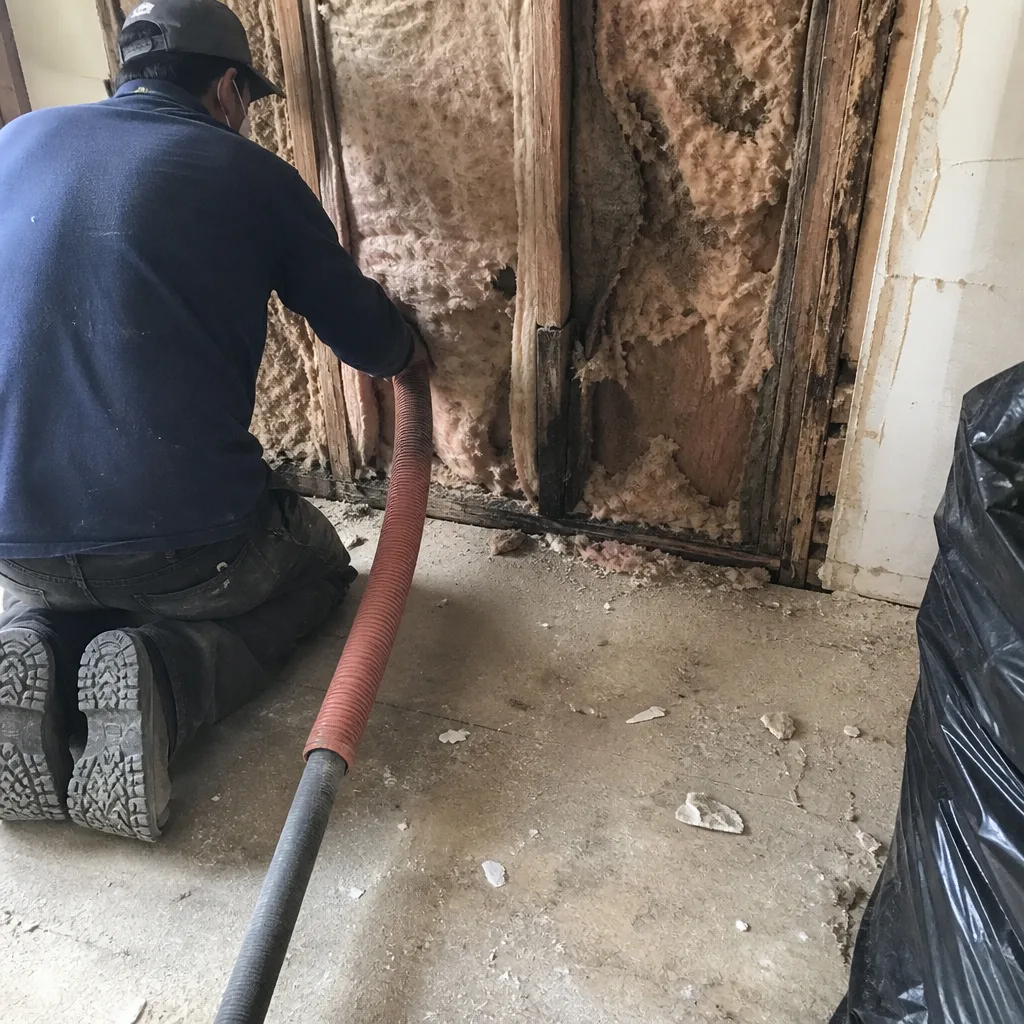 Before
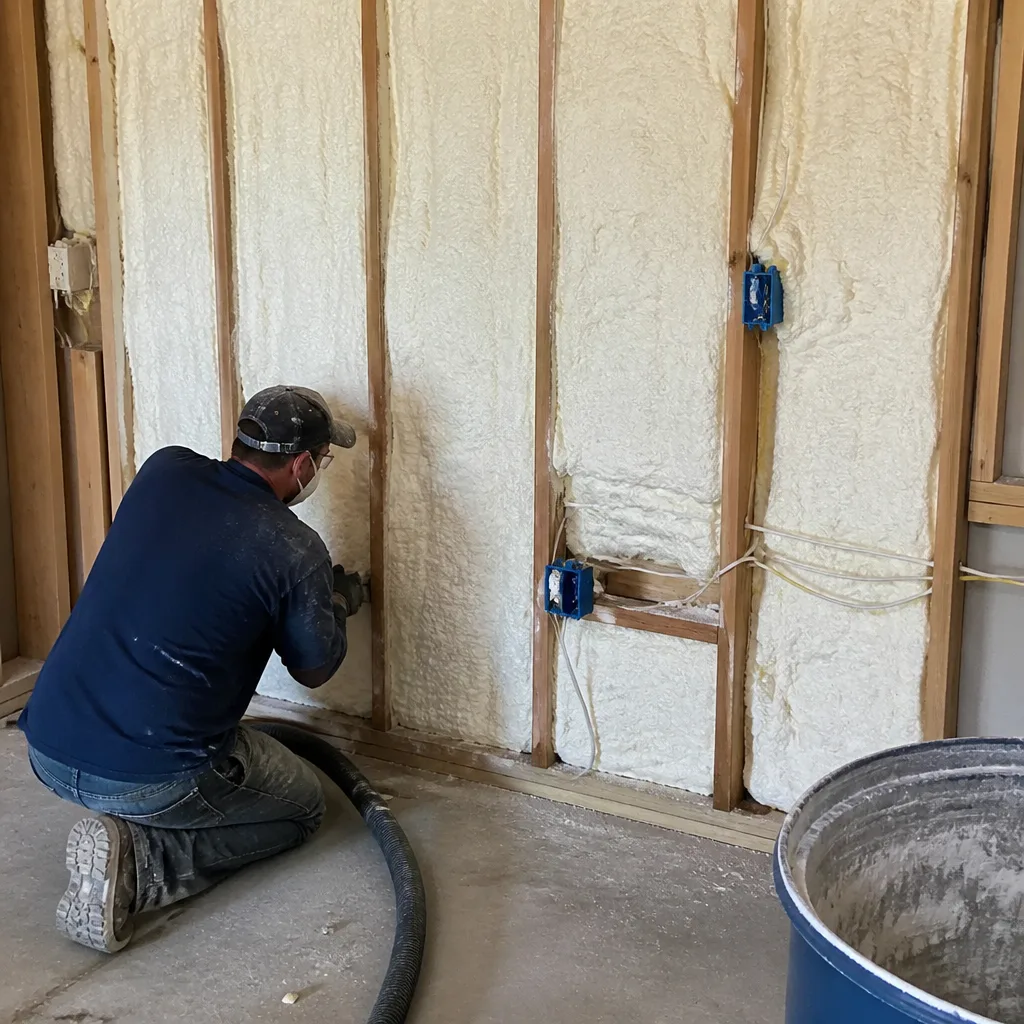 After
AfterReplacement Cost & What’s Included
Most complete Knauf radiant barrier replacements in San Marcos run between $1,800 and $3,400, with the spread driven by three factors: attic square footage, whether we must remove failed existing material, and the condition of your air sealing at the top plate, which we address first per Haven Standard protocol. A partial replacement, covering only damaged sections while leaving sound barrier in place, typically falls between $650 and $1,200.
| Component | Typical Range |
|---|---|
| Knauf EcoSeal material (per sq ft) | $1.40-$1.75 |
| Knauf Insulation Shield (per sq ft) | $1.75-$2.10 |
| Existing barrier removal & disposal | $250-$450 |
| Top plate air sealing (if needed) | $300-$600 |
| Before-and-after blower-door test | Included |
Every replacement includes a written scope and written warranty delivered before work starts, a Documented Photo Record of the completed installation, and on applicable jobs, before-and-after blower-door numbers so you can verify the air-sealing result. The 365-Day Done Right Promise applies to all completed work.
DIY or Call Us?
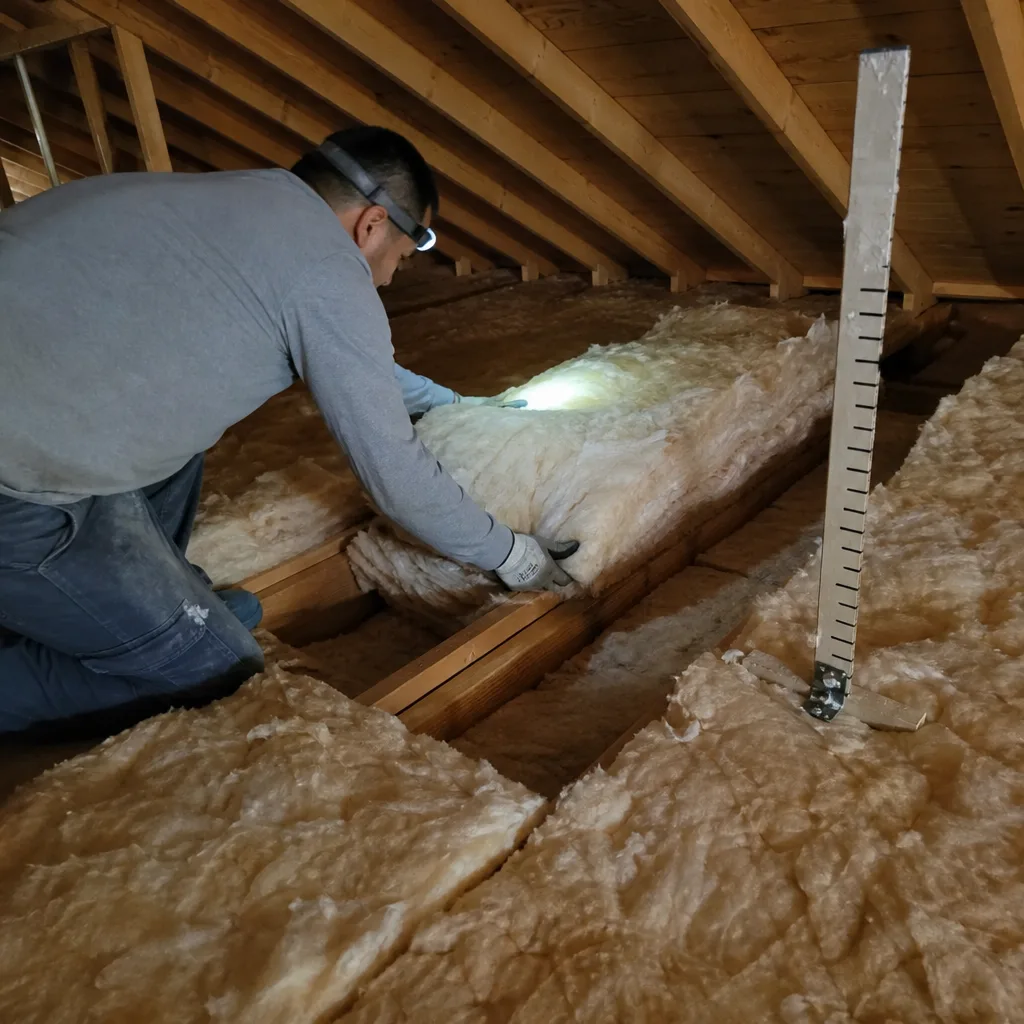
There is one thing a homeowner can safely check: from the attic hatch, look for the Knauf product code and whether the foil surface is still reflective or has dulled. A flashlight and a camera phone are sufficient. What you cannot safely assess is whether your top plates, can lights, and duct boots are sealed before the barrier goes in, and that sequencing error, repeated across thousands of San Marcos attics, is why radiant barriers underperform.
The actual installation involves working across ceiling joists at height, handling rolls that unfurl unpredictably in confined spaces, and stapling at intervals tight enough to prevent sagging without tearing. More critically, if your attic has active knob-and-tube wiring, recessed can lights, or vermiculite insulation, disturbance creates hazards that require professional identification. We carry liability and workers’ compensation coverage specifically for this environment.
We also stock both Knauf product lines on our trucks, so if your attic is accessible and under 2,500 square feet, we can often complete the assessment and installation in a single visit. Call (737) 337-8049 for a written price before any work starts.
FAQs
In our climate, a properly installed Knauf EcoSeal barrier maintains effective reflectivity for 10-15 years; Insulation Shield often reaches 15-20 years. The R-value tells you how slow heat moves through the material - the blower-door number tells you whether any of that matters. Oxidation accelerates in attics that exceed 150°F regularly, which is common in San Marcos homes with dark architectural shingles and inadequate soffit-to-ridge ventilation. Call (737) 337-8049 and we’ll measure your attic’s peak temperature during the assessment.
Patching is possible for isolated tears smaller than a dinner plate using Knauf-compatible foil tape, but the repair rarely matches the original reflectivity and almost never addresses the underlying cause, whether that’s rodent access, wind washing, or failed fasteners. We provide a free second opinion on any written estimate that recommends repair over replacement. Call (737) 337-8049 to bring us the competing quote.
A typical San Marcos home between 1,800 and 2,800 square feet requires one full day for removal, air sealing, and reinstallation, assuming clear attic access and no active rodent infestation. Homes with limited hatch openings, engineered trusses with minimal crawl space, or blown-in insulation that must be temporarily relocated add a half day. We text you a named technician and their arrival window under Haven Standard: Arrive on schedule.
We stock both Knauf EcoSeal and Insulation Shield on our service trucks, along with the plastic-cap fasteners and compatible foil tape Knauf specifies. For unusual code requirements or commercial-grade specifications, we can source through distribution within 24-48 hours. Same-day installation is available for most residential jobs under 1,500 square feet when you call before noon. Call (737) 337-8049 to confirm current truck inventory.
We’ve sealed and insulated over 9,000 homes since 2016, every one with a written price before work started and a documented record when the crew left. If your Knauf radiant barrier is showing any of the symptoms above, we’ll run a blower-door test, hand you the before-and-after numbers on a single printed page, and show you exactly what your attic looks like before we quote a dollar.
Written by Wes Okafor, Owner, Topside Attic Insulation San Marcos at Topside Attic Insulation San Marcos, serving San Marcos and nearby areas.