
Icynene Attic Insulation: The San Marcos Owner’s Guide
Most Icynene open-cell spray foam attic insulation jobs in San Marcos run between $1.80 and $2.40 per board foot installed, with a typical 1,600-square-foot attic at R-38 costing $3,200-$4,800 depending on thickness and prep work. We stock Icynene MD-R-200, LD-C-50, and classic LD-R-50 formulations on our truck, and we can usually start the same day you call. Homeowners usually discover a problem when their upstairs rooms won’t stay cool in July despite the AC running nonstop, or when they spot yellowing, crumbling, or moisture-stained foam during a ductwork check.
Which Icynene Models This Applies To
Icynene’s residential attic line breaks into three families, and the part you need depends on which was originally specified.
MD-R-200 is the medium-density closed-cell formula, 2.0 lbs per cubic foot, used when the roof deck itself is being insulated in unvented attics. It carries a higher R-value per inch - roughly R-6.0 - but requires a thicker intumescent ignition barrier in San Marcos because it falls under Texas amendments to the IRC fire-safety code for occupied attic spaces.
LD-C-50 and LD-R-50 are the open-cell workhorses, 0.5 lbs per cubic foot, R-3.6 to R-3.7 per inch. LD-C-50 is the classic “pourable” formulation for wall cavities; LD-R-50 is the spray-applied version you’ll find on most San Marcos attic floors and roof decks from the 2015-2022 building boom. Check the job record or the faded yellow specification tag the installer should have left on a rafter - it lists the formulation, pass thickness, and date.
Here’s the compatibility gotcha: Icynene changed its catalyst system around 2019. New foam bonds chemically to old foam, but the surface must be clean and the old foam must test above 80% density retention. We’ve found several homes near the Blanco River where a 2017 LD-R-50 job was topped with 2023 material without proper prep, and the seam failed within 18 months. We don’t do that. If we’re adding to existing Icynene, we scarify the surface and apply a tie-coat primer - it’s slower, but it’s the only way the warranty holds.
OEM Icynene foam from an authorized distributor is what we use. Aftermarket “Icynene-compatible” foams exist, but the density, closed-cell content, and long-term adhesion testing data rarely match. For a product that lives behind your drywall for 30 years, we don’t substitute.
Signs Your Icynene Attic Insulation Is Failing
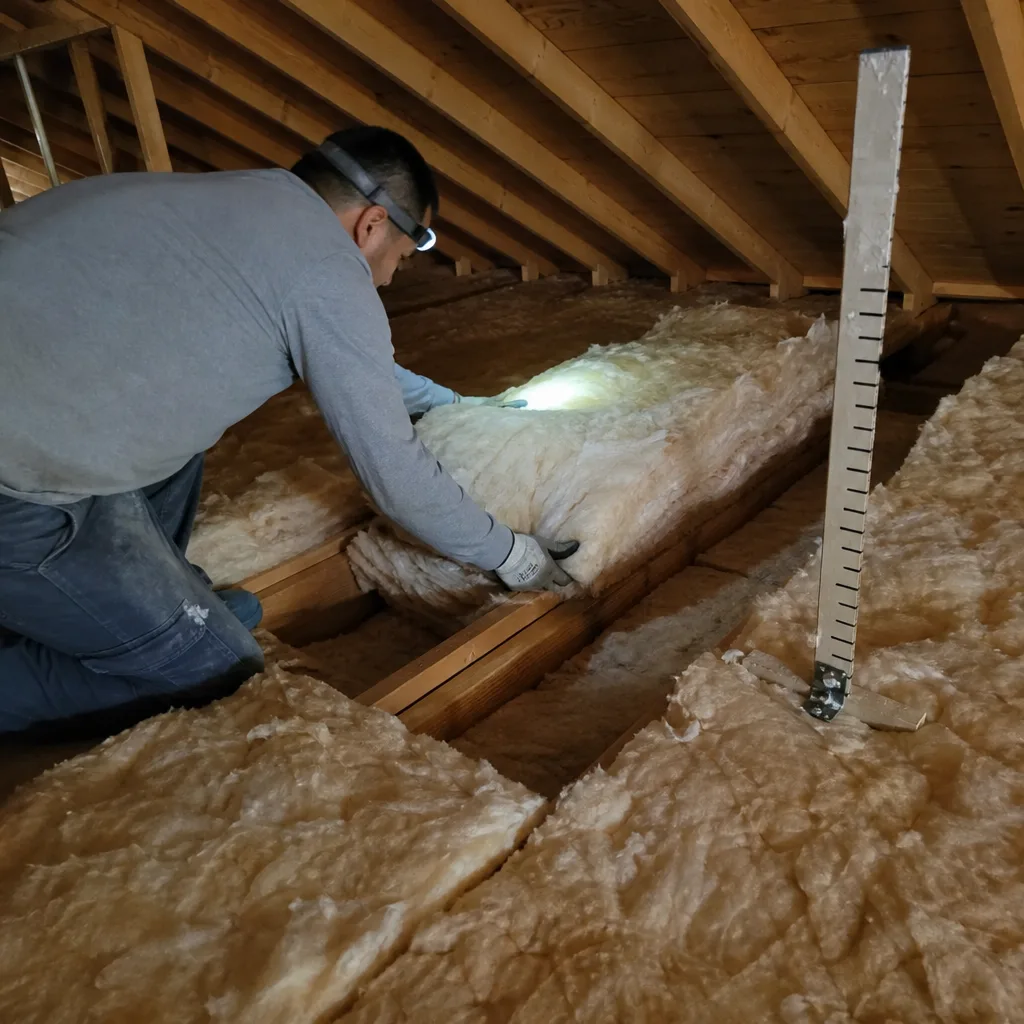
- Hot second-floor rooms in summer, cold ones in winter. The foam looked fine when your home inspector poked it, but shrinkage at the top plate - the horizontal framing member where your wall meets the ceiling - creates a gap that bypasses the R-value entirely. We find this in about one in five San Marcos homes built between 2015 and 2020, especially in the Willow Creek and Springtown subdivisions where crews raced to close out phases.
- Yellow or brown discoloration on the foam surface. This is UV degradation if the foam was left exposed, or more commonly, slow roof leak staining. Icynene is vapor-permeable in its open-cell form, but it’s not a sponge - standing water from a compromised shingle degrades the cell structure and drops R-value by 15-30% in the affected area.
- Crumbly, powdery texture when touched. Properly cured Icynene feels firm but slightly yielding, like dense bread. If it disintegrates, the original mix ratio was off, or the substrate temperature was below 60°F during application. San Marcos gets enough December and January mornings in the 40s that this happens more than it should.
- Musty smell that worsens after rain. Open-cell Icynene allows vapor through, which is normally fine in our climate - but if the attic isn’t properly vented or the foam was sprayed too thin at the eaves, condensation forms on the cold roof deck above. The foam isn’t the leak; it’s the thermal bridge that makes the leak possible.
- Ice damming or heavy frost on roof nails in winter. Even in Central Texas, we get enough freeze-thaw cycles that poorly insulated attic planes show themselves. Warm, moist air hits the cold nail shank, condenses, and freezes. The Icynene either missed thickness at that rafter bay or pulled away during cure.
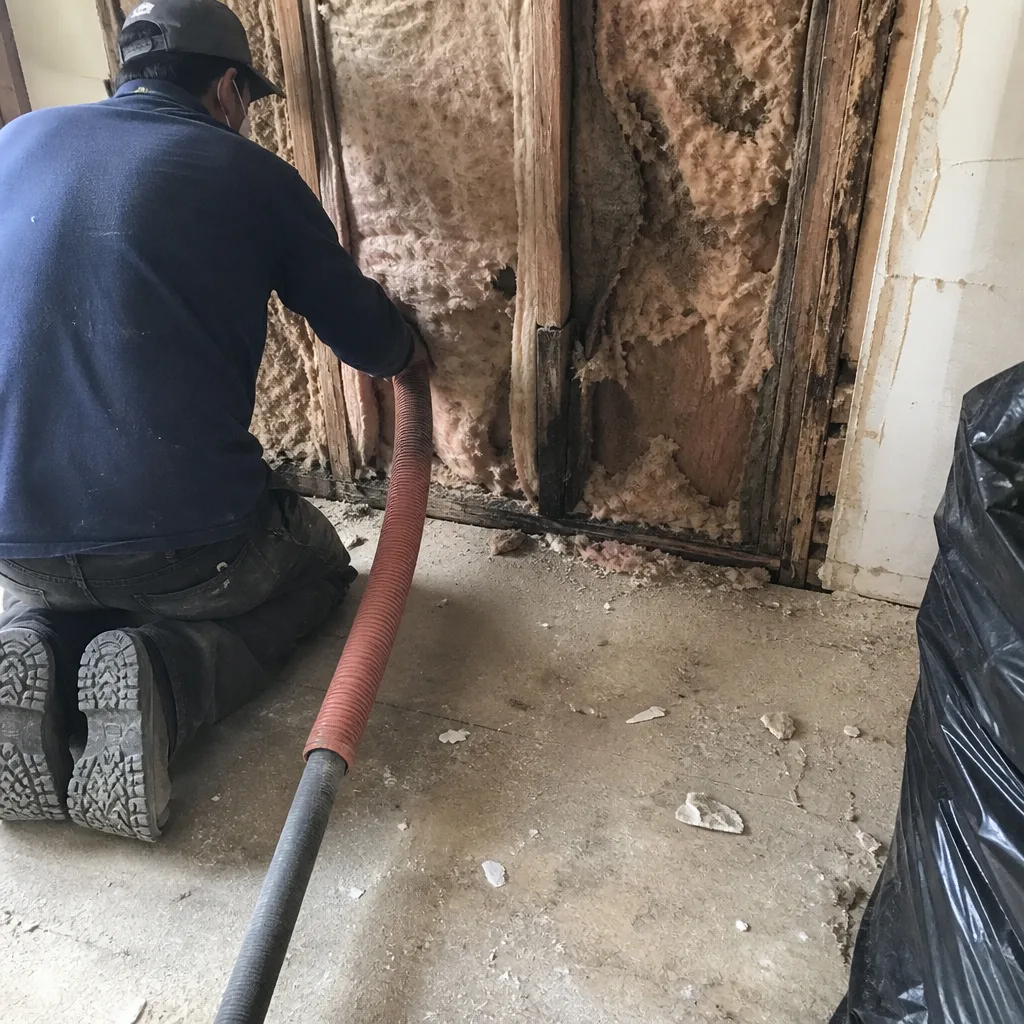 Before
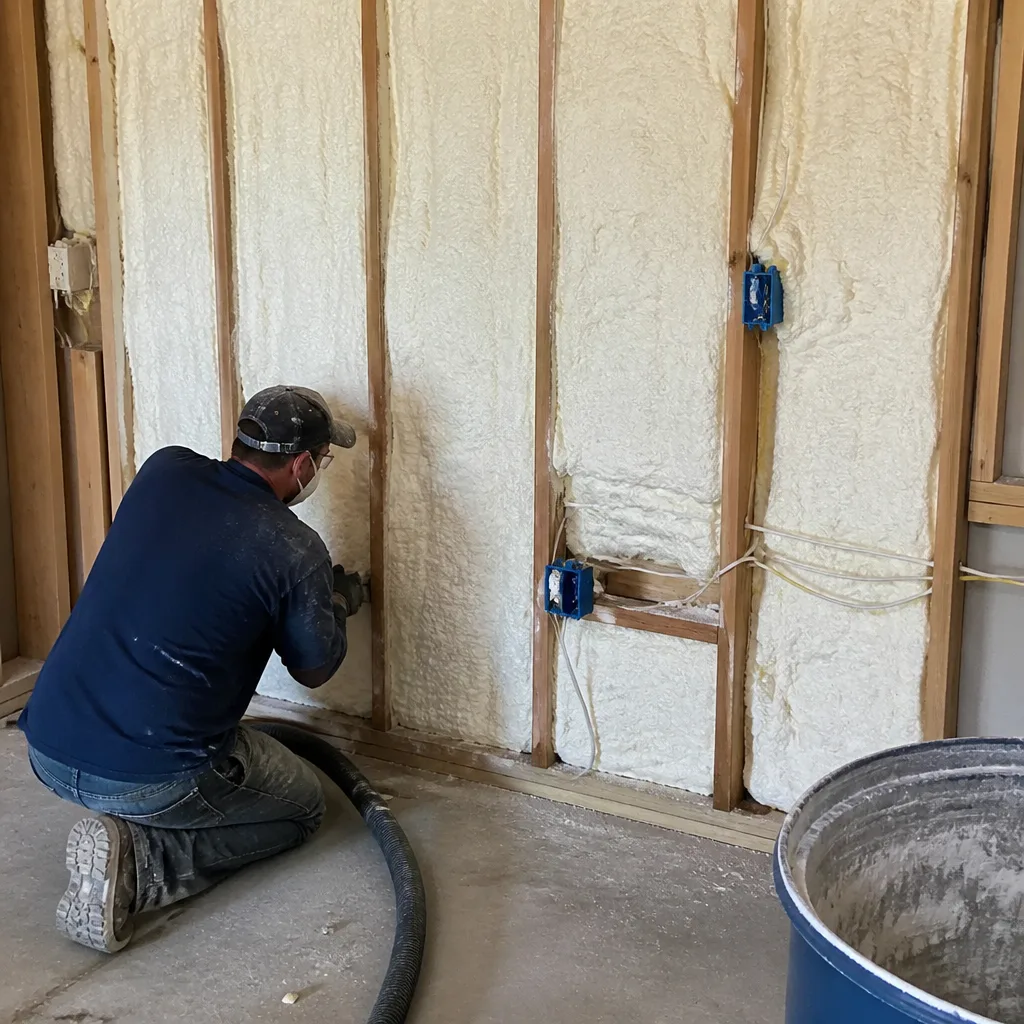 After
AfterReplacement Cost & What’s Included
| Scope | Typical Range in San Marcos |
|---|---|
| Spot repair (1-2 affected bays, up to 100 sq ft) | $850-$1,400 |
| Partial re-spray (attic floor or roof deck, 500-800 sq ft) | $2,800-$4,200 |
| Full attic replacement (remove + re-spray, 1,200-1,800 sq ft) | $5,500-$8,500 |
| Air sealing package (top plates, can lights, penetrations) - added to any job | $600-$1,200 |
The range depends on three things: how much existing foam needs removal, whether we find unsealed top plates or can lights that should have been handled first, and whether your original job used the older pre-2019 formulation that requires additional surface prep. Every quote is flat and written - Haven Standard Clause 1 - before anyone suits up. The 365-Day Done Right Promise covers labor and material adhesion; manufacturer warranty on the Icynene itself runs 25 years when applied to spec.
DIY or Call Us?
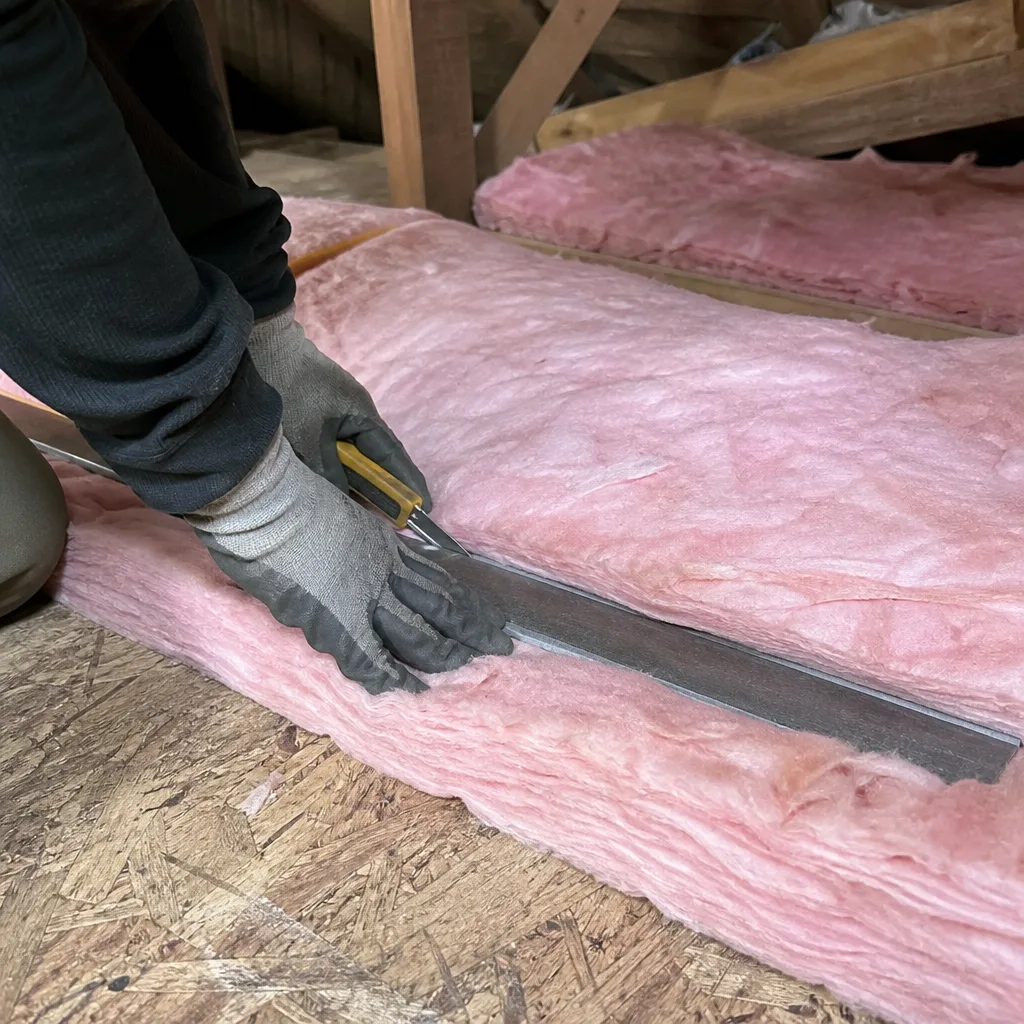
There’s no safe DIY path for spray foam. The two-part polyurethane chemistry requires heated hoses, precise 1:1 ratio control, and full-face supplied-air respirators - not the hardware-store kind, the kind with a remote air pump. Iso-cyanate exposure can sensitize you permanently, meaning you’ll never be around the material again without an allergic reaction. We’ve seen homeowners try touch-ups with canned foam; it shrinks differently, bonds poorly, and voids any remaining warranty.
What you can safely check: the specification tag on a rafter, the thickness with a ruler where foam is exposed at the attic hatch, and whether your can lights are IC-rated (Insulation Contact - they’ll say so on the housing). If any of those look off, call us. We answer live, 24/7, and we’ll read your existing paperwork with you - no charge for a second opinion on another contractor’s scope.
FAQs
Properly applied Icynene lasts 30+ years, but we’ve found shrinkage and adhesion failures in local homes as early as year 6 when the original crew skipped substrate cleaning or sprayed in cold weather. The R-value tells you how slow heat moves through the material - the blower-door number tells you whether any of that matters. Call (737) 337-8049 and we’ll test both.
Spot repairs work if the surrounding foam tests above 80% density and the failure is isolated to one or two bays. Widespread shrinkage, UV damage, or moisture-compromised foam requires removal and re-spray - patching over bad foam just traps the problem. We document the condition with photos before recommending either path.
Most residential attic jobs in San Marcos take one to two days: half a day for prep and air sealing, half a day for spray application, plus cure time before occupancy. We run the blower-door test before we leave and hand you a single printed page with the before-and-after air-changes-per-hour figure.
We stock MD-R-200, LD-C-50, and LD-R-50 in standard set formulations, plus tie-coat primers for bonding to existing foam. Same-day starts are normal for jobs under 1,000 square feet. For larger or specialized jobs, we pull fresh material from the Dallas distributor with a 48-hour lead time - no old stock, no off-ratio drums sitting in Texas heat.
Topside Attic Insulation San Marcos is independently owned and operated, not affiliated with Icynene or its parent company. We also stock and install Reflectix radiant barrier products where they suit the assembly.
Ready to see what’s actually happening in your attic? Call (737) 337-8049 for a free written estimate. We’ll bring the blower door, the camera, and a flat price before any work starts - that’s Haven Standard, and it’s how we’ve handled over 9,000 homes since 2016.
Written by Wes Okafor, Owner, Topside Attic Insulation San Marcos at Topside Attic Insulation San Marcos, serving San Marcos and nearby areas.