
Demilec Crawl Space Encapsulation: The San Marcos Owner’s Guide
We stock and install Demilec-compatible crawl space encapsulation systems in San Marcos, with most complete jobs running between $3,800 and $7,200 depending on crawl square footage and whether the foundation needs active dehumidification tied in. Same-day assessment is available, and we carry Demilec vapor barrier rolls, seam tape, and closed-cell spray foam on the truck for jobs up to 1,500 square feet. Most San Marcos homeowners discover their encapsulation has failed when they notice a sharp musty smell returning after months of absence, or when their dehumidifier starts running continuously without pulling the relative humidity below 65 percent - a sign the vapor barrier has torn at the piers or the seam tape has delaminated from our clay-heavy soils shifting underneath.
Which Demilec Models This Applies To
Demilec’s crawl space line breaks into two families: the Heatlok HFO Pro closed-cell spray foam series, commonly specified at 2-3 inches on foundation walls in San Marcos builds from 2018 onward, and the Demilec 500 open-cell water-blown foam used more often in hybrid systems where a polyethylene vapor barrier carries the bulk of the moisture stop. The product label is on the foam drum or the vapor barrier roll core - look for a four-digit batch code starting with “TX” for material mixed at Demilec’s Texas distribution point, which matters because the catalyst ratio shifts slightly for our humidity zone.
We also see Demilec spec’d in retrofits where the original contractor used a generic 6-mil polyethylene sheet that failed within three to five years. If your crawl has Demilec foam on the walls but a non-Demilec barrier on the ground, the seam between those two materials is your most likely failure point - different expansion rates, and no chemical bond. We stock both OEM Demilec vapor barrier (10-mil reinforced, 14-foot wide rolls to minimize seams) and a quality aftermarket equivalent from Reflectix for homeowners who want a radiant-barrier hybrid on the ground plane. The OEM tape is a butyl-acrylic blend; the aftermarket equivalent is a double-sided polyethylene tape with similar adhesion but shorter working life in our alkaline soil conditions.
To identify what you have: measure the vapor barrier thickness with a caliper at an edge cut, check the foam color - Demilec HFO Pro cures to a light yellow, not the dark amber of some competitors - and photograph any label remnants. Bring that to us; we’ll match it without guessing.
Signs Your Demilec Crawl Space Encapsulation Is Failing
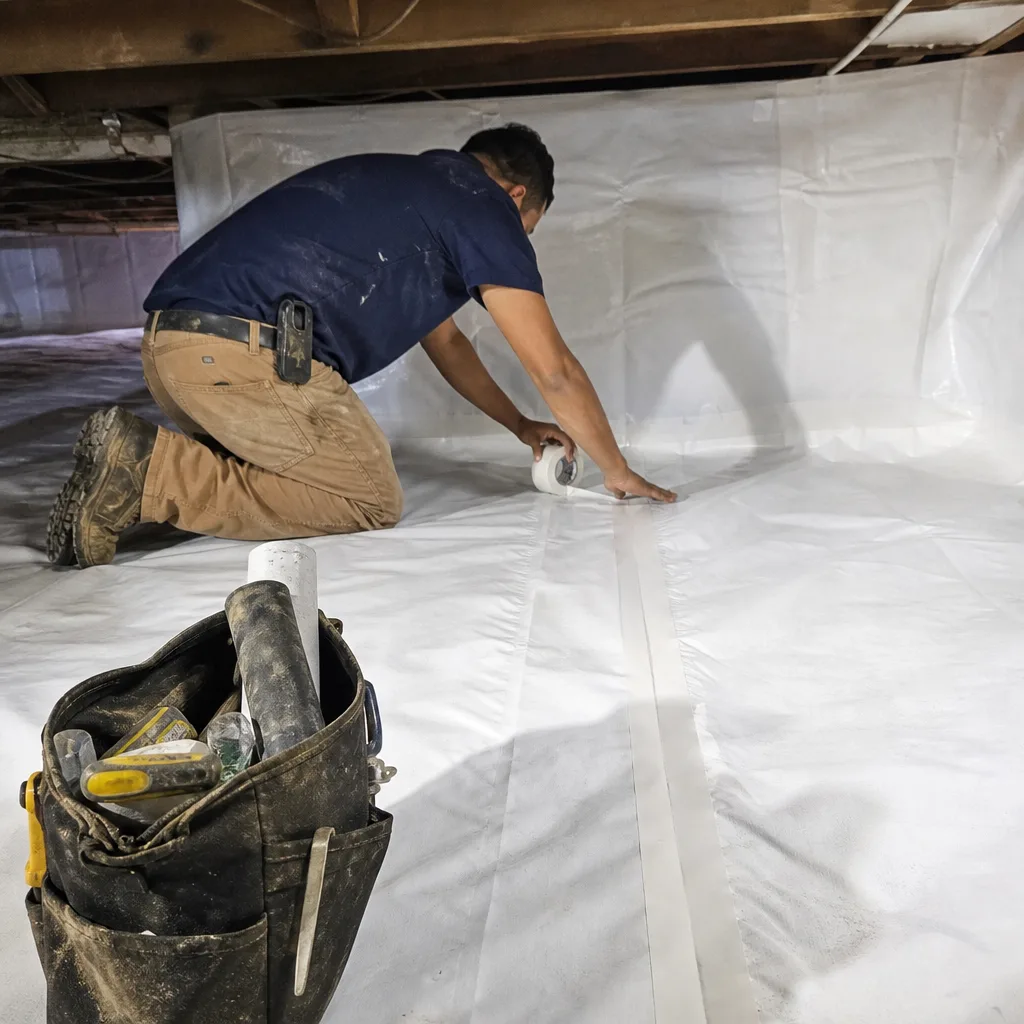
- Musty odor returning in humid months. The vapor barrier has torn at a pier pad or the seam tape has lost adhesion. San Marcos sees 75+ percent relative humidity from May through October; any breach lets soil moisture evaporate directly into the crawl air.
- Dehumidifier running constantly, condensate line barely flowing. The encapsulated volume is no longer sealed - outside air is infiltrating faster than the unit can dry it. We check this with a simple manometer reading; a properly sealed crawl should hold a 5-10 pascal pressure difference with the house.
- Insulation falling from band joists or rim boards. Demilec foam that was applied to a damp substrate has delaminated. This happens when crews skip the moisture-content check - wood above 18 percent moisture won’t bond, and San Marcos slab homes often have grade-level moisture wicking into the band joist.
- White chalky residue on the vapor barrier surface. This is efflorescence, mineral salts from concrete or soil moisture passing through a compromised barrier. It means water is moving, not pooling - an earlier stage than visible standing water but just as damaging to framing.
- Floor above the crawl feels cold in winter despite heating. The thermal boundary has failed at the crawl ceiling, usually because air sealing at the top plate was skipped when the encapsulation was installed. The R-value tells you how slow heat moves through the material - the blower-door number tells you whether any of that matters.
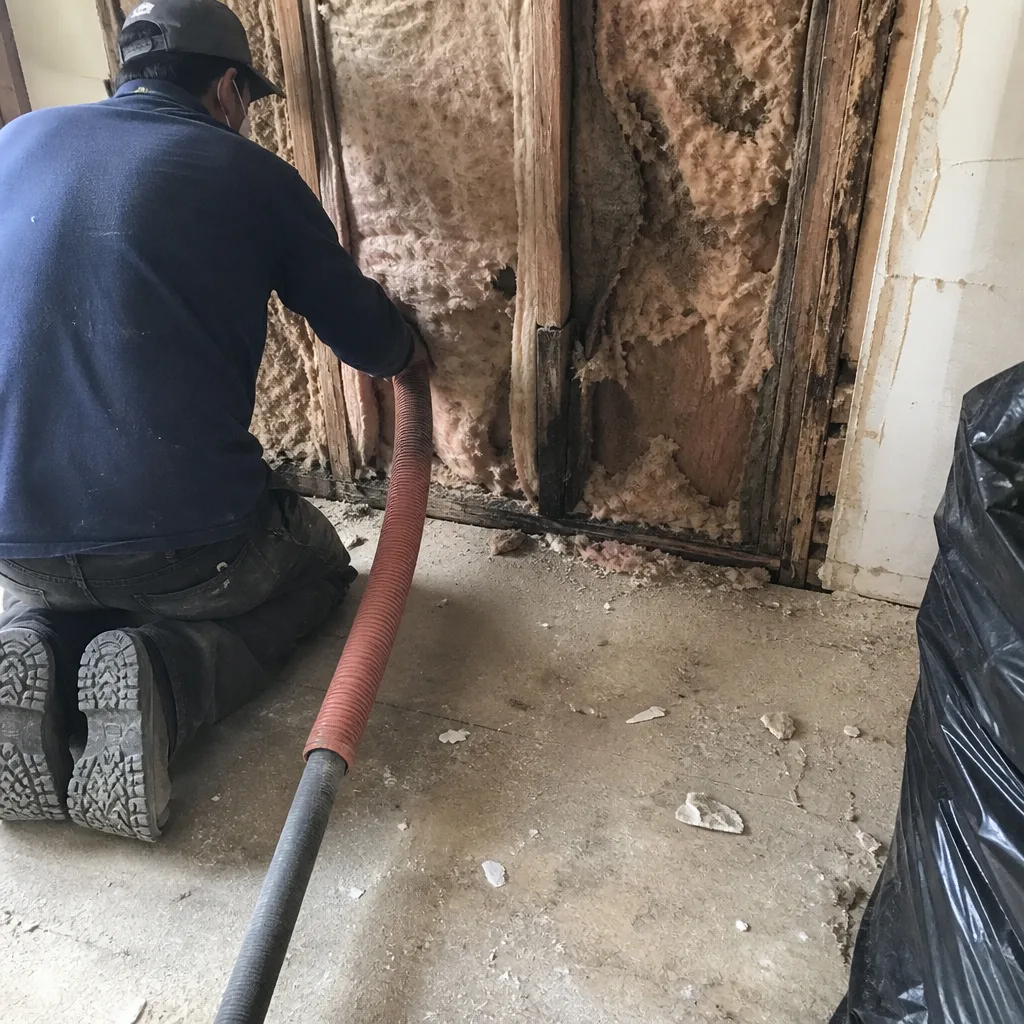 Before
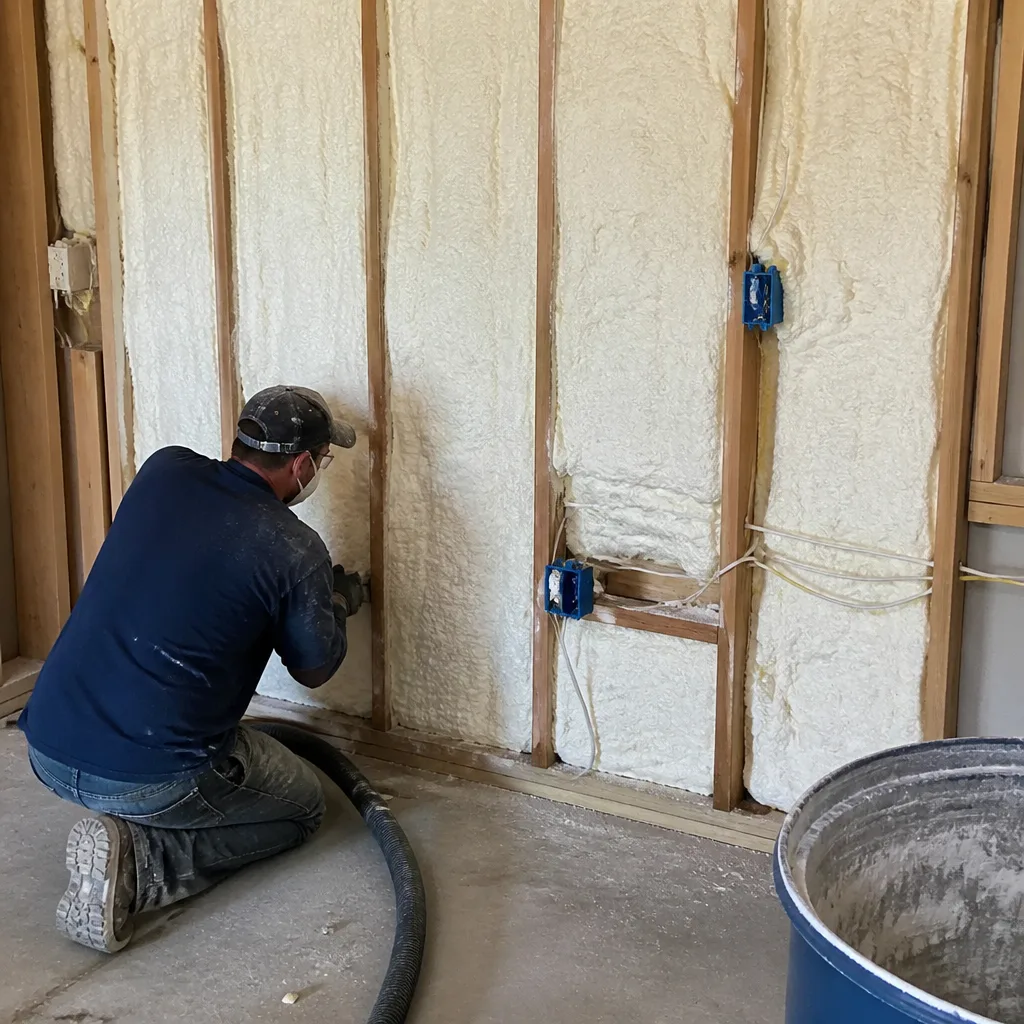 After
AfterReplacement Cost & What’s Included
| Component | Typical Range in San Marcos |
|---|---|
| Vapor barrier replacement (10-mil reinforced, ground only) | $1,800 - $3,400 |
| Full encapsulation: barrier + wall foam + dehumidifier tie-in | $4,200 - $7,200 |
| Spot repair: seam tape, pier patching, localized foam touch-up | $650 - $1,400 |
| Active dehumidifier (70-pint, condensate pump to exterior) | $1,200 - $1,800 installed |
The wide range on full encapsulation comes down to three things: crawl height (less than 18 inches means we work on our backs, doubling labor time), number of piers to wrap and seal, and whether the foundation walls need foam stripped and re-applied or just patched. Every job gets a written price before any work starts - Haven Standard Clause 1 - and that price includes the Documented Photo Record you’ll receive at walkthrough. We don’t charge separately for the blower-door test when it’s applicable to the conditioned space above; we do charge for crawl-specific manometer testing if we’re verifying sealed-crawl performance against the 2018 IECC requirements that San Marcos adopted in 2019.
Our 365-Day Done Right Promise covers all encapsulation work. If a seam lifts or a tape line fails, we return and fix it. The warranty is in writing, delivered before the crew starts, same as the price.
DIY or Call Us?
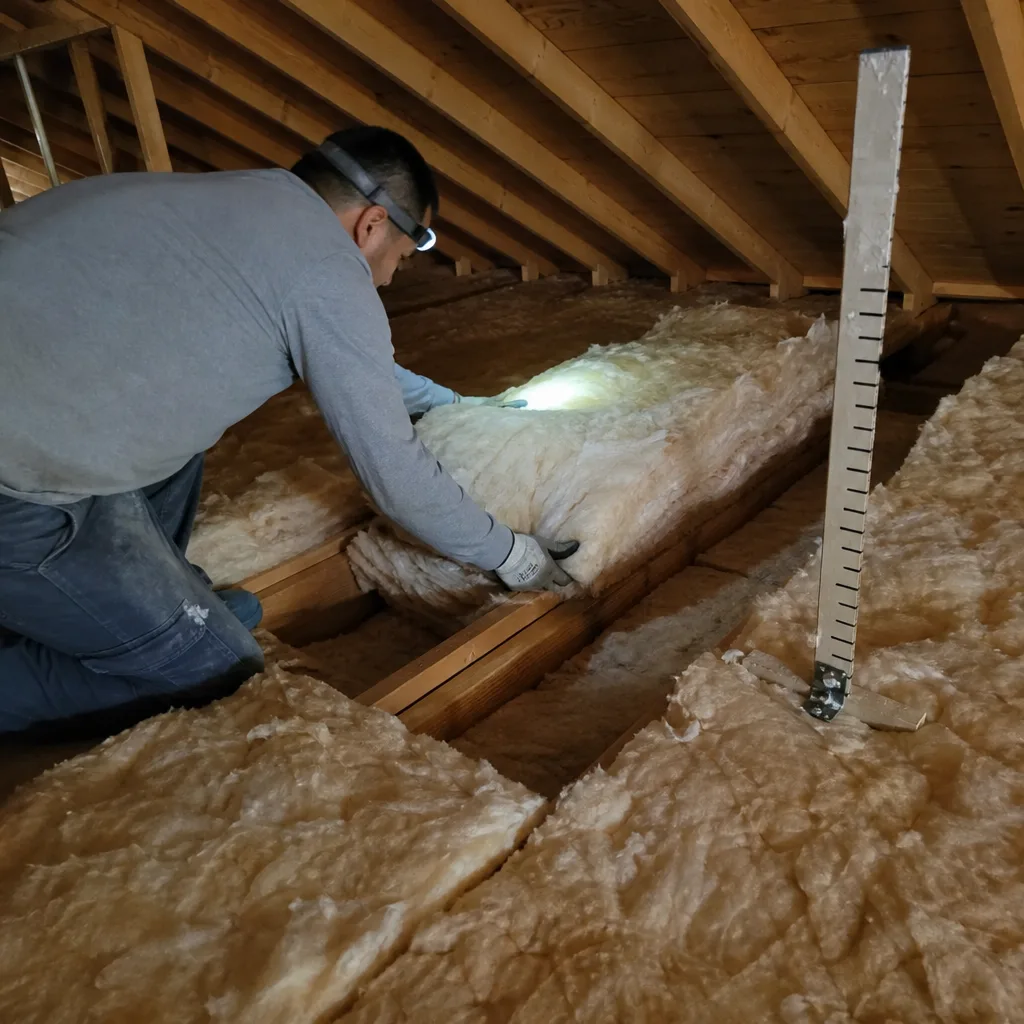
There’s a honest line here. A homeowner with a utility knife, a roller, and patience can patch a small vapor barrier tear with proper seam tape - we sell the tape by the roll if that’s all you need. Check the tear edges for cleanliness; any soil or moisture underneath and the bond will fail in weeks, not years.
Where DIY goes wrong: applying closed-cell spray foam to foundation walls without controlling substrate moisture and temperature. Demilec HFO Pro wants substrate between 40°F and 100°F and moisture content below 18 percent. San Marcos crawl spaces in January run 45-55°F; in August they hit 85°F with 90 percent humidity. Spray foam applied out of spec develops voids, delaminates, and traps moisture against the wall - the opposite of what you paid for. The chemicals also require respirator-rated PPE and ventilation planning we don’t recommend homeowners source for a one-off job.
We’re an independent service provider - not affiliated with Demilec - and we’ve replaced enough homeowner foam jobs to know what the remediation costs. If you’re unsure what you’re looking at, text us photos or call (737) 337-8049. We’ll tell you whether it’s a tape patch or a full strip-and-replace, no charge for the assessment.
FAQs
Properly installed Demilec vapor barrier and foam should perform for 15-20 years in our climate. The 10-mil reinforced barrier resists the alkali in our local clay soils better than standard 6-mil polyethylene, which we typically see fail at 3-5 years. The bigger variable is installation quality - seams at piers and the perimeter wall are where we find 80 percent of failures, not the material itself. Call (737) 337-8049 and we’ll assess whether your original install followed Demilec’s fastening schedule.
Spot repair is viable when the failure is localized - a torn barrier section, delaminated tape at one or two piers, or a small foam void. We replace the damaged barrier patch, re-tape with fresh butyl-acrylic, and verify with a smoke pencil. Full replacement makes sense when the barrier is brittle throughout, when multiple foam areas have delaminated, or when the original install skipped critical air-sealing at the rim joist. We’ll show you both options with a written price for each - Haven Standard - so you decide based on numbers, not pressure.
A spot repair runs 4-6 hours. A full encapsulation on a 1,200-square-foot crawl with two technicians takes 2-3 days: Day one for prep, debris removal, and substrate drying if needed; day two for foam application and cure; day three for barrier installation, taping, and final testing. We don’t rush the foam cure - Demilec HFO Pro needs its full rise time before we load the vapor barrier against it. You’ll get a schedule in writing before we start, and a text when the crew is en route.
We carry 10-mil reinforced vapor barrier in 14-foot and 16-foot widths, Demilec-compatible butyl-acrylic seam tape, closed-cell spray foam for touch-up work, and pier wrap pads on every truck serving San Marcos. For full-wall foam jobs requiring full drums of Heatlok HFO Pro, we pull from our Austin warehouse with next-morning delivery if the job is assessed by 2 p.m. Same-day spot repair is realistic; same-day full encapsulation requires assessment and scheduling. Call (737) 337-8049 - a live person answers, 24/7 - and we’ll tell you exactly what’s on the truck today.
Written by Wes Okafor, Owner, Topside Attic Insulation San Marcos at Topside Attic Insulation San Marcos, serving San Marcos and nearby areas.