
GreenFiber Attic Insulation: The San Marcos Owner’s Guide
GreenFiber cellulose attic insulation installed in San Marcos homes typically runs $1.80 to $2.40 per square foot when blown to R-38 to R-49 depth, and we stock it for same-day installation on most residential jobs. Most homeowners realize their GreenFiber insulation is failing when upstairs rooms won’t stay cool in July despite the AC running nonstop, or when they find gray, settled material measuring well below the original depth markers on their attic joists. We see this often in San Marcos homes built between 2005 and 2015, especially in neighborhoods like Willow Creek and Blanco River Village where original insulation was under-blown or never paired with proper air sealing.
Which GreenFiber Models This Applies To
GreenFiber manufactures loose-fill cellulose insulation, not panel or batt products with model numbers stamped on edges. What you’ll find in a San Marcos attic is either GreenFiber All Borate or GreenFiber Low Dust, distinguishable by the bag labeling if any original bags remain, or by lab testing the settled material’s borate content. The All Borate variant carries a higher fire-retardant load and was the standard spec for Texas builds from 2010 forward; Low Dust came into wider use around 2016 for occupied-home retrofits where airborne particulate was a concern.
We don’t push OEM-only replacement. GreenFiber cellulose is commodity cellulose at its core, treated with borate for pest and fire resistance. We source matching material from GreenFiber direct and from Johns Manville and CertainTeed, all meeting the same ASTM C739 standard for cellulose insulation. The compatibility gotcha in San Marcos is mixing GreenFiber’s higher borate-content material with untreatd or ammonium-sulfate-treated stock, which can create uneven fire-retardant distribution across your attic floor. We verify borate consistency before blowing, and we mark the depth targets on your joists so you can check settlement yourself in five years.
Identification help: original GreenFiber bags show a green-and-white logo with “All Borate” or “Low Dust” clearly marked. Settled material without bag reference can be tested; we include this verification in our free estimate.
Signs Your GreenFiber Attic Insulation Is Failing
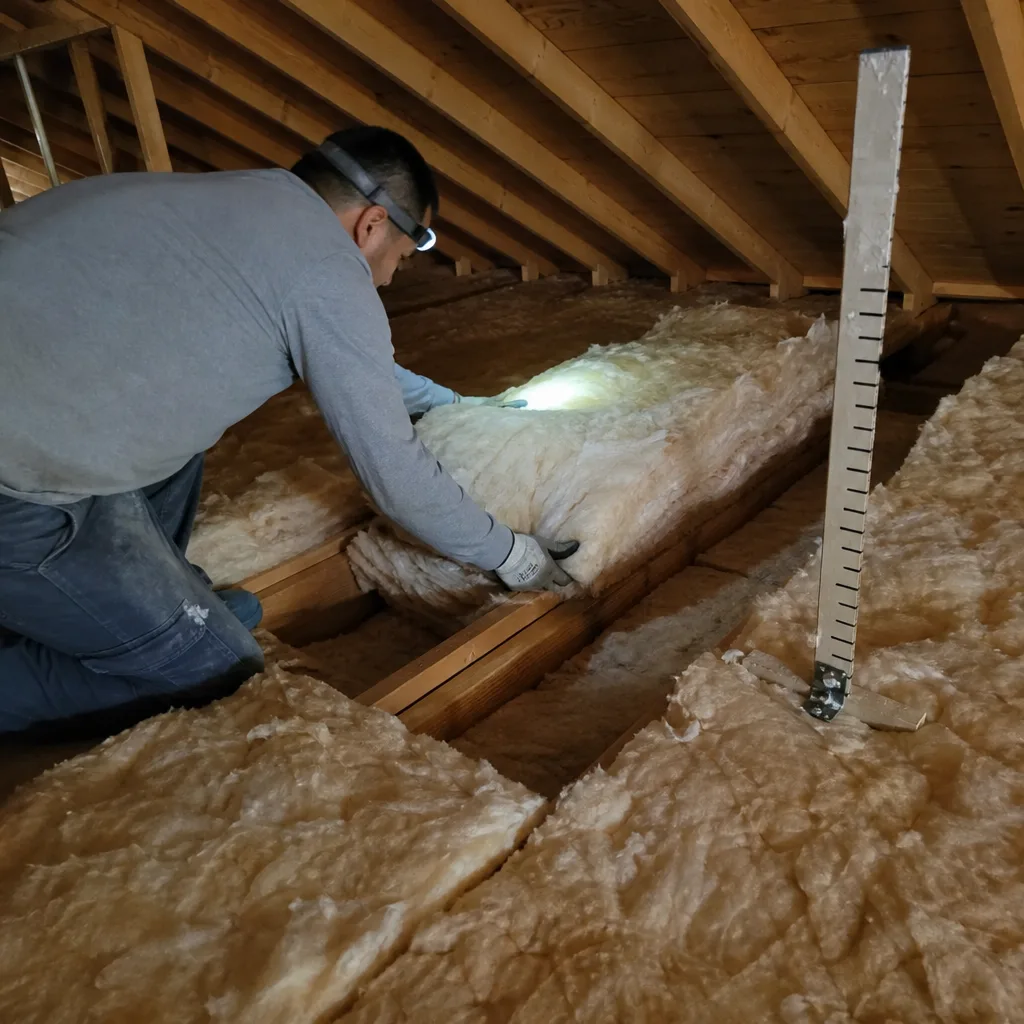
- Depth has dropped below R-38 equivalent. GreenFiber cellulose settles 10 to 20 percent from original blown depth in the first two years. In San Marcos, where attic temperatures routinely hit 140°F in August, accelerated thermal cycling drives further compaction. If your joists show through or depth markers are buried, you’re likely at R-25 or below.
- Hot second floor, cold first floor, no ductwork explanation. This temperature stratification usually means your insulation isn’t holding conditioned air where it belongs. The R-value tells you how slow heat moves through the material - the blower-door number tells you whether any of that matters. We test both.
- Ice damming or heavy condensation in winter. Rare but real in San Marcos during hard freezes. Warm, moist interior air hits a cold attic ceiling because insulation has shifted or settled at the eaves, creating a thermal bypass. GreenFiber blown without proper baffles at the soffit is especially prone to wind-washing in our Hill Country gusts.
- Rodent disturbance or moisture staining. Cellulose compresses where animals tunnel; borate treatment degrades with repeated wetting. San Marcos homes near the Blanco River corridor see this after seasonal flooding. Compressed cellulose loses up to 40 percent of its R-value and won’t recover when dried.
- Energy bills climbing year over year with no rate change. We pull CPS Energy rate history with homeowner permission. When usage spikes 15 percent or more against weather-normalized baselines, failed insulation is usually the culprit, especially in homes where the original installer skipped top-plate sealing.
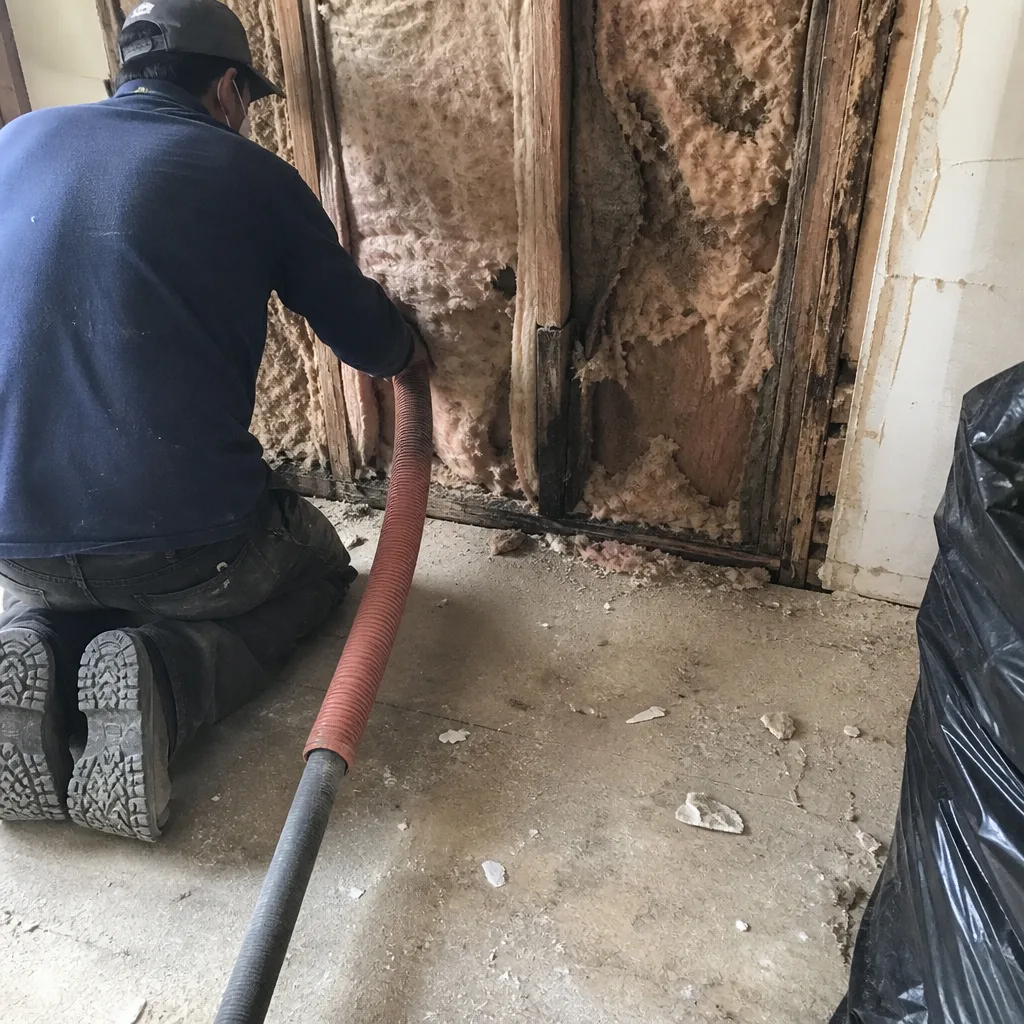 Before
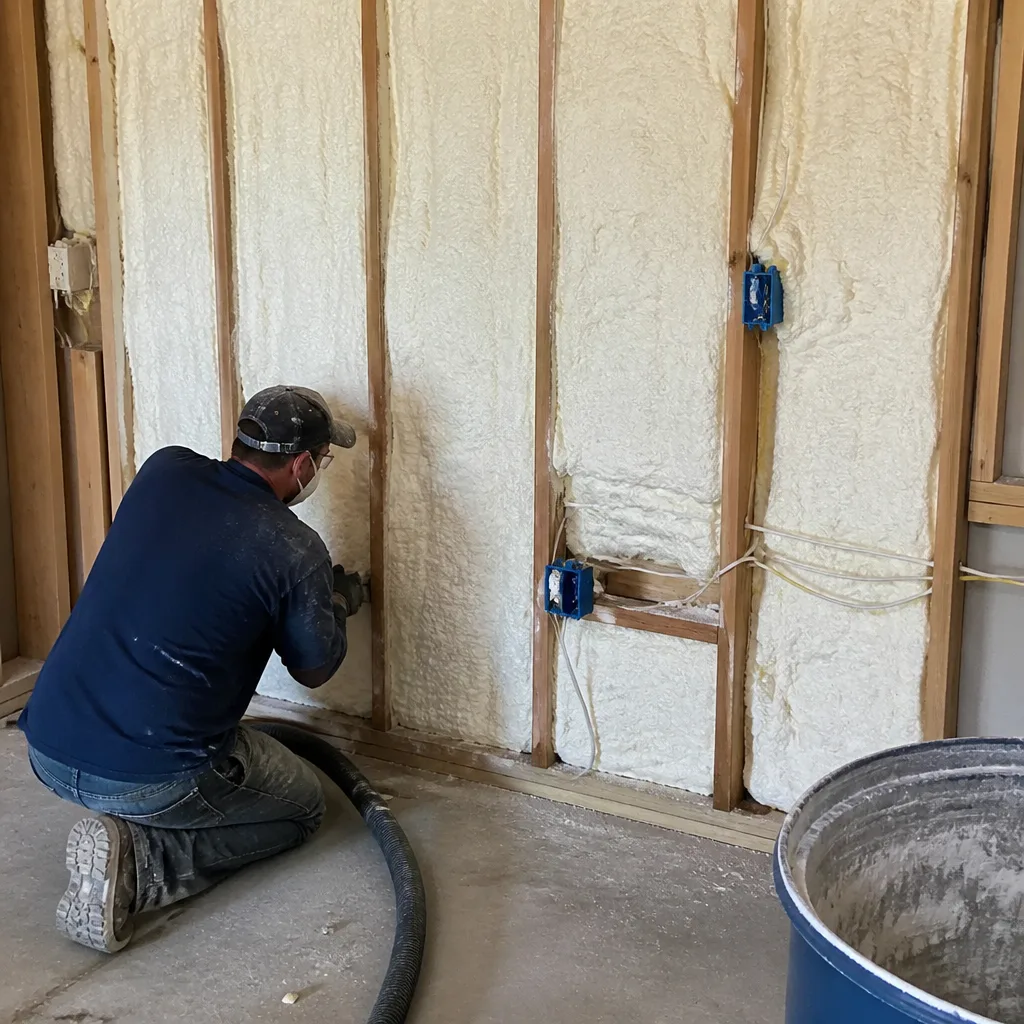 After
AfterReplacement Cost & What’s Included
Most GreenFiber attic insulation jobs in San Marcos run between $1.80 and $2.40 per square foot for R-38 to R-49 blown depth, with typical single-story homes in the 1,200 to 2,200 square foot range falling between $2,200 and $4,800 total installed. Two-story homes with complex attic geometry, like those in the Sage Meadows area with multiple dormers and kneewalls, push toward the upper end.
| Component | Price Range |
|---|---|
| GreenFiber All Borate or equivalent cellulose (R-38 to R-49) | $1.00 - $1.40 / sq ft |
| Attic air sealing (top plates, can lights, penetrations) | $0.50 - $0.70 / sq ft |
| Baffle installation at soffits (if missing) | $150 - $350 flat |
| Insulation removal and disposal (when required) | $0.80 - $1.20 / sq ft |
| Before-and-after blower-door test | Included |
What drives the range: existing depth requiring removal versus top-dress, accessibility (scuttle versus pull-down stairs), and whether we find unsealed top plates or open chase ways that must be closed before new material goes in. We never blow over unsealed attic floors. Under Haven Standard Clause 1, you get a written price before any work starts, a written scope, and a written warranty. Every job closes with a Documented Photo Record and printed blower-door results. The 365-Day Done Right Promise covers all completed work.
DIY or Call Us?
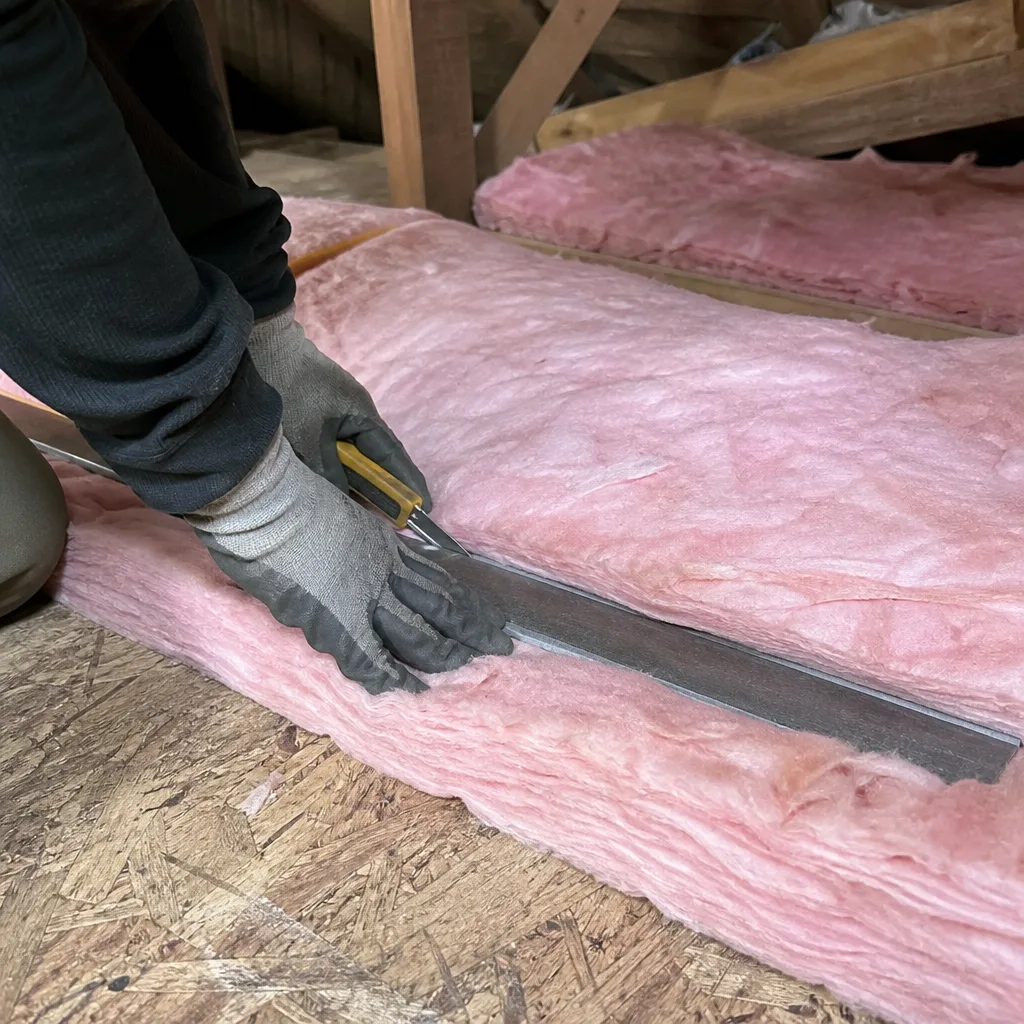
Homeowners can safely check their own insulation depth with a ruler and a flashlight. Measure at multiple points, especially near the attic hatch and at the eaves. If you find settled material, note the depth and whether joists are visible. You can also inspect for obvious gaps around chimneys, dropped soffits, and HVAC penetrations.
Where DIY ends: cellulose blowing requires a commercial machine calibrated for material density, and GreenFiber’s specified coverage per bag assumes proper attic preparation that most homeowners skip. More critically, disturbed cellulose in a confined attic creates respirable dust even with Low Dust formulations. We wear P100 respirators for a reason. And without a blower-door test, you’re guessing at air leakage that will undermine whatever R-value you install. Wes Okafor has pulled out too many DIY jobs where the homeowner blew $800 of material over a leaky ceiling and saw no bill improvement.
Topside Attic Insulation San Marcos is an independent service provider, not affiliated with GreenFiber. We stock GreenFiber-compatible cellulose, Owens Corning fiberglass, and Rockwool on our trucks. Call (737) 337-8049 for a free estimate with written pricing before any work starts.
FAQs
Properly installed GreenFiber cellulose lasts 20 to 30 years, but in San Marcos attics we see functional degradation closer to 10 to 15 years when original installation skipped air sealing or used insufficient depth. Thermal cycling, humidity swings, and the occasional roof leak accelerate settling and borate depletion. Call (737) 337-8049 and we’ll measure your actual depth and condition - estimates are free.
Partial top-dressing works if existing material is dry, uncompacted, and free of pest contamination. We add new cellulose to reach target depth after sealing air leaks first. Full removal is necessary when material is mold-affected, urine-contaminated, or soaked from roof leaks. We document the condition with photos so you can see the difference. Call (737) 337-8049 for an assessment.
Most residential jobs in San Marcos complete in one day: morning prep and air sealing, afternoon blowing and cleanup. Two-day jobs involve full removal, extensive deck repair, or complex attic geometry. We arrive with a written scope and leave with a Documented Photo Record and your blower-door results. Call (737) 337-8049 to schedule.
We stock GreenFiber All Borate and Low Dust equivalents on our trucks, along with Johns Manville and CertainTeed cellulose meeting the same ASTM C739 standard. Same-day installation is available for most San Marcos homes when you call before noon. We also carry Reflectix radiant barrier for homes needing combined thermal strategies. Call (737) 337-8049 to confirm truck stock for your job.
Written by Wes Okafor, Owner, Topside Attic Insulation San Marcos at Topside Attic Insulation San Marcos, serving San Marcos and nearby areas.