
GreenFiber Vapor Barrier Installation: The San Marcos Owner’s Guide
We stock and install GreenFiber-compatible vapor barriers in San Marcos, with most crawl space or slab-on-grade jobs running between $1,200 and $2,800 depending on square footage and whether the existing barrier needs full removal. Same-day installation is available when we have your dimensions and access conditions by 10 a.m. Most San Marcos homeowners discover their vapor barrier has failed when they notice a persistent musty smell after rain, find condensation pooling on the barrier surface, or spot mold spotting on floor joists during a routine HVAC filter change in the crawl space.
Which GreenFiber Models This Applies To
GreenFiber produces loose-fill cellulose insulation, not standalone vapor barrier membranes, so the “GreenFiber vapor barrier installation” we’re called for is typically the polyethylene ground cover and seam-sealing system installed beneath or adjacent to GreenFiber-insulated floors. The compatibility question is really about your home’s construction era and foundation type. San Marcos homes built between 1985 and 2010, especially the slab-on-grade ranches near the Texas State University corridor and the post-and-pier builds in the Blanco River floodplain, often have 6-mil poly that was never properly overlapped or sealed to the walls.
To identify what you’re working with, look for the mil rating stamped in the poly edge, usually every 24 inches. GreenFiber cellulose performs best when paired with 10-mil reinforced poly or cross-laminated polyethylene, not the 6-mil builder-grade sheeting that tears on crawl space gravel within five to seven years in our clay-heavy soils. We carry both 10-mil virgin poly and a reinforced woven option rated for puncture resistance on rocky crawl space floors. The OEM approach is virgin polyethylene seamed with acoustic sealant; our preferred aftermarket equivalent uses a woven scrim layer that costs roughly 15% more but lasts nearly twice as long in Texas Hill Country conditions where foundation shift and rodent activity are common.
Signs Your GreenFiber Vapor Barrier Installation Is Failing
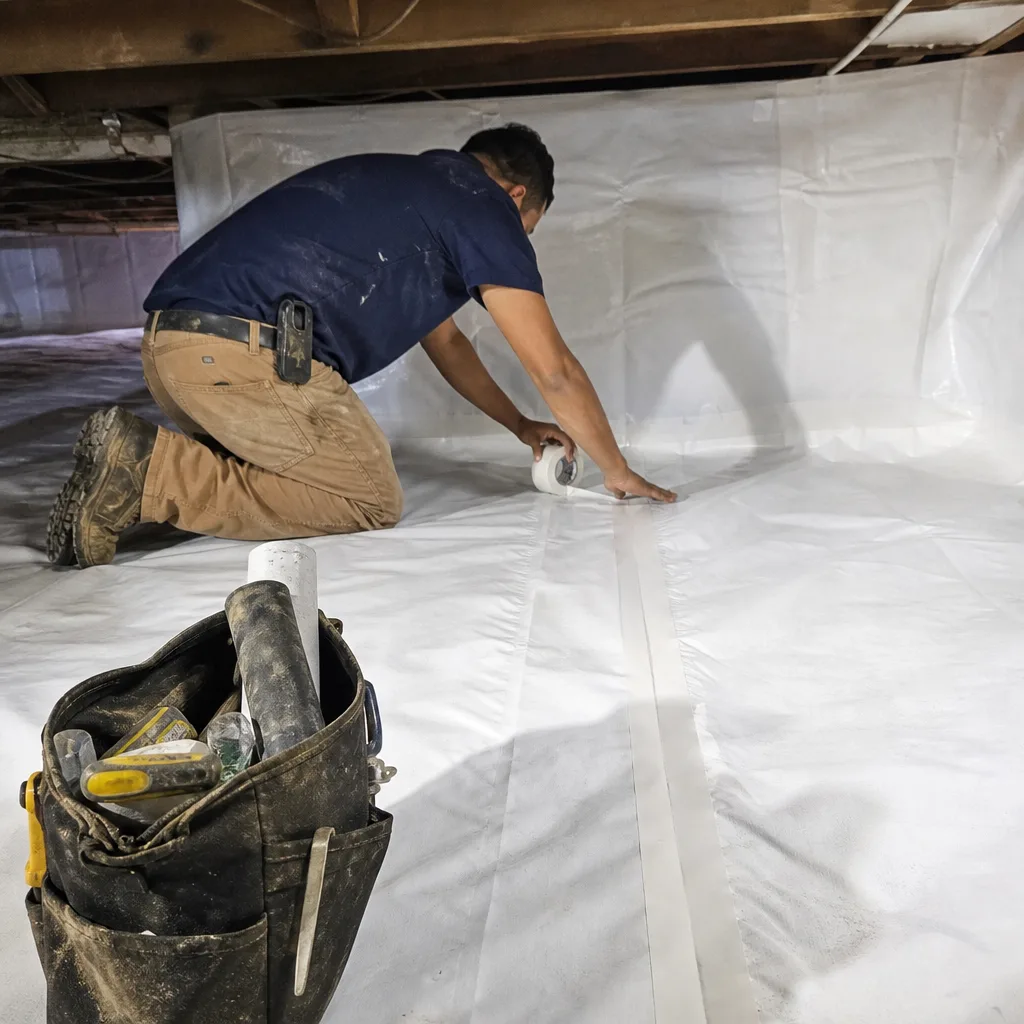
- Condensation beads on the poly surface. This means warm, humid exterior air is reaching the cool crawl space and hitting the barrier at its dew point. In San Marcos, where spring humidity spikes above 75% before the summer dry arrives, this is the first visible failure mode we see.
- Mold spotting on floor joists or sill plates. Once moisture gets past a torn or unsealed barrier, cellulose insulation, including GreenFiber, will wick that moisture to wood contact points. The mold is a symptom; the real problem is air movement through gaps in the poly perimeter.
- Musty odor that returns within 48 hours of airing out the house. This usually points to a complete perimeter seal failure, where the poly has pulled away from the stem wall or was never mechanically fastened. The smell is soil gas and moisture cycling through your floor system.
- Sagging or pooled water on the barrier. Either the grade underneath wasn’t leveled before installation, or the poly has torn at a seam and is now collecting groundwater. In older San Marcos homes near the San Marcos River, seasonal water tables can lift an improperly anchored barrier right off the ground.
- Increased allergy symptoms or respiratory irritation when HVAC runs. A failed vapor barrier allows crawl space air, which carries mold spores and soil bacteria, to get drawn into return air pathways through floor penetrations. The blower-door test we run before sealing will quantify exactly how much air is moving this way.
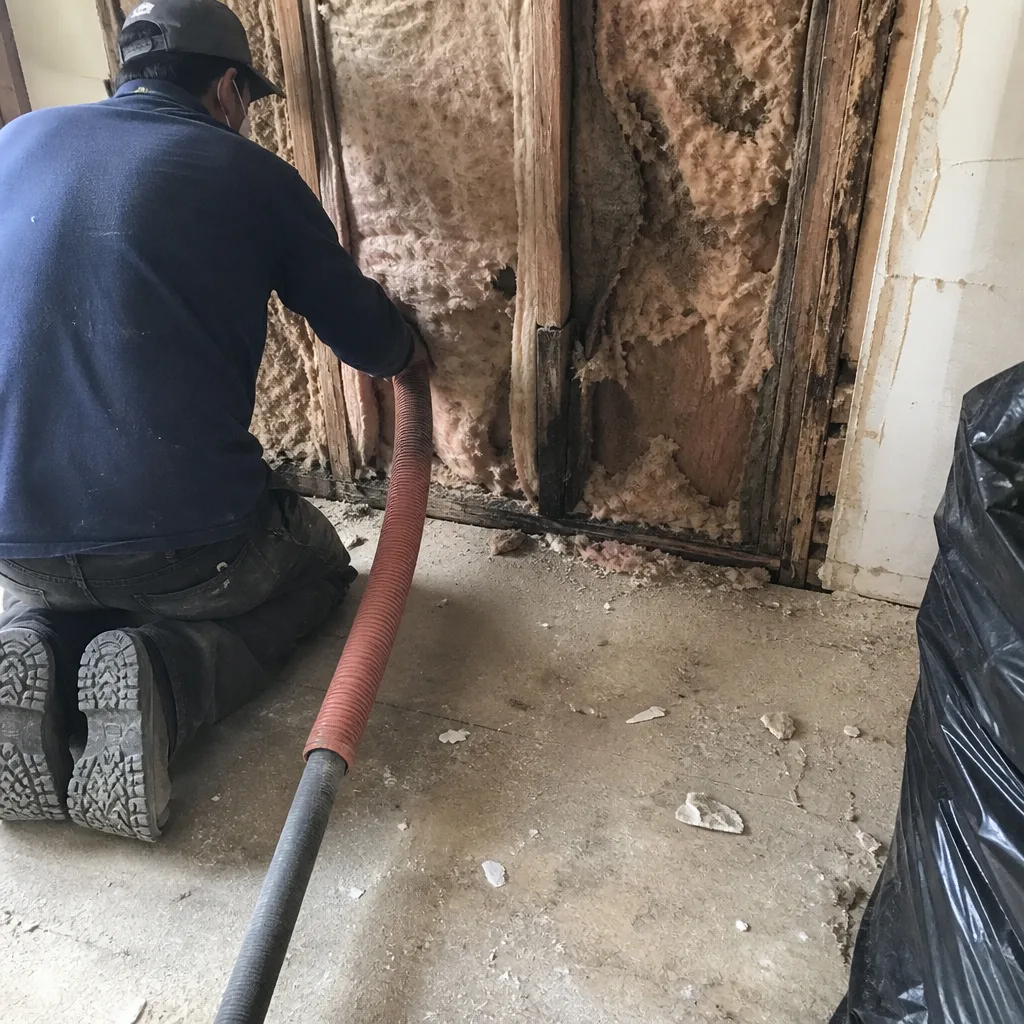 Before
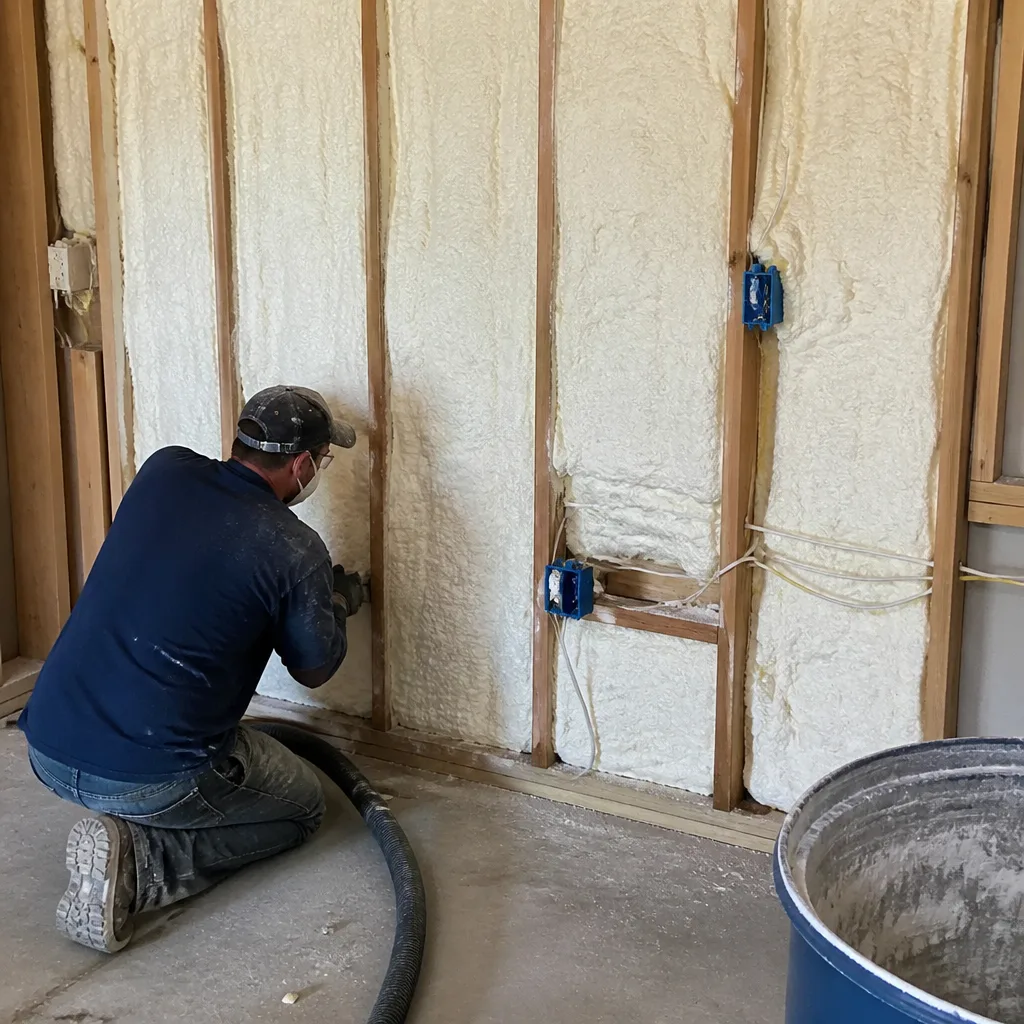 After
AfterReplacement Cost & What’s Included
For a typical San Marcos crawl space between 1,200 and 2,000 square feet, complete vapor barrier replacement runs $1,200 to $2,800. That range breaks down as follows: removal and disposal of existing poly and failed seam tape ($300-$500), ground prep and leveling ($200-$400 if needed), 10-mil reinforced poly material ($0.45-$0.65 per square foot), perimeter mechanical fastening to stem walls with termination bars ($350-$600), and seam sealing with compatible tape or acoustic sealant ($200-$400). Jobs requiring full encapsulation with wall liners and dehumidifier rough-in start around $4,500.
What drives the range is access height, existing debris, and whether we find unsealed penetrations that need addressing before the new barrier goes down. We don’t blow insulation over an unsealed attic floor, and we don’t lay vapor barrier over an unsealed crawl space perimeter. Under Haven Standard Clause 1, you get a written price before any work starts, a written warranty, and a Documented Photo Record showing the before condition, the sealed perimeter, and the finished installation. The 365-Day Done Right Promise covers all completed work.
DIY or Call Us?
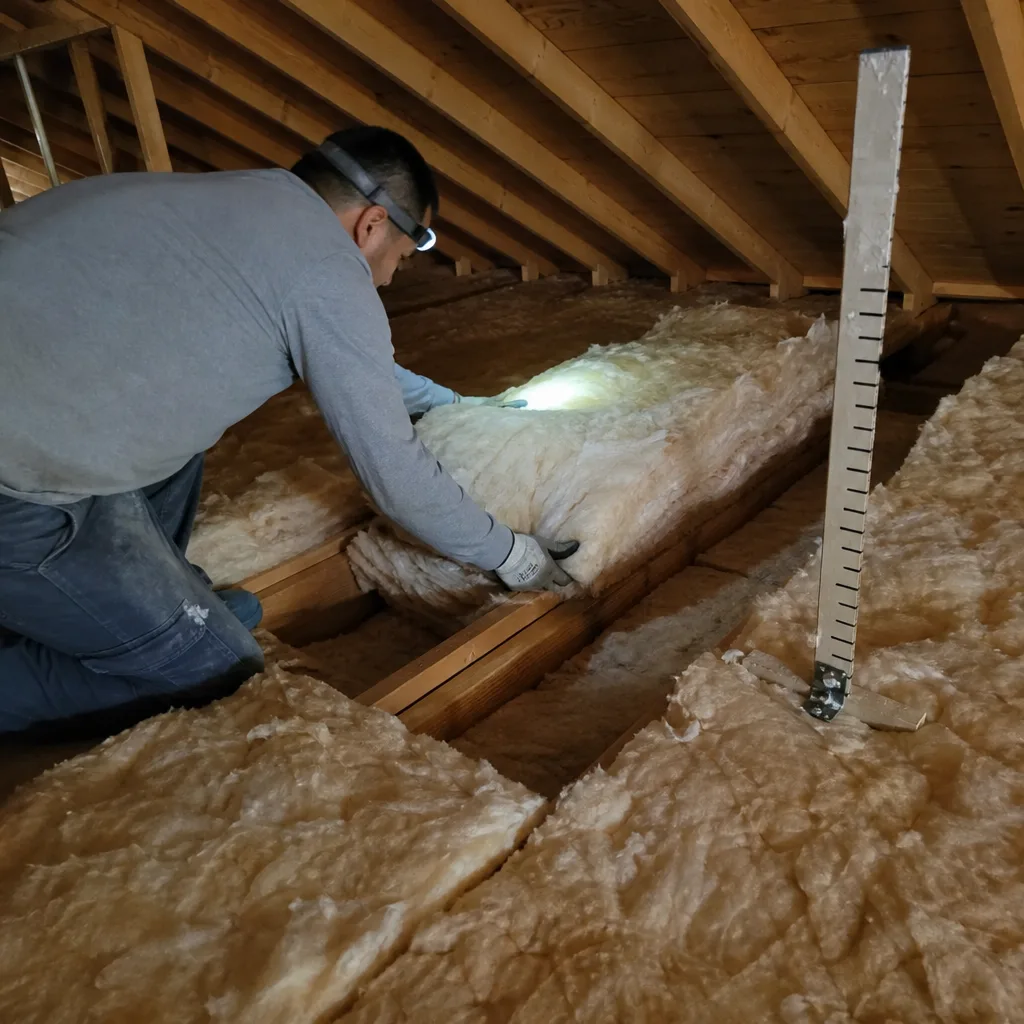
What you can safely check yourself: confirm the mil rating on your existing poly, measure your crawl space square footage, and photograph any tears, pooling, or pulled seams. What goes wrong with DIY: most homeowners use 6-mil hardware store poly that degrades in UV within months if any light penetrates; they overlap seams without sealing them, which passes moisture vapor at the lap; and they fail to mechanically fasten the perimeter, so foundation shift, which is constant in our expansive clay soils, pulls the barrier away from the wall within a year or two. The R-value tells you how slow heat moves through the material, the blower-door number tells you whether any of that matters, and a crawl space with moving air doesn’t care about your insulation rating if the vapor barrier is leaking.
We’re not affiliated with GreenFiber, we just install their insulation and the systems that protect it. If you want a written price and a documented result, call (737) 337-8049.
FAQs
A properly installed 10-mil reinforced poly barrier lasts 15 to 20 years in San Marcos, though homes in low-lying areas near the Blanco River or with poor drainage may see reduced lifespan due to seasonal moisture loading. Call (737) 337-8049 for an exact assessment of your crawl space conditions, estimates are free.
Small punctures, under six inches, can be patched with compatible polyethylene tape if the surrounding material is still supple and the perimeter seal is intact. If the poly is brittle, extensively torn, or the seams are failing throughout, patching is a short-term fix that costs more in repeated service calls than replacement. We carry patch kits on the truck for minor damage, but we’ll tell you honestly if replacement is the better value, call (737) 337-8049 for a free second opinion.
Most residential crawl spaces in San Marcos are completed in four to six hours, assuming clear access and no full encapsulation. Larger homes, tight crawl spaces under 24 inches, or jobs requiring debris removal and ground leveling may extend to a full day. We text you a named technician’s arrival window and send before-and-after photos within two hours of completion.
Yes, we stock 10-mil virgin poly, reinforced woven polyethylene, and all seam tapes and termination hardware on our San Marcos trucks. For GreenFiber-insulated floors specifically, we also carry the acoustic sealant recommended for poly-to-sill plate contact, since cellulose insulation is more moisture-sensitive than fiberglass and the seal quality matters more. Same-day installation is available when we have your crawl space dimensions and access conditions by 10 a.m., call (737) 337-8049 to confirm stock and schedule.
Written by Wes Okafor, Owner, Topside Attic Insulation San Marcos at Topside Attic Insulation San Marcos, serving San Marcos and nearby areas.