

How Much Does Attic Air Sealing Cost in San Marcos?
Attic air sealing in San Marcos, TX typically costs between $800 and $2,200 for a standard single-story home, with most jobs landing around $1,200 to $1,500 once top plates, can lights, and penetrations are addressed. Homes with larger attic footprints, heavy contamination, or existing insulation that needs to be removed first will run toward the higher end of that range. The quote you receive before any work starts will be a flat written price – not an estimate that grows after the crew arrives.
Attic Air Sealing Cost Breakdown (2026)
Most Attic Air Sealing services in San Marcos involve more than one scope item. The table below reflects what Envelope Insulation Co. sees regularly on local homes – from the 1,400-square-foot bungalows near the Texas State University campus to the newer two-story builds in communities like Trace and Kissing Tree.
| Scope Item | Typical Cost Range (San Marcos, 2026) | Notes |
|---|---|---|
| Air sealing only – small home (under 1,200 sq ft attic floor) | $800 – $1,100 | Top plates, penetrations, can lights sealed; blower-door test included |
| Air sealing only – mid-size home (1,200 – 2,000 sq ft attic floor) | $1,100 – $1,600 | Most common scope in San Marcos; includes before-and-after blower-door readings |
| Air sealing only – large home (2,000+ sq ft attic floor) | $1,600 – $2,200 | Multi-zone attics, bonus rooms, cathedral ceilings add complexity |
| Blower-door test (standalone diagnostic) | $175 – $300 | Included at no separate charge on Envelope air sealing jobs; priced separately if diagnostic only |
| Can-light air sealing (recessed fixtures, per fixture) | $15 – $35 per can | Older recessed cans are among the largest single leak points in Hill Country-area homes |
| Top-plate sealing (framing cavities at the attic floor perimeter) | Included in full-seal scope | Never skipped – sealing the perimeter without the top plates leaves the biggest leaks open |
| Attic hatch / pull-down stair air sealing | $75 – $175 | Often overlooked; a poorly gasketed attic hatch can lose as much air as a small window left open |
| Air sealing + blown-in insulation (combo scope) | $2,000 – $4,200 | Sealed first, then insulated – always in that order; insulation never goes over an unsealed floor |
| Existing insulation removal before air sealing | $600 – $1,400 | Required when insulation is contaminated, rodent-damaged, or covers penetrations that need sealing |
A few things drive cost up or down in this market specifically. San Marcos sits on the edge of the Edwards Plateau, which means attics here cycle between genuine cold snaps in January and sustained heat loads that push past 140 degrees in July and August. That heat cycle accelerates caulk and foam degradation on older homes, so the number of failed or missing seals found during a blower-door test – a pressurization reading that shows, in one number, how much air the building envelope is losing – directly determines how much labor and material the job requires. A home built in the 1980s near Craddock Park with original recessed cans and no prior sealing work will almost always cost more than a 2018 build in Willow Creek that just needs top-plate touchups.
The other cost variable that is specific to this area: homes near the Blanco River corridor and the low-lying parts of the LBJ Drive corridor tend to have older construction with more penetration points – plumbing chases, electrical conduit runs, HVAC drops – that were never sealed at the attic floor. More penetrations mean more sealing time, and sealing time is the primary labor driver on any attic air sealing job.
What Affects Attic Air Sealing Pricing in San Marcos
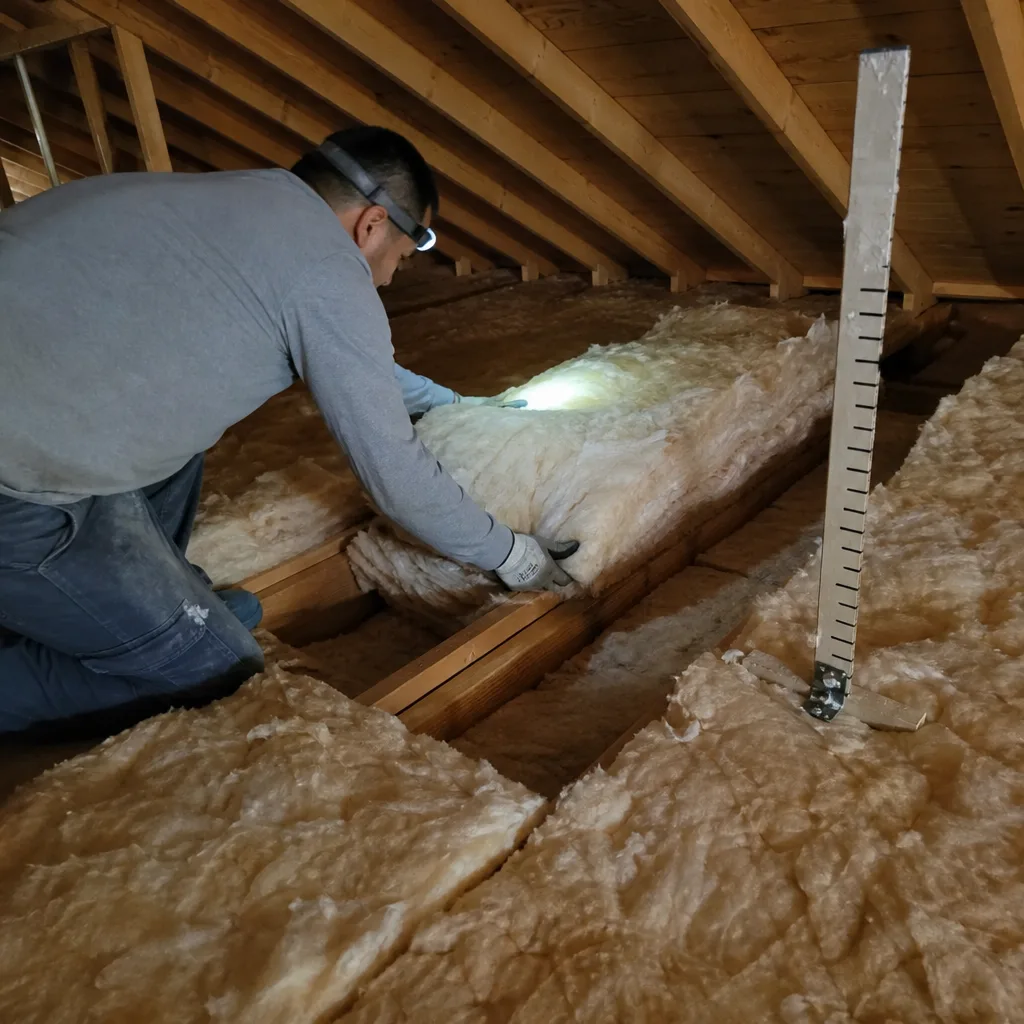
- Attic floor area and access difficulty. A 1,600-square-foot attic with good decking and a standard pull-down stair is straightforward. A 2,400-square-foot attic split across two rooflines with a low-pitch section over a garage addition – which is common in the older neighborhoods near Sessom Drive – requires more time to move through and more material to cover every penetration point. Tighter crawl space in the attic means slower work, and slower work costs more.
- Number and type of ceiling penetrations. Every recessed can light, every HVAC boot, every electrical chase, and every plumbing vent stack that punches through the attic floor is a potential air leak. Homes built between 1985 and 2005 in San Marcos – particularly those in Springtown and the older sections of Hunter’s Glenn – routinely have 30 to 60 can lights in the ceiling below, each one a direct connection between conditioned living space and a 140-degree attic. More cans equals more labor and more material.
- Existing insulation condition. When insulation is in good condition and at the right depth, crews can work around it during the sealing phase. When it is contaminated with rodent debris, saturated from a roof leak, or so thin that it’s draped over the penetrations rather than filling around them, it has to come out first. Insulation removal in San Marcos runs $600 to $1,400 depending on depth and contamination, and it adds half a day or more to the project timeline.
- Blower-door baseline (how leaky the house already is). Before sealing starts, a blower-door test establishes the home’s starting CFM50 – cubic feet per minute of air loss at 50 pascals of pressure. A house reading 4,500 CFM50 has roughly twice the work ahead of it as a house reading 2,200 CFM50. That initial reading sets expectations for both the scope of work and the measurable result. Every Envelope job closes with a second reading so the before-and-after numbers are documented, not estimated.
- Climate-driven material requirements. The temperature differential between a San Marcos attic in August (often 140°F+) and the conditioned space below (typically 74-78°F) is severe enough that standard acoustic sealant alone is not sufficient on large top-plate gaps. Two-part closed-cell spray foam – which bonds mechanically and doesn’t shrink through heat cycles – is the correct material for those gaps, and it costs more than a caulk-only approach. Choosing the cheaper material to lower the bid is a way of selling a job that will need to be redone in three to five years.
- Combination scope vs. air sealing only. When air sealing is completed as part of a larger scope – blown-in insulation added immediately after, for example – the mobilization cost is shared across the full job, which lowers the effective per-square-foot cost of the sealing portion. A standalone air sealing job on a home where insulation is already in good condition will carry the full mobilization cost itself, which is part of why the $800-$1,100 floor exists even for smaller homes.
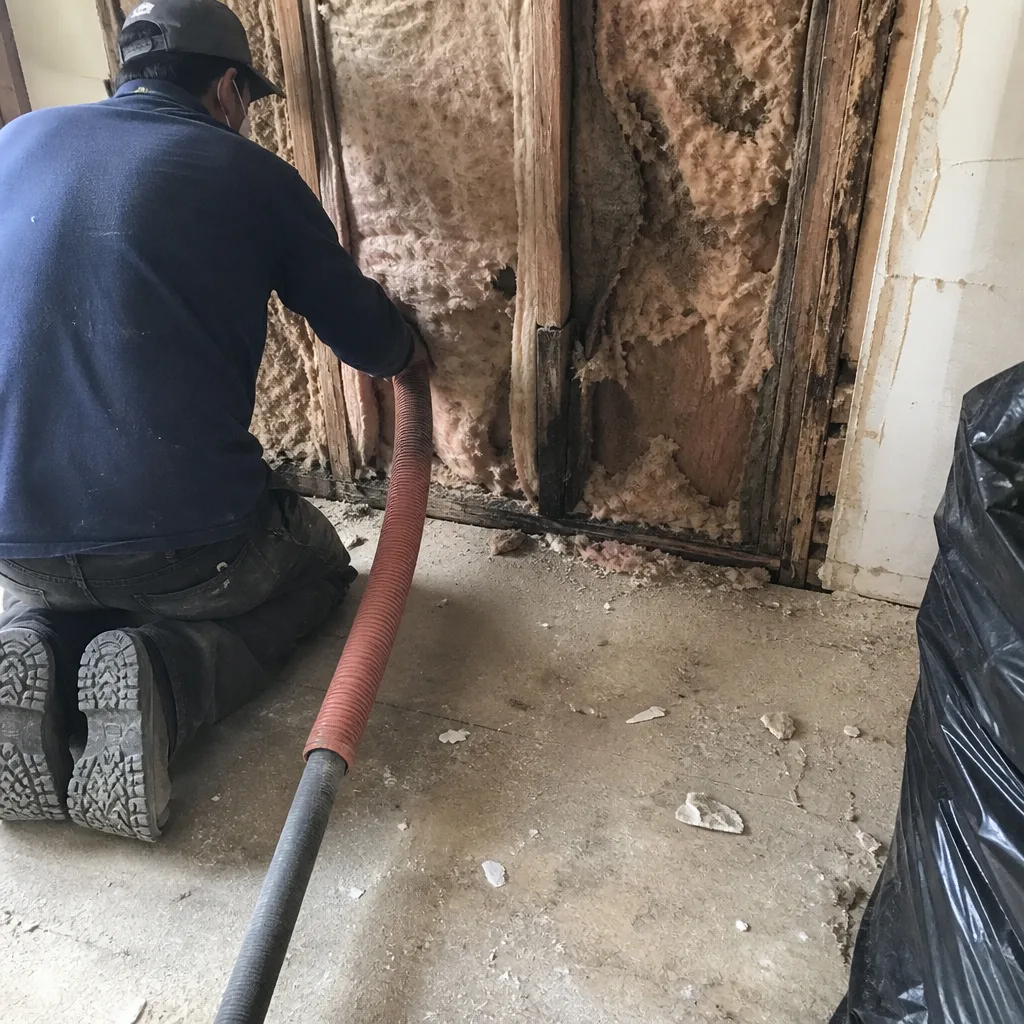 Before
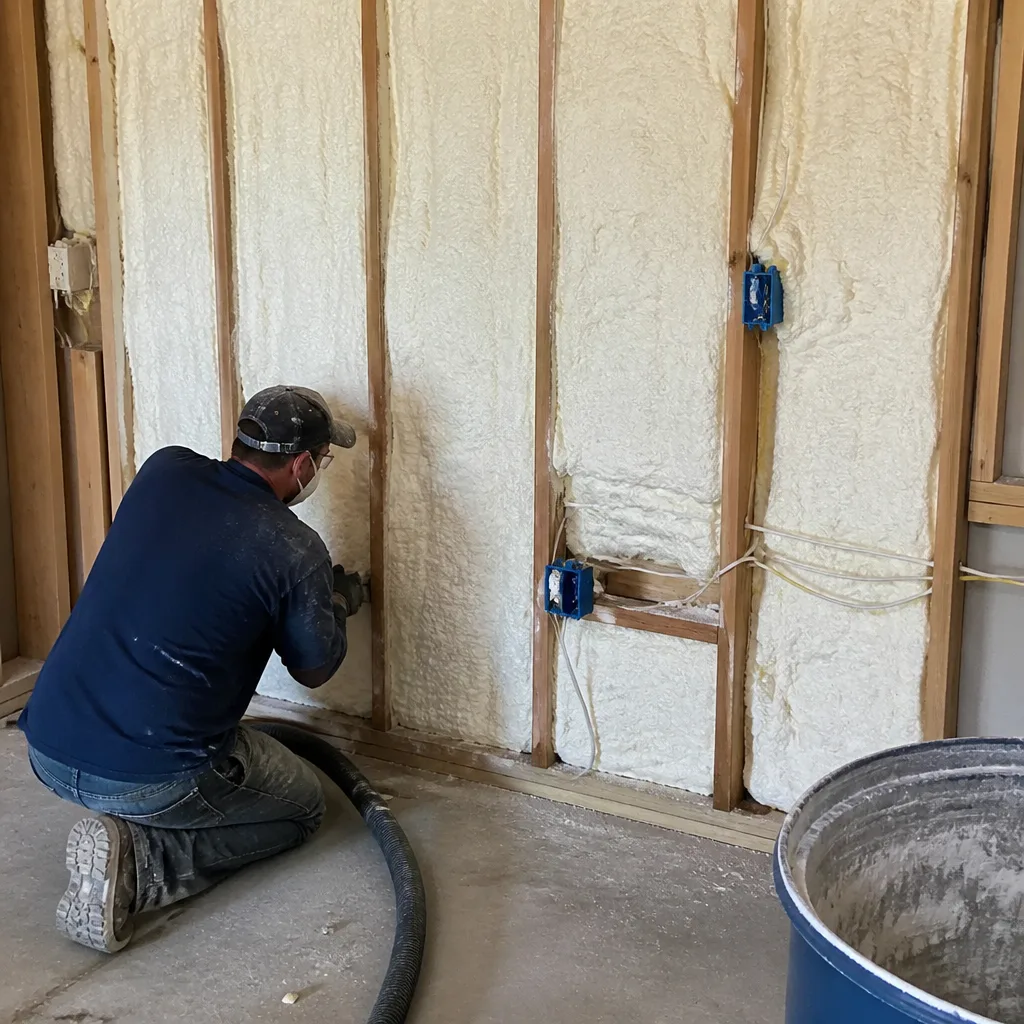 After
AfterHow to Save on Attic Air Sealing in San Marcos
The most direct way to keep the cost reasonable is to get the sealing done before the insulation goes in. Once blown-in insulation is covering the attic floor, finding and reaching every penetration requires the crew to move around significantly more material. Sealing on a bare or cleared attic floor is faster and cleaner, which is why Envelope Insulation Co. treats air sealing as the first step – not an add-on after insulation is already in.
Bundle the work when it makes sense. If your insulation is also at the wrong depth or in poor condition, scheduling both attic air sealing and blown-in insulation together in a single visit reduces mobilization costs and typically brings the per-square-foot number down on both scopes. Homes in San Marcos that were built before 2000 very commonly need both, and doing them together is almost always less expensive than two separate visits.
Get a written price before committing to anything. Under Haven Standard Clause 1, a flat written price, written scope, and written warranty are delivered before any work starts – no exceptions. That means you’re comparing a fixed number against other bids, not an estimate that can shift after the job is underway. If you have a competing written estimate, Envelope will read it with you as part of a free second opinion. That’s not a sales call – it’s a line-by-line review of what the other bid includes and what it might be missing.
Check for available utility rebates. CPS Energy and other Texas utility programs have periodically offered rebates for verified air sealing work – the key word being “verified,” meaning a documented blower-door result, not just a receipt for materials. Because Envelope publishes before-and-after blower-door numbers on every applicable job, the documentation needed to file for a rebate already exists when the job closes. It’s worth checking current program availability through your utility provider before scheduling work.
Don’t delay because of the upfront cost. An attic that is leaking 4,000 CFM50 before sealing is pushing your HVAC system to compensate continuously. In San Marcos, where cooling season runs from April through October and overnight lows in July rarely drop below 75°F, that’s a compressor running harder and longer every day. A $1,200 to $1,500 sealing job that drops air infiltration by 40 to 50 percent pays for itself in HVAC runtime reduction faster here than in a milder climate.
To get a written price for your specific home – attic size, construction year, existing insulation condition – call (737) 337-8049. The estimate is free and the price is written before anyone touches a tool.
What the Job Actually Looks Like: Start to Finish
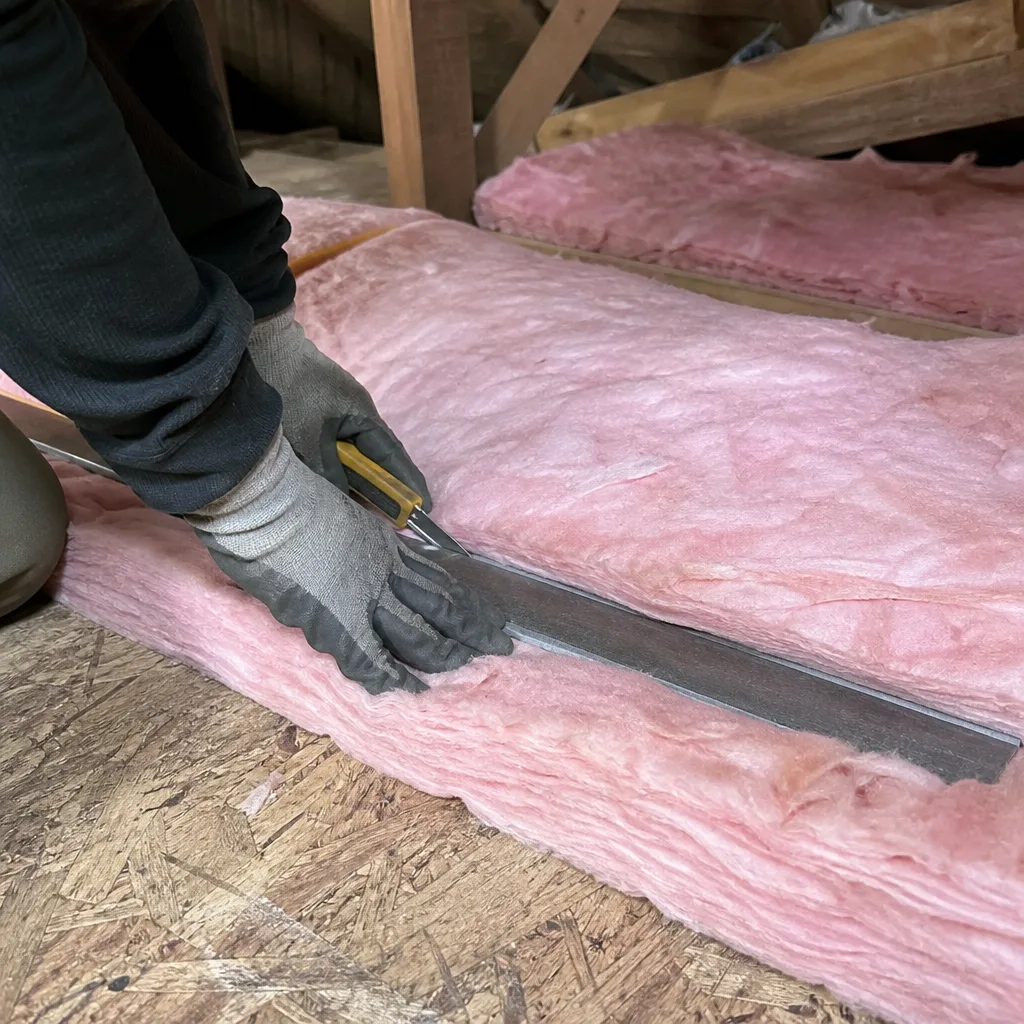
Understanding what happens during a San Marcos attic air sealing job helps you evaluate bids accurately. A bid that skips any of these steps is a bid for incomplete work.
Step 1: Blower-Door Diagnostic
A technician installs the blower-door frame and fan in an exterior doorway, depressurizes the home to 50 pascals, and records the CFM50 reading. This is the before number. It tells us exactly how leaky the envelope is before we touch anything. In San Marcos homes built before 1995, pre-sealing readings above 3,500 CFM50 are common. Newer builds in Trace or Kissing Tree that have never had sealing work often test at 1,800 to 2,500 CFM50 – still meaningfully above where they should be.
Step 2: Attic Inspection and Penetration Mapping
With the blower-door still running, the technician moves through the attic identifying every gap, penetration, and top-plate opening. The depressurization makes air movement through gaps physically detectable. Every recessed can, every plumbing vent, every electrical chase, and every framing gap at the perimeter top plates gets documented – photographically and in writing – before sealing begins. This is part of the Documented Photo Record included on every visit.
Step 3: Sealing
Top plates, penetrations, and can lights are sealed using closed-cell two-part spray foam for large gaps (anything wider than roughly a quarter inch) and fire-rated acoustical sealant for smaller penetrations. Attic access hatches and pull-down stairs are gasketed and air-sealed separately. No penetration is left open because it’s hard to reach – if it punches through the attic floor, it gets sealed. Insulation is never added before this phase is complete.
Step 4: Post-Seal Blower-Door Reading
The blower-door runs again. The after reading is recorded alongside the before reading. A well-executed air sealing job on a typical San Marcos home should reduce infiltration by 25 to 45 percent depending on the starting condition. Both numbers – before and after – are documented and provided to the homeowner. If the numbers don’t reflect meaningful improvement, the job isn’t done. Under the 365-Day Done Right Promise, if it’s not right, it gets made right.
Step 5: Written Closeout Documentation
The homeowner receives the written scope, the blower-door before-and-after readings, the photo record from the job, and the written warranty before the crew leaves. That documentation is what “leaving looks like” on a Haven Standard job – you know what was done, you can verify the result, and you have something in writing if you ever need to reference it for a utility rebate, a home sale, or a warranty claim.
San Marcos Homes: What We Find Most Often
Wes Okafor and the Envelope team have worked across San Marcos since 2016 – from the older stock near Downtown and the university to the newer subdivisions on the city’s expanding northeast edge. Across those 9,000+ homes sealed and insulated, a few patterns show up repeatedly in Hays County construction.
Older homes near the Texas State campus and the Blanco River corridor – particularly those built in the 1970s and 1980s – almost universally have open top plates. The framing cavities at the perimeter of the attic floor are simply open channels between the conditioned space and the attic. On a hot August afternoon, that means hot attic air has a direct route into wall cavities and ceiling cavities. Sealing those top plates alone typically reduces CFM50 by 15 to 25 percent on homes that have never had this work done.
In newer communities like Trace and the Spring Branch area, the most common leak point is the HVAC duct boot – the metal fitting where the supply or return duct connects to the ceiling register. If that boot isn’t air-sealed at the drywall, it’s a large gap right at the ceiling plane. On a two-story home in Trace, we regularly find four to eight unsealed duct boots in an attic that otherwise looks reasonably tight. Each one is adding meaningful CFM50 to the blower-door reading.
Recessed can lights are the third consistent pattern across San Marcos construction. Before 2012 or so, the standard recessed can had a junction box that was intentionally vented to prevent heat buildup – which means it had deliberate openings to the attic. Sealing those cans with an appropriate fire-rated cover and foam is one of the highest-return single tasks in any attic air sealing scope.
Sealed First, Then Insulated: Why the Order Matters
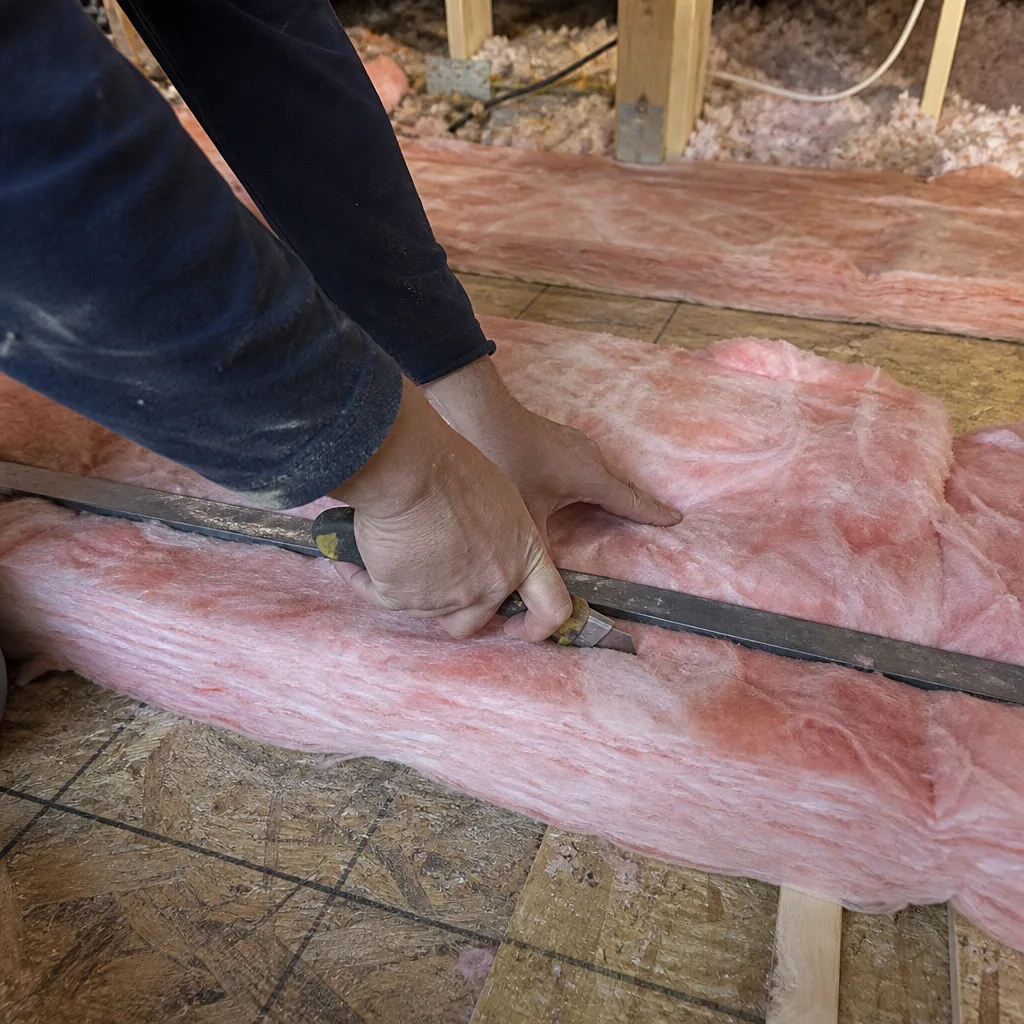
Envelope Insulation Co. holds one position on this that doesn’t move: insulation never goes over an unsealed attic floor. It’s not a preference – it’s how the physics work.
Insulation slows heat transfer (conduction and radiation). It does not stop air movement. An attic with R-38 blown-in insulation and open top plates still has all the air leaks it had before the insulation was added – they’re just buried under 12 inches of fiberglass or cellulose now and much harder to find and seal. The blower-door reading on that home will tell the story: the CFM50 number barely moves after adding insulation, because insulation was never the thing slowing air exchange.
Air sealing addresses infiltration – the movement of air through gaps, which carries moisture, heat, allergens, and conditioned air in the wrong direction. Adding insulation before sealing is not a shortcut. It’s doing the second step before the first and then wondering why the utility bills didn’t improve the way they should have. This is the reason Envelope’s scope of work is structured the way it is, and it’s the reason we will not insulate an attic floor that hasn’t been sealed first.
You can read more about how this approach applies to the full service on the Attic Air Sealing in San Marcos page, or return to the home page to explore the full service line.
FAQs – Attic Air Sealing Cost in San Marcos, TX
How much does attic air sealing cost in San Marcos in 2026?
Most attic air sealing jobs in San Marcos run between $800 and $2,200, with the average for a mid-size home (1,200 to 2,000 square feet of attic floor) landing in the $1,100 to $1,600 range. Smaller homes with relatively few penetrations can come in under $1,000. Larger homes, multi-zone attics, or homes requiring insulation removal before sealing can exceed $2,000. Every job at Envelope Insulation Co. starts with a written flat price – call (737) 337-8049 for a free estimate specific to your home.
Is attic air sealing worth it in San Marcos’s climate?
Yes – and the math is more favorable here than in milder climates. San Marcos has a cooling season that runs roughly six to seven months, with attic temperatures regularly exceeding 140°F in July and August. A home with significant air leakage (say, 3,500 CFM50 before sealing) is running its HVAC system constantly to compensate for infiltration of superheated attic air. A sealing job that brings that number to 2,000 CFM50 or below produces a measurable reduction in HVAC runtime – and the before-and-after blower-door numbers document exactly what changed, so you’re not taking anyone’s word for it.
What does a blower-door test cost in San Marcos, and is it included?
A standalone blower-door diagnostic – a pressurization test that shows, in one number, how much air your building envelope is losing – typically costs $175 to $300 when scheduled on its own. When you’re having attic air sealing done through Envelope Insulation Co., both the before and after blower-door readings are included as part of the job. You don’t pay separately for the diagnostic, and both readings are documented in writing so you have a verified record of what changed.
How long does attic air sealing take in a typical San Marcos home?
A single-story home with a straightforward attic layout typically takes four to six hours from the first blower-door reading through sealing and the post-seal test. A larger two-story home with multiple attic zones, a high can-light count, or contaminated insulation that needs removal first can run eight hours or more. You’ll receive a specific time estimate along with the written price before work starts – no vague “most of a day” answers.
Can I get attic air sealing and insulation done at the same time?
Yes, and it’s usually the most cost-effective approach when your insulation also needs attention. Air sealing is completed first – every penetration sealed, every top plate closed, every can light addressed – and then insulation is added immediately after in the same visit. A combined air sealing and blown-in insulation scope for a mid-size San Marcos home typically runs $2,000 to $4,200 depending on attic floor area, current insulation depth, and insulation type. Insulation is never blown in over an unsealed attic floor – that order is the entire point. Call (737) 337-8049 for a free written estimate on a combined scope.
Does attic air sealing qualify for any rebates or tax credits in Texas?
Possibly. Texas utility programs – including periodic offerings from CPS Energy and Oncor – have offered rebates for verified air sealing work, where “verified” means a documented blower-door result showing measured improvement, not just a receipt. Federal energy efficiency tax credits have also covered air sealing in recent years, though program terms change annually. Because Envelope publishes documented before-and-after blower-door numbers on every applicable job, the paperwork you’d need to support a rebate or credit application is already part of your job closeout record. Check current program terms with your utility provider and a tax professional – we can’t file on your behalf, but we can provide the documentation.
Key Takeaways
- Attic air sealing in San Marcos costs $800 to $2,200 for most homes; the mid-range for a typical single-story is $1,100 to $1,600.
- The biggest cost drivers are attic floor area, number of recessed can lights and penetrations, existing insulation condition, and starting blower-door reading.
- San Marcos’s climate – 140°F+ attic temperatures in summer, extended cooling season – makes air sealing payback faster here than in moderate climates.
- Air sealing always comes before insulation. Insulation over unsealed penetrations leaves the air leaks intact and buried.
- Every Envelope job includes a written price before work starts, before-and-after blower-door readings, a documented photo record, and the 365-Day Done Right Promise.
- A free second opinion on any written estimate is available – bring a competing quote and we’ll read it with you line by line.
Get a Written Price for Your San Marcos Home
If your home was built before 2005, you’ve never had attic air sealing done, or your utility bills have been climbing without an obvious explanation, a blower-door diagnostic will tell you exactly what the envelope is doing. Wes Okafor and the Envelope Insulation Co. team have worked on homes across San Marcos since 2016 – from the older neighborhoods near Texas State to the newer builds on the city’s northeast edge – and every job starts the same way: a written price, a defined scope, and a documented result when the crew leaves.
Call (737) 337-8049 to schedule a free estimate. The price is written before any work starts, no exceptions. That’s Haven Standard Clause 1, and it applies to every job, every time.
Pricing reflects the San Marcos market as of 2026. Topside Attic Insulation San Marcos offers free estimates – call (737) 337-8049.
Written by Wes Okafor, Owner at Envelope Insulation Co. (operating as Topside Attic Insulation San Marcos), serving San Marcos, TX since 2016.
What Our Customers Say
"They photographed rodent damage in the old insulation that we had no idea about, and priced the exclusion work separately so we could decide."
- Harriet N."Turned up on time, protected the hallway, and the written scope matched what was actually done."
- Bruno S."They air-sealed the attic floor before insulating and showed me the blower-door number before and after. The upstairs is finally the same temperature as downstairs."
- Marisol D.