
Attic Batt Insulation in San Marcos, TX
Attic batt insulation in San Marcos costs most homeowners between $1.50 and $3.00 per square foot installed, depending on current R-value, attic access, and whether air sealing is done first. Most jobs in a standard San Marcos home – 1,400 to 2,200 square feet of attic floor – run between $1,800 and $4,800 completed. The work is typically done in a single visit, and you leave with a written scope, documented photos, and a flat price that was agreed on before anyone touched a tool.
Batt insulation – pre-cut fiberglass or mineral wool panels fitted between ceiling joists – is the right call when an attic has clearly defined joist bays, when you need a precise R-value in a specific zone, or when existing blown-in material has settled, shifted, or been disturbed by a rodent intrusion or HVAC repair. It’s also the method most Code-compliant attic builds in Hays County spec out for new construction because the R-value per inch is easy to verify visually and by label.
At Topside Attic Insulation San Marcos, part of Envelope Insulation Co., we follow one rule that a lot of other contractors skip: air sealing happens before any insulation goes in, not after. If top plates, can light penetrations, and plumbing chases are still open when the batts go down, you are essentially stuffing insulation into a drafty box. The blower-door reading will prove it. Our process is documented – before-and-after numbers, photos, written scope – so you can see the actual change you paid for, not just take our word for it.
Questions before we get to the numbers? Call us directly at (737) 337-8049 – a live person picks up, 24/7. Or read on; everything you need to make a decision is on this page.
This page covers batt insulation specifically. For a full picture of attic insulation options in San Marcos – blown-in, spray foam, radiant barrier, and more – see our Attic Insulation in San Marcos overview.
When You Need Attic Batt Insulation
Batt insulation is not the only option, but it is the right one in several specific situations. Here’s what we see most often in San Marcos attics that point toward a batt installation:
- Your energy bills spike every June and stay high through September. San Marcos sits in a climate zone where attic temperatures regularly hit 140-150°F in summer. If your air conditioning is running hard and the second floor or ceiling near the roofline stays noticeably warm, inadequate attic insulation is the first place to look. We’ve seen attics in the Blanco Vista and Trace neighborhoods with R-11 or less – less than half of what the 2021 IECC recommends for Climate Zone 2.
- Existing blown-in insulation has settled below R-30. Cellulose and older fiberglass loose-fill both compress over time. When a probe reading shows settled material at 3 to 4 inches, that’s R-11 to R-15 – not enough. Adding a layer of batts over properly air-sealed joists can bring the assembly up to R-38 or R-49 without a full removal.
- Your attic had a rodent intrusion or HVAC repair recently. Both tend to leave insulation disturbed, contaminated, or pulled back from critical areas. Batts let us target specific joist bays and reinstall to a verified depth and R-value – something loose-fill can’t do as precisely in a spot-repair situation.
- You’re finishing an attic conversion or adding conditioned storage space. Sloped rafter bays and knee walls in a conversion require cut-and-fit material. Rockwool and Johns Manville fiberglass batts are cut cleanly on-site and hold their shape without settling – which matters when you’re insulating a vertical knee wall or a 2×6 rafter cavity where a hose and blower would be difficult to control.
- A home inspection flagged missing or inadequate attic insulation before closing. Buyers in the Springtown or Bel Air Estates areas sometimes inherit attics that haven’t been touched since original construction in the 1990s. A batt installation with a documented R-value label satisfies the inspection requirement and gives the new owner a written record they can pass on.
- You want a thermal performance number you can verify yourself. Batts carry a label. You can read the R-value on the package and confirm the depth with a ruler. For homeowners who want to see the evidence rather than trust a verbal estimate, batt insulation is the most auditable option we install.
Our Attic Batt Insulation Process
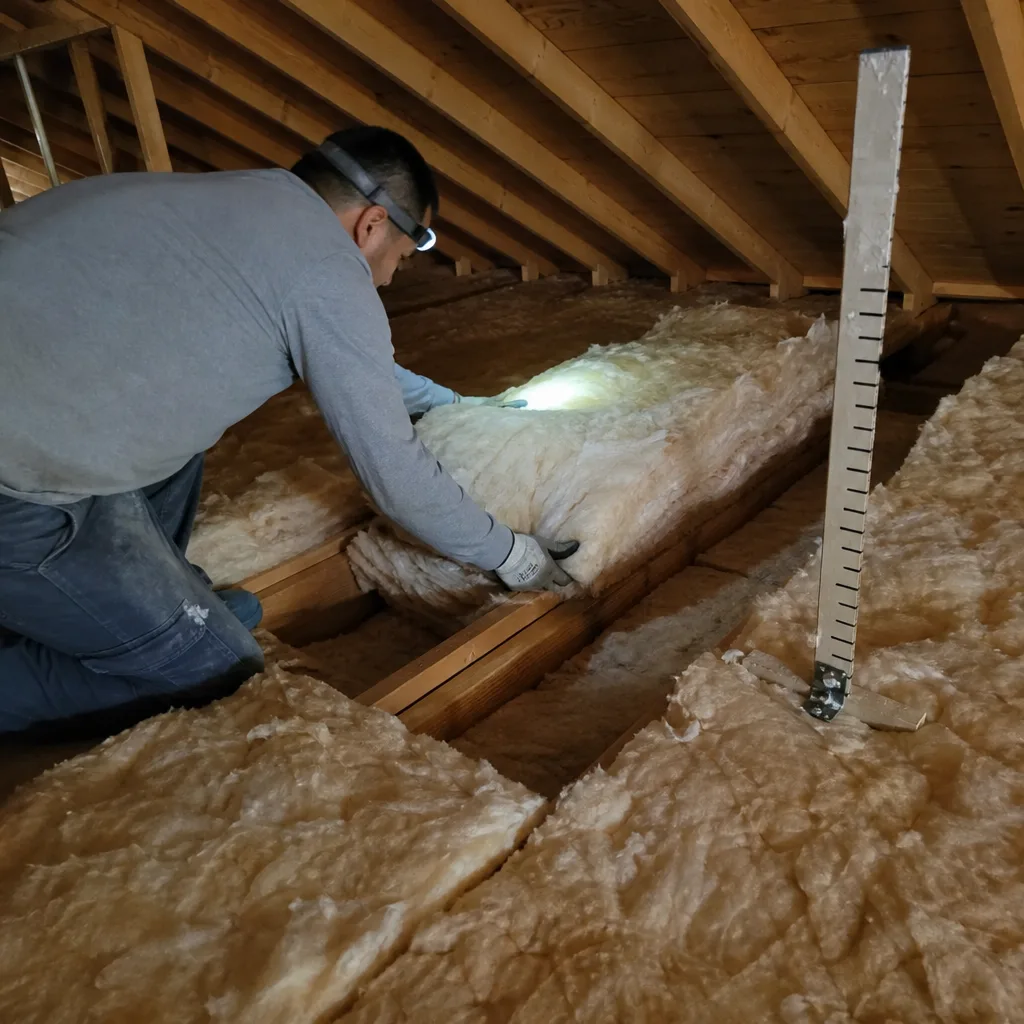
Every job follows the same sequence – the Haven Standard: written price before we start, documented record when we leave. Here’s what that looks like on a batt insulation job in San Marcos:
-
Written scope and flat price before anything starts.
We measure the attic floor area, check current insulation depth with a calibrated probe, note existing R-value, photograph the attic condition, and identify any visible air leaks. You receive a written scope and a flat price. No work begins until you have that document in hand – Haven Standard Clause 1. -
Blower-door baseline test (on applicable jobs).
Before we touch the insulation, we run a blower-door test – a pressurization reading that shows, in one number (CFM50), how much conditioned air your building envelope is currently losing. This is the “before” number. We’ve run pre-job tests in homes in the LBJ Heights and Kissing Tree areas and found readings above 5,000 CFM50 where the occupants assumed the building was reasonably tight. It rarely is, until it’s been sealed. -
Air sealing first – no exceptions.
Top plates, recessed can light penetrations, plumbing and electrical chases, HVAC boot connections – we seal these with fire-rated foam and caulk before any batt goes down. This is not an upsell. Insulating over an unsealed attic floor is like wrapping a window that’s already cracked open; the R-value label means less than it should. We do not skip this step on any job. -
Batt installation to target R-value.
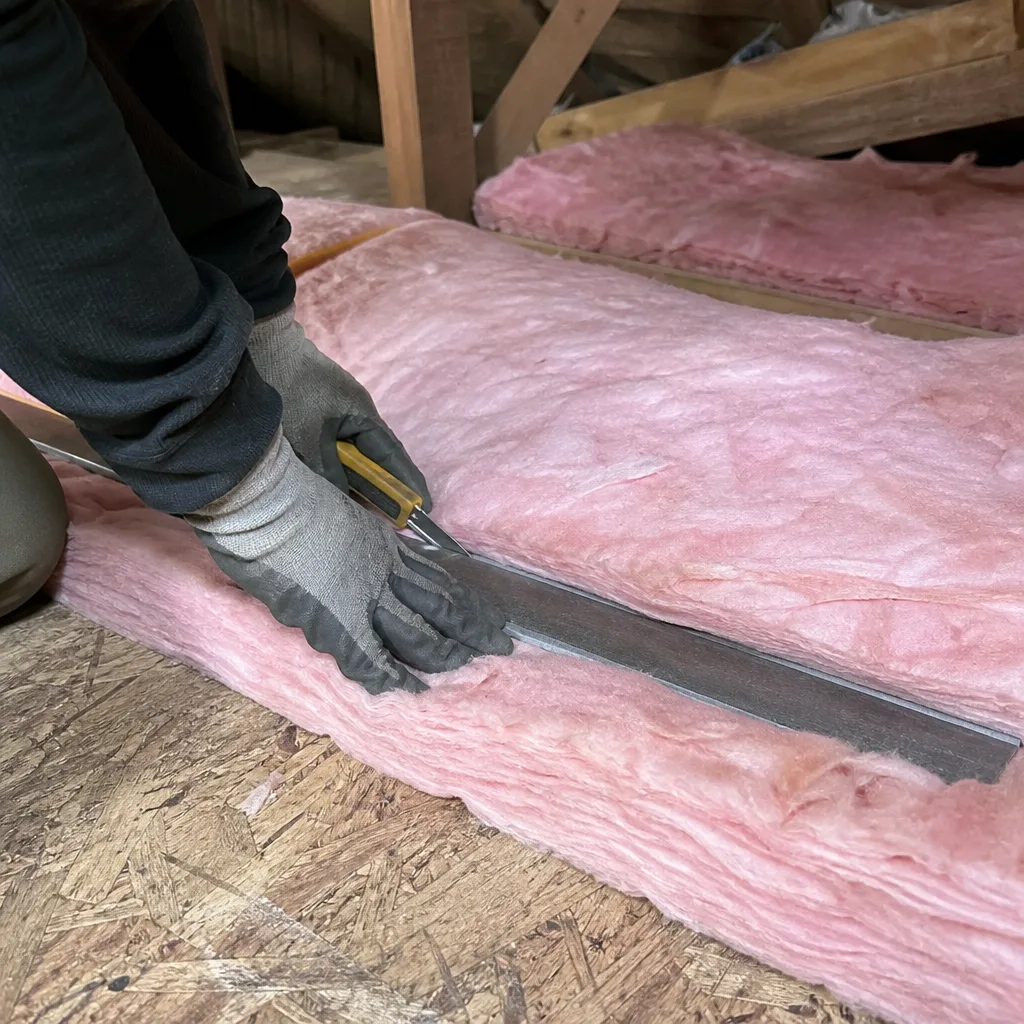
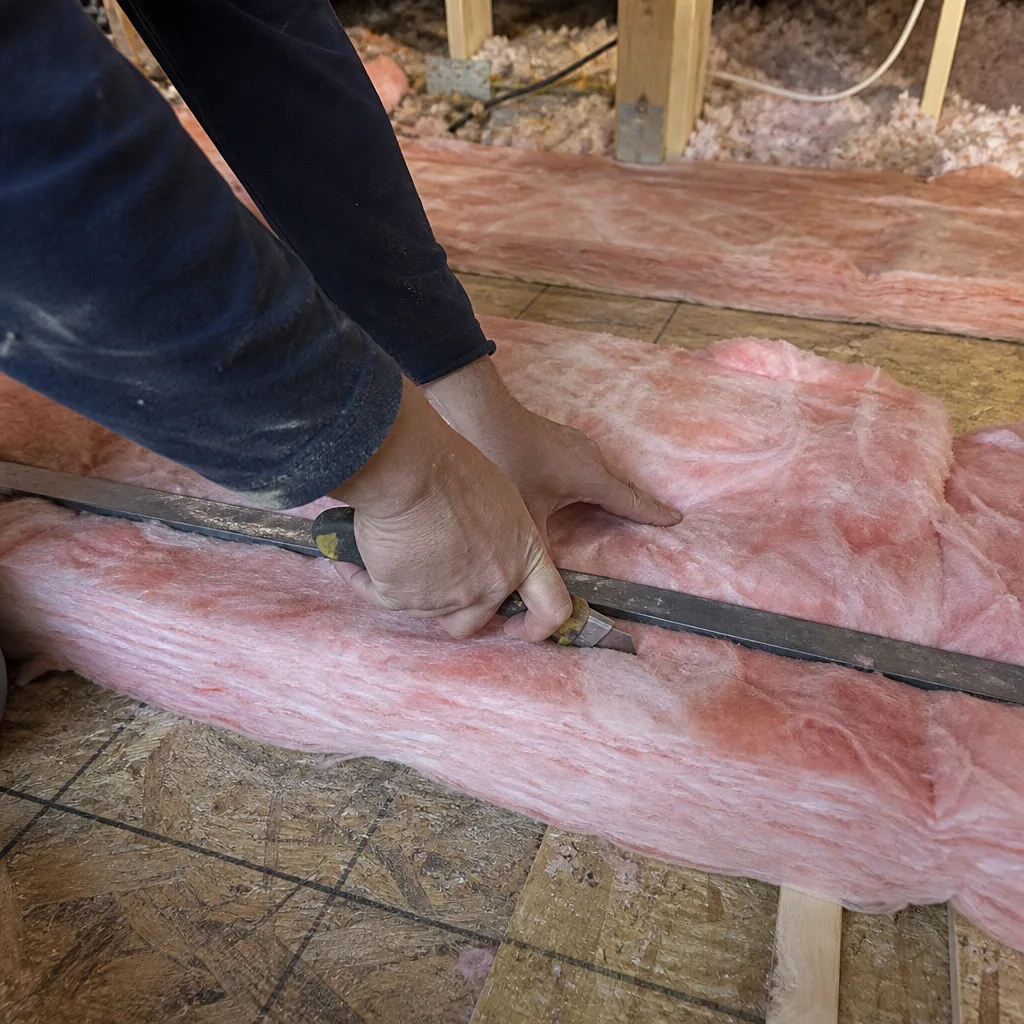
We cut and fit Johns Manville or Rockwool batts to the joist bays, working from the perimeter in. Batts are friction-fit without gaps or compression – both reduce effective R-value. Where existing loose-fill is in good condition and above the joists, we may install an unfaced batt layer perpendicular to the joists as a cap layer. Target R-value for most San Marcos attics is R-38 to R-49, in line with current Hays County building code requirements. -
Post-installation verification and documentation.
After installation, we photograph the completed work from multiple angles, confirm visible R-value labels are legible and correctly oriented, and record final depth measurements. On applicable jobs, the after blower-door number is taken and compared against the pre-job baseline. You receive both numbers in your job documentation. -
Written closeout documentation delivered before we leave.
The Documented Photo Record, blower-door readings (where applicable), material labels, and your written 365-Day Done Right Promise are handed to you – or emailed, if you prefer – before our crew leaves the driveway. If anything is not right within 365 days of completion, we come back and make it right. That promise is in writing before work starts, not after.
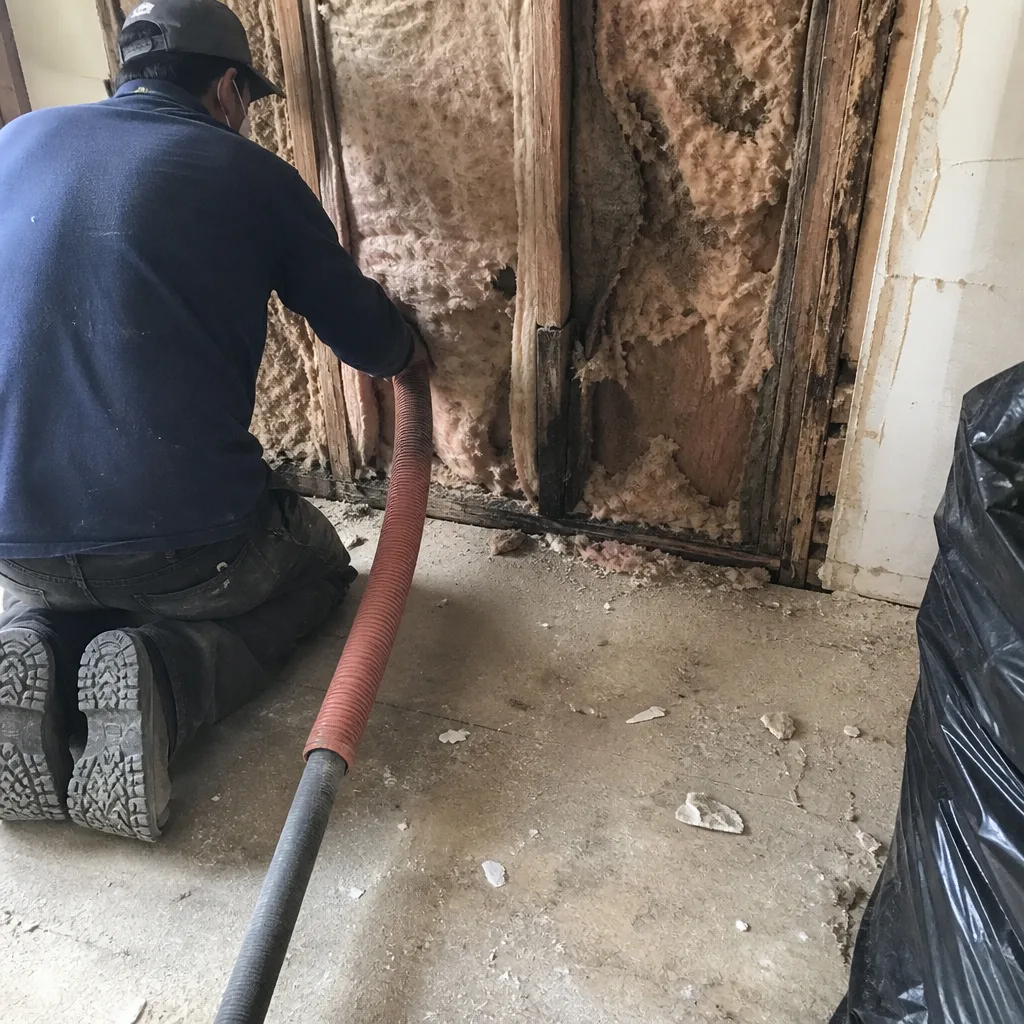 Before
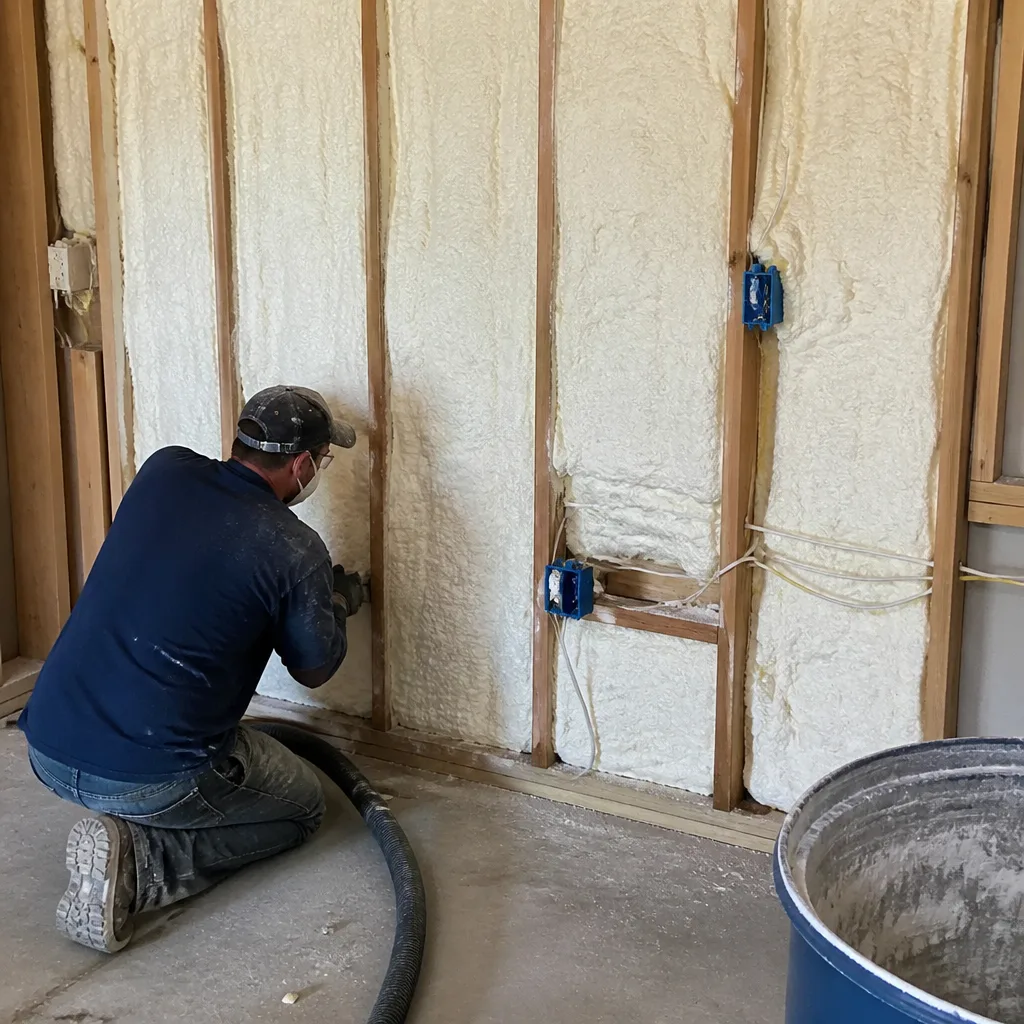 After
AfterAttic Batt Insulation Pricing in San Marcos
Most attic batt insulation jobs in San Marcos run between $1,800 and $4,800 for a typical single-story home. Here is how that breaks down:
| Job Type | Typical Price Range |
|---|---|
| Air sealing only (top plates, penetrations) | $400 – $900 |
| Batt installation only (1,400 sq ft attic, R-30 to R-38) | $1,400 – $2,600 |
| Air seal + batt install, 1,400 sq ft, target R-38 | $1,800 – $3,200 |
| Air seal + batt install, 2,200 sq ft, target R-49 | $2,800 – $4,800 |
| Partial spot repair (single zone, post-HVAC or rodent damage) | $450 – $1,100 |
| Rafter/knee wall batt install (attic conversion) | $900 – $2,400 |
Several factors move the number inside those ranges:
- Attic access. A standard pull-down stair is straightforward. A small gable vent entry or a low-pitch roof with limited standing height adds time and affects labor cost.
- Current insulation condition. If existing material is contaminated, compressed below R-10, or wet, removal is required first. Insulation removal in San Marcos typically runs $1.00 to $1.75 per square foot depending on depth and material type.
- Number of penetrations to seal. Older homes in central San Marcos – particularly those built before 2000 near Sessom Drive and the university district – tend to have more open can lights and unsealed top plates than newer builds in Trace or Whisper. More penetrations means more sealing time.
- Target R-value. R-38 uses fewer materials than R-49. The difference in materials is typically $200 to $500 on a standard attic; the labor is similar since the air sealing dominates the time cost.
- Material choice. Rockwool (mineral wool) batts run about 15 to 20 percent more than comparable fiberglass from Johns Manville or CertainTeed, and they offer better fire resistance and a slight improvement in sound attenuation – worth considering if HVAC ductwork runs through the attic space.
Under the Haven Standard, you receive a flat written price before we start. If conditions in the attic are different from what the scope documents – say, we find wet decking or additional contamination once we’re inside – we stop, photograph what we found, and present a revised written price before continuing. No surprise invoices.
To get an exact number for your home, call (737) 337-8049. Estimates are free, and if you already have a written quote from another contractor, bring it – we’ll read it with you as part of a free second opinion.
FAQs – Attic Batt Insulation in San Marcos
What R-value do I need for attic batt insulation in San Marcos, TX?
San Marcos is in IECC Climate Zone 2, which calls for a minimum of R-38 in attic assemblies under the 2021 energy code – and R-49 is the target if you’re starting from an uninsulated or near-uninsulated attic. Most homes we inspect in San Marcos are sitting at R-19 or less, which means summer heat gain is substantial even when the AC runs well. A batt layer added over sealed joists can bring an assembly from R-11 to R-49 in a single visit. Call (737) 337-8049 for a free probe reading and a flat price tied to your actual attic conditions.
Can attic batt insulation be installed over existing blown-in insulation?
Yes, in most cases. If the existing blown-in material is dry, uncontaminated, and still above the top of the joists, an unfaced batt layer can be laid perpendicular across the joists as a cap to add R-value without full removal. The key step that has to happen first is air sealing – we’re not adding batts on top of existing material until any open top plates and penetrations below are sealed, because the loose-fill underneath won’t stop air movement on its own. On attic insulation replacement jobs in San Marcos where we’ve done this combination, blower-door readings have dropped by 30 to 50 percent after sealing alone, before the cap layer even goes down.
How long does attic batt insulation installation take in San Marcos?
Most jobs are completed in one visit, typically 4 to 8 hours for a standard 1,400 to 2,200 square foot attic that includes air sealing and batt installation. Larger attics, complex geometries, or attics requiring partial removal first may extend to a second visit. You’ll know the expected timeline before we start – it’s in the written scope. We text you when the technician is on the way, and calls are answered live if anything changes during the job.
Is attic batt insulation better than blown-in insulation for San Marcos homes?
Neither is universally better – they suit different situations. Batts work well when joist bays are clear and accessible, when you need a precise spot-repair to a specific R-value, or when you’re insulating vertical surfaces like knee walls in an attic conversion. Blown-in cellulose or fiberglass covers irregular shapes and hard-to-reach corners more easily and tends to be faster in a large open attic. In San Marcos, we often recommend batts for targeted work and blown-in for large open attic floors, sometimes in combination. The right answer depends on your attic geometry and current conditions – which is exactly what the pre-job assessment documents before a price is agreed on.
Key Takeaways
- Attic batt insulation in San Marcos typically costs $1,800 to $4,800 for a standard home, depending on attic size, current R-value, and air sealing scope.
- San Marcos Climate Zone 2 targets R-38 to R-49 for attic assemblies – most homes we assess are well below that.
- Air sealing top plates and penetrations before batts go in is not optional; it’s the step that determines whether the R-value on the label reflects the actual performance of the assembly.
- Every job includes a written scope, flat price before work starts, documented photos, and a 365-Day Done Right Promise – in writing.
- On applicable jobs, before-and-after blower-door readings are included so you can verify the air-sealing result, not just the insulation depth.
- Rockwool, Johns Manville, and CertainTeed batts are all materials we work with – no proprietary product lock-in.
Get a Written Price for Your San Marcos Attic
If your San Marcos home is running warm upstairs, if your energy bills don’t match what the neighbors with similar homes are paying, or if an inspection flagged inadequate attic insulation, a free assessment is the right first step. We measure, we probe, we photograph the current condition, and we give you a flat written price before anything starts.
Call (737) 337-8049 – a live person picks up, 24/7. If you already have a written estimate from another contractor, bring it; a free second opinion is part of what we offer. For context on the full range of attic work available in San Marcos – blown-in, radiant barrier, spray foam, and more – visit our Attic Insulation in San Marcos page.
Written by Wes Okafor, Owner at Topside Attic Insulation San Marcos, serving San Marcos.