
GreenFiber Insulation Removal & Replacement in San Marcos: What to Know First
We provide independent GreenFiber insulation removal and replacement in San Marcos, with most jobs completed in a single day and a written price delivered before any work starts. Typical turnaround from inspection to completion runs 1-3 business days for standard attic removals, with same-day emergency service available for contaminated insulation situations. We do not quote over the phone without seeing the space - every price is flat, written, and binding under Haven Standard Clause 1.
This page is for San Marcos homeowners who find GreenFiber cellulose insulation in their attic and need to know whether it stays, goes, or gets replaced with something better suited to our climate. Call (737) 337-8049 to schedule an inspection with a written estimate.
How GreenFiber Products Fail - and How We Fix Them
- GreenFiber All Borate loose-fill cellulose settling below labeled depth. The product is specified at R-38 for roughly 10 inches settled depth, but in San Marcos attics with seasonal humidity swings above 60%, we’ve measured settled depths of 6-7 inches in homes built between 2015 and 2020. The borate fire retardant remains effective, but the thermal performance drops proportionally. We remove the settled material, air seal the attic floor properly - top plates, wire penetrations, and can-light housings - then reinstall to true depth with fresh cellulose or upgrade to a less compressible alternative.
- GreenFiber Sanctuary blown-in system moisture absorption in vented attics. Sanctuary is marketed as a “stabilized” cellulose, but the adhesive binder can trap roof-leak moisture against drywall in San Marcos homes with older ridge vent configurations common in the Blanco Gardens and Willow Creek areas. We’ve pulled Sanctuary that weighed 2.3 pounds per square foot - nearly double its dry weight - with mold fruiting bodies on the paper backing. We remove the saturated material, treat the substrate with an EPA-registered antimicrobial, and correct the ventilation imbalance before reinstalling.
- GreenFiber Low Dust formulation becoming high dust after rodent activity. The Low Dust line uses a mineral oil additive to suppress particulate during installation, but roof rats - endemic to the creek corridors running through San Marcos - shred the material for nesting and the oil binds with urine and fecal particulate. The result is a hazardous dust that standard shop vacuums cannot safely capture. We use HEPA-filtered negative-air machines, remove the contaminated material to bag, and rodent-proof the attic before any new insulation goes in.
- GreenFiber stabilized cellulose failing to meet labeled R-value after multiple DIY additions. Homeowners in the Post Road area often add a fresh layer every few years without removing the old, creating a stratified mass with thermal bridging at each compressed interface. The top layer reads correctly on a tape measure; the bottom layers have compacted to R-11 equivalent. We strip to the deck, document the condition with photos, and install a single continuous layer to the specified depth.
- GreenFiber in contact with recessed can lights not rated for insulation contact. Pre-2016 San Marcos construction often used IC-rated housings incorrectly, or non-IC housings with GreenFiber blown directly against them. The cellulose chars at 450°F; we’ve found discolored material and deformed housings in homes near the Texas State campus. We remove the compromised insulation, replace with fire-rated covers or LED retrofits as appropriate, and reinstall with proper clearance.
Our GreenFiber Insulation Removal & Replacement Process
- 1
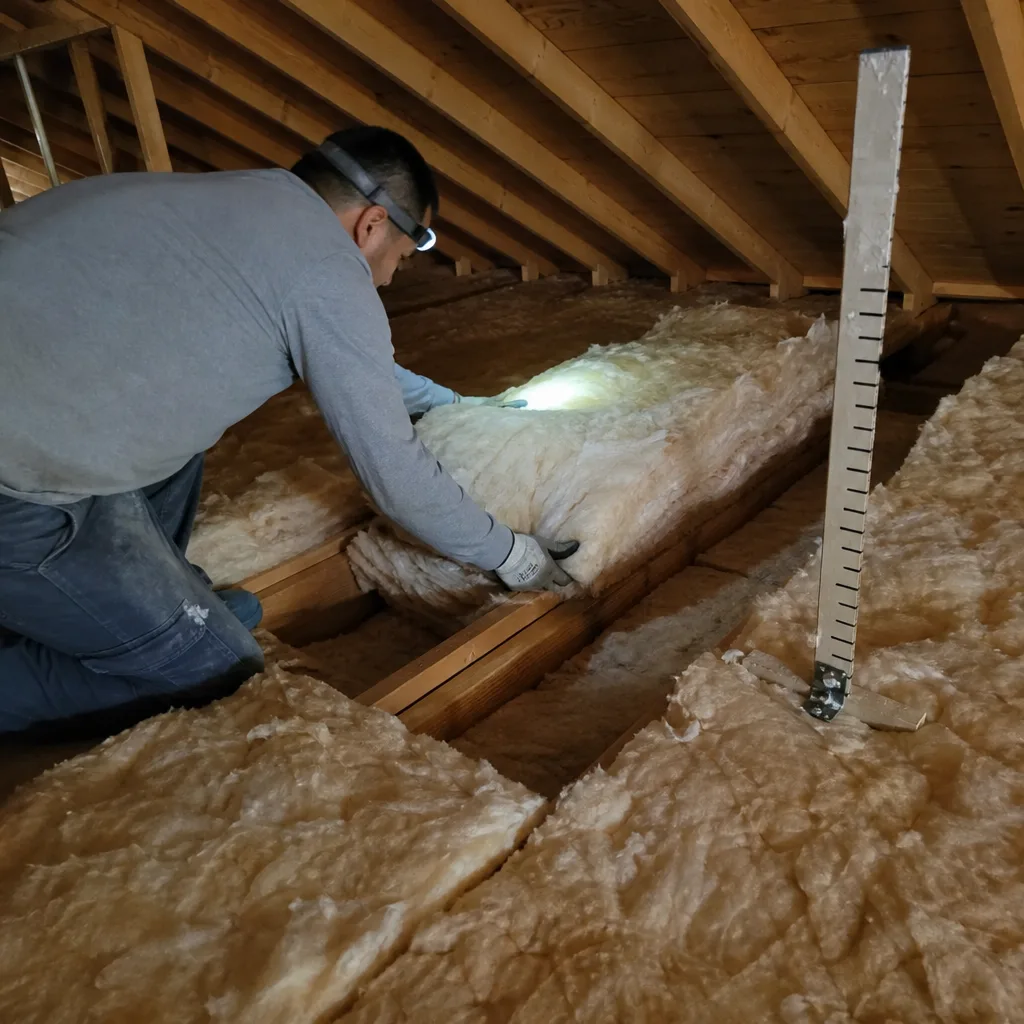
Inspection and blower-door baseline. We pressurize the house to measure air leakage in cubic feet per minute at 50 pascals - a single number showing how much conditioned air escapes through the building envelope. We photograph the existing GreenFiber condition, depth, and any contamination.
- 2
Written scope and price. Under Haven Standard Clause 1, you receive a flat price, written scope, and written warranty before anyone lifts a tool. No work starts without it.
- 3
Air sealing before removal. We seal top plates, electrical penetrations, and duct boots from below or above as access allows. The R-value tells you how slow heat moves through the material - the blower-door number tells you whether any of that matters.
- 4
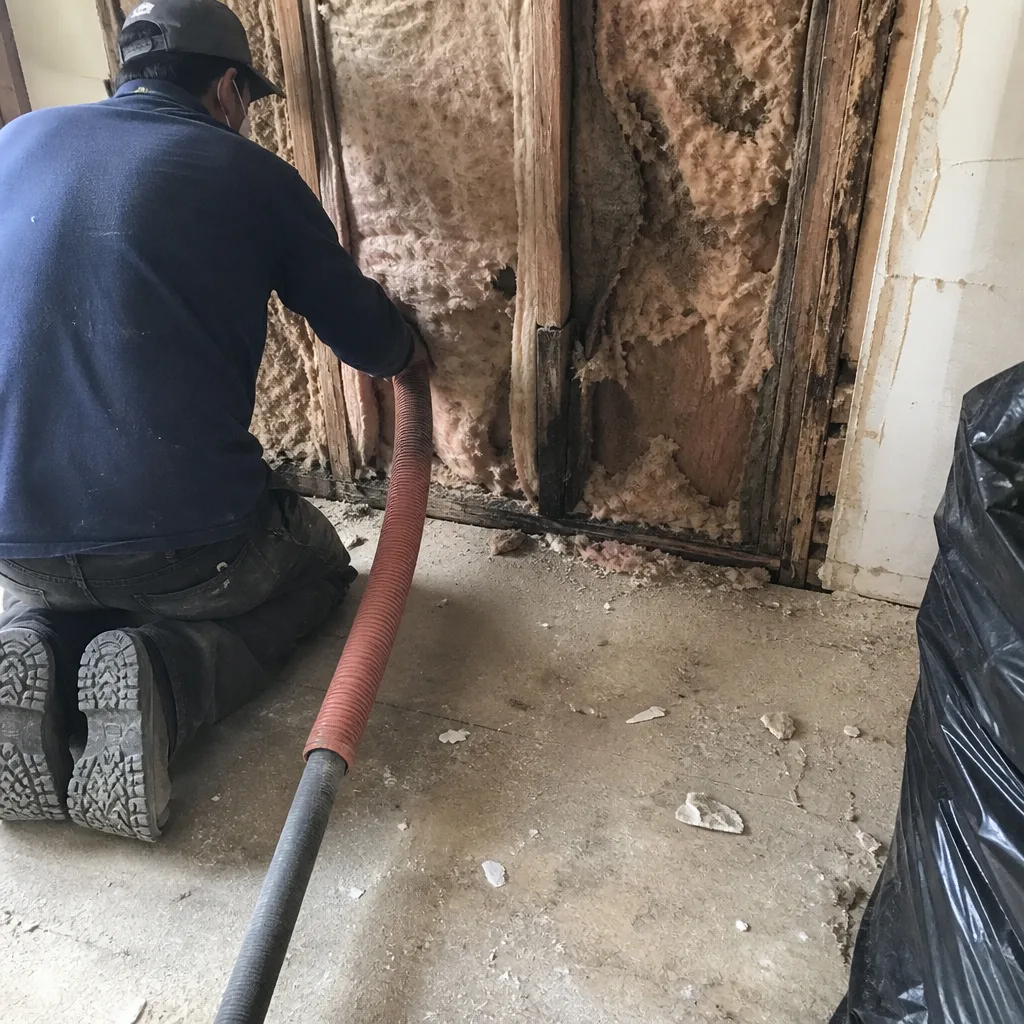
HEPA removal and disposal. GreenFiber cellulose is removed using negative-air containment, bagged, and disposed of per Texas Commission on Environmental Quality guidelines for construction debris.
- 5
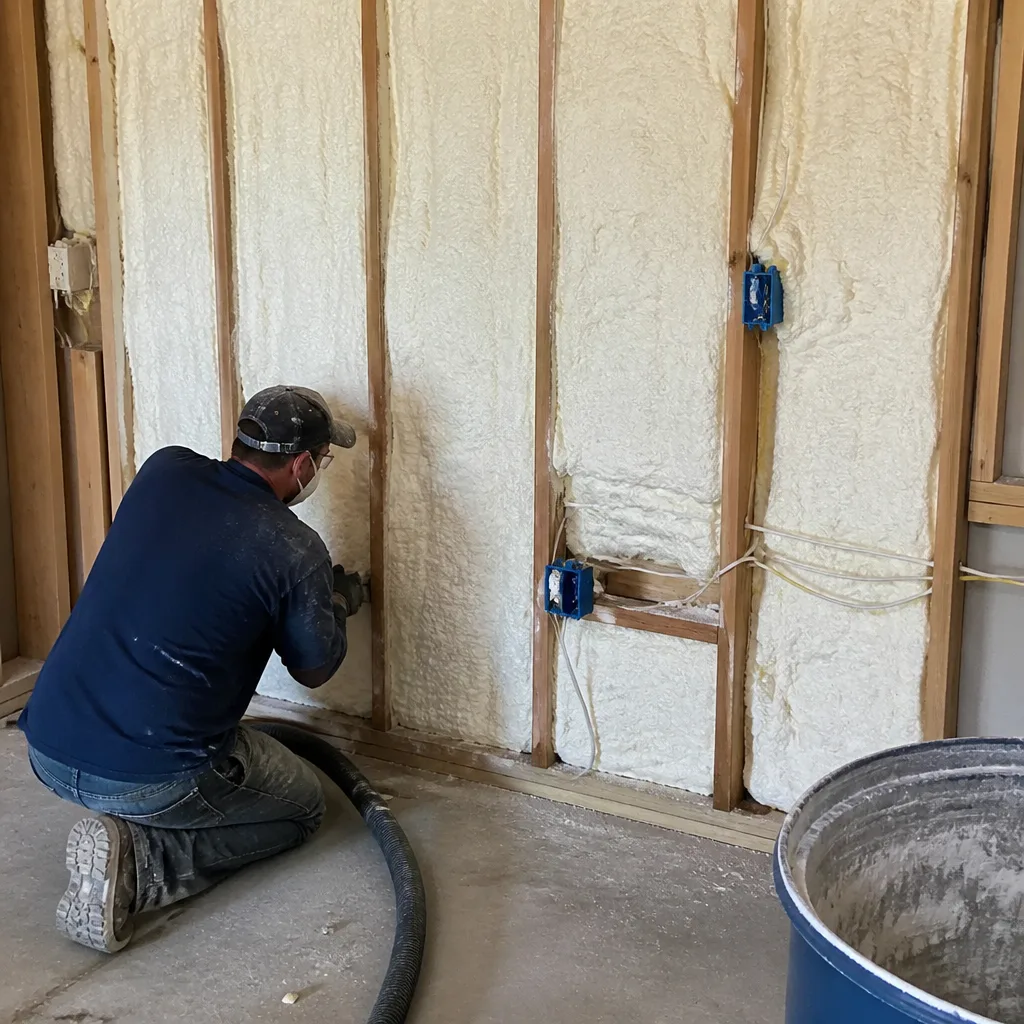
Replacement and verification. New insulation is installed to specified depth. We run a second blower-door test and hand you a single printed page with before-and-after air-changes-per-hour figures.
- 6
Documented Photo Record and 365-Day Done Right Promise. You receive all photos, test results, and warranty documentation before the crew leaves.
 Before
 After
AfterWhat GreenFiber Insulation Removal & Replacement Costs in San Marcos
| Scenario | Typical Range |
|---|---|
| Standard attic removal and replacement (1,200-1,800 sq ft), GreenFiber to GreenFiber | $2,800-$4,200 |
| Contaminated removal with rodent proofing and antimicrobial treatment | $3,600-$5,800 |
| Deep removal (multiple layers, compacted or water-damaged) with air sealing | $4,200-$6,500 |
| Upgrade from GreenFiber to spray foam or Rockwool on removal | $5,500-$9,000 |
Price movers: attic square footage, accessibility (scuttle vs. pull-down stairs), contamination level, and whether the existing material can be walked on or has compressed to a solid mat. We also service Reflectix radiant barrier systems where those were installed over or under GreenFiber and need integration with new insulation.
Call (737) 337-8049 for a written estimate - inspections are free, and we offer a Free Second Opinion on any written estimate you’ve already received.
Why San Marcos Homeowners Call Topside Attic Insulation San Marcos for GreenFiber Work
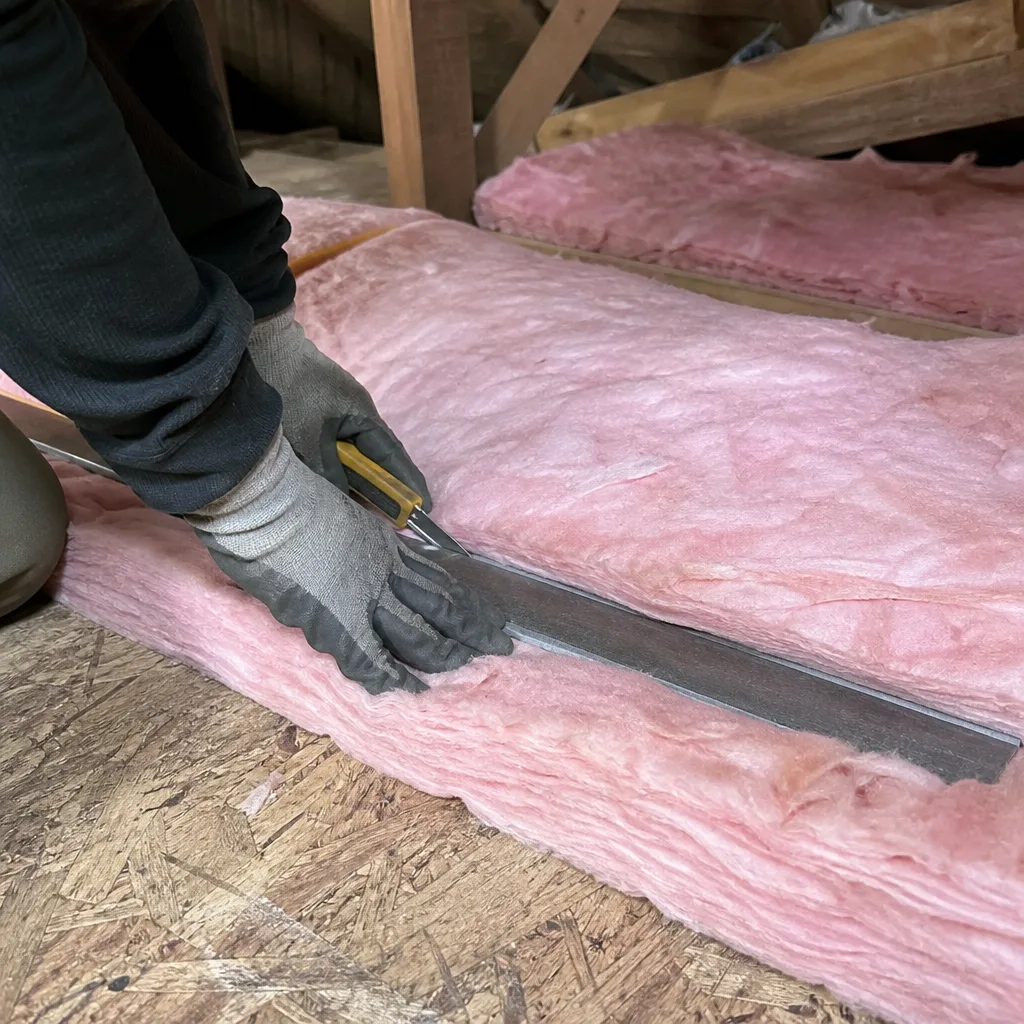
We’ve pulled GreenFiber from attics in San Marcos since 2016, including the older slab-on-grade homes near the Texas State University corridor where air sealing at the top plate - the junction where wall framing meets ceiling drywall - is routinely skipped and always felt in the utility bill. Our technicians are background-checked and uniformed; calls are answered by a live person, 24/7. Every applicable job publishes before-and-after blower-door numbers so the improvement is documented, not claimed. Materials come from Owens Corning, Johns Manville, Knauf, Rockwool, CertainTeed, Icynene, Demilec, and GreenFiber - no proprietary lock-in. The 365-Day Done Right Promise applies to all completed work: if it’s not done right, we make it right.
FAQs
GreenFiber’s limited warranty covers manufacturing defects in original installation, not subsequent modifications by an independent service provider. As an independent GreenFiber service provider, we document the condition of existing material before removal so any legitimate manufacturing claim can still be pursued. For warranty-safe practices, we follow GreenFiber’s published installation depth and density specifications on any reinstall. Call (737) 337-8049 to discuss your specific situation.
Yes - R-value is a standardized measurement of thermal resistance, and we source equivalent or improved performance from multiple manufacturers including Owens Corning, Knauf, and Rockwool. We publish the labeled R-value and installed depth on every job documentation sheet. Call (737) 337-8049 for a comparison estimate.
We measure settled depth against the labeled requirement and run a blower-door test. If the material is dry, uncontaminated, and simply settled, targeted addition with air sealing may suffice. If it’s compressed below 50% of original depth, moisture-damaged, or rodent-compromised, removal is the only sound approach. We show you the photos and the numbers before recommending either path. Call (737) 337-8049 to schedule an inspection.
Standard attic removals are typically completed in one working day once scheduled. Contaminated or large-area jobs may extend to two days. We maintain availability for same-day emergency response when insulation is actively wet or creating indoor air quality concerns. Call (737) 337-8049 for current scheduling.
Spot repairs on cellulose are rarely cost-effective - the material blends poorly across seams, and undisturbed adjacent areas often share the same settling or contamination issue. In most San Marcos attics we’ve inspected, full removal and proper air sealing before reinstall delivers better performance per dollar than partial remediation. We quote both approaches when feasible so you can compare. Call (737) 337-8049 for a written price on each option.
Written by Wes Okafor, Owner, Topside Attic Insulation San Marcos at Topside Attic Insulation San Marcos, serving San Marcos and nearby areas.