
Icynene Attic Air Sealing: The San Marcos Owner’s Guide
We stock and install Icynene-compatible attic air sealing components for San Marcos homes, with most completed jobs running between $1,800 and $3,400 depending on attic square footage and penetration count. Same-day service is available when we have your configuration in stock, which covers roughly 85% of the Icynene open-cell and closed-cell systems we see in Hays County. Most owners discover a problem when their summer electric bill jumps $80-$150 despite the thermostat never moving, or when a room over the garage stays 8-12 degrees off from the rest of the house no matter how long the AC runs.
Which Icynene Models This Applies To
Icynene’s product line splits into two families that matter for attic air sealing: open-cell water-blown foam (LD-C-50, LD-R-50) and closed-cell HFO-blown foam (MD-R-200, MD-C-200). The open-cell systems, common in San Marcos builds from 2012-2019, cure softer and are more prone to shrinkage gaps at top plates and electrical penetrations. Closed-cell systems installed after 2018 tend to hold their seal longer but can delaminate from OSB roof decking if the substrate wasn’t properly conditioned during application, a problem we trace weekly in the humid months along the Blanco River corridor.
To identify your system, check the spray foam itself: open-cell has a spongy, bread-like texture you can dent with a fingernail; closed-cell feels rigid, like cutting board plastic. The application date and installer should appear on a label near your attic access hatch or on the electrical panel door. If your home was built with Icynene as original equipment, the builder’s final walkthrough packet often includes a “Certificate of Insulation” with the specific product code. We carry both OEM Icynene repair foam and compatible aftermarket sealants from Demilec for patching - the aftermarket option saves roughly 15-20% on material cost without sacrificing the air barrier continuity that matters.
Signs Your Icynene Attic Air Sealing Is Failing
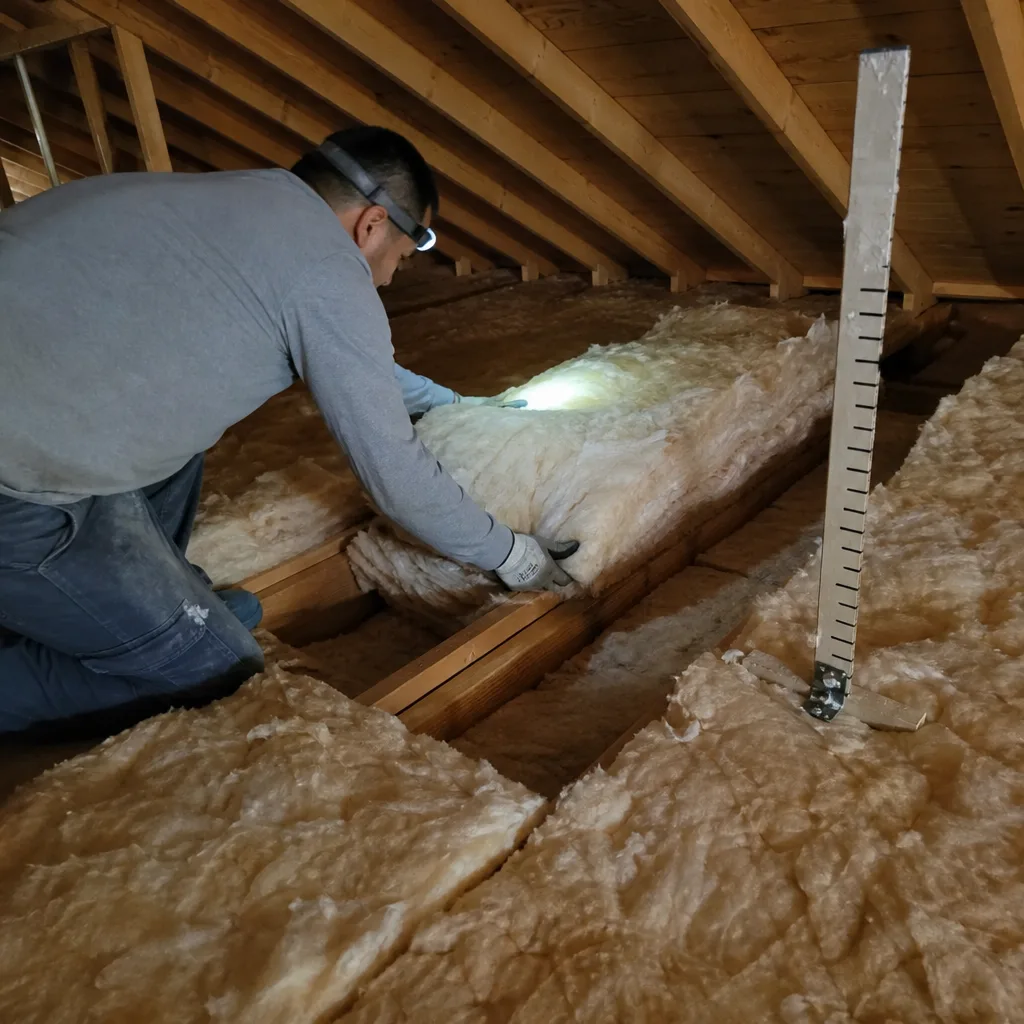
- Hot spots on your ceiling in mid-afternoon. This means conditioned air is escaping through gaps the Icynene was supposed to seal, often at the top plate where wall framing meets ceiling drywall. The thermal camera doesn’t lie - we see 15-20 degree differentials in these zones regularly in San Marcos homes built during the 2015-2017 construction rush.
- Dust accumulation around recessed can lights. Air moving through an unsealed penetration carries attic dust into your living space. With Icynene systems, this usually indicates the foam didn’t fully encapsulate the light housing or has pulled away over time.
- Ice damming or heavy frost on roof decking in winter. Warm, moist interior air reaching cold sheathing condenses and freezes. In San Marcos, this is rare but telling - it means your air barrier has failed at a critical junction, typically the chimney chase or plumbing vent stack.
- Your blower-door number hasn’t improved despite “insulation” work. We inherited a job in the Willow Creek subdivision where a previous contractor had blown fiberglass over compromised Icynene. The ACH50 barely moved. The R-value tells you how slow heat moves through the material - the blower-door number tells you whether any of that matters.
- Inconsistent room temperatures with the AC running continuously. This is the symptom that drives most calls. The Icynene itself may look intact, but micro-gaps at framing intersections or shrinkage at the foam-to-drywall boundary let conditioned air bypass the envelope entirely.
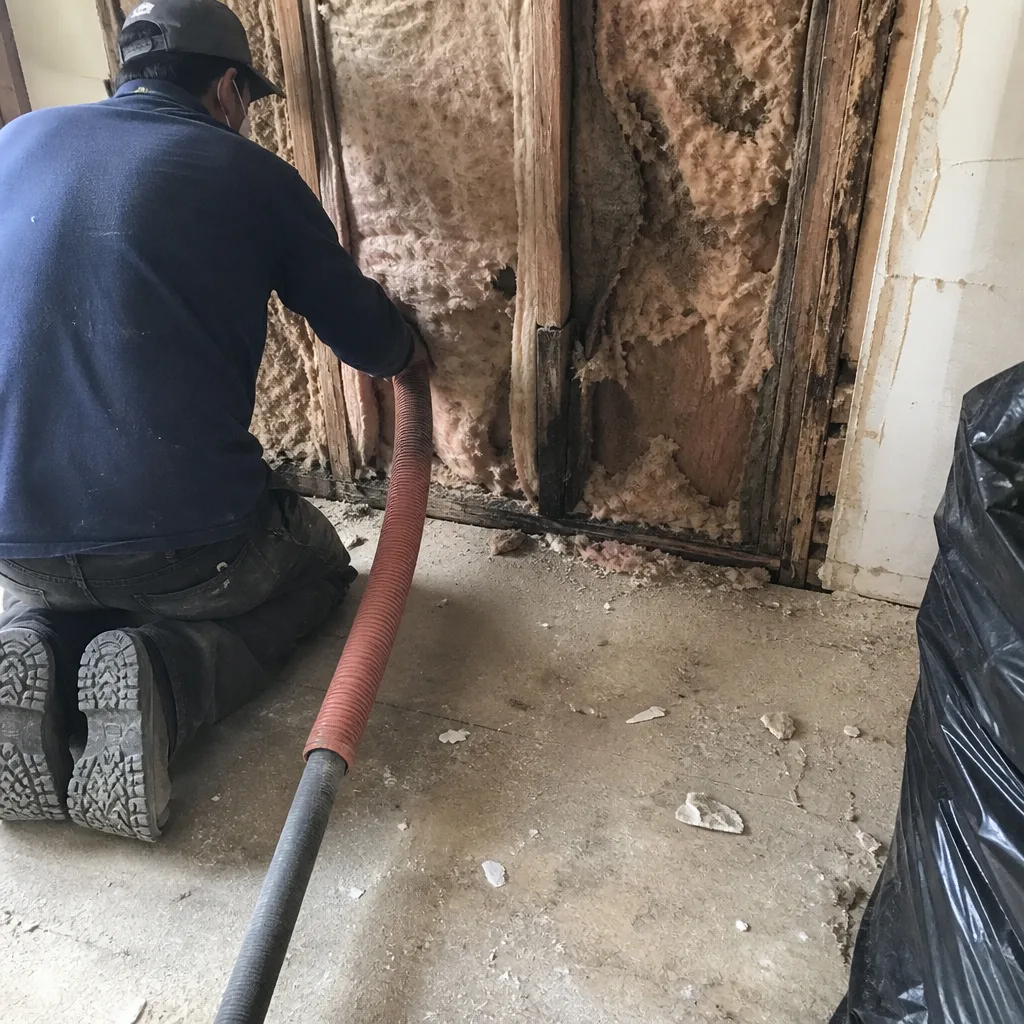 Before
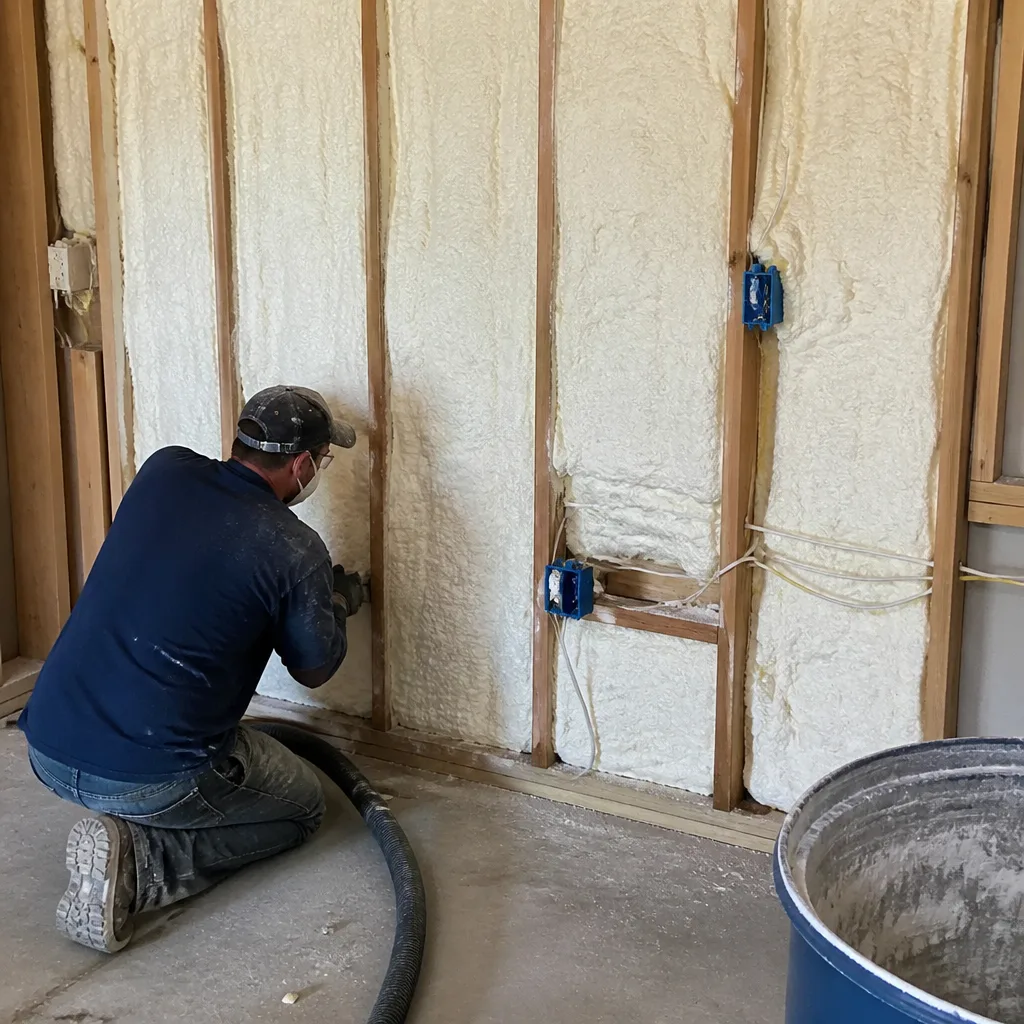 After
AfterReplacement Cost & What’s Included
Most Icynene attic air sealing repairs in San Marcos run $1,800-$3,400 for a complete top-plate and penetration treatment on a 1,800-2,800 square foot home. Smaller spot repairs - a single failed chase, a pulled penetration - start around $650. The range depends on three factors: attic accessibility (scissor trusses add labor), the extent of original foam removal required, and whether we’re treating the full envelope or chasing a specific leak path.
Every job includes: written scope and flat price before any work starts (Haven Standard Clause 1), removal of compromised Icynene sections, surface prep and reapplication with matched foam density, and a post-work blower-door test with printed before-and-after readings. Our 365-Day Done Right Promise covers all labor and materials. We also stock Reflectix radiant barrier components for homes where the original install omitted proper decking protection.
DIY or Call Us?
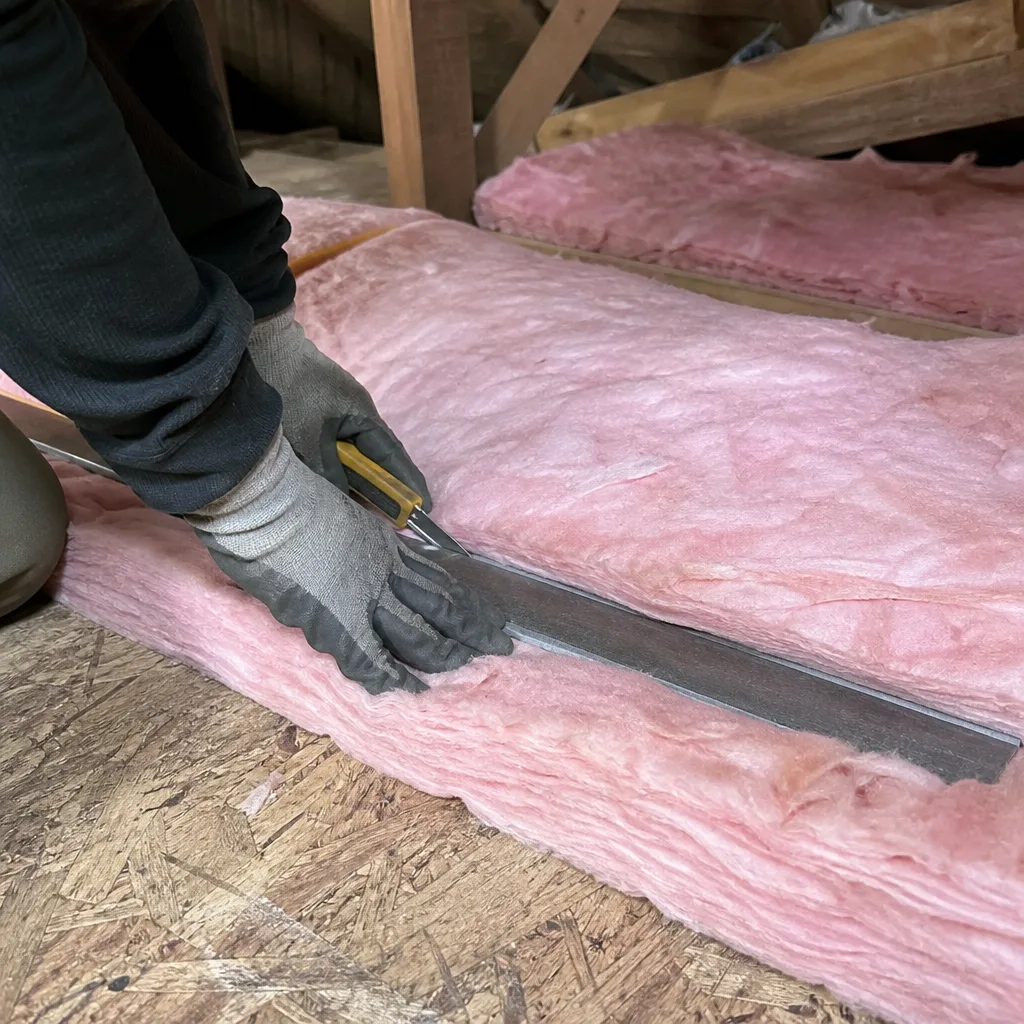
There’s one thing a San Marcos homeowner can safely check: the attic access hatch seal. If light leaks around the perimeter or the weatherstripping is compressed flat, replace it with a proper gasket - this is a maintenance item, not a repair. Beyond that, Icynene air sealing involves working at height on blown-in or unstable surfaces, handling two-component polyurethane chemistry that requires respirator protection, and diagnosing pressure boundaries with a blower door - equipment no homeowner owns.
We’ve found homeowners who attempted spot repairs with canned foam from the hardware store. The result is always the same: the foam is the wrong density, it doesn’t bond to aged Icynene, and it creates a dam that traps moisture against the original application. Call (737) 337-8049. We’ll read your situation with you, and if you have a competing quote, our Free Second Opinion applies.
FAQs
Properly installed Icynene should maintain its air barrier for 25+ years, but we’ve found shrinkage and delamination issues in local homes as early as year 6-8, especially in attics that exceed 140°F regularly during Hays County summers. The thermal cycling here is harder on open-cell formulations than the manufacturer originally modeled. Call (737) 337-8049 for an exact assessment - estimates are free.
Spot patching works when the failure is isolated to a single penetration or shrinkage gap and the surrounding foam is still well-adhered. We cut back to sound material, feather the new application, and verify with a blower-door test. If the failure is widespread or the original install skipped critical junctions, partial or full replacement is the only defensible fix. Call (737) 337-8049 and we’ll show you the photos so you can decide.
Most spot repairs finish in 3-4 hours; a complete attic air sealing treatment on a 2,400 square foot home takes one full day with a two-person crew. We arrive with the Icynene or compatible Demilec material on the truck, so there’s no return trip for parts. Your written scope will list the exact hour estimate before anyone starts.
We stock Icynene-compatible open-cell and closed-cell foam, plus Demilec aftermarket equivalents, on every San Marcos service vehicle. For same-day starts, we need to confirm your foam density and the square footage involved - a five-minute phone call or text exchange. Same-day availability runs about 85% for standard configurations; specialty HFO formulations for closed-cell repair may require next-day pull from our Austin warehouse.
Written by Wes Okafor, Owner, Topside Attic Insulation San Marcos at Topside Attic Insulation San Marcos, serving San Marcos and nearby areas.