
Icynene Vapor Barrier Installation: The San Marcos Owner’s Guide
Most Icynene vapor barrier installations in San Marcos run between $1,800 and $3,400 for a standard crawl space or attic application, depending on square footage and whether the existing barrier needs full removal. We stock Icynene-compatible vapor barrier material on our trucks and can usually install same-day or next-day. Homeowners typically discover the problem after spotting condensation on ductwork, a musty smell that worsens after rain, or their annual energy audit flagging elevated humidity readings in the crawl space or attic envelope.
Which Icynene Models This Applies To
Icynene’s vapor barrier systems are not tied to a single spray foam model, but rather to the envelope assembly where their open-cell or closed-cell foam has been applied. The critical match is between the vapor barrier’s permeance rating, measured in perms, and the specific Icynene product line already in place. Icynene Classic Max, Icynene ProSeal, and Icynene MD-C-200 each create different drying potentials at the sheathing plane, and the vapor barrier must be selected to complement, not trap, that moisture profile.
To identify what you’re working with, check the spray foam application tag, usually stapled near the attic access or on a crawl space joist. The tag lists the Icynene product name, install date, and applied thickness. If the tag is missing, measure the foam thickness and note its color and texture: Classic Max open-cell is soft and gray-white, while ProSeal closed-cell is rigid and yellow-tan. We carry 6-mil and 10-mil reinforced polyethylene barriers rated for Texas humidity, plus specialized smart vapor retarders for mixed-climate assemblies where seasonal reversal matters.
OEM Icynene vapor barriers are available through their distributor network, but lead times run two to three weeks. We source equivalent ASTM E1745 Class A material from Johns Manville and CertainTeed with identical perm ratings and superior puncture resistance, installed under the same Haven Standard documentation. The aftermarket equivalent carries the same warranty when we install it; the difference is availability, not performance.
Signs Your Icynene Vapor Barrier Installation Is Failing
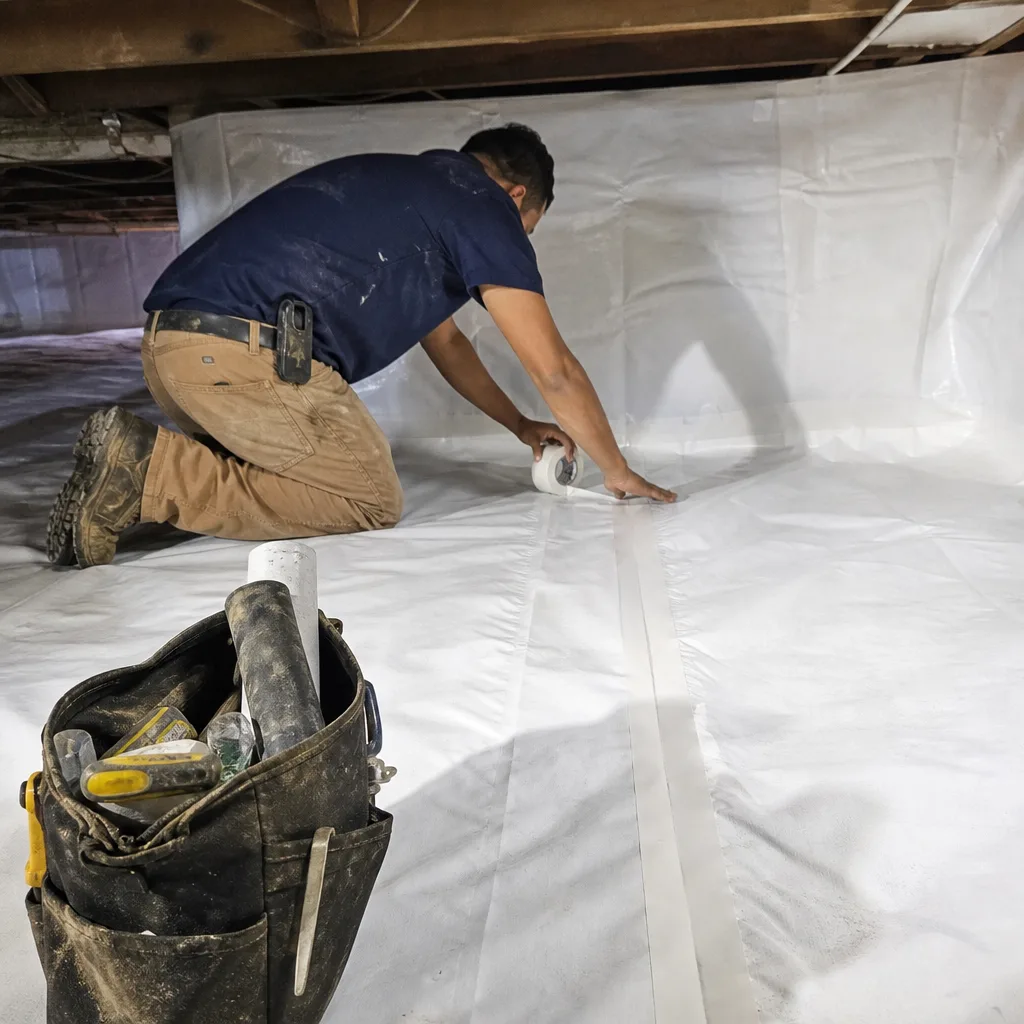
- Condensation on ductwork or pipes in summer. When the vapor barrier tears or pulls away at seams, San Marcos humidity, which regularly pushes 70% from May through October, migrates through the envelope and condenses on cool surfaces. The fix is resealing the barrier at penetration points, not adding more foam.
- Musty odor that intensifies after rain. This indicates bulk water intrusion at the foundation or a compromised barrier allowing ground moisture to evaporate upward. In slab-on-grade homes near the Texas State University corridor, we’ve found original barriers installed without proper overlap at seams, creating a wicking path.
- Wood framing or joists showing dark staining or soft spots. Elevated moisture content in wood above 20% sustained over weeks triggers fungal growth. A functioning vapor barrier keeps framing below 16% even in peak humidity; when it fails, the lag time between installation and visible damage is often 18 to 36 months in this climate.
- Insulation appearing damp or compressed. Fiberglass batts or blown cellulose above a failed barrier absorb evaporative moisture, losing R-value and creating a hidden mold reservoir. We see this most in homes where the original barrier was 4-mil or thinner, inadequate for Texas clay soils.
- Energy bills climbing without rate changes. A compromised envelope forces your HVAC to dehumidify air that should never have entered conditioned space. The blower-door number tells the story: we regularly measure 800 to 1,200 CFM50 of excess leakage traceable to crawl space or attic bypasses where the vapor barrier failed.
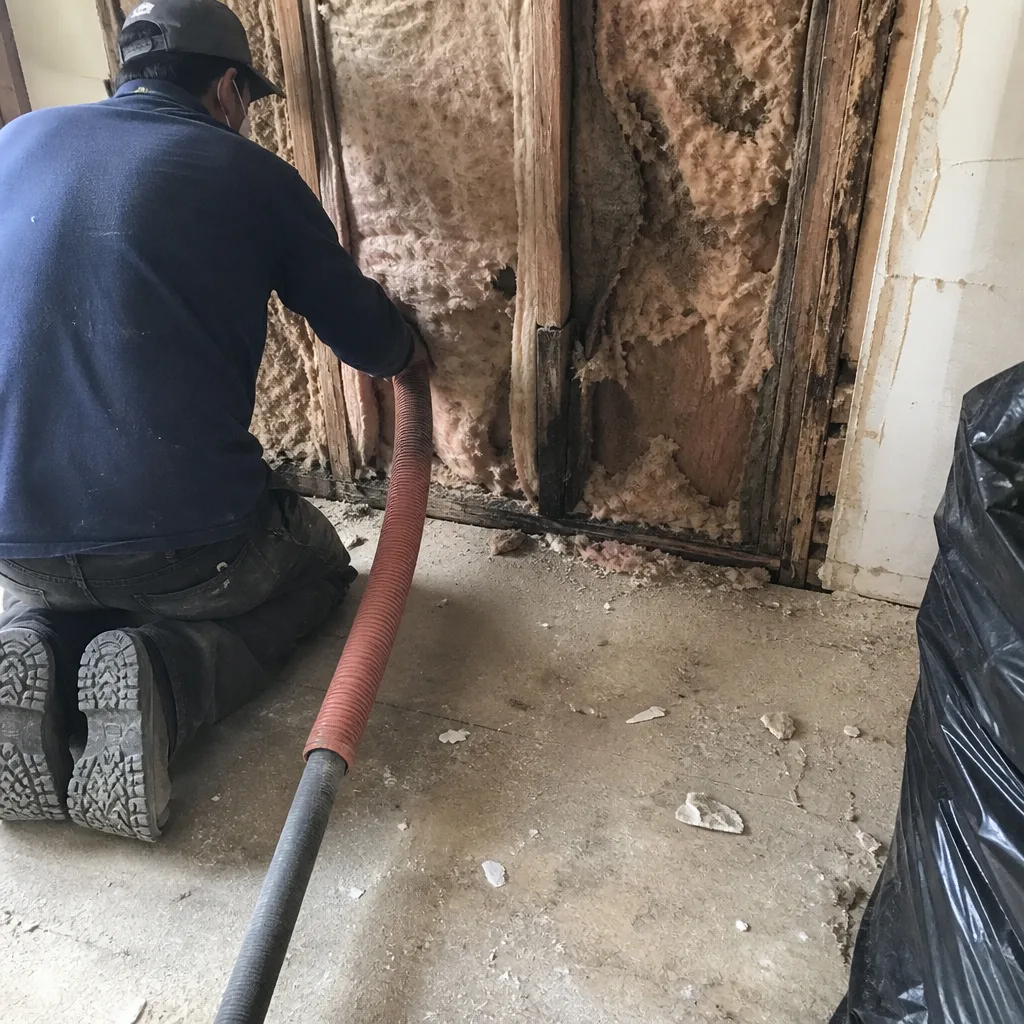 Before
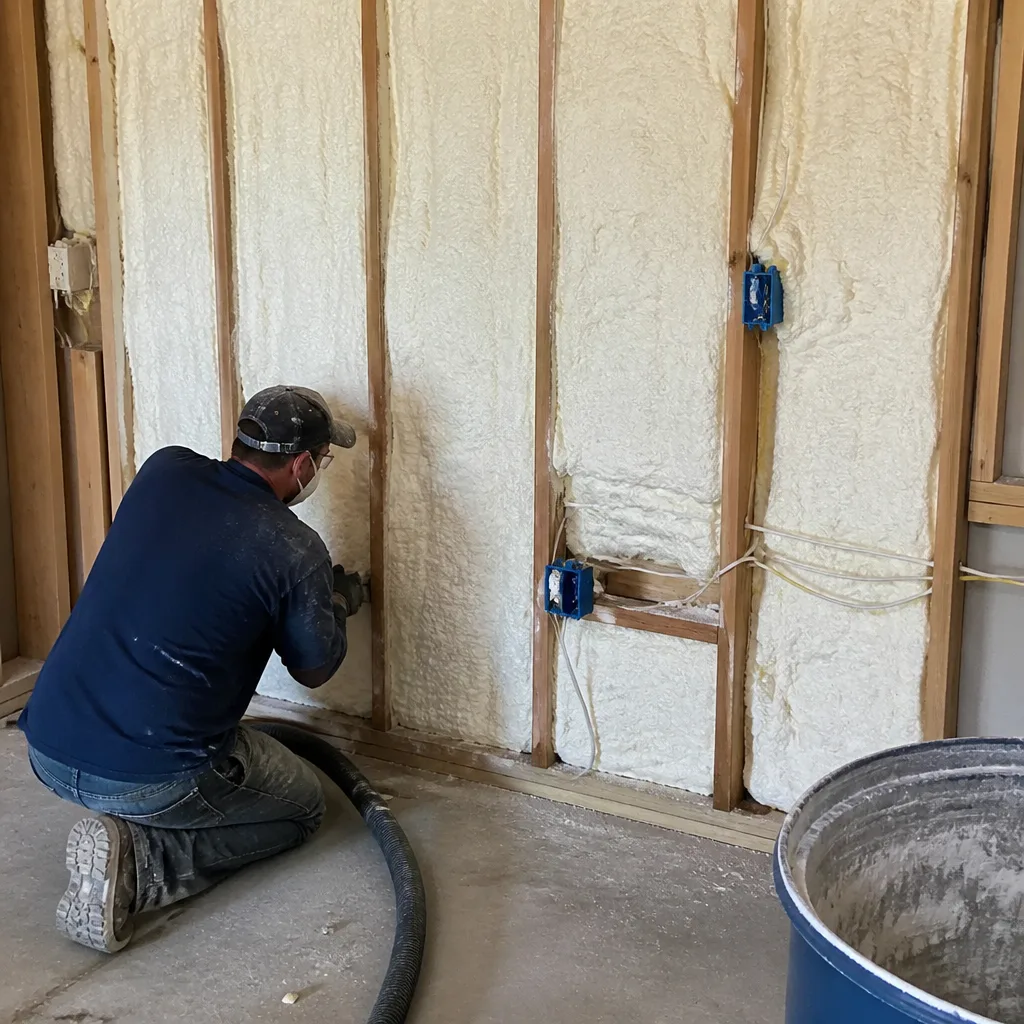 After
AfterReplacement Cost & What’s Included
| Scope | Typical Range in San Marcos |
|---|---|
| Standard crawl space (1,000-1,500 sq ft), 6-mil barrier | $1,800 - $2,600 |
| Standard crawl space, 10-mil reinforced barrier | $2,400 - $3,200 |
| Attic application with smart vapor retarder | $2,200 - $3,400 |
| Full removal of failed barrier + disposal | Add $400 - $700 |
| Sealing at penetrations and piers | Included |
What drives the range: square footage, accessibility (crawl height and debris), whether the existing barrier is intact enough to leave or must be removed, and whether we find unsealed penetrations that need addressing first. We never install a new barrier over an unsealed envelope; air sealing at top plates, sill plates, and penetrations is completed before the barrier goes down. Every job includes a written scope, a written warranty, and a Documented Photo Record showing before, during, and after. On applicable jobs, we run a blower-door test and hand you a single printed page with the before and after air-changes-per-hour figure. The R-value tells you how slow heat moves through the material - the blower-door number tells you whether any of that matters.
DIY or Call Us?
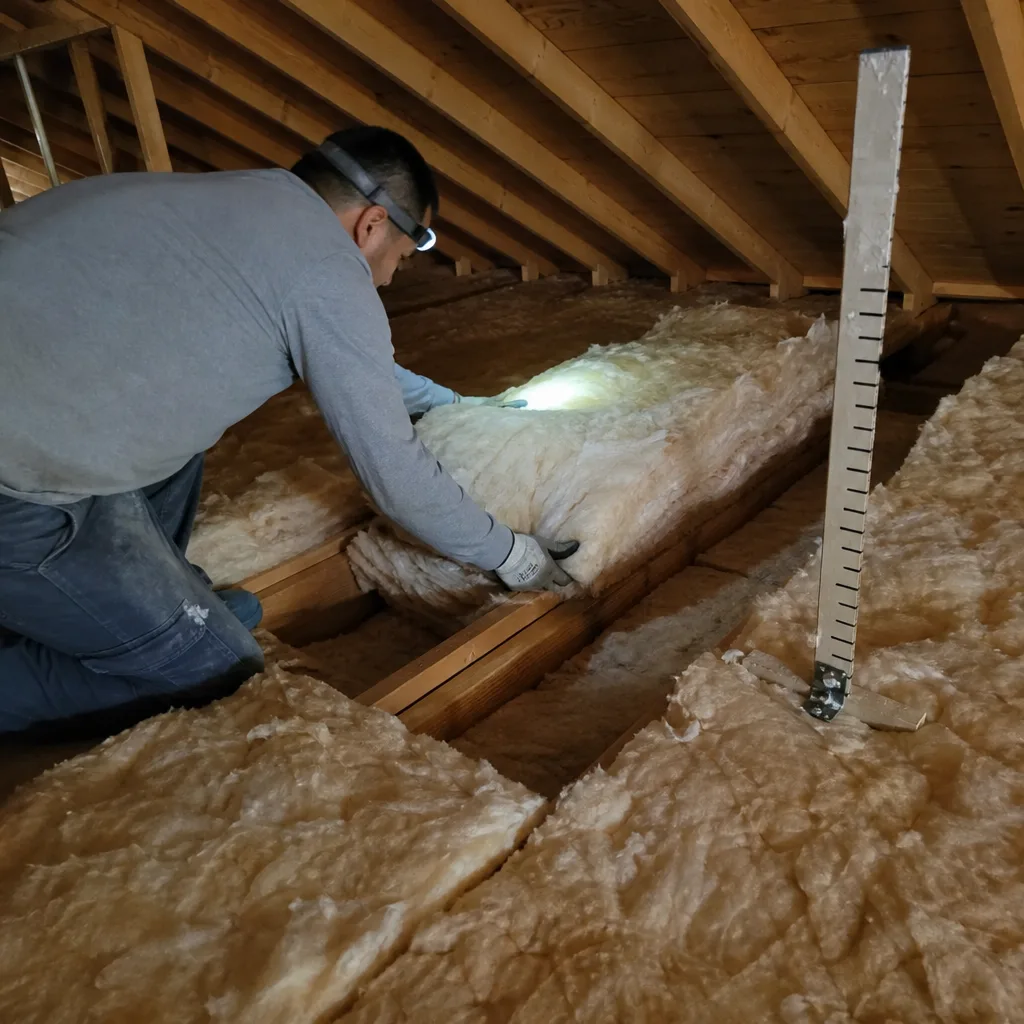
What you can safely check: walk your crawl space or attic with a flashlight and look for tears, gaps at seams, or barrier pulled away from walls or piers. Note any standing water, which indicates a drainage problem that a barrier alone won’t fix. Photograph what you find; the images help us scope the job before we arrive.
Where DIY goes wrong: vapor barrier installation looks simple but fails systematically when seams aren’t overlapped 12 inches minimum and sealed with compatible tape, when penetrations aren’t booted and sealed, or when the wrong perm rating is selected for the existing foam assembly. In San Marcos, we’ve been called to fix homeowner installations where 6-mil poly was laid directly over wet soil, trapping moisture against the framing and accelerating rot. The material cost is low; the cost of getting the moisture profile wrong is structural damage and mold remediation.
We’re an independent service provider, not affiliated with Icynene, and we also stock Reflectix radiant barrier material for hybrid assemblies. Call (737) 337-8049 for a free estimate with a written price before any work starts.
FAQs
A properly installed 10-mil reinforced barrier typically lasts 15 to 20 years in this climate; 4-mil or 6-mil un-reinforced material often fails at 8 to 12 years due to UV degradation at access points and puncture from maintenance traffic. Call (737) 337-8049 for an exact quote on replacement - estimates are free.
Small punctures or tears under six inches can be patched with compatible polyethylene tape if the surrounding material is still supple and the seam overlap is intact. Widespead embrittlement, delamination at seams, or barrier installed without proper overlap requires full replacement to restore the moisture seal. Call (737) 337-8049 for an exact quote - estimates are free.
Most residential crawl space or attic vapor barrier installations in San Marcos are completed in one day, assuming access is clear and no hazardous conditions are present. Jobs requiring full removal of a failed barrier, mold remediation hold, or extensive air sealing at penetrations may extend to a second day. Call (737) 337-8049 for an exact quote - estimates are free.
Yes - we carry 6-mil, 10-mil reinforced, and smart vapor retarder material rated for Texas humidity on every truck, sized for same-day or next-day installation in the San Marcos area. Call (737) 337-8049 for an exact quote - estimates are free.
Written by Wes Okafor, Owner, Topside Attic Insulation San Marcos at Topside Attic Insulation San Marcos, serving San Marcos and nearby areas.