
Johns Manville Radiant Barrier Installation: The San Marcos Owner’s Guide
We stock and install Johns Manville-compatible radiant barrier systems in San Marcos, with most attic retrofits running between $1,800 and $3,400 depending on attic square footage and whether air sealing is needed first. Same-day installation is available for standard ranch and two-story layouts under 2,500 square feet when you call before noon. Most San Marcos homeowners realize their radiant barrier is failing when summer attic temperatures climb past 140°F despite the shiny foil still being visible, or when their HVAC runs continuously from 2 p.m. to sunset without cycling off.
Which Johns Manville Models This Applies To
Johns Manville produces two radiant barrier product lines relevant to San Marcos attics: the AP Foil-Faced Polyiso board products (typically R-6 to R-12.5, with foil facing on one or both sides) and the ComfortTherm batt-style products with reflective kraft facing. The critical identification point is the facing type, not the core insulation. AP Foil-Faced boards use a heavy-duty aluminum foil laminated to polyisocyanurate foam; ComfortTherm uses a reflective kraft paper that degrades faster in Texas humidity but costs less per square foot.
We do not install proprietary Johns Manville systems exclusively. We are an independent service provider with no affiliation to Johns Manville. For homeowners who already have JM product in place, we match the existing facing spec to maintain vapor barrier continuity. Mixing foil-faced polyiso with kraft-faced batts in the same assembly creates a double vapor barrier that traps moisture in San Marcos’s spring and fall shoulder seasons, when outdoor dew points swing 30 degrees in a week. We stock both OEM-equivalent foil and kraft facing materials on our trucks, sourced through our regular suppliers including Johns Manville, Owens Corning, and Reflectix.
To identify what you have: check the printed edge tape or stamp on any exposed board edge. AP Foil-Faced carries a “JM AP” stamp with the R-value and thickness; ComfortTherm batts have a pinkish-white fiberglass core with silver-kraft facing and a “CT-R” code. If the stamp is faded or painted over, measure the facing thickness with a caliper. Foil facing runs 3-5 mils; kraft facing runs 6-8 mils and tears easily when scraped with a fingernail.
Signs Your Johns Manville Radiant Barrier Installation Is Failing
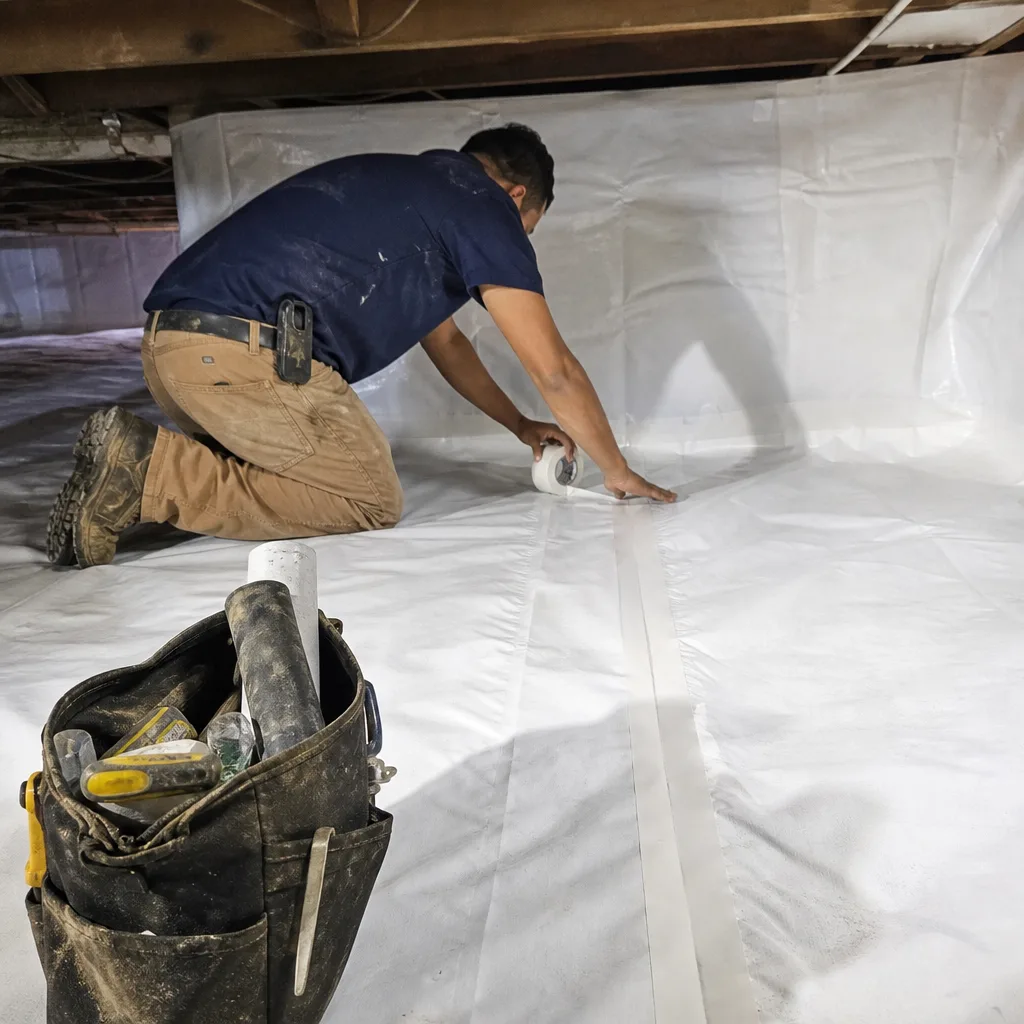
- Attic temperature exceeds 130°F by 3 p.m. on a 95°F San Marcos day. A functioning radiant barrier should drop peak attic temperature 20-40°F below an unprotected attic. When the foil oxidizes or collects dust, its emissivity rises and it quits reflecting radiant heat back toward the roof deck.
- Dust layer visible on foil facing that cannot be wiped clean without tearing the surface. This is the most common failure mode in San Marcos, where caliche dust from Hill Country construction and agriculture settles through ridge vent gaps. Once dust embeds in the foil’s protective coating, the emissivity shifts from 0.03 (reflective) to 0.30 or higher, effectively neutralizing the barrier.
- ComfortTherm kraft facing that has darkened, become brittle, or shows water staining. The reflective kraft paper in JM’s batt products is not rated for prolonged exposure to attic humidity above 70% relative humidity. San Marcos attics hit that threshold regularly from May through October, especially in homes with bathroom fans vented into the attic rather than through the roof.
- Air conditioning supply ducts sweating in the attic during peak afternoon hours. This indicates the radiant barrier has lost effectiveness and the attic is functioning as a solar oven. The ductwork, which may be R-6 or R-8 flex, cannot maintain surface temperature above dew point when surrounded by 140°F air.
- Energy bills rising year-over-year with no change in thermostat setting or occupancy. We see this pattern in San Marcos homes built 2015-2020 near the Wonder World Drive corridor, where builders installed minimum-code radiant barrier and skipped top plate sealing. The barrier degrades; the air leaks were never addressed; the homeowner pays for both failures simultaneously.
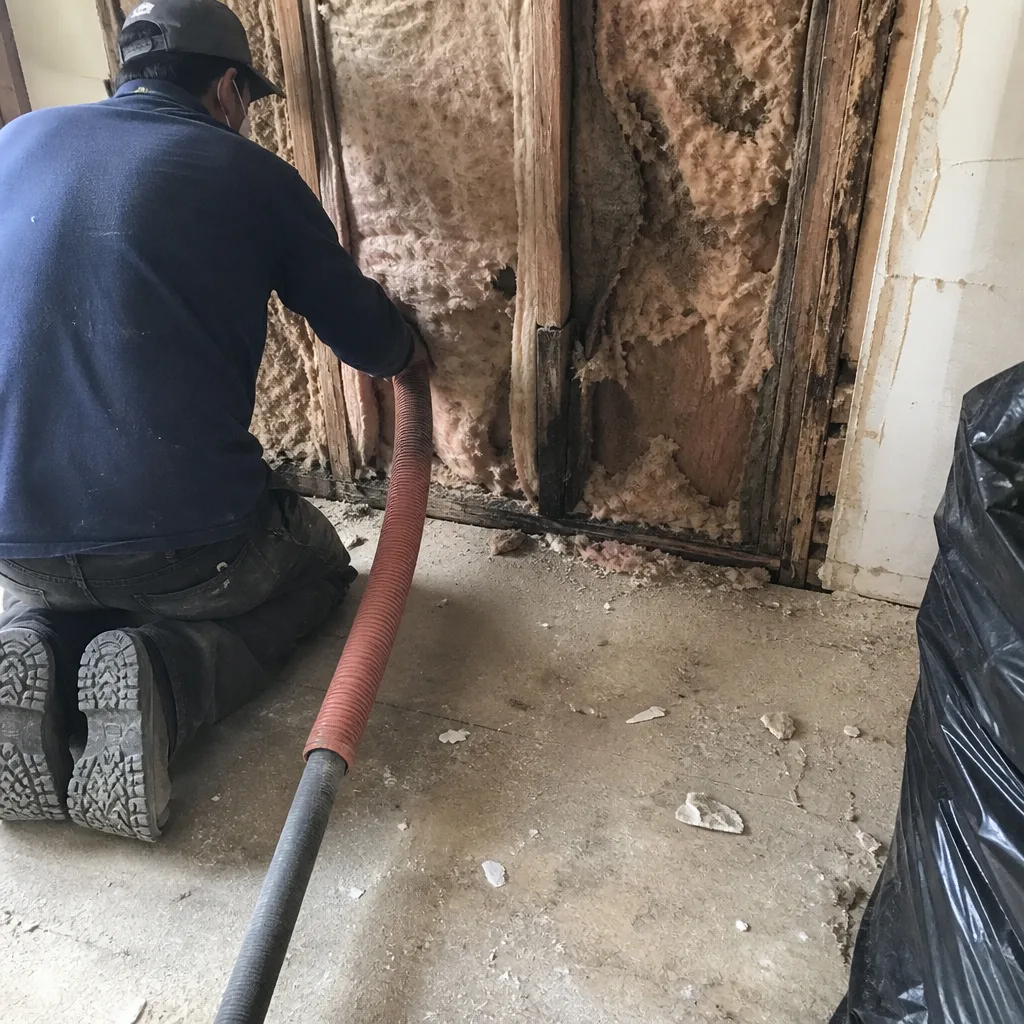 Before
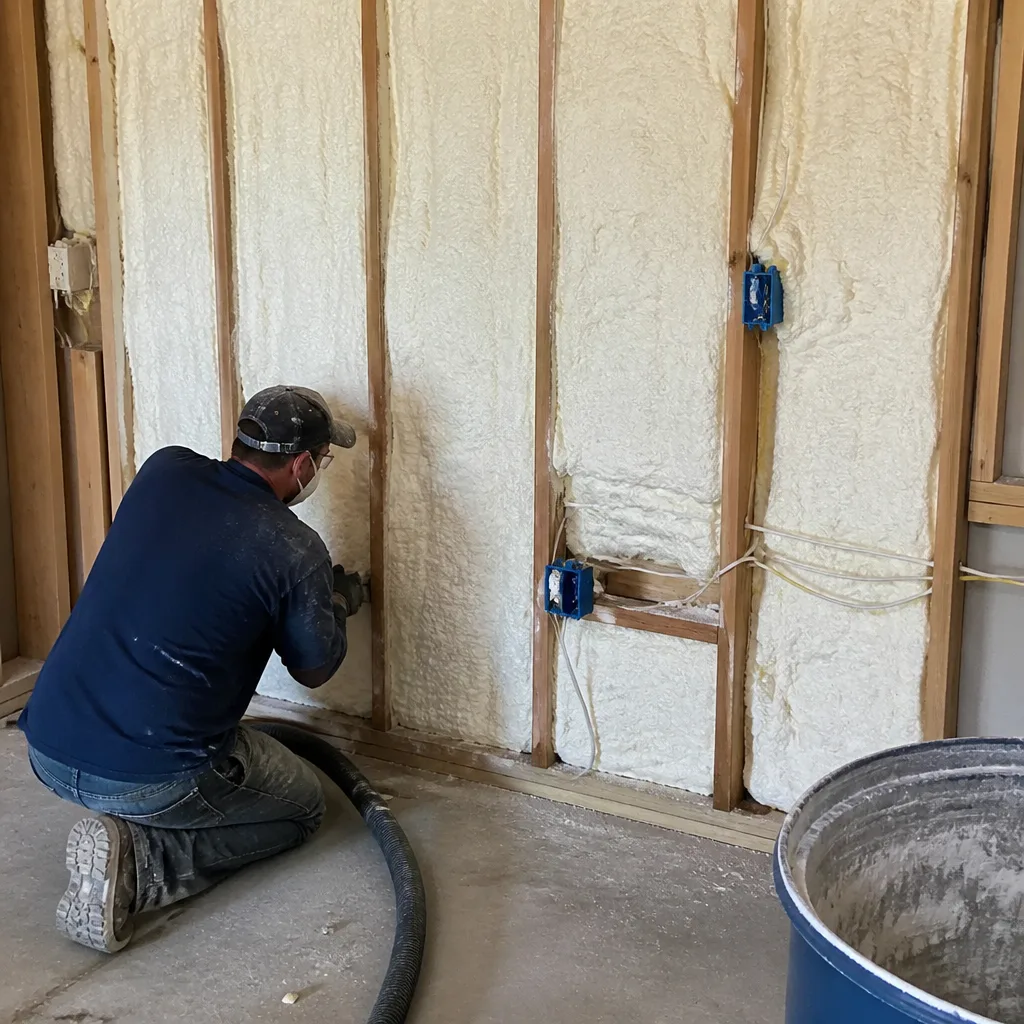 After
AfterReplacement Cost & What’s Included
For a typical San Marcos home between 1,600 and 2,400 square feet of attic floor, complete radiant barrier replacement with new Johns Manville-compatible foil-faced product runs $1,800-$2,800. Homes requiring removal of failed kraft-faced product first, or with complex rooflines with multiple dormers and kneewalls, run $2,600-$3,400. These prices include removal of degraded material, disposal, installation of new facing or board product, and a written scope with warranty documentation before any work starts.
What moves the number: attic accessibility (truss height and pitch), quantity of penetrations to work around, whether we find unsealed top plates or can lights that must be addressed first under our sequencing protocol, and whether the homeowner wants the full blower-door verification package. We do not blow insulation over a failed radiant barrier. If you have existing fiberglass or cellulose below a degraded foil layer, we remove both, seal the envelope, then reinstall the radiant barrier at the roof deck or attic floor as appropriate for the assembly.
Every job closes with a Documented Photo Record and, where applicable, before-and-after blower-door numbers. The 365-Day Done Right Promise applies. Haven Standard Clause 1: flat price, written scope, written warranty before anyone lifts a tool.
DIY or Call Us?
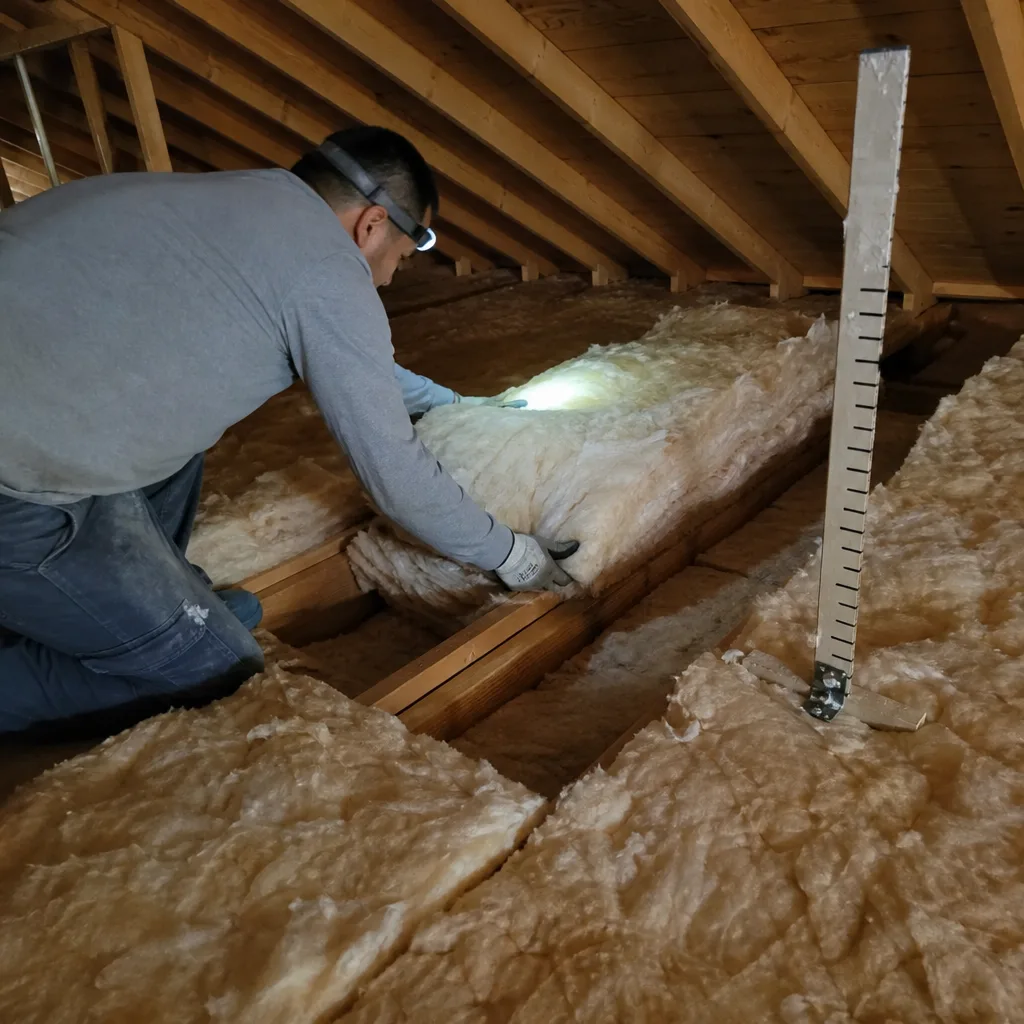
What you can safely check yourself: confirm the product stamp or facing type from the attic access hatch with a flashlight and phone camera. Note any visible dust accumulation, tears, or darkening. Check whether your bathroom fans and kitchen range hood vent through the roof or terminate in the attic space. These observations help us prepare the right materials and scope before we arrive.
Where DIY goes wrong: radiant barrier installation requires working at height on uneven framing, often in 120°F+ conditions, with precise attention to vapor barrier continuity and electrical clearances. Foil-faced polyiso board must be cut to fit snugly around truss chords and electrical junction boxes without compression gaps that create thermal bypasses. More critically, many San Marcos attics contain active knob-and-tube wiring or romex run across the tops of joists, where a slipped knee or fastener can create a fire or shock hazard. We background-check and uniform our technicians for a reason.
Call (737) 337-8049 for a free estimate. We answer live, 24/7. Bring us a competing quote; we will read it with you.
FAQs
Foil-faced polyiso product typically performs 15-20 years in San Marcos attics when installed with proper ventilation and minimal dust intrusion; kraft-faced product shows degradation in 8-12 years due to humidity cycling. The R-value tells you how slow heat moves through the material - the blower-door number tells you whether any of that matters. Call (737) 337-8049 for an exact assessment of your assembly - estimates are free.
Spot repair is possible for small tears or detached sections, but dust-embedded or oxidized foil cannot be restored to original emissivity, and brittle kraft facing cannot be patched reliably. We evaluate each attic individually; if more than 30% of the surface shows degradation, full replacement is the cost-effective choice. Call (737) 337-8049 for an exact quote - estimates are free.
Most San Marcos retrofits complete in one working day for attics under 2,500 square feet; complex removals with air sealing require a second day. We arrive with materials on the truck and do not leave for supply runs mid-job. Call (737) 337-8049 to check same-day availability.
We stock foil-faced and kraft-faced radiant barrier materials compatible with Johns Manville specifications, including matching thicknesses and facing types, on every San Marcos service vehicle. We do not stock every JM SKU, but we carry the product lines that cover 90% of local residential attics. Call (737) 337-8049 to confirm compatibility with your specific assembly - estimates are free.
Written by Wes Okafor, Owner, Topside Attic Insulation San Marcos at Topside Attic Insulation San Marcos, serving San Marcos and nearby areas.