
Owens Corning Crawl Space Encapsulation: The San Marcos Owner’s Guide
Owens Corning crawl space encapsulation systems in San Marcos typically run $4,200-$7,800 installed for a standard 1,200-1,800 square foot footprint, and we stock compatible vapor barrier, seam tape, and foundation insulation on every truck for same-day starts. Most San Marcos homeowners discover a problem when their floors feel cold despite the heater running, or when a musty smell returns after a rain - usually because the 6-mil or 10-mil polyethylene barrier has torn at a seam, the foundation sill has pulled loose, or groundwater is getting past the drainage plane. We carry Owens Corning-compatible materials sourced through our regular suppliers, and we’re not affiliated with Owens Corning - we’re an independent service provider who matches their specs when that’s what your home needs.
Which Owens Corning Models This Applies To
Owens Corning doesn’t sell crawl space encapsulation as a single branded “system” the way they sell shingles or blown-in insulation. Instead, they manufacture the component materials that contractors assemble: FOAMULAR NGX rigid foam board for foundation walls, QuietZone acoustic and thermal batts where floor joists need treatment, and specified 6-mil to 20-mil reinforced polyethylene vapor barriers with compatible seam tapes and mechanical fasteners. If your prior contractor used Owens Corning materials, you’ll find their pink panther logo on the foam board facing, or lot numbers on the vapor barrier roll ends that start with “OC-” followed by a date code.
The compatibility gotcha in San Marcos: FOAMULAR NGX comes in 25-psi and 15-psi compressive strength ratings. Slab-on-grade homes near the Blanco River corridor with seasonal clay swell need the 25-psi board at the sill plate, or the foam crushes and creates a gap where humid air enters. We check what’s in place before quoting replacement. For vapor barriers, Owens Corning-specified 10-mil cross-laminated polyethylene outlasts standard 6-mil by roughly 8-12 years in Central Texas crawl spaces, where summer soil temperatures hit 85°F and accelerate plasticizer migration. We stock both mil ratings and will show you what’s currently down there before recommending.
OEM versus aftermarket: for vapor barrier and seam tape, we use Owens Corning-compatible materials from the same industrial suppliers - the spec is the spec, and the price difference is usually 10-15% for identical mil rating and permeance. For rigid foam, we also carry Johns Manville and Knauf equivalents with matching compressive strength and R-value per inch, because availability fluctuates and we won’t delay your job over a brand name.
Signs Your Owens Corning Crawl Space Encapsulation Is Failing
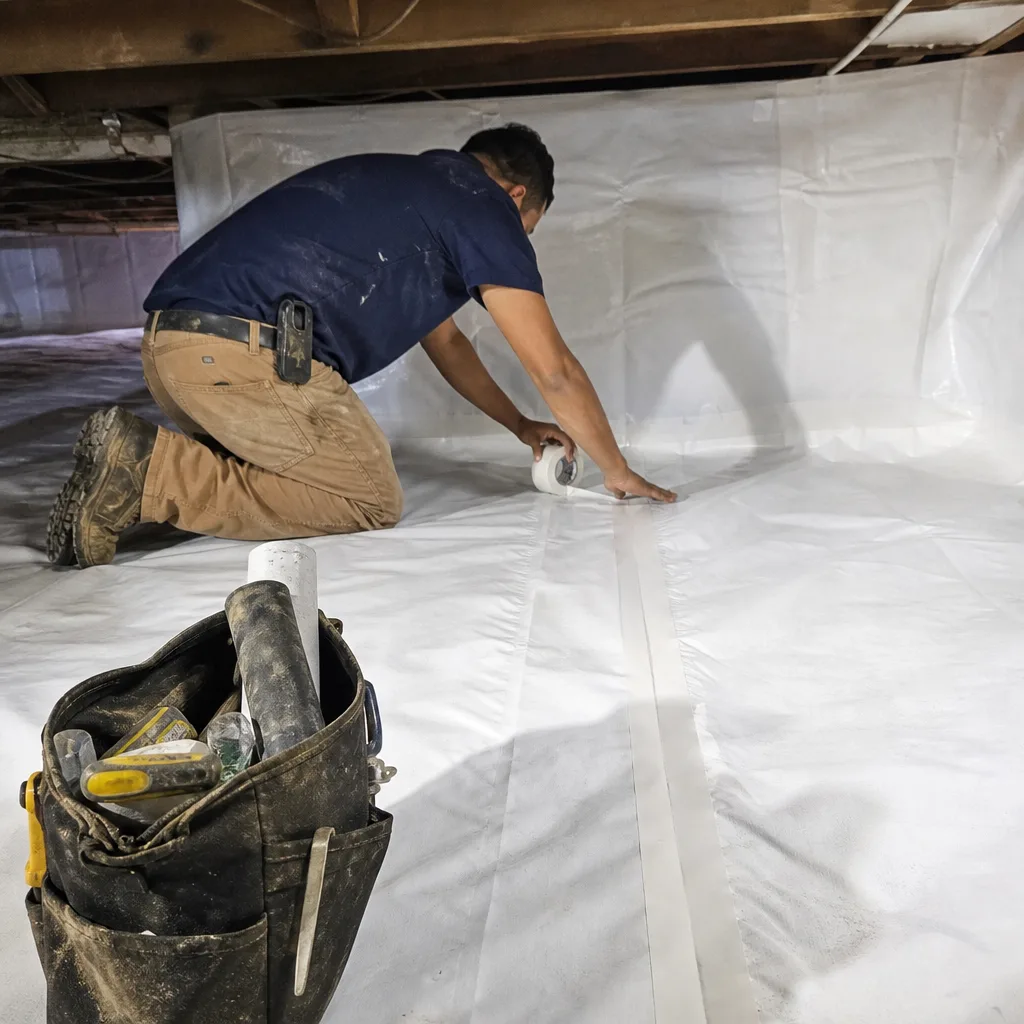
- Cold floors in winter, despite adequate attic insulation. The thermal boundary has failed at the crawl space - usually torn or displaced foam board at the foundation wall, or gaps where the vapor barrier pulled away from piers. Conditioned air leaks out; soil-temperature air leaks in.
- Musty or earthy smell that worsens after rain. Your vapor barrier has a breach, or the seam tape has delaminated. In San Marcos, where we get 34 inches of annual rainfall concentrated in spring and fall, even a 6-inch tear lets enough moisture through to support mold on floor joists within two to three weeks.
- Insect or rodent activity concentrated at foundation walls. Gaps in the encapsulation create highways. We often find this in older homes near the Texas State University corridor where the original foam board was cut too tight to the sill and thermal expansion opened a finger-width gap.
- Increased allergy symptoms or humidity readings above 60% on your main floor. A compromised crawl space becomes a moisture pump. The stack effect - natural air movement from bottom to top of the house - pulls whatever’s down there into your living space.
- Visible condensation on ductwork or plumbing lines in the crawl space. This means the dew point is being hit inside the envelope, either because the vapor barrier is breached or because the insulation R-value has degraded. In our climate, this accelerates corrosion on galvanized fittings.
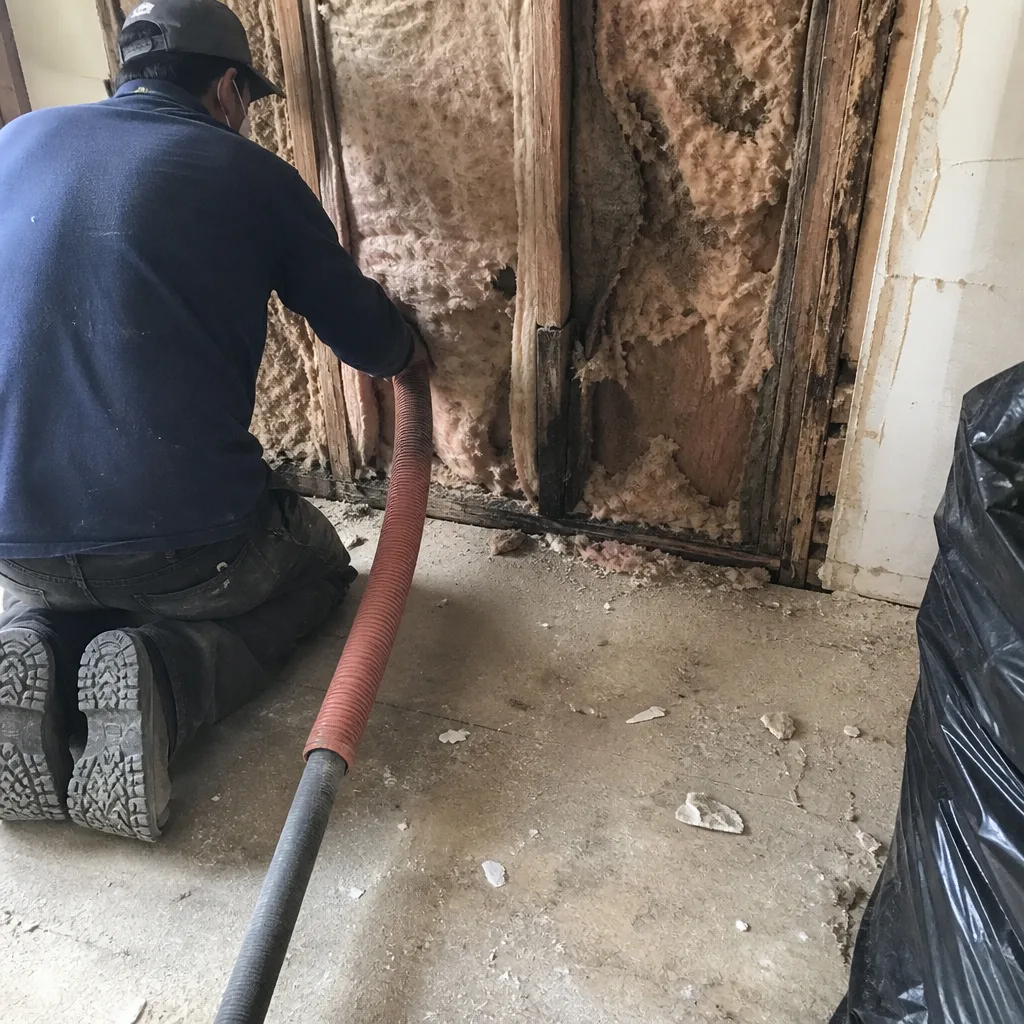 Before
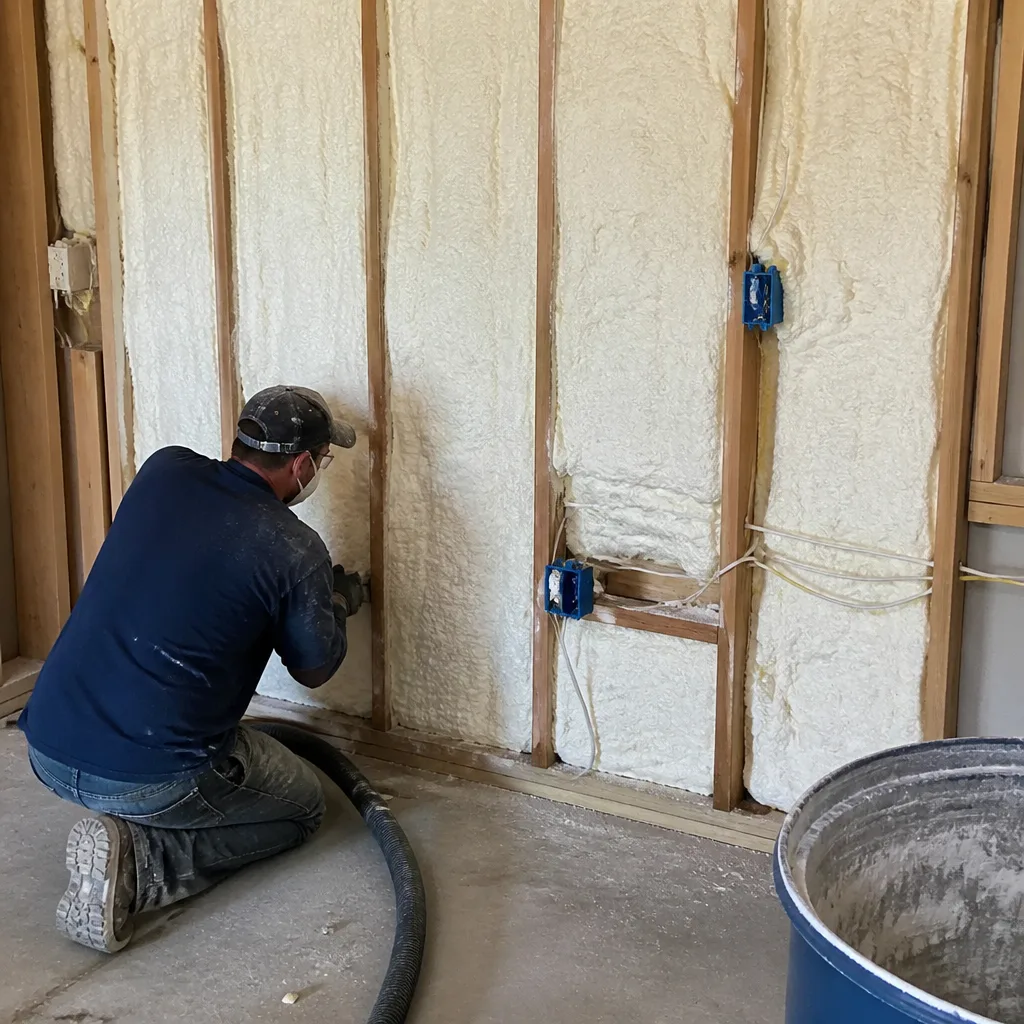 After
AfterReplacement Cost & What’s Included
Most full crawl space encapsulation replacements in San Marcos run $4,200-$7,800 for homes between 1,200 and 1,800 square feet of footprint. Here’s what drives the range:
| Component | Typical Range | What Affects It |
|---|---|---|
| Vapor barrier (10-mil reinforced poly, full floor) | $1,800-$3,200 | Obstructions (piers, HVAC platforms), access clearance |
| Foundation wall insulation (FOAMULAR NGX or equivalent) | $1,400-$2,800 | Wall height, termite inspection gap requirements, 25-psi vs. 15-psi |
| Seam tape, fasteners, mechanical sealing | $400-$700 | Linear feet of seams, pier wrapping complexity |
| Labor (removal, prep, install, cleanup) | $1,200-$2,400 | Existing debris, access difficulty, height clearance |
Partial repairs - a section of torn barrier, re-taping failed seams, replacing crushed sill foam - run $800-$2,200 depending on square footage affected. Every job gets a Written Price Before Any Work Starts, per Haven Standard Clause 1: flat price, written scope, written warranty before anyone lifts a tool. The 365-Day Done Right Promise covers all completed work, and you’ll receive a Documented Photo Record showing before condition, installed condition, and any blower-door or humidity readings we take. We don’t publish blower-door numbers for crawl space-only jobs - the meaningful measurement is at the whole-house envelope - but we will measure and document crawl space relative humidity before and after if a dehumidifier is part of the scope.
DIY or Call Us?
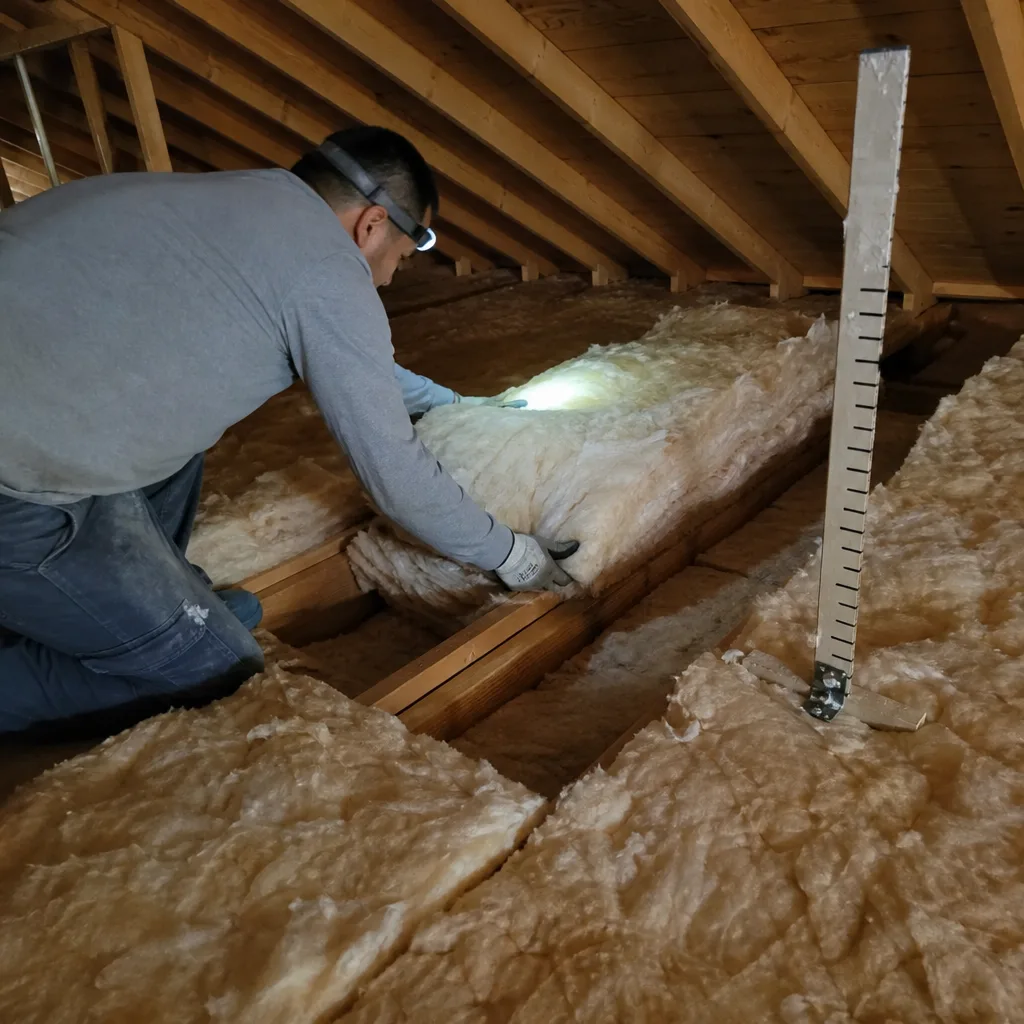
Here’s what you can safely check yourself: look at your crawl space access hatch for the Owens Corning pink logo on any visible foam board, and photograph any tears, gaps, or discolored areas on the vapor barrier. Note whether your floors feel uniformly cold or if it’s concentrated at exterior walls - that pattern tells us where the thermal boundary failed first.
Where DIY goes wrong: cutting and seaming polyethylene in a confined crawl space requires overlapping seams by 12 inches minimum and using pressure-sensitive tape rated for damp substrate application - the hardware-store tape most homeowners buy delaminates in 90 days. More critically, FOAMULAR NGX and equivalent rigid foams must maintain a termite inspection gap per Texas building code, typically 2-3 inches above grade, and must not bridge the sill plate in a way that traps moisture against framing. We’ve found rot behind well-intentioned DIY foam jobs in San Marcos homes where the gap was omitted. If you’re not certain what’s behind that foam, or whether your vapor barrier is properly lapped at seams, call us at (737) 337-8049. Estimates are free, and we’ll show you exactly what we find.
FAQs
Properly installed 10-mil cross-laminated polyethylene lasts 15-20 years in our climate; 6-mil non-reinforced lasts 8-12 years before brittleness and seam failure. The R-value tells you how slow heat moves through the material - the blower-door number tells you whether any of that matters. Call (737) 337-8049 for a free assessment of your current barrier’s condition.
Single tears under 24 inches can be patched with compatible tape and an overlay patch if the surrounding material is still supple. If the poly has gone chalky, brittle, or has multiple seam failures, replacement is more cost-effective than chasing individual breaches. We’ll tell you which category you’re in after a 10-minute inspection - estimates are free.
Most residential crawl spaces in San Marcos take one to two working days for full removal and replacement: half a day to pull old material and prep, half a day to install new barrier and foam, plus cure time for any adhesive applications. Access constraints - low clearance, tight pier spacing, or HVAC equipment in the way - can add a day. We give you a firm schedule in your written scope before starting.
We stock 10-mil and 20-mil reinforced polyethylene, seam tape, and 25-psi rigid foam board on every truck. FOAMULAR NGX specifically is ordered to job size because sheet dimensions vary by foundation height, but our San Marcos warehouse carries standard widths with 24-hour turnaround. Same-day starts are routine for partial repairs; full encapsulations typically start within 48 hours of written scope approval.
Written by Wes Okafor, Owner, Topside Attic Insulation San Marcos at Topside Attic Insulation San Marcos, serving San Marcos and nearby areas.