
Rockwool Attic Insulation: The San Marcos Owner’s Guide
Most Rockwool attic insulation installations in San Marcos run between $1.80 and $3.20 per square foot installed, depending on thickness and whether air sealing is needed first. We stock Rockwool Comfortbatt, Comfortboard, and AFB (Acoustical Fire Batt) in common R-values from R-13 to R-38, and we can usually inspect and quote same-day. Homeowners typically discover their Rockwool needs attention when rooms directly below the attic spike 8-12°F above the thermostat setpoint on summer afternoons, or when they notice the batts have settled, compressed, or been displaced by previous contractor traffic - the material doesn’t degrade chemically, but its performance collapses once the loft is lost.
Which Rockwool Models This Applies To
Rockwool’s residential attic line breaks into three families, and the part you need depends on what was originally installed and what’s accessible now.
- Comfortbatt - the flexible semi-rigid batt designed for standard wood stud cavities. Available in 3.5″, 5.5″, and 7.25″ thicknesses matching 2×4, 2×6, and 2×8 framing. If your San Marcos home was built between 2015 and 2020 and the attic was insulated during original construction, there’s a strong chance this is what’s up there. The facing matters: unfaced is standard for attics; kraft-faced belongs in walls, not overhead.
- Comfortboard 80/110 - rigid boards used for continuous insulation over framing or as a thermal break. We see these in custom builds near the Blanco River corridor where architects spec’d raised-heel trusses and full-depth insulation. Thicknesses run 1″ to 4″ in 0.5″ increments. Critical compatibility note: Comfortboard 80 (8 psi compressive strength) will crush under foot traffic during future service work; 110 (11 psi) holds up better in attics with frequent HVAC access.
- AFB (Acoustical Fire Batt) - denser, used where fire rating and sound control overlap with thermal. Rare in pure attic applications but common in San Marcos townhomes and duplexes near Texas State where party walls extend into attic space.
Identification is straightforward if the original installer left the product label stapled to a truss. Otherwise, measure thickness and density: Comfortbatt at 3.5″ weighs roughly 0.6 lbs per square foot; fiberglass of the same thickness is half that. Rockwool’s brownish-gray color and fibrous, almost felt-like texture are distinct from yellow-pink fiberglass or white cellulose. We carry OEM Rockwool and equivalent-density mineral wool from Johns Manville and Knauf - the thermal performance matches, though fire ratings may differ if code compliance is required.
Signs Your Rockwool Attic Insulation Is Failing
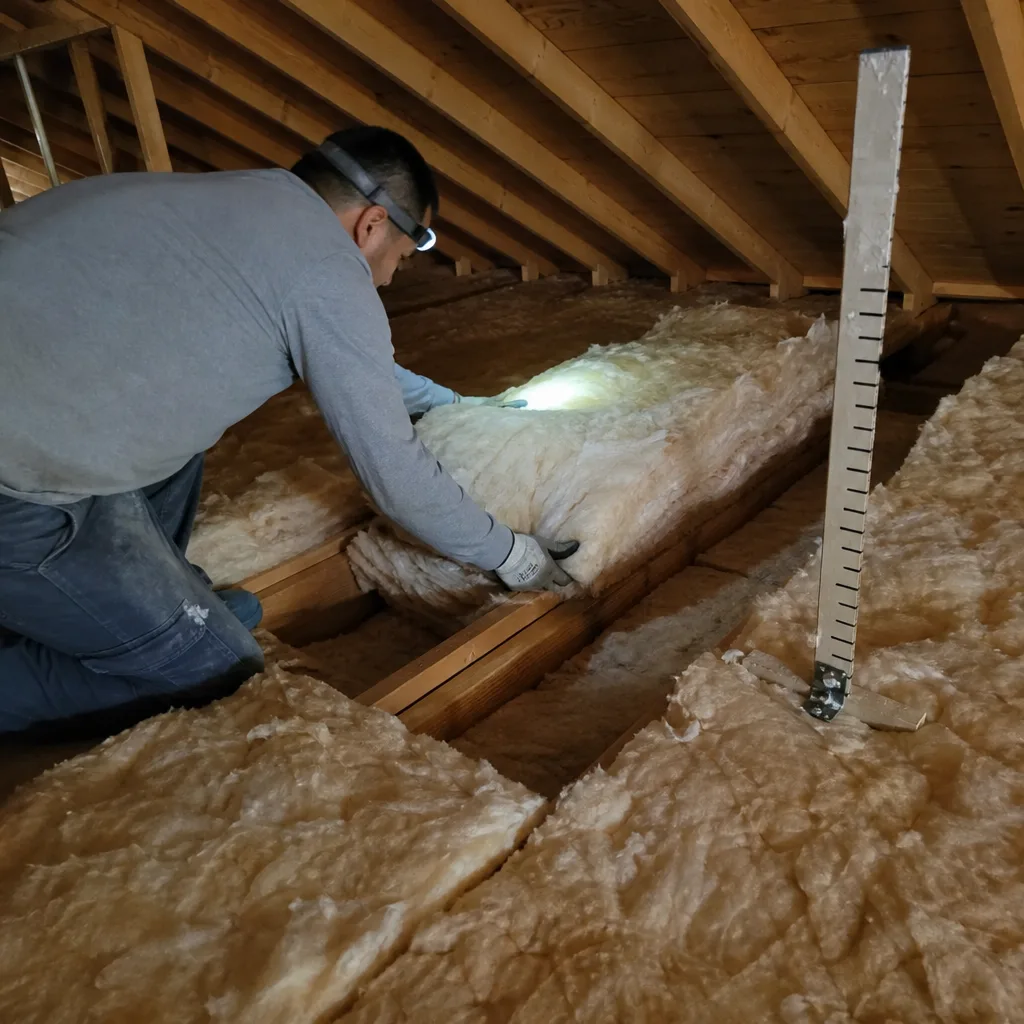
- Uneven room temperatures, especially upstairs. Rockwool doesn’t lose R-value with age, but it loses effective coverage when compressed by storage boxes, disturbed by cable installers, or shifted by attic wind-washing - the movement of air through the insulation layer that strips heat before it reaches the material. In San Marcos, where afternoon attic temps hit 140°F from May through September, even 10% gaps in coverage create detectable hot spots on the ceiling below.
- Energy bills climbing year-over-year with no rate change. The material itself is stable, but the building envelope around it moves: top plates crack, can lights loosen, bath fan housings separate from drywall. Conditioned air escapes upward, and the Rockwool can’t compensate for air movement it was never designed to stop.
- Visible settling below joist tops. Comfortbatt installed at full loft should crown slightly above the framing. If it’s flush or below, the original thickness has compressed - often from workers walking the joists during HVAC or solar installs. R-value drops proportionally with thickness; 5.5″ compressed to 4″ performs like R-21, not R-23.
- Moisture staining on ceiling drywall beneath the attic. Rockwool is hydrophobic - it repels liquid water - but it won’t stop humid attic air from contacting cold ductwork or can light housings. The stain isn’t the insulation’s fault; it’s a sign that air sealing was skipped when the insulation went in, and warm moist air is finding cold surfaces.
- Dust or debris filtering through recessed light trim. This means air is moving from attic to living space, carrying whatever the insulation has collected. Rockwool doesn’t shed fibers like old fiberglass, but if it’s serving as a filter rather than a barrier, the pressure boundary has failed somewhere else.
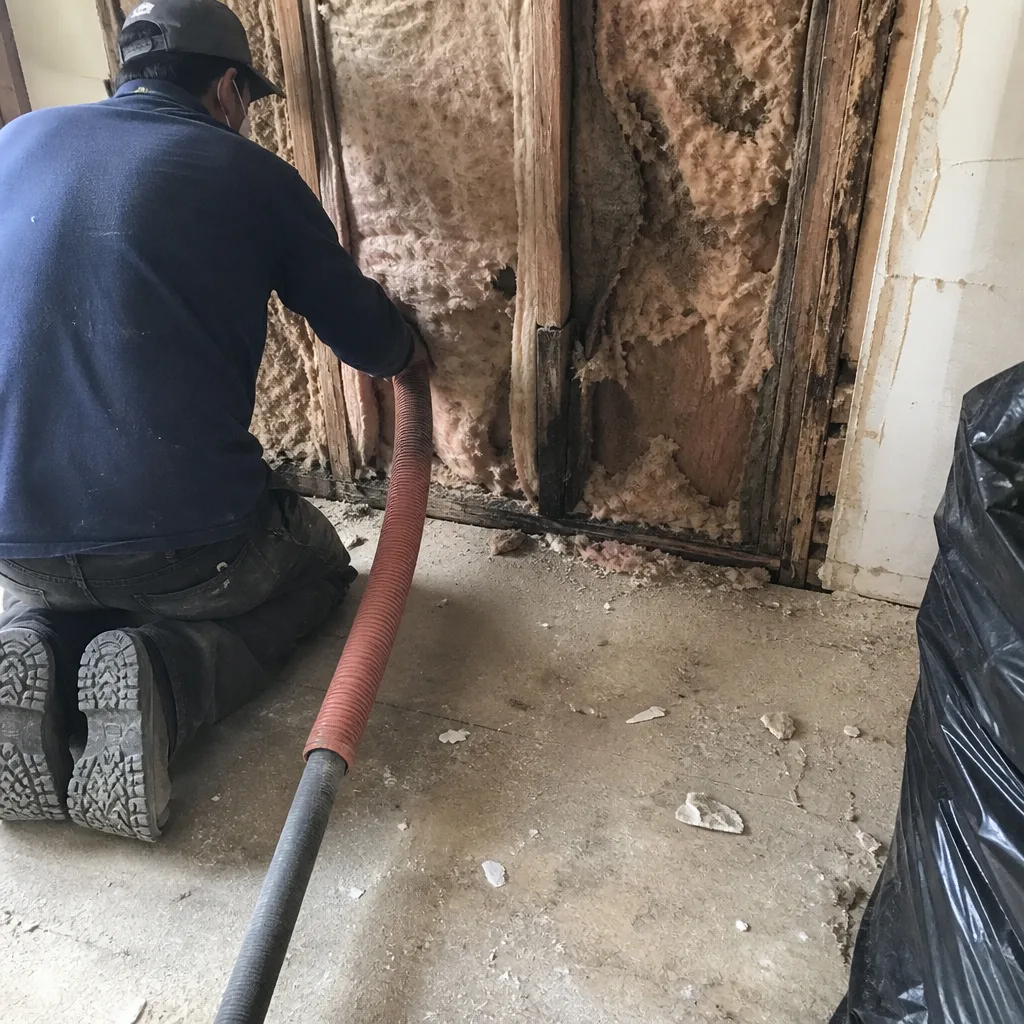 Before
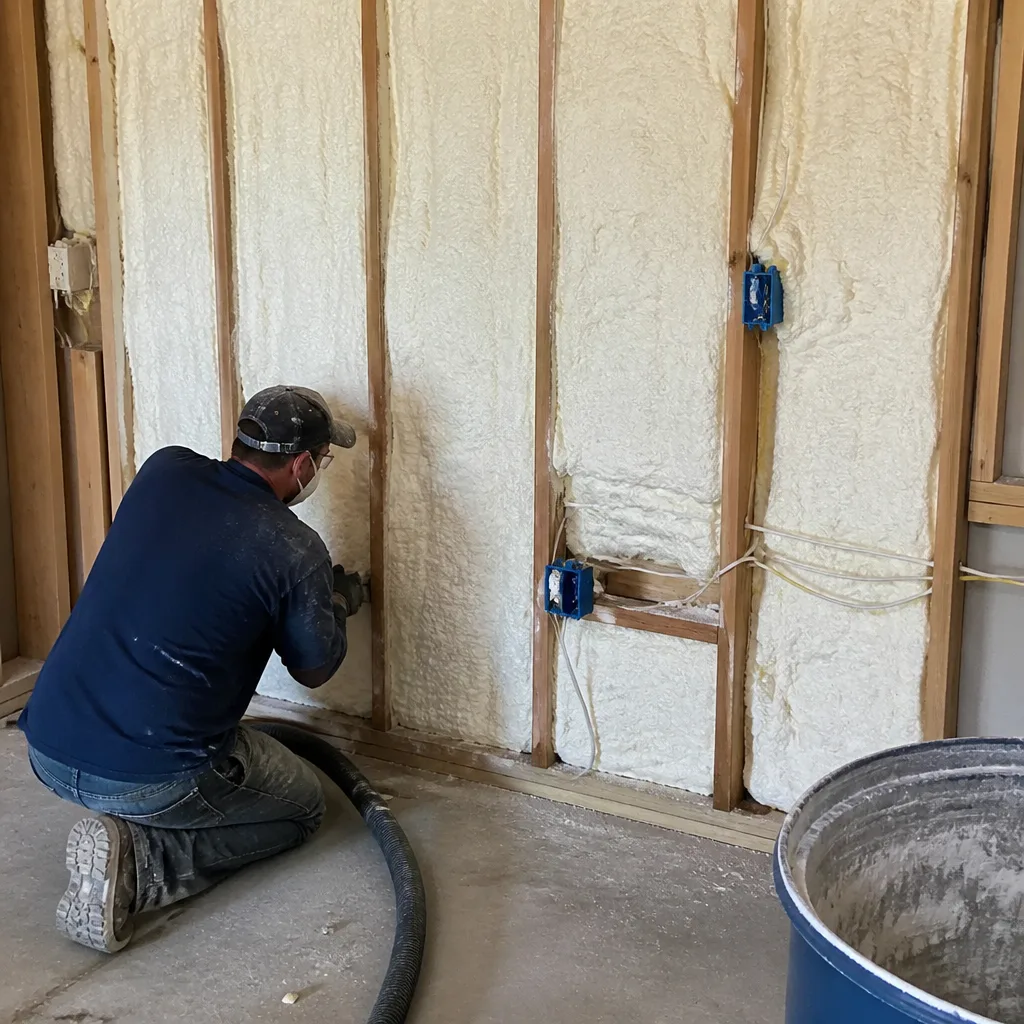 After
AfterReplacement Cost & What’s Included
| Component | Price Range (San Marcos) |
|---|---|
| Rockwool Comfortbatt, installed (unfaced, 3.5″-7.25″) | $1.80-$2.60/sq ft |
| Rockwool Comfortboard 110, installed (rigid, 2″-4″) | $2.40-$3.20/sq ft |
| Attic air sealing (top plates, penetrations, can lights) | $450-$1,200 (typical 1,800 sq ft home) |
| Blower-door test, before and after | Included with air sealing package |
| Insulation removal (if existing is contaminated or wet) | $0.75-$1.50/sq ft |
The range depends on three factors: attic accessibility (scuttle, pull-down stairs, or permanent staircase), whether we’re working over existing insulation or removing first, and the condition of the air barrier. We won’t blow or lay new Rockwool over an unsealed attic floor - that’s Haven Standard Clause 1. The written price you receive before any work starts includes material, labor, the blower-door test, and the Documented Photo Record. Every Rockwool installation carries our 365-Day Done Right Promise.
DIY or Call Us?
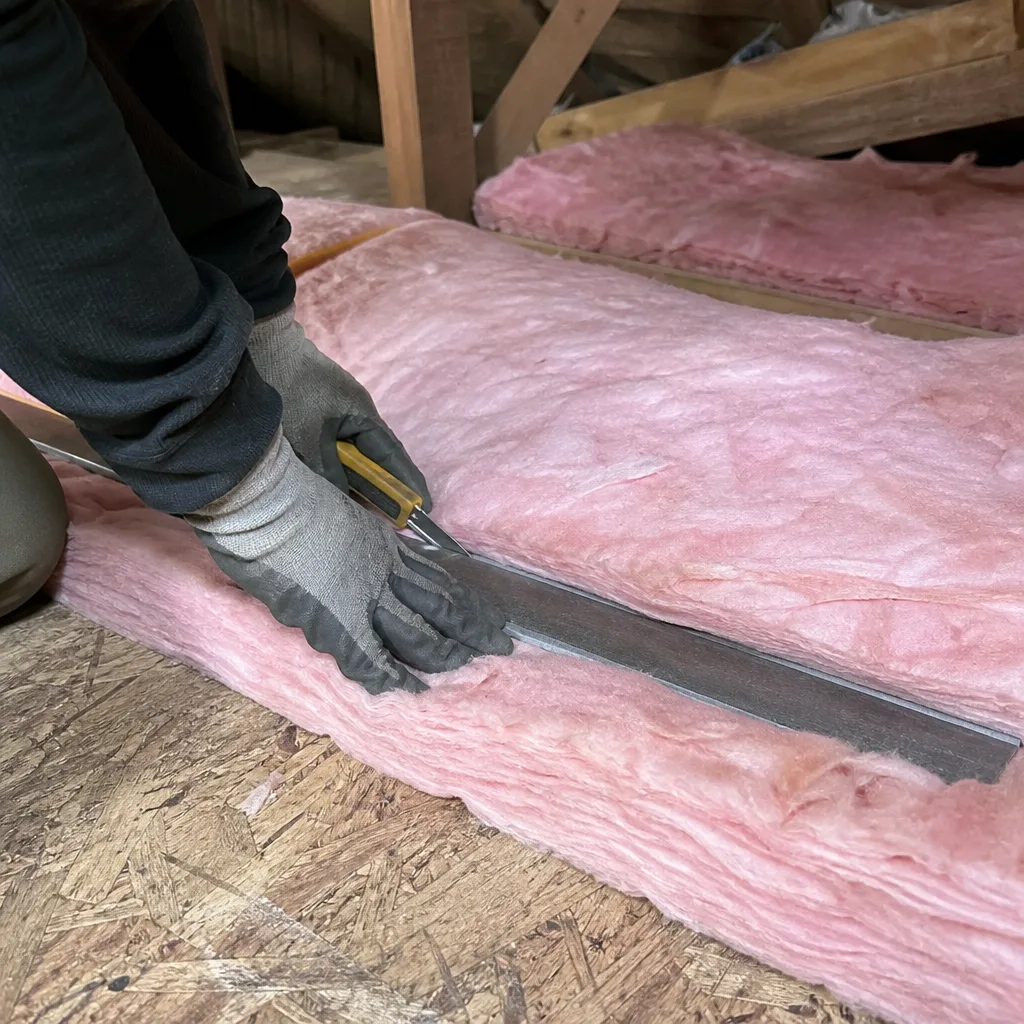
There’s safe checking and there’s unsafe guessing. A homeowner can verify the product label, measure settled thickness against original specs, and photograph any moisture staining or compressed areas - all useful information that speeds our quote. What we don’t recommend: walking attic joists without proper plank walkways, disturbing potentially asbestos-containing vermiculite that may underlie older insulation layers, or attempting to install rigid Comfortboard overhead without two-person handling and proper fasteners - the boards are dense, the angles are awkward, and a 2’×4′ sheet of 110 at 4″ thick weighs 22 pounds.
The bigger risk isn’t physical injury; it’s spending money on material that can’t perform because the air leaks weren’t found first. The R-value tells you how slow heat moves through the material - the blower-door number tells you whether any of that matters. We run that test before we spec any product. Call (737) 337-8049 and we’ll walk through what you’ve found.
FAQs
The mineral wool itself is inert and doesn’t degrade; we’ve inspected 30-year-old Rockwool that still met original density and R-value specs. What fails is the installation around it - compressed batts, displaced boards, and air leaks that develop as the structure settles and penetrations loosen. In San Marcos specifically, the thermal cycling between 140°F summer attic peaks and occasional winter freezes below 32°F accelerates joint and sealant fatigue in the air barrier, not the insulation. Call (737) 337-8049 for an attic condition check - estimates are free.
Localized compression or displacement can sometimes be corrected by adding loose-fill mineral wool to restore depth, but only if the air sealing is intact and there’s no moisture history. Batts that have been walked on repeatedly break their fiber structure and won’t recover loft. We assess each attic for salvageable coverage versus replacement; our written scope separates the two so you see the math. Call (737) 337-8049 for an exact quote.
A typical 1,500-2,000 square foot attic with air sealing and new Comfortbatt is a one-day job for our crew of two. Add half a day if we’re removing existing material first. We arrive with the Rockwool on the truck, run the blower-door test before and after, and leave you with the printed results and photo documentation. Same-day starts are usually available with 24-48 hours notice. Call (737) 337-8049 to check this week’s schedule.
We keep Comfortbatt in R-13, R-19, R-21, R-23, R-30, and R-38 on our San Marcos warehouse shelves, plus Comfortboard 80 and 110 in 2″ and 4″ thicknesses. AFB and less common thicknesses typically arrive within two business days from our Austin-area distributor. We don’t markup material; the price in your written scope reflects our landed cost plus standard labor. Topside Attic Insulation San Marcos is an independent service provider and is not affiliated with Rockwool International. Call (737) 337-8049 to confirm current stock for your specific R-value and square footage.
Ready to see what your attic is actually doing? Call (737) 337-8049. A live person answers 24/7, and we’ll schedule a free inspection that includes a written price before any work starts, a blower-door test if air sealing is needed, and the Documented Photo Record you receive when we leave. Wes Okafor and the crew have been working San Marcos attics for years - from the older slab-on-grade neighborhoods near Texas State to newer builds along Wonder World Drive - and we publish the numbers so you know what you paid for.
Written by Wes Okafor, Owner, Topside Attic Insulation San Marcos at Topside Attic Insulation San Marcos, serving San Marcos and nearby areas.