
Rockwool Crawl Space Encapsulation: The San Marcos Owner’s Guide
Rockwool crawl space encapsulation in San Marcos typically runs $2,800-$5,400 for a complete system install, and we stock Rockwool Comfortboard 80 and Comfortboard 110 rigid boards on every truck for same-day replacement. Most San Marcos homeowners discover the system has failed when their spring electricity bill jumps $80-$150 and the crawl space smells like wet cardboard after a hard rain off the Blanco River basin.
We see this most often in 1980s-2000s slab-on-grade homes between Hopkins Street and the Wonder World Drive corridor, where the original builder-grade polyethylene vapor barrier has degraded and the Rockwool rigid insulation is sitting directly on damp soil. The R-value tells you how slow heat moves through the material - the blower-door number tells you whether any of that matters. If your crawl space is leaking unconditioned air, even Rockwool’s excellent 4.0 per inch R-value is working uphill.
Which Rockwool Models This Applies To
Rockwool does not manufacture a dedicated “crawl space encapsulation kit.” What we install and replace are Rockwool Comfortboard rigid mineral wool boards, typically 80 or 110 density, paired with a sealed vapor barrier and mechanical fastening system. Comfortboard 80 is the 8-pound-per-cubic-foot density used for interior crawl space walls and rim joist cavities; Comfortboard 110 at 11 pounds per cubic foot handles exterior-grade applications and high-moisture zones under San Marcos homes with poor site drainage.
To identify what you have, look for the foil-faced stamp on any exposed board edge. Rockwool labels include density, R-value, and batch date. If the stamp has worn off, measure thickness: 1.5-inch boards are almost always Comfortboard 80, while 2-inch and 3-inch stock is typically 110 density. The critical compatibility gotcha in San Marcos is fastening: Comfortboard requires corrosion-resistant washers and cap nails rated for mineral wool’s compressive resistance, not standard insulation staples, which pull through within two seasons of our clay-heavy soil’s expansion cycles.
OEM Rockwool boards versus quality aftermarket mineral wool: we source both. Aftermarket boards from Johns Manville or Owens Corning match Rockwool’s thermal performance but vary in water-repellency additive load, which matters in the 60-70% average humidity under a San Marcos crawl space. We default to Rockwool stock for replacement work because its hydrophobic binder formulation, the factory-applied treatment that resists moisture absorption, has held up longest in our documented photo records from 2016 forward.
Signs Your Rockwool Crawl Space Encapsulation Is Failing
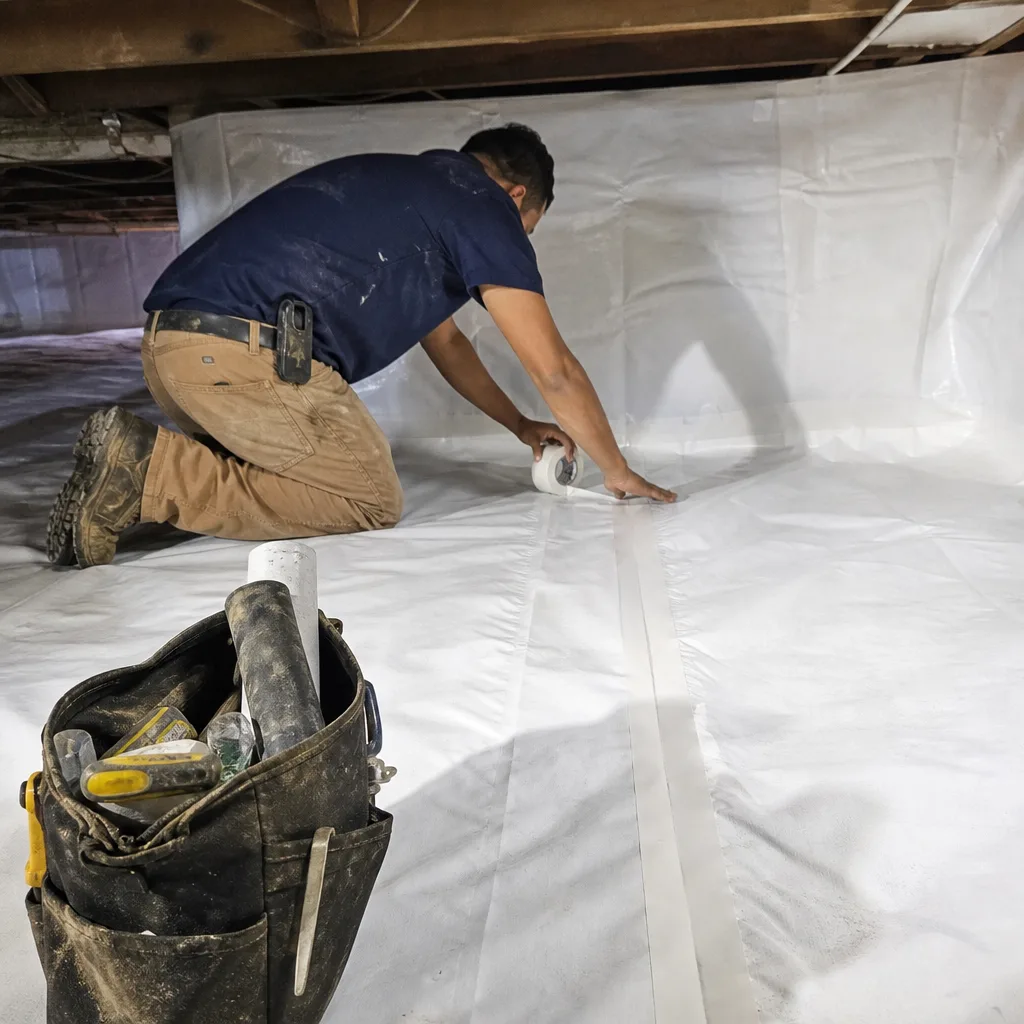
- Wet or sagging insulation boards. Rockwool is water-repellent, not waterproof. If the vapor barrier beneath it has torn at seams or perimeter edges, capillary wicking from soil moisture saturates the board’s lower surface. The board doesn’t rot, but its thermal performance drops roughly 40% once the binder breaks down from sustained dampness.
- Mold or mildew on floor joists above the crawl space. This signals warm, humid air hitting cold surfaces - the classic encapsulation failure pattern. In San Marcos, we trace this most often to unsealed rim joists where the Rockwool board meets the sill plate, a gap that opens as framing lumber shrinks through our hot, dry summers.
- Insect or rodent nesting in board gaps. Rockwool’s mineral content deters chewing, but mice will burrow between poorly fitted boards. We find this concentrated near plumbing penetrations where the original installer cut boards roughly and didn’t seal with compatible mesh and foam.
- Musty odor entering living spaces through floor registers. Your HVAC return plenum likely runs through the crawl space or pulls make-up air from it. When the encapsulation seal fails, that air path becomes a direct conduit for soil gases and microbial volatile organic compounds.
- Hardwood floor cupping or tile grout cracking. These are moisture signatures, not structural failures. When the crawl space relative humidity climbs above 65% because the vapor barrier is compromised, moisture migrates upward through the subfloor and attacks finish flooring from below.
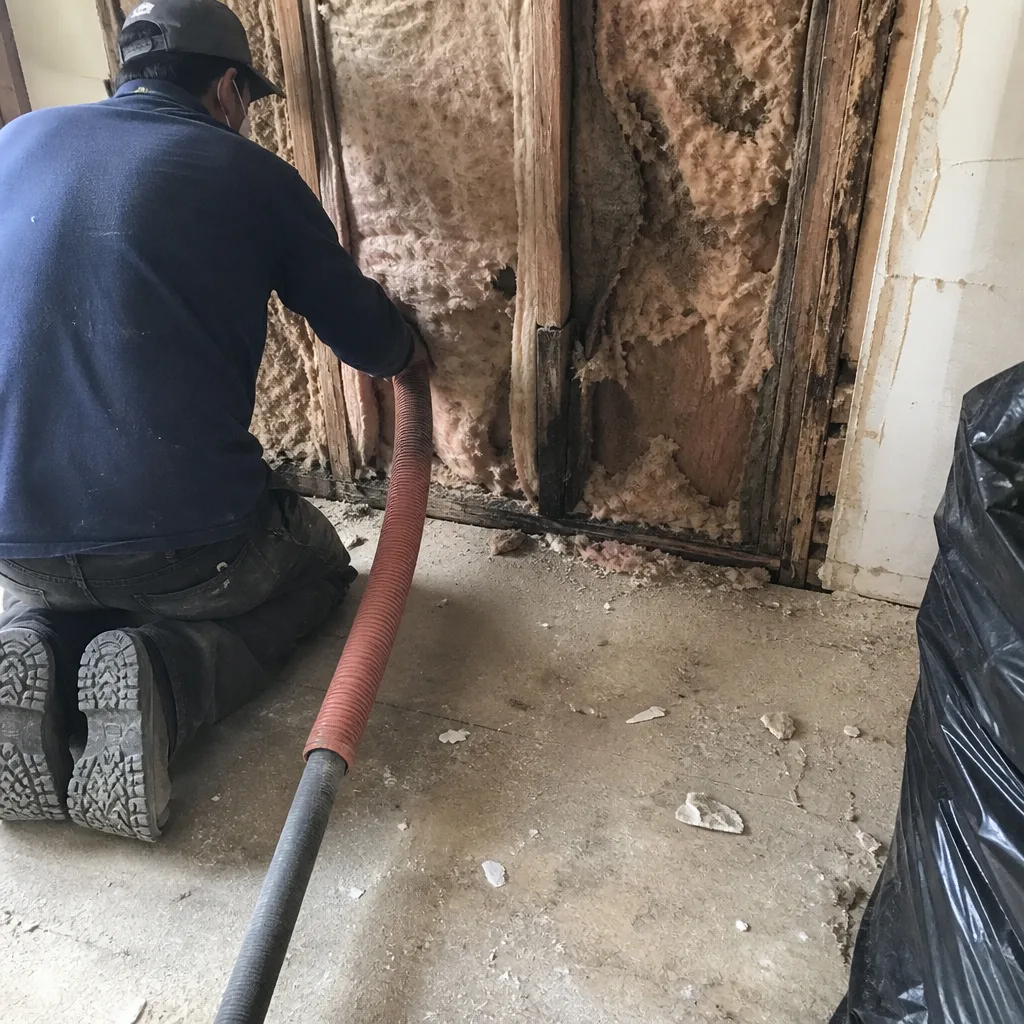 Before
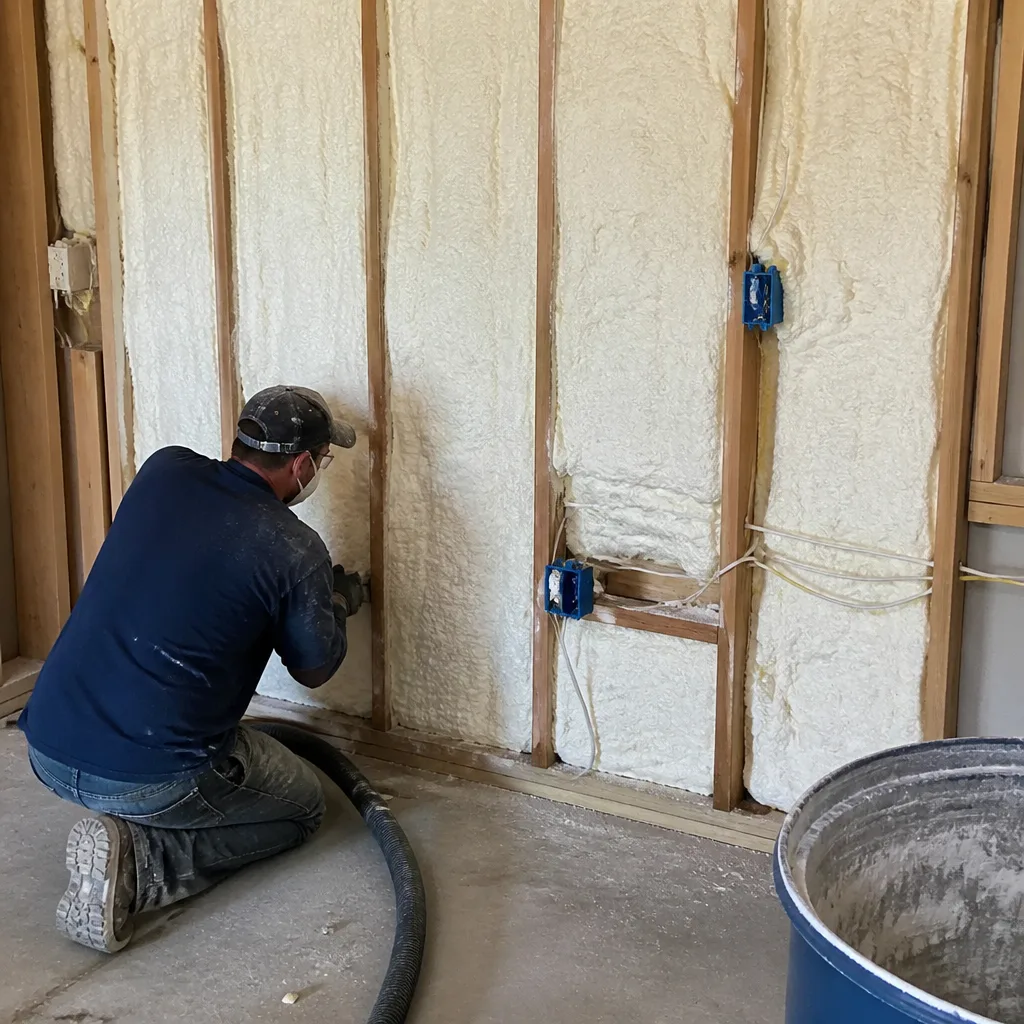 After
AfterReplacement Cost & What’s Included
In San Marcos, a full Rockwool crawl space encapsulation replacement runs $2,800-$5,400 for homes between 1,200 and 2,400 square feet. The range depends on three factors we assess during our free estimate: crawl space height (less than 18 inches requires specialized equipment), existing mold remediation needs, and whether the rim joist assembly needs separate air sealing before new Rockwool goes in.
| Component | Typical Range |
|---|---|
| Rockwool Comfortboard 80/110 material | $680-$1,400 |
| Vapor barrier (10-20 mil reinforced poly) | $420-$890 |
| Mechanical fastening and seam sealing | $340-$620 |
| Labor and removal of failed material | $1,100-$2,100 |
| Before-and-after blower-door test | Included |
Every job closes with a Documented Photo Record and, where applicable, before-and-after blower-door numbers showing the actual air-leakage reduction. Our 365-Day Done Right Promise covers all completed work, and the written scope and warranty are delivered before anyone starts - Haven Standard Clause 1.
DIY or Call Us?
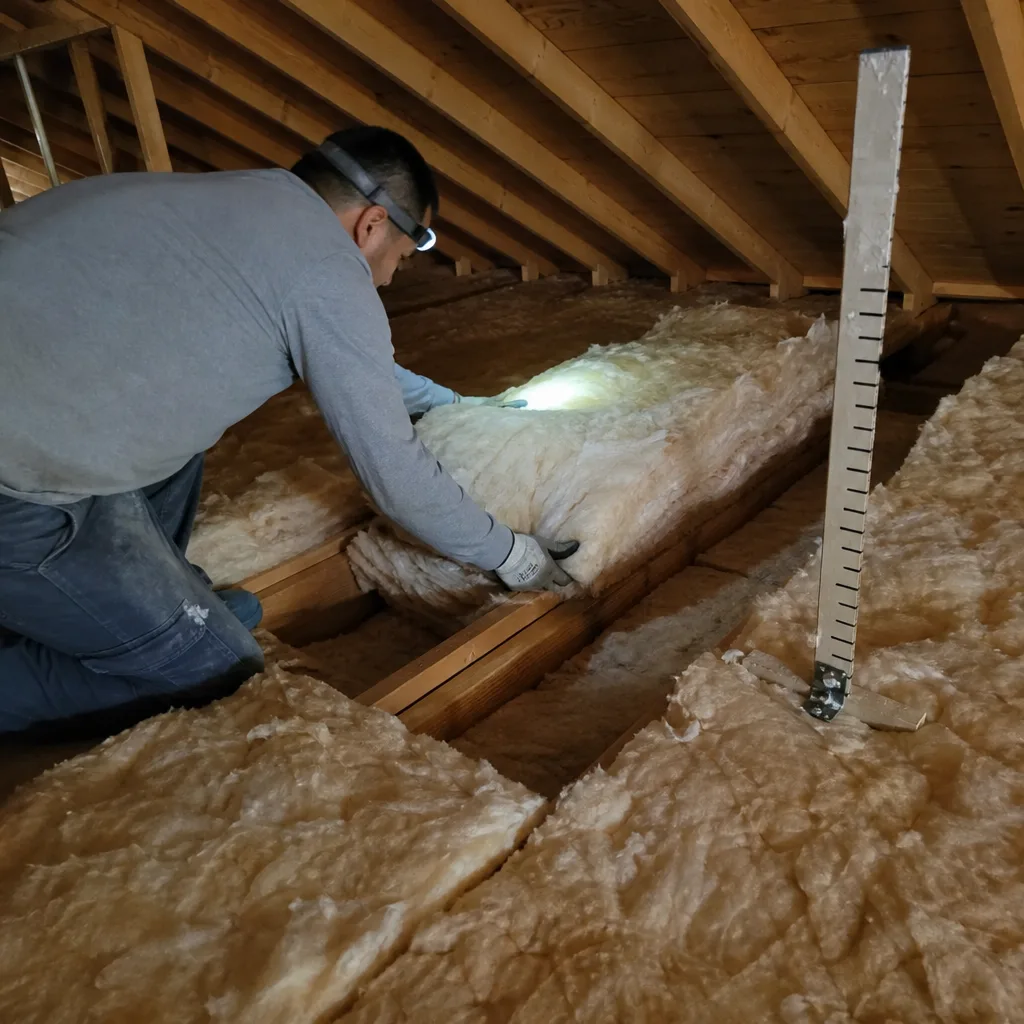
What you can safely check: verify that your crawl space access door seals tightly, look for standing water or obvious vapor barrier tears from the entry point, and photograph any board stamps or labels for identification. Do not enter if you smell sewage or detect structural sagging in floor joists.
Where DIY goes wrong: Rockwool Comfortboard is itchier than fiberglass and requires a respirator rated for mineral wool fibers, not a dust mask. More critically, proper encapsulation requires a continuous vapor barrier sealed to foundation walls with compatible tape and mechanical termination - a detail we see failed in roughly seven of ten DIY attempts we are called to correct. The rim joist air sealing that must precede insulation is nearly impossible to execute properly without a blower-door test to locate hidden leakage paths. We also stock Reflectix and other radiant barrier materials if your application calls for hybrid systems.
Topside Attic Insulation San Marcos is an independent service provider, not affiliated with Rockwool. If you’re seeing the symptoms above, call (737) 337-8049. We answer live 24/7, and estimates are free.
FAQs
In San Marcos’s climate, a properly installed Rockwool encapsulation system lasts 20-25 years, with the vapor barrier typically failing first at seam and perimeter points around year 15. Our clay soils’ seasonal expansion and contraction stress those termination details more than in sandy-soil regions. Call (737) 337-8049 for an exact assessment of your existing system - estimates are free.
Spot repair is viable if the Rockwool boards are dry, intact, and the damage is limited to accessible seams less than 10 linear feet. We use 10 mil minimum patch material with double-sided butyl tape, not duct tape or generic construction tape, which releases within two years in crawl space humidity. If boards show binder breakdown or compression set, partial replacement is the honest recommendation. Call (737) 337-8049 for a free second opinion on any written estimate.
Most Rockwool crawl space encapsulation replacements in San Marcos are completed in one to two working days, depending on crawl space square footage and whether mold remediation or structural repairs are needed first. We arrive with Rockwool Comfortboard stock on the truck, so material delays are not a factor. Call (737) 337-8049 to schedule - we text when the technician is en route.
Yes. We carry Comfortboard 80 and 110 in 1.5-inch, 2-inch, and 3-inch thicknesses, plus corrosion-resistant fastening systems and compatible vapor barrier materials on every service vehicle. For less common densities or faced variants, our San Marcos warehouse holds next-day stock. Call (737) 337-8049 to confirm compatibility with your specific installation.
Written by Wes Okafor, Owner, Topside Attic Insulation San Marcos at Topside Attic Insulation San Marcos, serving San Marcos and nearby areas.