
Rockwool Radiant Barrier Installation: The San Marcos Owner’s Guide
Rockwool radiant barrier installation in San Marcos typically runs between $2,800 and $4,600 for an average attic, depending on square footage and whether we’re retrofitting over existing insulation or starting fresh. Most homeowners who call us are dealing with second-floor rooms that won’t cool below 78°F even when the AC runs continuously, or they’ve noticed their summer electric bills climbing $80-$150 above the same month three years prior. We stock Rockwool Comfortboard 80 and Comfortboard 110 rigid board, plus the matching radiant barrier assemblies, on our trucks and can usually start the job within 48 hours of your call.
Which Rockwool Models This Applies To
Rockwool doesn’t sell a standalone “radiant barrier” product under its own name. What San Marcos homeowners are usually holding is a Rockwool Comfortboard rigid mineral wool board that was paired with a reflective foil-facing or installed beneath a separate radiant barrier membrane, typically in a cathedral ceiling or roof-assembly retrofit. Check your paperwork for Comfortboard 80 (2-inch, R-8), Comfortboard 110 (1.5-inch to 3-inch, R-6 to R-12), or AFB evo batt insulation with a factory-applied foil facing.
The compatibility gotcha in Hays County: Comfortboard 80 is 48″ × 24″ and Comfortboard 110 is 48″ × 36″. If your original installer cut custom pieces to fit between 24-inch on-center rafters, the replacement boards need to match that exact field-cut dimension, not the nominal sheet size. We’ve opened attics in the Blanco Gardens area where a previous contractor mixed the two sheet sizes and left gaps at the perimeter that rendered the radiant barrier useless.
OEM Rockwool foil facing versus aftermarket: Rockwool’s factory-applied foil is a kraft-paper-backed aluminum laminate rated to 250°F. Aftermarket radiant barrier membranes like Reflectix or Fi-Foil’s Ultima-FOIL can achieve similar emissivity (0.03 to 0.05) but must be installed with the correct ¾-inch minimum air gap to the roof deck to work at all. We carry both approaches on the truck and will show you the installed assembly before we close the attic.
Signs Your Rockwool Radiant Barrier Installation Is Failing
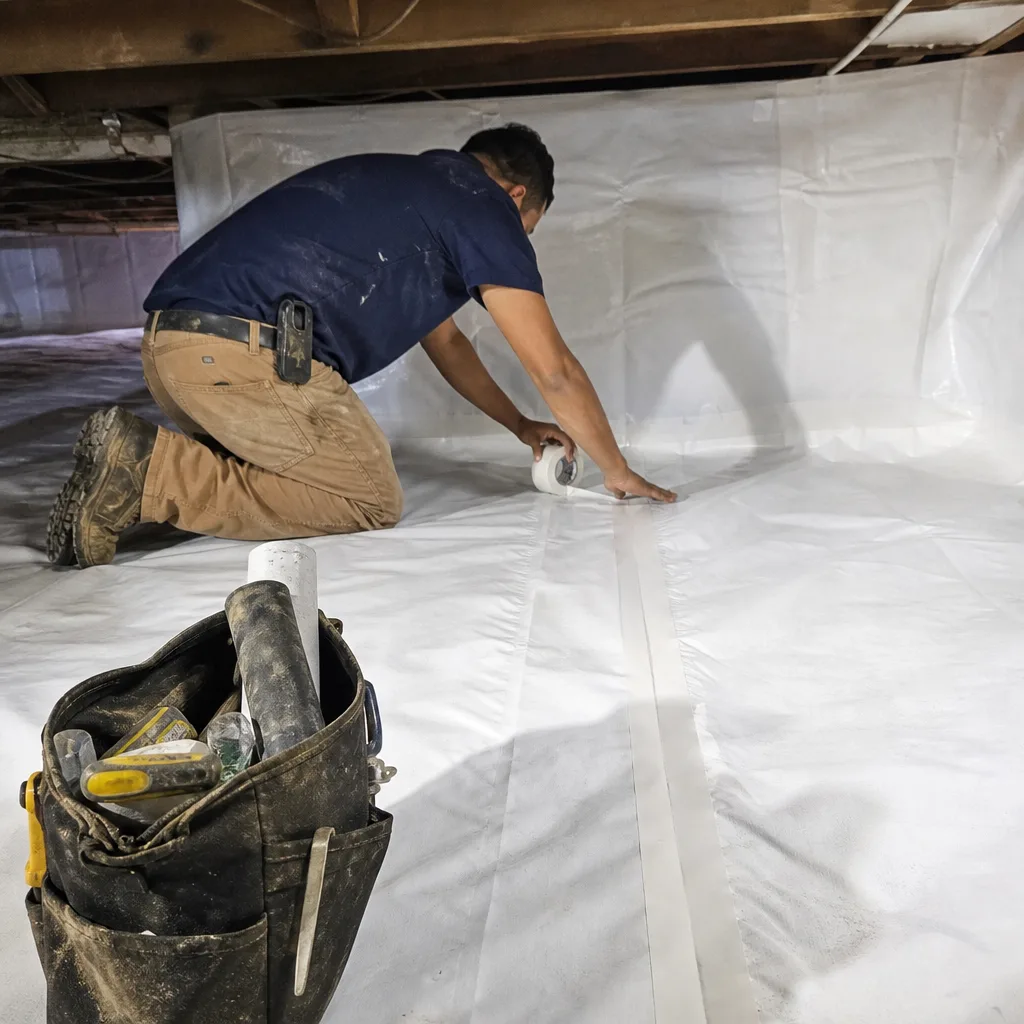
- Hot second-floor ceilings by mid-afternoon. The radiant barrier’s foil surface has either delaminated from the Rockwool board or accumulated enough dust to push its emissivity above 0.20, at which point it’s reflecting less than half the radiant heat it was designed to block. In San Marcos, where roof deck temperatures hit 160°F regularly from May through September, this failure mode shows up fast.
- AC runs constantly between 2 p.m. and 7 p.m. but catches up after dark. This pattern points to radiant heat gain overwhelming your thermal barrier, not a sizing problem with the unit itself. The Rockwool insulation is probably still doing its conductive-resistance job; the radiant barrier layer above it has failed.
- Visible gaps or sagging in the attic ceiling assembly. Rockwool Comfortboard is dense at 8-11 lbs per cubic foot, but if it was friction-fit without mechanical fasteners and the attic hits 130°F, the boards can slowly walk downward. We’ve found 3-inch gaps at the ridge in homes near the San Marcos River where humidity cycling accelerated the sag.
- Water stains on the foil facing with no roof leak. This usually means the radiant barrier was installed as a double-sided assembly without adequate drying potential. Moisture driven from the conditioned space hits the cold side of the foil and condenses. Rockwool is hydrophobic and won’t mold, but the assembly is compromised and the wetting cycle is degrading your top plates.
- Your summer kilowatt-hours have climbed 20% or more year-over-year with no rate increase. Check your CPS or Bluebonnet bill. When the radiant barrier fails, the delta-T across your attic insulation increases, and the insulation itself - even good Rockwool - can’t handle the radiant load alone.
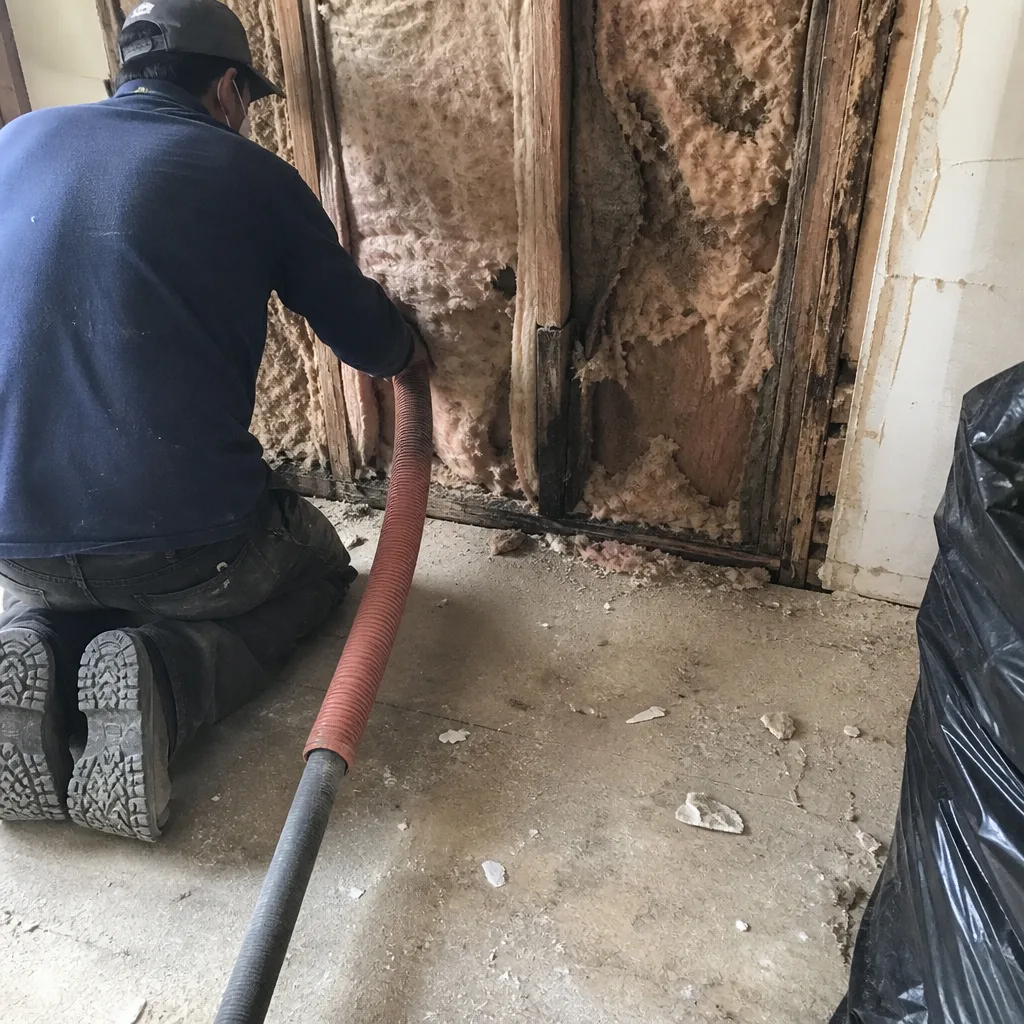 Before
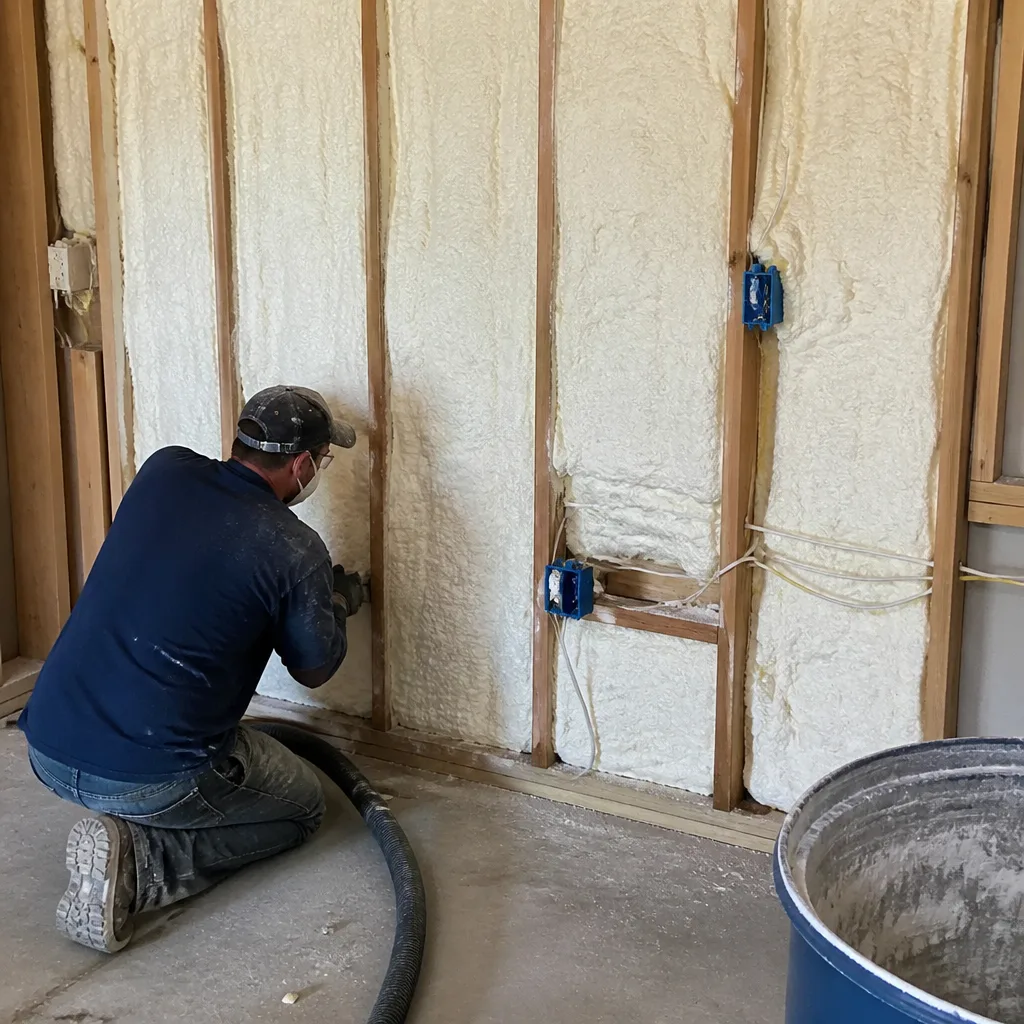 After
AfterReplacement Cost & What’s Included
| Scope | Price Range in San Marcos |
|---|---|
| Retrofit radiant barrier over existing Rockwool (under 1,200 sq ft attic) | $2,800 - $3,400 |
| Retrofit radiant barrier over existing Rockwool (1,200 - 2,400 sq ft) | $3,400 - $4,200 |
| Full Rockwool board + radiant barrier replacement (remove and re-install) | $4,000 - $4,600 |
| Air sealing package (top plates, can lights, penetrations) - required before insulation per our protocol | $680 - $1,200 |
What drives the range: attic square footage, roof pitch (steeper = slower, more material waste), accessibility, and whether we need to remove degraded existing material first. Every job includes the Documented Photo Record, the written scope with flat price before work starts, and on applicable jobs the before-and-after blower-door numbers. The 365-Day Done Right Promise covers all completed work. We source Rockwool through our standard supply chain alongside Owens Corning, Johns Manville, and Knauf; we have no exclusive arrangement with any manufacturer.
DIY or Call Us?
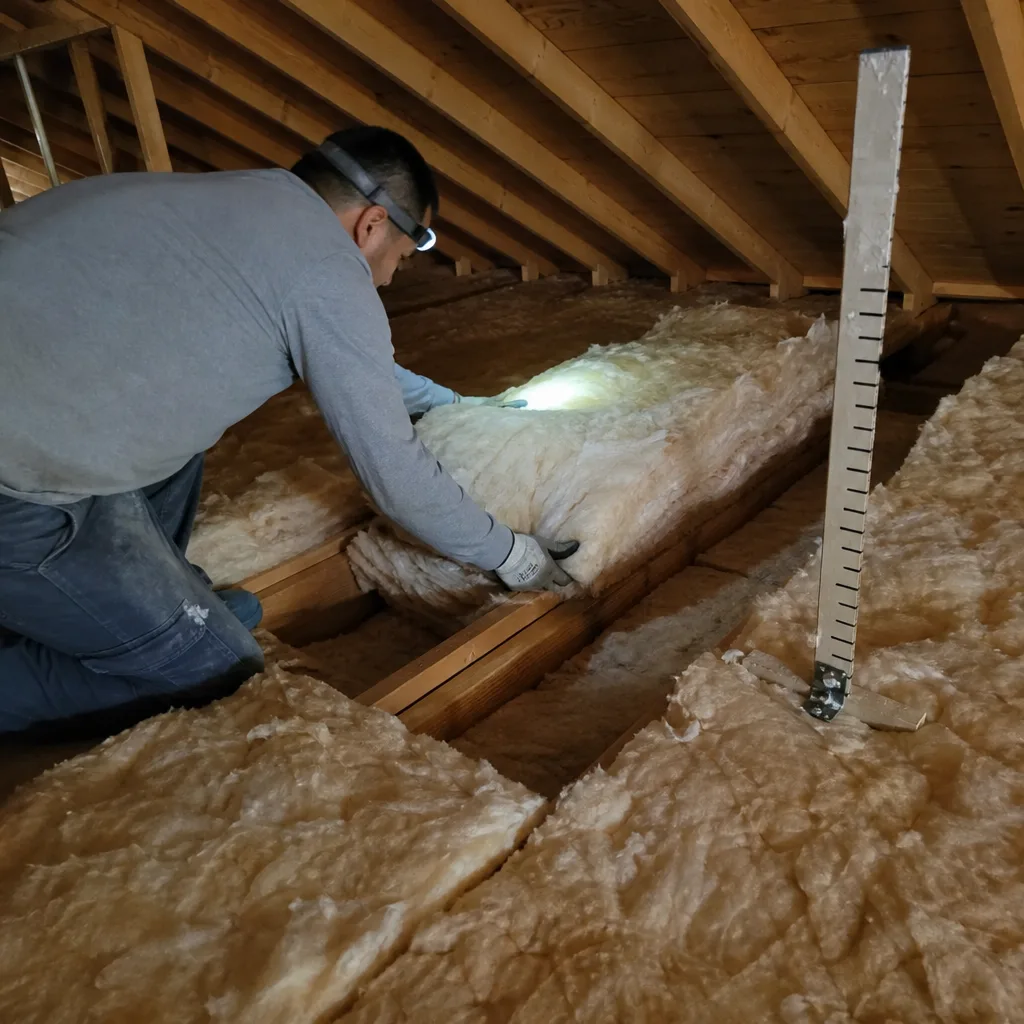
Here’s what you can safely check yourself: confirm the product label on any visible Rockwool board, measure the thickness with a tape measure, and photograph any gaps or damage from the attic hatch. Do not, however, try to remove or replace Rockwool board in a sloped roof assembly without proper fall protection and respiratory gear. Mineral wool fibers are non-irritating to most people but the dust is still a lung hazard, and working on a slope near an unprotected ridge is how homeowners end up in the ER.
The bigger DIY trap is the air gap. A radiant barrier without the required ¾-inch minimum ventilated air space to the roof deck is just shiny wallpaper. We’ve fixed three San Marcos attics this year where a homeowner stapled Reflectix directly to the rafters and actually increased attic temperature by trapping heat. If you want to verify the gap exists, use a ruler and a flashlight. If it’s missing or compressed, call (737) 337-8049 and we’ll assess whether the assembly can be corrected without full removal.
FAQs
In the Central Texas climate, a properly installed assembly with factory-applied foil facing should perform for 20-25 years. The failure point we see most often isn’t the Rockwool itself, which doesn’t degrade, but the foil delaminating after 12-15 years of 140°F+ attic cycling or the air gap being compromised by subsequent work. Call (737) 337-8049 for an attic inspection if your home is past the 12-year mark.
Sometimes. If the Rockwool board is still firmly in place and the failure is limited to dust-coated foil or small delaminated sections, we can sometimes overlay a new radiant barrier membrane with the proper air gap. If the board has sagged, gotten wet, or been compressed by storage or foot traffic, replacement is the only fix that will show up in a blower-door test. We offer free second opinions on any written estimate you’ve received for this decision.
Most residential retrofits in the San Marcos area are completed in one to two working days. Day one is air sealing and prep; day two is board installation and radiant barrier hanging. We don’t blow insulation over an unsealed attic floor, so the sealing step is non-negotiable and included in every scope. You’ll get a named technician and a text when they’re on the way.
We stock Comfortboard 80 and 110 in common thicknesses, plus Reflectix and Fi-Foil radiant barrier membranes and the correct fasteners and standoff clips to maintain the required air gap. For less common Rockwool configurations, we pull from our San Antonio supplier and typically have material on site within 24 hours. Call (737) 337-8049 to confirm current stock for your specific assembly.
The R-value tells you how slow heat moves through the material - the blower-door number tells you whether any of that matters. Wes Okafor has been running those tests since his Dawson Technical Institute training days, and he still hands every applicable customer that single printed page with the before-and-after air-changes-per-hour figure.
Ready to stop guessing about your attic? Call (737) 337-8049 for a free estimate. We’ll bring the blower door, the Rockwool stock, and the written price before any work starts - Haven Standard Clause 1, no exceptions.
Written by Wes Okafor, Owner, Topside Attic Insulation San Marcos at Topside Attic Insulation San Marcos, serving San Marcos and nearby areas.