
Rockwool Vapor Barrier Installation: The San Marcos Owner’s Guide
Rockwool vapor barrier installation in San Marcos typically runs $1,800-$3,400 for an average attic, depending on square footage and whether we’re working over existing insulation or stripping back to the deck. Most jobs we book are completed same-day once the written scope is signed, and we stock Rockwool Comfortbatt, Comfortboard, and AFB-compatible vapor barrier membranes on every truck. Homeowners usually figure out something’s wrong when they pull down attic stairs and find damp, compressed insulation near the eaves, or when their AC runs nonstop through a San Marcos July and the upstairs never cools below 78.
Which Rockwool Models This Applies To
Rockwool’s mineral wool products don’t rot, but the vapor barrier installed alongside them fails all the time. We most often pair barriers with Comfortbatt for stud cavities, Comfortboard 80 or 110 for continuous exterior or interior rigid applications, and AFB (Acoustical Fire Batt) for partition walls where moisture migration is still a concern. The compatibility gotcha: Rockwool’s higher density, 8 pounds per cubic foot for Comfortboard versus 0.5 to 1.0 for standard fiberglass, means the vapor barrier must be mechanically fastened with cap nails or battens, not just friction-fit. If your previous installer used standard staples every 24 inches, the barrier has likely sagged and torn at the fasteners.
To identify what you have, check the kraft paper or polyethylene facing for a printed ASTM E96 rating, the standard that measures how much moisture passes through. Rockwool-compatible barriers should read Class I, 0.1 perm or lower. If there’s no label, measure the mil thickness, 6-mil minimum for polyethylene in our climate zone, and note whether it’s black, clear, or foil-faced. Foil-faced barriers work with Comfortboard in commercial assemblies but trap summer heat in residential attics here; we see that mistake in San Marcos homes built during the 2019-2021 rush.
OEM vapor barriers from Rockwool distributors run 15-20% higher than quality aftermarket equivalents from Stego or Poly-America, and in our experience the performance difference is indistinguishable on a blower-door test. We stock both and will show you the spec sheets side by side before you sign.
Signs Your Rockwool Vapor Barrier Installation Is Failing
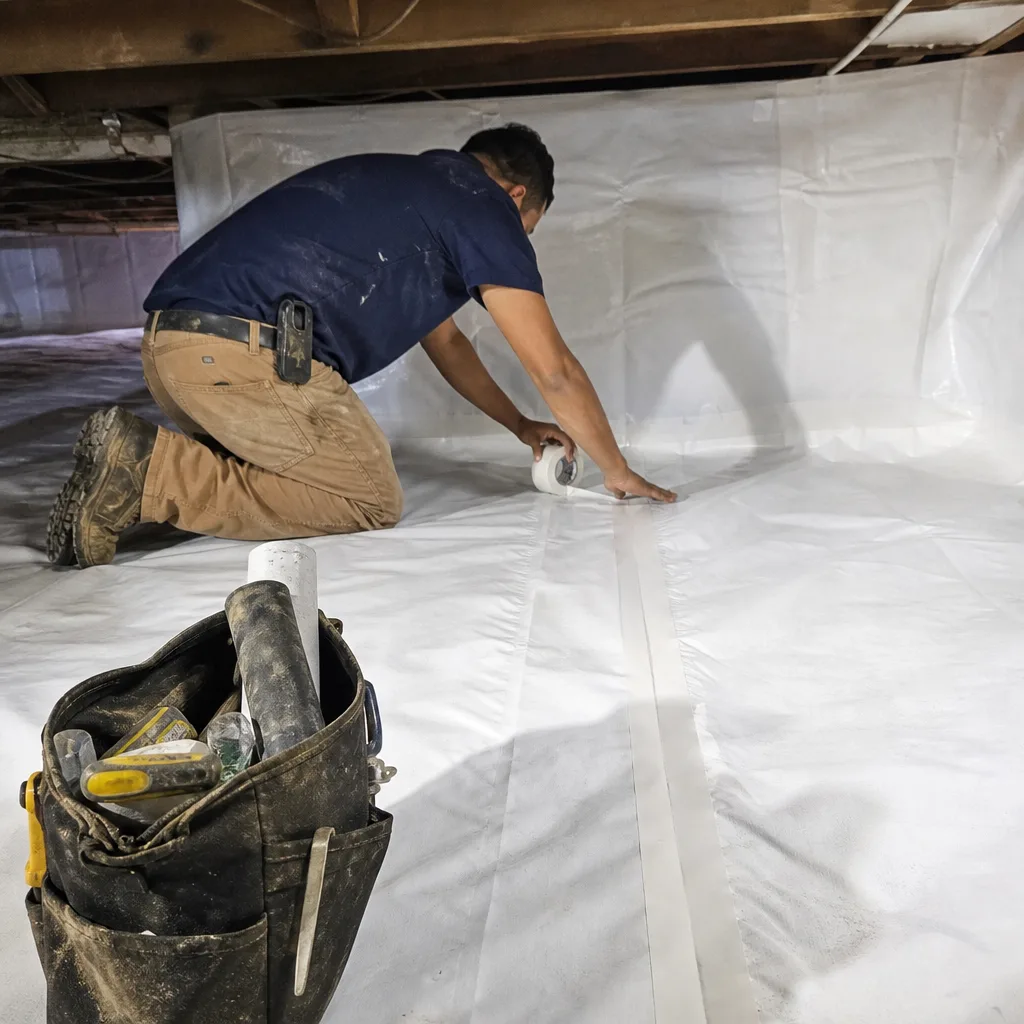
- Insulation appears dark or stained near the eaves. This means humid San Marcos air is migrating through gaps in the barrier and condensing on the cooler Rockwool surface. Mineral wool itself doesn’t mold, but the dust and organic debris caught in it will.
- Water spots on ceiling drywall below the attic, especially after a hard rain. The barrier has torn at a penetration, around a chimney, or at the top plate, the horizontal framing member where your wall meets the ceiling. Wind-driven rain pushes through, then the missing barrier lets attic air carry moisture inward.
- AC runs constantly in summer, or the upstairs temperature lags the thermostat by 4+ degrees. A failed barrier lets conditioned air leak out and hot, humid attic air leak in. The R-value of your Rockwool hasn’t changed, but the effective performance has collapsed because the air is moving around it, not just through it.
- You find loose, unattached polyethylene sheeting flapping in the attic. Staples pulled through, cap nails missed the rafter, or the installer never sealed seams with acoustic sealant or tape. In San Marcos, where attic temperatures hit 140 degrees regularly, adhesive-backed tapes dry out and release within three to five years if they weren’t rated for high heat.
- Musty smell from attic access or upstairs closets on exterior walls. Vapor barrier failures at the top plate let moisture collect in the wall cavity. Rockwool won’t degrade, but the paper-faced drywall and wood framing will.
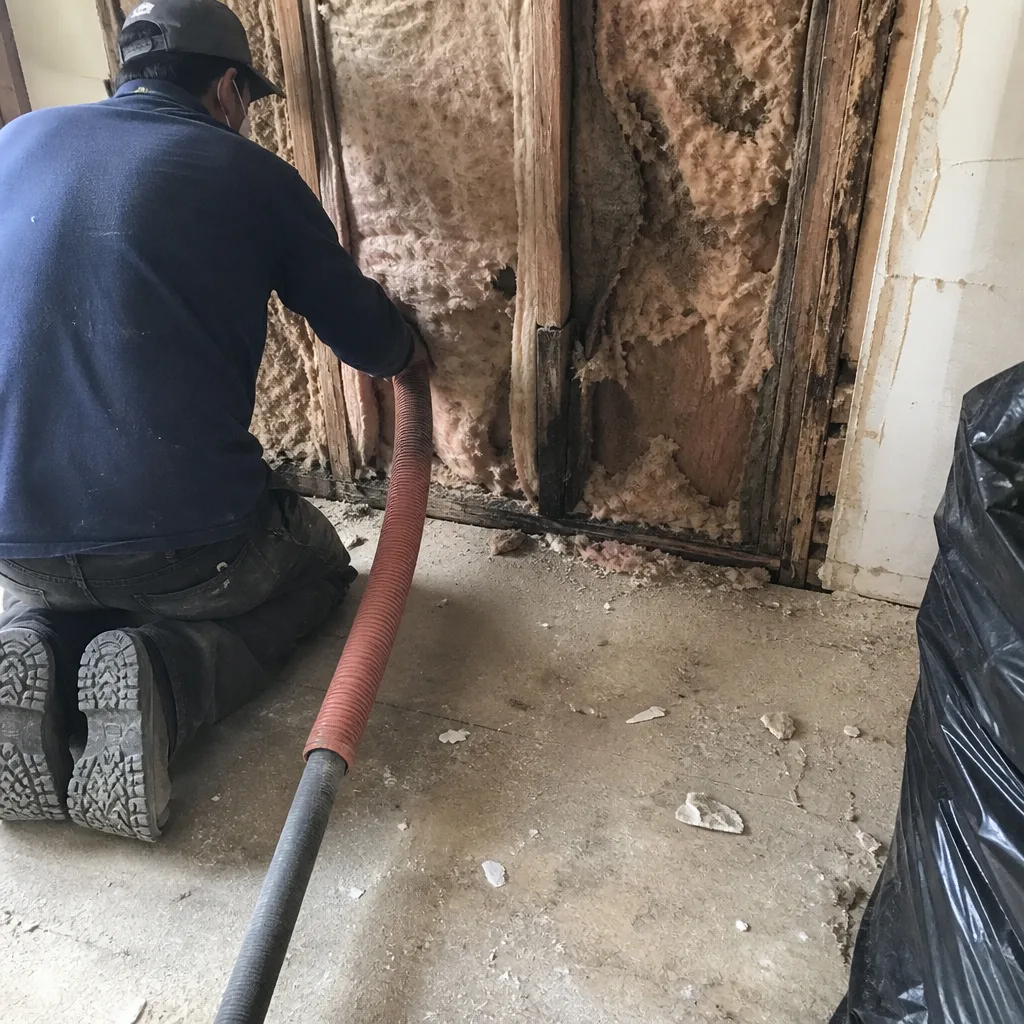 Before
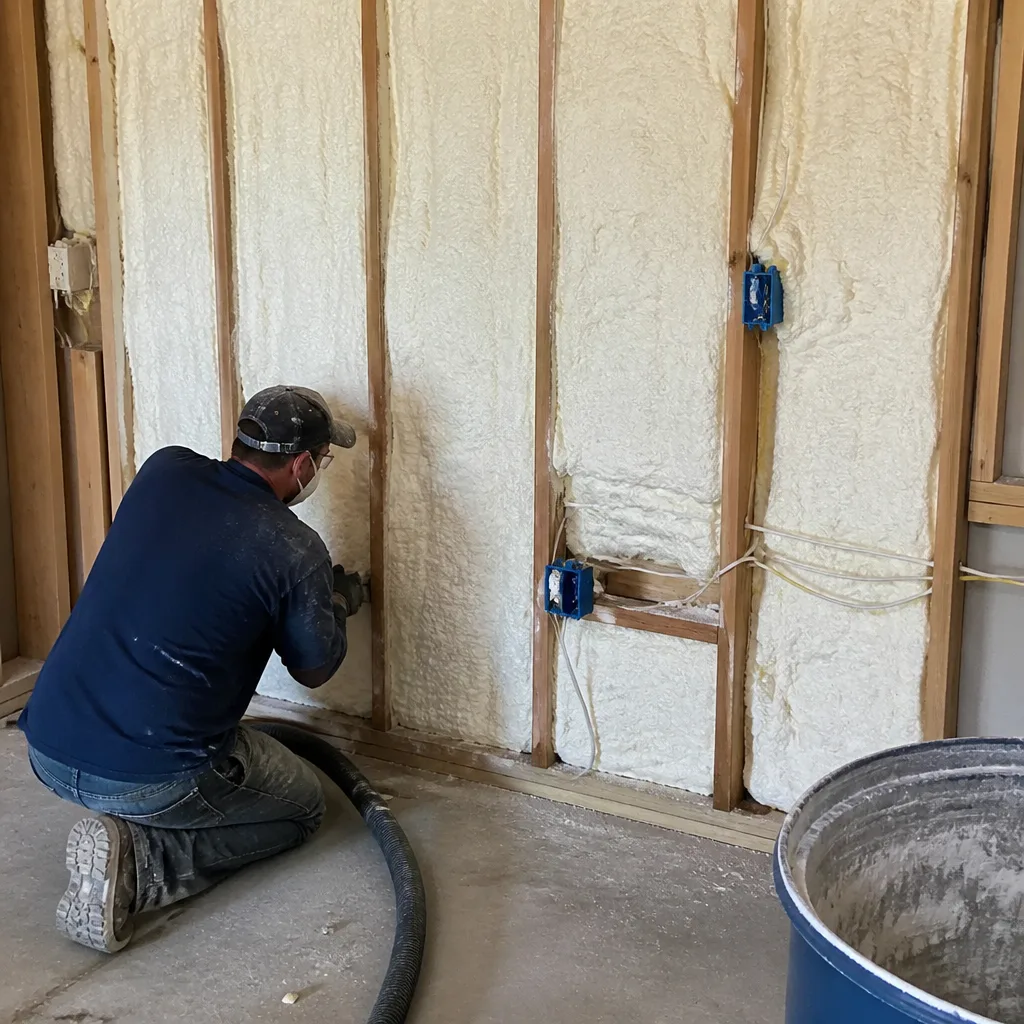 After
AfterReplacement Cost & What’s Included
Most Rockwool vapor barrier replacements in San Marcos fall between $1,800 and $3,400 installed. The low end covers a straightforward attic with clear access, 6-mil polyethylene, and taped seams over existing Rockwool that’s staying in place. The high end involves removing degraded insulation, air sealing top plates and penetrations with foam and tape, then installing a reinforced 10-mil barrier with mechanical fastening and a documented photo record of every seam and penetration.
What drives the range: attic square footage, whether we’re working around HVAC ducts and platform decking, and whether the existing barrier was installed before or after the Rockwool. If the barrier is underneath, we strip to the deck, seal, reinstall Rockwool, then barrier on top, that’s two days, not one. Every job gets a Written Price Before Any Work Starts under Haven Standard Clause 1, flat, no surprises. The 365-Day Done Right Promise covers labor and materials; the barrier membrane itself carries a 10-year manufacturer defect warranty from Stego or Poly-America, whichever we spec for your job.
DIY or Call Us?
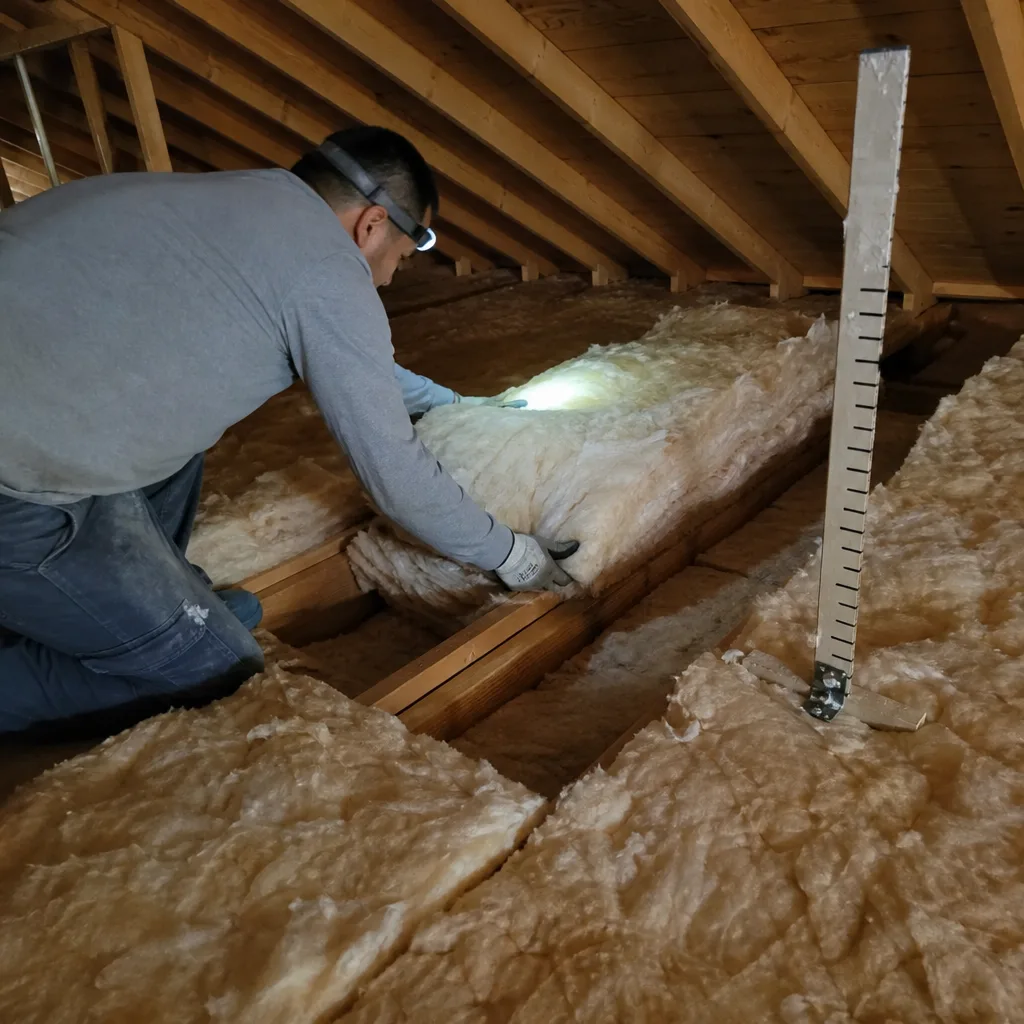
There’s no high-tension spring or electrical hazard here, but there is a genuine safety issue: most San Marcos attics built before 2010 have no flooring, and the joist spacing doesn’t match modern standards. We’ve found unsecured plywood sheets, paint cans used as stepping stones, and one home near the Texas State corridor where the previous owner had cut through a truss bottom chord to run a TV cable. If you’re going up, wear a respirator, mineral wool fibers are sharper than fiberglass and don’t degrade in lung tissue, and bring a headlamp plus a spotter at the ladder.
What you can safely check: look for the ASTM E96 label on your existing barrier, note any tears or detached sections, and photograph the worst areas. What goes wrong with DIY: homeowners tape seams with hardware-store duct tape that releases in summer heat, or they install the barrier on the wrong side of the insulation, cold side in winter, which traps moisture inside the cavity. We fix three to four of those per year in San Marcos alone. If you want it done once, call (737) 337-8049. We’ll run a blower-door test before and after, hand you the printed before-and-after air-changes-per-hour figure, and you’ll know exactly what changed.
FAQs
A properly installed 6-mil or thicker polyethylene barrier with heat-rated tape and mechanical fastening should last 15 to 20 years in our climate. The failure point is almost always the tape or fasteners, not the membrane itself. San Marcos attics cycle between 40 degrees in January and 140 in August, and cheap adhesive can’t survive that range. Call (737) 337-8049 for a free inspection if you’re past year 10 and don’t know what was used.
Small punctures or seam gaps can be patched with foil tape rated for high temperature, but tears longer than 6 inches, sagging sections, or any area where the barrier has pulled free from the framing need replacement. Patches in a compromised barrier are like patches in a leaky boat: you’ll spend more chasing the next leak than starting fresh. We include patch-versus-replace guidance in our free second opinion on any written estimate.
Most residential attic replacements take 4 to 8 hours for a two-person crew. If we’re removing old insulation, air sealing top plates and can lights, then reinstalling Rockwool plus barrier, expect a full day. We never rush the blower-door test at the end, it’s the only proof the air sealing worked. Same-day starts are available for standard replacements booked before noon.
We stock 6-mil, 8-mil, and 10-mil reinforced polyethylene, plus foil-faced and breathable membrane options, on every truck. Rockwool Comfortbatt, Comfortboard, and AFB are also stocked locally through our Owens Corning, Johns Manville, Knauf, Rockwool, CertainTeed, Icynene, Demilec, and GreenFiber supply relationships. No proprietary lock-in, no special order delays. Call (737) 337-8049 to confirm availability for your specific model and schedule.
Topside Attic Insulation San Marcos is an independent service provider and is not affiliated with Rockwool. We also stock parts and materials for Reflectix and other major insulation brands.
Written by Wes Okafor, Owner, Topside Attic Insulation San Marcos at Topside Attic Insulation San Marcos, serving San Marcos and nearby areas.