
Crawl Space Vapor Barrier in San Marcos, TX
A crawl space vapor barrier is a polyethylene or reinforced liner installed across the ground and walls of your crawl space to block ground moisture before it enters your home’s structural envelope. In San Marcos, where clay-heavy soils in neighborhoods like Blanco Vista and Hunter’s Crossing hold moisture after rain and the Edwards Plateau’s drainage patterns push groundwater toward slab and pier-and-beam foundations alike, uncovered crawl space dirt is one of the most reliable sources of elevated indoor humidity, wood rot, and mold growth we see. Most installs in a typical San Marcos home run between $1,400 and $3,800, depending on square footage, existing conditions, and liner thickness – and we put that number in writing before any work starts.
This page covers the vapor barrier sub-service specifically. If you’re also weighing full encapsulation with a dehumidifier and sealed vents, see our Crawl Space Encapsulation & Vapor Barrier in San Marcos page for how those pieces fit together. For a broader look at what Topside Attic Insulation San Marcos handles across the building envelope, the home page outlines our full service line. Questions before you read further? Call (737) 337-8049 – a live person answers, no voicemail loop.
What a Vapor Barrier Actually Does
Ground moisture doesn’t stay in the ground. In summer, San Marcos soil temperatures run significantly cooler than ambient air, so warm humid air descends into the crawl space, hits the cooler ground, and the moisture condenses – on the dirt, on wood joists, on the underside of your subfloor. Hays County’s average July dew point hovers in the mid-60s Fahrenheit. That’s enough moisture load to rot floor joists over years and drive interior relative humidity above 60 percent, which is where mold colonizes.
A properly installed vapor barrier – meaning a minimum 6-mil liner, though we more commonly use 12-mil or 20-mil reinforced material on problematic crawl spaces – cuts off the evaporation pathway at the source. It doesn’t seal the space the way full encapsulation does, but it dramatically reduces the moisture contribution from the soil. For many pier-and-beam homes in the older parts of San Marcos near the square and along River Road, a ground liner is the right first step before any insulation work touches the floor cavity above.
Under Crawl Space Encapsulation & Vapor Barrier in San Marcos, a vapor barrier is always the foundation of the work – we never insulate a floor system over bare, untreated ground. That sequencing matters. Insulation traps moisture if the moisture source hasn’t been addressed first.
When You Need a Crawl Space Vapor Barrier
- Musty odor in the living space or near floor vents. Ground-sourced moisture carries a distinctive earthy smell. When it’s detectable inside, the crawl space has typically been saturating wood and insulation for months. We see this frequently in older homes near Wonder World Drive where crawl heights are shallow and airflow is minimal.
- Visible condensation or standing water after rain. San Marcos averages around 32 inches of rain per year, and after a heavy Hill Country storm, low-lying crawl spaces without drainage slopes or liners accumulate standing moisture. If you’ve shone a flashlight under the house after a rain event and seen wet soil or puddles, bare ground is the problem.
- Wood joists or subfloor that feel soft underfoot. A floor that has developed flex or squeaking it didn’t have before is sometimes a structural warning. Moisture-damaged wood loses rigidity. This is something a technician should inspect directly – don’t defer it.
- High indoor humidity readings despite HVAC running normally. If your thermostat’s humidity sensor or a standalone hygrometer reads above 55 percent consistently in summer, and your HVAC system is functioning correctly, the building envelope is the source. The crawl space is often where we find it.
- Pest activity or rodent evidence in the crawl space. Moist, bare-earth crawl spaces attract moisture-seeking insects – termites in particular – and rodents looking for a warm, undisturbed harborage. A liner removes some of what makes that environment hospitable.
- Pre-insulation assessment finding inadequate or missing ground cover. Before we touch floor insulation, we assess what’s underneath. In San Marcos pier-and-beam homes built before 1985, it’s common to find no liner at all, or a deteriorated partial liner that was installed once and never replaced.
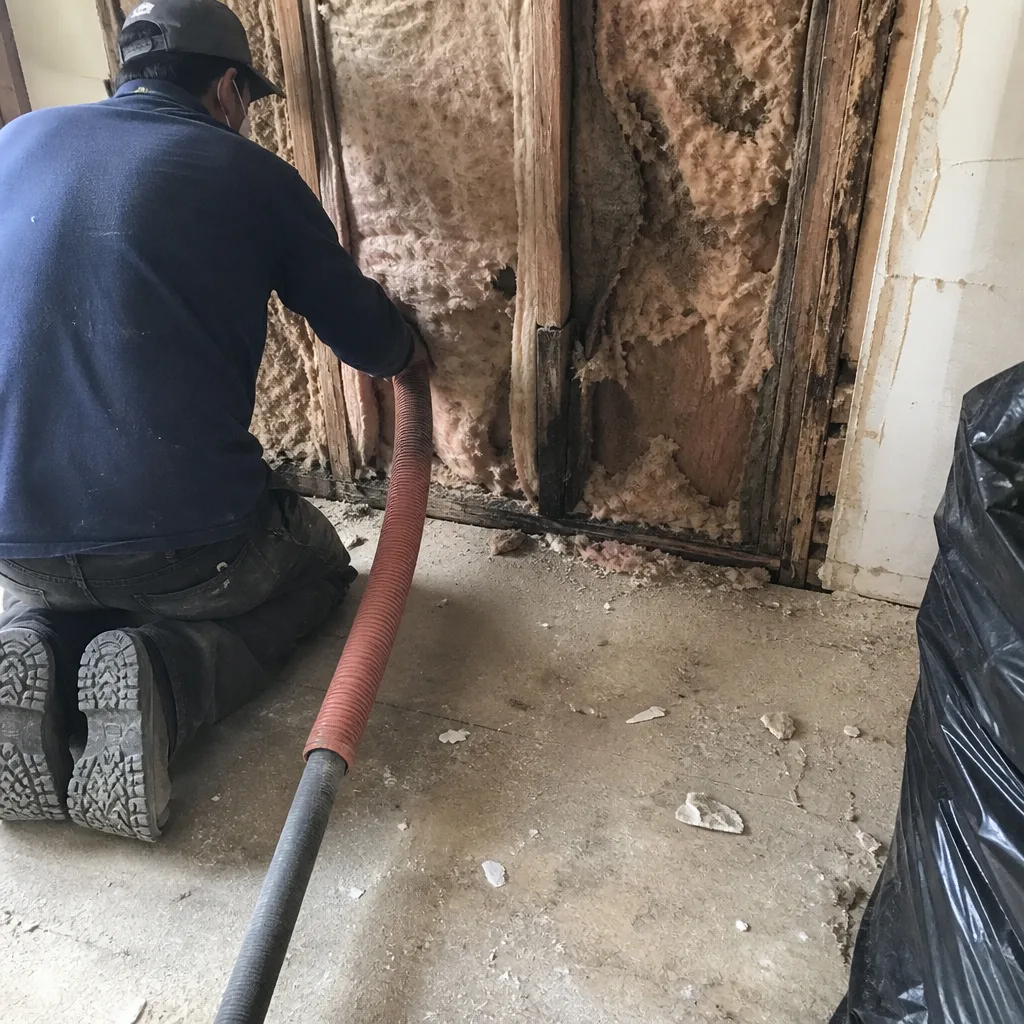 Before
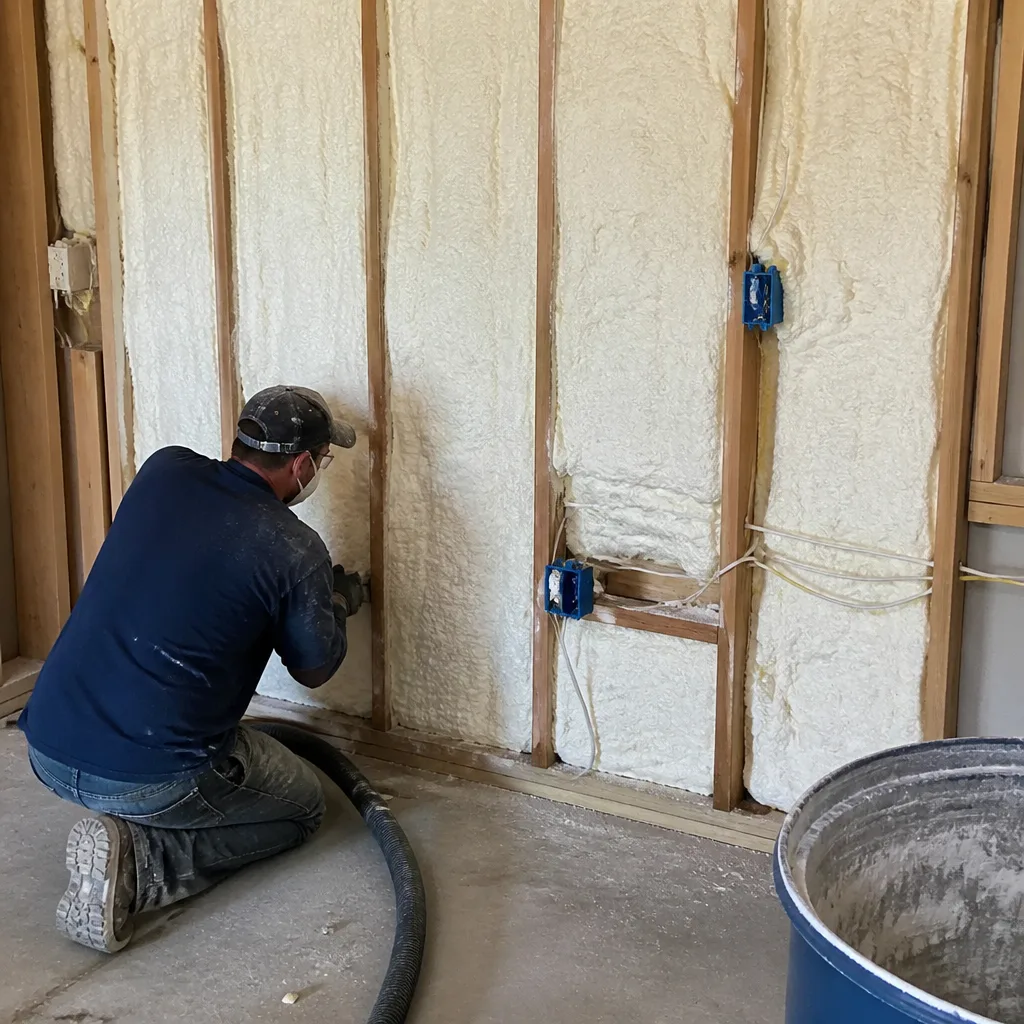 After
AfterOur Crawl Space Vapor Barrier Process
- Pre-work inspection and photo documentation. Before anyone moves material into the crawl space, a technician photographs existing conditions: soil moisture, any standing water, liner remnants, joist condition, pest evidence, and the crawl space height and access points. These photos become part of your documented job record. You get a written scope and written price before the crew lifts anything. That’s Haven Standard Clause 1 – no exceptions.
- Debris and old liner removal. Deteriorated vapor barrier material, debris, and any organic accumulation that would trap moisture under a new liner gets removed. We don’t install over failed material. If old insulation is present and has been compromised by moisture, that gets flagged in the written scope before work starts so there are no surprises.
- Ground grading and moisture assessment. If the crawl space floor has low spots where water pools, we address grading before liner placement. In San Marcos homes on expansive clay soils – common across Hays County – the ground can shift seasonally, creating uneven surfaces that direct water toward piers or foundation walls.
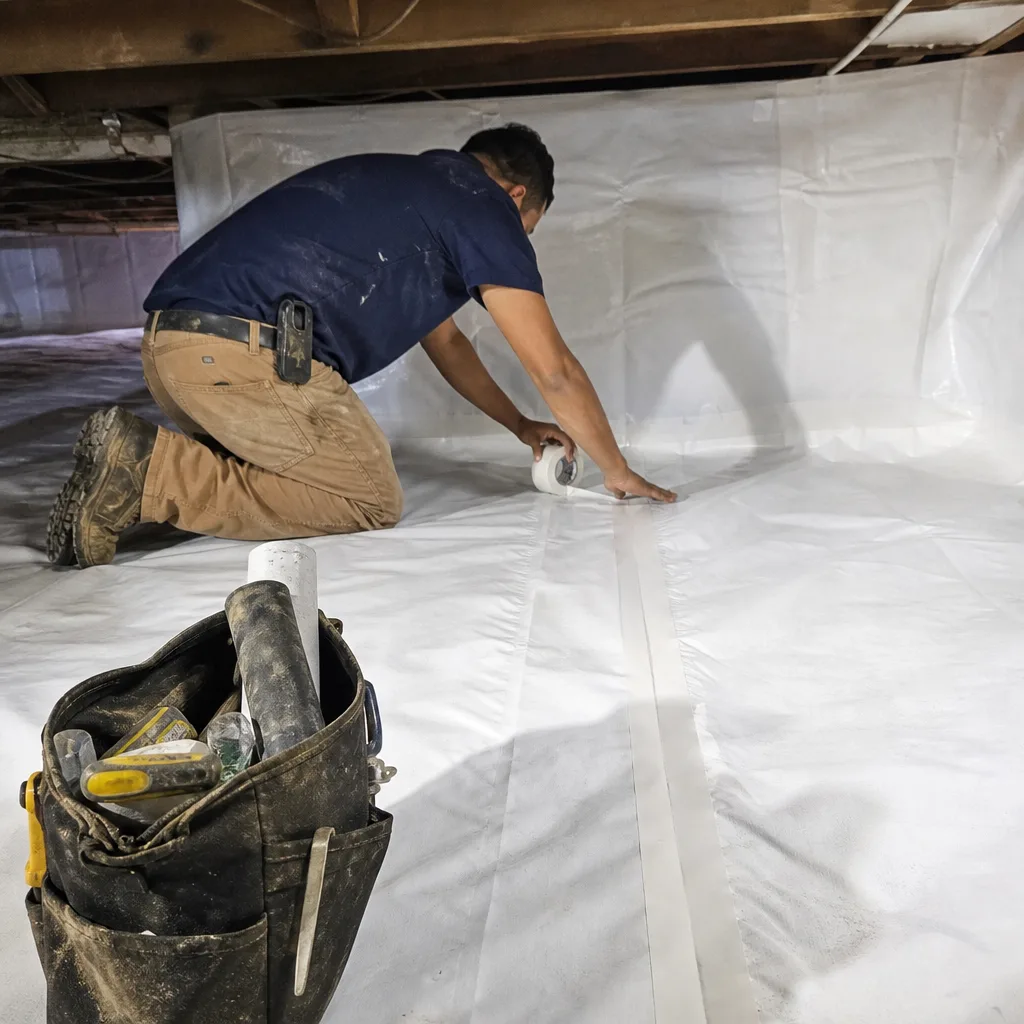
- Liner installation – overlapped, taped, and secured. We install reinforced polyethylene liner – typically 12-mil or 20-mil depending on the job conditions – across the entire ground surface, lapping up foundation walls at least 6 to 12 inches. Seams are overlapped a minimum of 12 inches and sealed with manufacturer-rated tape. Penetrations around piers and support columns are cut and sealed individually. A liner that isn’t fully lapped and taped at every seam is not doing its job; gaps are where moisture bypasses the system.
- Perimeter attachment. The liner is mechanically fastened to the foundation wall or rim joist perimeter so it can’t shift or pull away from the wall over time. In crawl spaces with significant pier-and-beam movement history – something we see in parts of San Marcos where the underlying limestone and clay soils shift with the seasons – this attachment matters for liner longevity.
- Post-install documentation and walkthrough. After the liner is down, we photograph the completed installation from multiple angles. You receive a documented photo record of the finished work, not just a verbal description. We walk you through what was done, note any observations about the wood structure or venting that should be monitored, and leave you with a written record of the scope completed.
Crawl Space Vapor Barrier Pricing in San Marcos
Most vapor barrier installs in San Marcos run between $1,400 and $3,800 for a typical single-family home. Here’s what drives cost in either direction:
| Factor | Lower-end impact | Higher-end impact |
|---|---|---|
| Crawl space square footage | Under 800 sq ft | 1,500+ sq ft |
| Liner thickness | 6-mil standard | 20-mil reinforced |
| Access difficulty | Standard hatch, 24″+ clearance | Low clearance, blocked piers, tight access |
| Existing conditions | Bare ground, no debris | Old liner removal, standing moisture, pest remediation needed |
| Wall coverage | Ground-only liner | Walls lined as part of partial encapsulation prep |
For homes in San Marcos’s older neighborhoods – houses near Stagecoach Road, the Blanco Vista development, or any property with a crawl space height under 18 inches – access difficulty is the most common cost variable we see. It takes longer, it requires smaller crews in tighter rotations, and the liner has to be handled more carefully to avoid damage during placement.
A few things that don’t affect our pricing: we don’t charge differently based on what we think you’ll spend. You get a flat price, written scope, and written warranty before anyone starts. That’s true whether this is a straightforward 900-square-foot install or a complicated low-clearance crawl space in a 1970s pier-and-beam home off Sessom Drive.
We also offer a Free Second Opinion on any written estimate. Bring us a competing quote and we’ll read it with you – line by line, material spec by material spec. If the liner thickness, seam overlap specs, or attachment method aren’t spelled out in the competing scope, that’s worth knowing before you sign.
FAQs – Crawl Space Vapor Barrier
How thick does a crawl space vapor barrier need to be in San Marcos?
The IRC building code minimum for a ground vapor retarder is 6-mil polyethylene, but 6-mil is the starting point, not the recommended spec for most San Marcos conditions. We install 12-mil as a standard and 20-mil reinforced liner on crawl spaces with active moisture intrusion, high foot-traffic access needs, or pest history. Thicker liner resists puncture from debris, rocks, and the occasional inspection visit. In Hays County’s clay-heavy soils where seasonal movement is common, thinner liners degrade faster at stress points around piers. If a quote specifies 6-mil, ask why.
What’s the difference between a vapor barrier and full crawl space encapsulation?
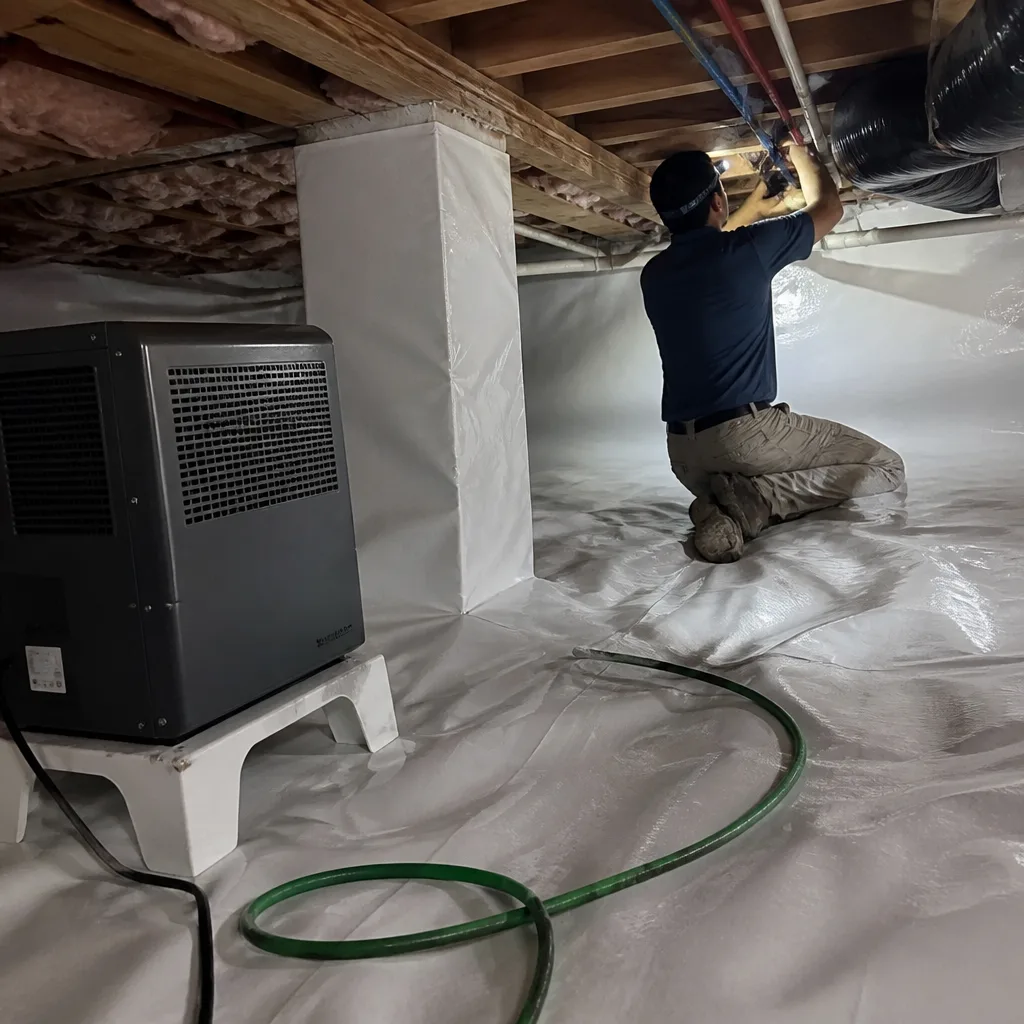
A vapor barrier covers the ground – and sometimes the walls – to block soil moisture from entering the crawl space air. Full encapsulation goes further: it seals the vents, lines the walls completely, and typically adds a conditioned air supply or a dedicated dehumidifier to manage the air in the now-sealed space. A vapor barrier alone is appropriate for vented crawl spaces where moisture intrusion is primarily from the ground. Full encapsulation makes sense when the crawl space has chronic humidity problems or when the homeowner wants to condition the space for storage or mechanical equipment. The right answer depends on your crawl space configuration and moisture load – something we assess during the pre-work inspection.
Can I install a crawl space vapor barrier myself?
The physical work – unrolling polyethylene and placing it on dirt – isn’t technically complex, but the details that make a liner actually work are where most DIY installs fall short. Seams need proper overlap and tape rated for below-grade use. Penetrations around piers need individual attention. The liner needs to run up the wall and attach mechanically. If any of those steps are skipped or done incorrectly, moisture bypasses the liner at exactly the points where it concentrates. There’s no structural danger in attempting this yourself the way there is with electrical or high-tension spring work, but a liner that isn’t correctly seamed and attached doesn’t perform materially better than bare ground. We’ve photographed and documented enough failed partial installs in San Marcos to say that clearly.
How long does a crawl space vapor barrier last?
A properly installed 12-mil or 20-mil liner in a stable crawl space typically lasts 15 to 25 years before it needs significant attention. Liner degradation is usually caused by UV exposure (not an issue in a dark crawl space), physical puncture, or chemical exposure from specific soil conditions. The more common cause of early failure we see in San Marcos homes is a liner that wasn’t fully secured at the perimeter and pulled away from the wall over time, allowing moisture to bypass it at the edges. Annual visual inspections – even just shining a flashlight in once a year – catch seam lifts and perimeter gaps before they become a bigger problem. Your documented photo record gives you a baseline to compare against.
Key Takeaways
- Vapor barrier installs in San Marcos typically cost $1,400 to $3,800, written price provided before any work starts.
- 12-mil and 20-mil reinforced liners outperform 6-mil in Hays County’s clay-soil conditions – ask any competing quote to specify liner thickness.
- Seam overlap, taping, and perimeter attachment are the details that determine whether a liner works; a liner that isn’t fully sealed at every seam and wall transition is leaving pathways open.
- A vapor barrier addresses ground-sourced moisture. If your crawl space has chronic humidity or you want to condition the space, full encapsulation is the right conversation.
- Every job closes with a Documented Photo Record and a written warranty – you know what was done and have evidence of it.
- The 365-Day Done Right Promise applies: if it’s not done right, we make it right.
Schedule Your Crawl Space Vapor Barrier Assessment in San Marcos
If you’re seeing moisture signs under your San Marcos home – or you’re about to have floor insulation installed and want to confirm the ground is addressed first – the next step is a written assessment and price. No work starts without a written scope. No surprises when the job closes.
Call (737) 337-8049 to schedule. A live person answers. We’ll confirm your appointment with a technician’s name and a text when they’re on the way – no callback windows. We serve San Marcos and surrounding Hays County, including Blanco Vista, Hunter’s Crossing, Trace, and properties along the Blanco River corridor where crawl space moisture is consistently among the most active we see in this market.
Written by Wes Okafor, Owner at Topside Attic Insulation San Marcos, serving San Marcos since 2016.