

How Much Does a Home Energy Audit Cost in San Marcos?
A home energy audit in San Marcos, TX typically runs between $200 and $650, depending on the size of your home and the scope of testing involved. Most single-family homes in the 1,500-2,800 sq ft range land between $275 and $450 for a blower-door audit that includes a written report and prioritized recommendations. If your goal is to qualify for utility rebates through Pedernales Electric Cooperative or CPS Energy, make sure you book an audit that includes the pressurization test – not just a walkthrough.
Home Energy Audit Cost Breakdown (2026)
In San Marcos, audit pricing breaks down by what’s actually included. A “walk-and-talk” visual inspection is cheaper but gives you opinions, not measurements. A diagnostic audit gives you numbers – and numbers are what the rebate programs and insulation contractors need to price the actual work correctly. Here’s how the tiers stack up in this market:
| Audit Type | What’s Included | Typical San Marcos Price Range |
|---|---|---|
| Basic Visual Inspection | Walk-through, visual check of insulation, HVAC, windows. No diagnostic equipment. | $100 - $200 |
| Diagnostic Energy Audit (Standard) | Blower-door test, thermal imaging, duct leakage test, written report with findings. | $275 - $450 |
| Comprehensive Diagnostic Audit | All of the above plus combustion safety testing, room-by-room pressure mapping, and rebate documentation. | $450 - $650 |
| Utility-Sponsored Audit | Available through some Pedernales Electric Cooperative programs – reduced cost or free for qualifying homes. | $0 - $150 (after rebate) |
| Add-On: Duct Leakage Test Only | Pressurization test on duct system to measure supply/return leakage to outside. | $75 - $150 |
| Add-On: Infrared Thermal Imaging | Camera scan of walls, ceiling, and attic floor to identify missing insulation and air bypasses. | $50 - $125 (if not bundled) |
The biggest price driver in San Marcos is square footage – auditors spend more time and set more test points in a 3,200 sq ft two-story home than in a 1,400 sq ft slab-on-grade ranch. A second factor is age of construction. Homes built in the Trace subdivision and other developments that went up between 2000 and 2015 frequently have attic bypasses – gaps at top plates, recessed light housings, and HVAC chases – that require more diagnostic time to locate than you’d spend in a newer build. The audit report you receive at the end should document every finding with measurements, not just a checklist of suggestions.
At Envelope Insulation Co., operating locally as Topside Attic Insulation San Marcos, we don’t perform audits as a loss-leader designed to upsell insulation you may not need. The written report stands on its own. If the audit says your air barrier is the priority, that’s what the scope of work reflects – sealed first, then insulated, in that order. That’s not a policy we invented last year; it’s been standard practice since 2016.
What Affects Home Energy Audit Pricing in San Marcos
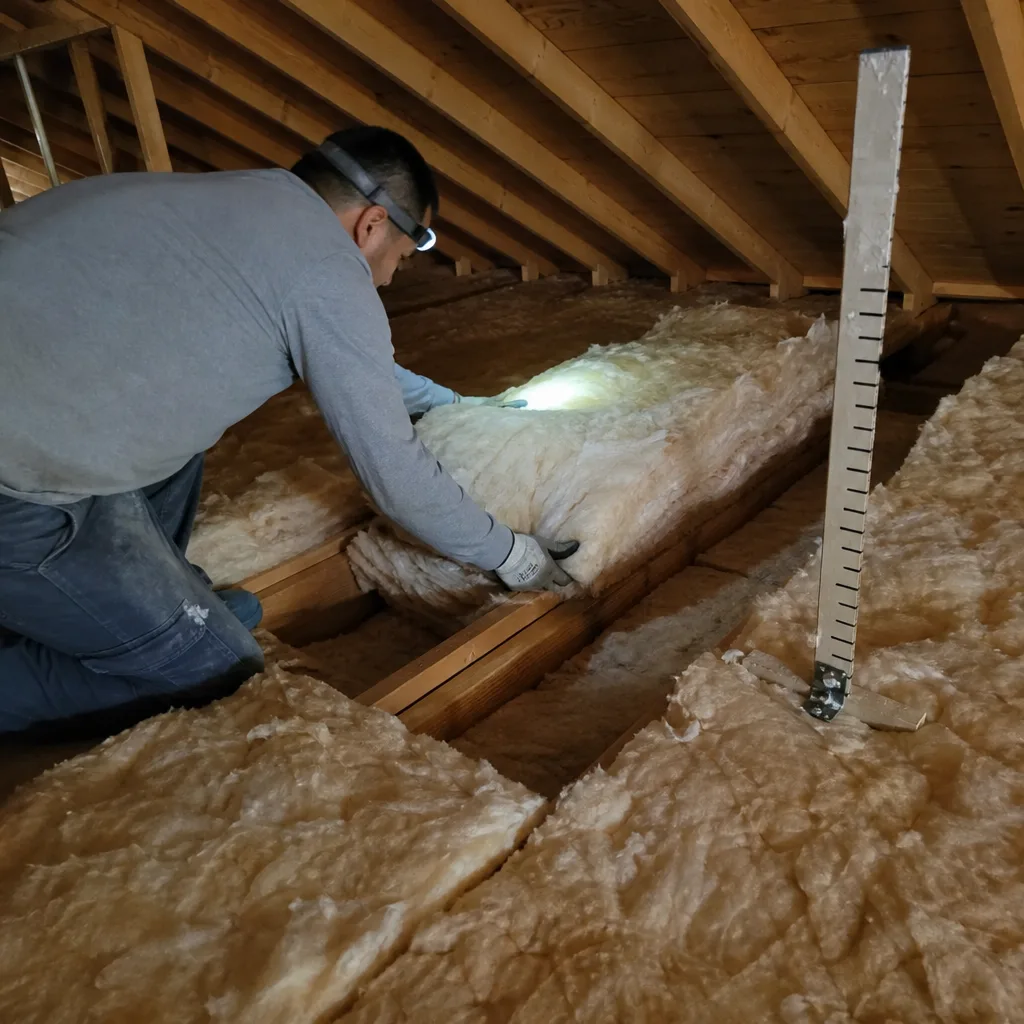
- Home size and story count: A blower-door test on a 2,600 sq ft two-story home in Willow Springs takes longer to set up and requires more pressure-relief points than a 1,200 sq ft single-story. Auditors typically add $40-$80 per additional 1,000 sq ft above the base rate.
- Age and construction type: Homes built before 1990 in central San Marcos – particularly the older neighborhoods near Texas State University – tend to have more air leakage paths and take longer to document. Expect to be toward the higher end of any given tier.
- HVAC system complexity: A home with two air handlers, a dehumidifier, and an HRV (heat-recovery ventilator) takes longer to test safely than a single-system house. Combustion appliances like gas water heaters also require safety testing before the auditor pressurizes the building envelope, which adds time.
- Whether duct testing is included: In San Marcos, ducts routed through unconditioned attic space are one of the most common efficiency losses we find. A duct leakage test adds $75-$150 if it isn’t bundled into the base audit price – and it’s almost always worth including.
- Local climate demands on the building envelope: San Marcos sits in a mixed-humid climate zone (IECC Climate Zone 2A/3A boundary), which means the building envelope has to manage both intense summer heat from a roof deck that can hit 160°F and periodic winter cold snaps that drop into the mid-20s. Auditors familiar with this climate zone know to check both cooling-season and heating-season vulnerabilities – a good audit reflects that scope.
- Report format and rebate documentation: If you’re applying for a utility rebate or a Home Performance with ENERGY STAR program, the report has to meet specific documentation requirements. Auditors who produce rebate-ready reports sometimes charge $50-$100 more than those who produce a simple summary letter. It’s worth paying – an incomplete report means starting over.
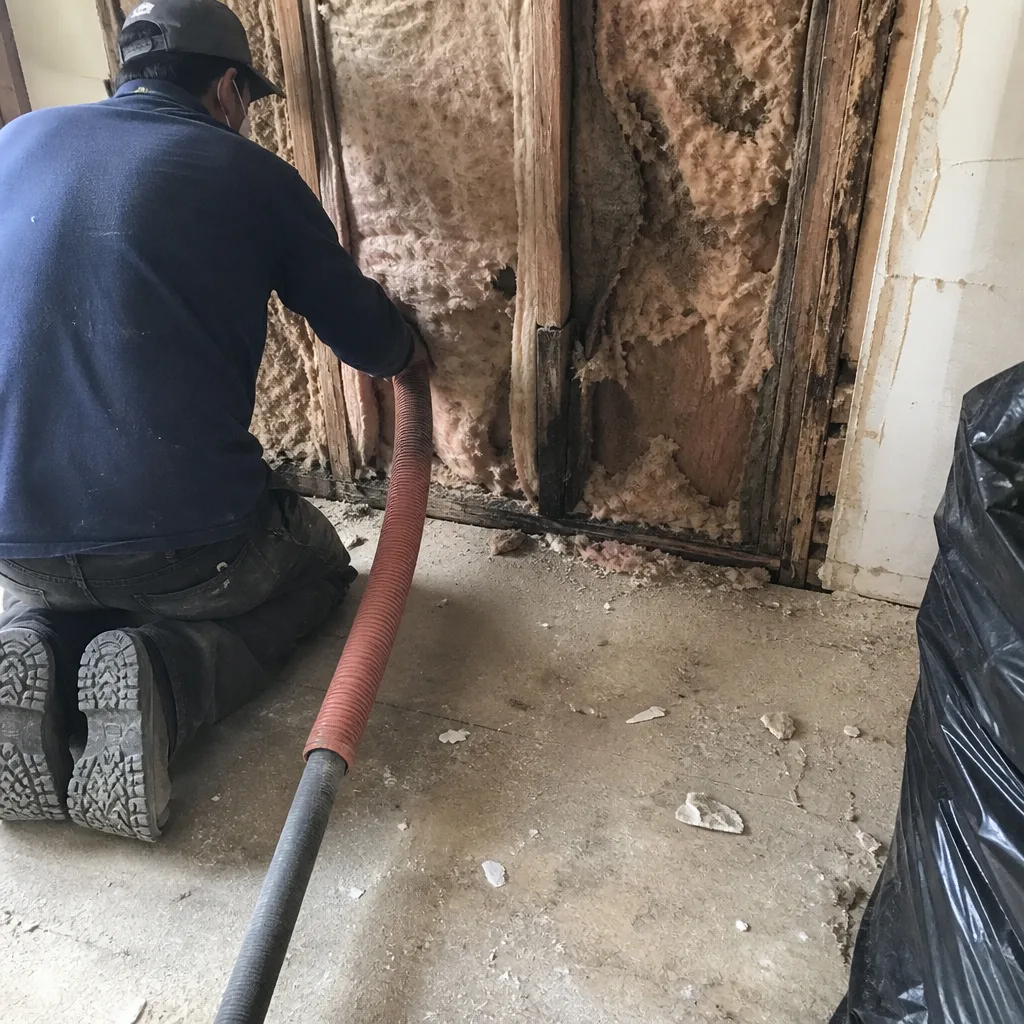 Before
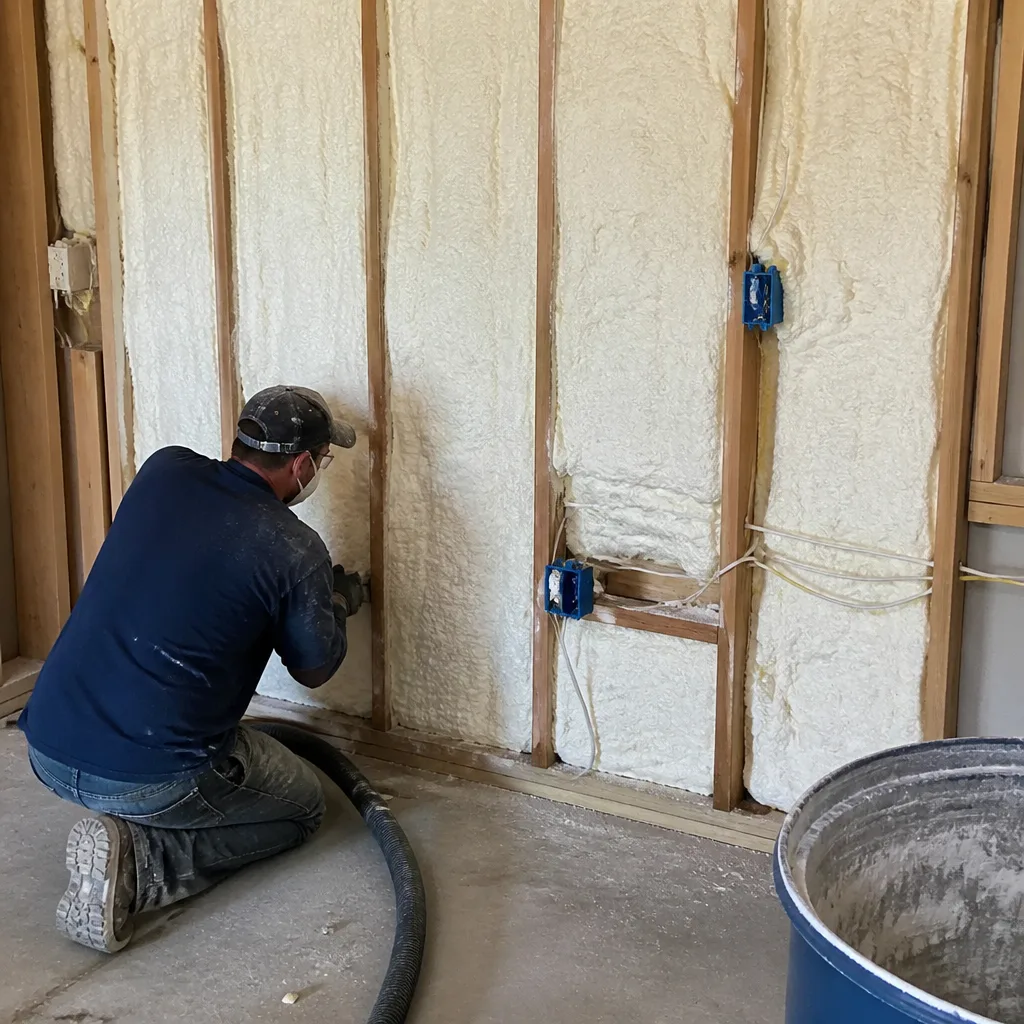 After
AfterWhat a Home Energy Audit Actually Tells You
A blower-door test – a pressurization measurement that shows, in a single figure, how much air your building envelope is losing – gives you one number: CFM50, or cubic feet per minute of airflow at 50 Pascals of depressurization. For context, a well-sealed 2,000 sq ft home in San Marcos might read around 1,200-1,600 CFM50. A house that hasn’t been air-sealed and has an open attic floor above recessed lights might read 3,500-5,000 CFM50 or higher. That gap translates directly into your summer cooling bill.
In the Blanco Vista and Hunter’s Crossing neighborhoods, where we’ve worked on homes built between 2006 and 2014, blower-door readings before air sealing regularly come back in the 3,000-4,500 CFM50 range – even on homes that appear well-insulated. The issue is almost never missing insulation. It’s air bypasses at top plates, behind kneewalls, and around HVAC penetrations that were insulated over without being sealed first. Insulation slows conduction. It does almost nothing for air movement. That’s why we never skip the audit and never blow insulation before the air barrier is verified.
A proper audit report documents each finding with a measured value, assigns a priority ranking based on cost-effectiveness, and gives you a before-picture that a contractor can compare against after the work is done. When Wes Okafor and the team at Topside Attic Insulation San Marcos complete Home Energy Audit in San Marcos work, every applicable job closes with before-and-after blower-door numbers published in the documented photo record – so you can verify what actually changed, in measurable terms, not a technician’s opinion.
How to Save on a Home Energy Audit in San Marcos
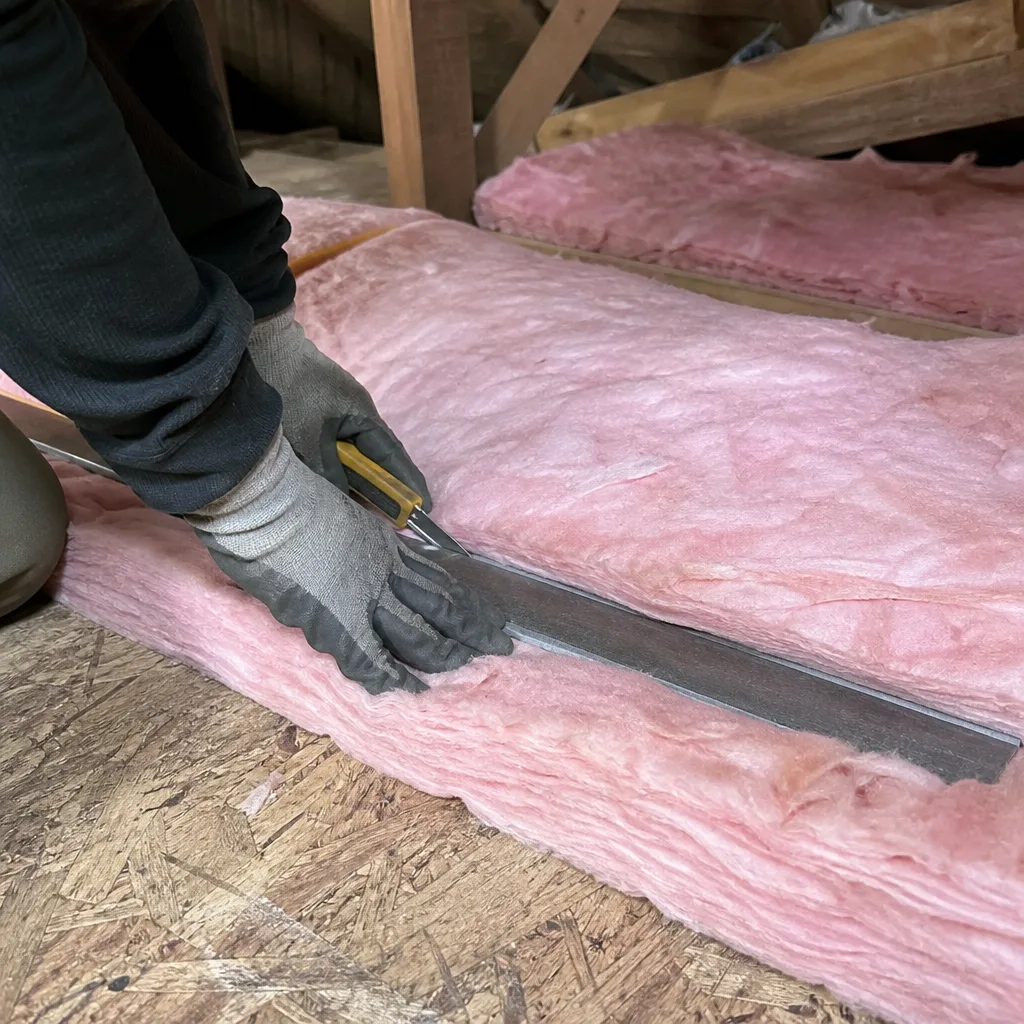
There are a few ways to reduce what you pay out of pocket without cutting corners on the diagnostic work itself.
Check Your Utility Rebate Programs First
Pedernales Electric Cooperative offers periodic rebate programs for qualifying audits and related improvements. City of San Marcos utility customers may also qualify for weatherization assistance through Hays County programs. Call your utility billing department directly and ask what audit formats they accept – this one phone call can reduce your net cost by $100-$300 before you schedule anything.
Bundle the Audit with Air Sealing Work
When an audit and the resulting air-sealing scope are contracted together, some auditors credit the audit fee against the project total or reduce the per-hour diagnostic rate because they’re not writing a report for a job that will go to a competitor. At Topside Attic Insulation San Marcos, we give you a written price before any work starts – including the audit – so you can see exactly what’s credited and what isn’t, rather than learning that at invoice time.
Ask What the Report Includes Before You Book
A $150 “energy audit” that produces a one-page checklist is not the same product as a $375 diagnostic audit with a blower-door test, thermal scan, duct leakage measurement, and a priority-ranked written report. Before you book any audit in the San Marcos market, ask these three questions: Does the price include a blower-door test? Will I receive the CFM50 reading in writing? Does the report format satisfy utility rebate requirements? If any answer is unclear, keep asking.
Request a Free Second Opinion on Any Estimate
Under Haven Standard Clause 1, we offer a free second opinion on any written estimate – including audit proposals from other contractors. If you’ve received a scope and want a second set of eyes on what’s included, call (737) 337-8049. We’ll read it with you and tell you plainly whether the scope matches the problem the audit is supposed to diagnose.
Don’t Skip the Duct Test to Save $100
In San Marcos’s climate, duct leakage to the attic is often the single largest efficiency loss in a home – more impactful than missing wall insulation, more impactful than single-pane windows. Skipping the duct leakage test to save $75-$150 on the audit is one of the most common ways homeowners end up solving the wrong problem first. Include it.
FAQs – Home Energy Audit Cost in San Marcos
How much does a home energy audit cost in San Marcos, TX?
A diagnostic Home Energy Audit in San Marcos costs $275 to $450 for most single-family homes, with comprehensive audits that include duct testing, combustion safety checks, and rebate-ready documentation running $450 to $650. Basic visual inspections without diagnostic equipment start around $100 to $200 but don’t produce the measurements you need to prioritize repairs or qualify for utility rebates. For a written estimate before any work starts, call (737) 337-8049 – estimates are free.
Is a home energy audit worth it in San Marcos?
In most cases, yes – particularly for homes built before 2015. San Marcos summers put a hard load on building envelopes; a roof deck that hits 160°F in July pushes heat through every air bypass and under-insulated cavity at the same time. In our experience, homes in developments like Willow Springs, Trace, and Hunter’s Crossing that haven’t had an air-sealing scope done typically show blower-door readings two to three times higher than a well-sealed house of the same size. The audit tells you where to spend first, which prevents paying for the wrong fix. A $350 audit that redirects a $4,000 insulation project to the right scope pays for itself before the first invoice is sent.
What does a home energy audit include in San Marcos?
A proper diagnostic audit includes a blower-door test (a pressurization reading that shows, in one number, how much air the building envelope is losing), a thermal imaging scan to locate insulation gaps and air bypasses, a duct leakage test, a written report with measured findings and a priority-ranked repair list, and – if applicable – documentation that meets utility rebate requirements. You should walk away with the CFM50 reading, the duct leakage result in writing, and a report that names specific locations rather than general categories. If the audit report says “attic” without specifying top plates, can lights, or HVAC penetrations, it isn’t specific enough to price accurate work from.
How long does a home energy audit take in San Marcos?
Most diagnostic audits on San Marcos homes in the 1,500-2,800 sq ft range take 2 to 4 hours on-site. Larger homes, homes with complex HVAC systems, or older construction with multiple air leakage zones can run 4 to 6 hours. The report is typically delivered within 24 to 48 hours of the site visit. Under Haven Standard: Arrive on schedule, you get a named technician and a text when they’re on the way – no guessing whether the appointment is still on.
Can a home energy audit help lower my electric bill in San Marcos?
It depends on what the audit finds and whether you act on the priority items – but for most homes in the San Marcos market, yes. A blower-door reading of 4,000 CFM50 in a 2,000 sq ft home means the building is exchanging a significant volume of conditioned air with the outside continuously. Bringing that reading down to 1,500-1,800 CFM50 through air sealing – before any additional insulation is added – typically reduces cooling loads meaningfully. The audit doesn’t lower your bill; the repairs the audit identifies do. The audit’s job is to make sure those repairs are the right ones, in the right order. For a written estimate on the full scope, call (737) 337-8049.
Why Audit Sequence Matters – Sealed Before Insulated
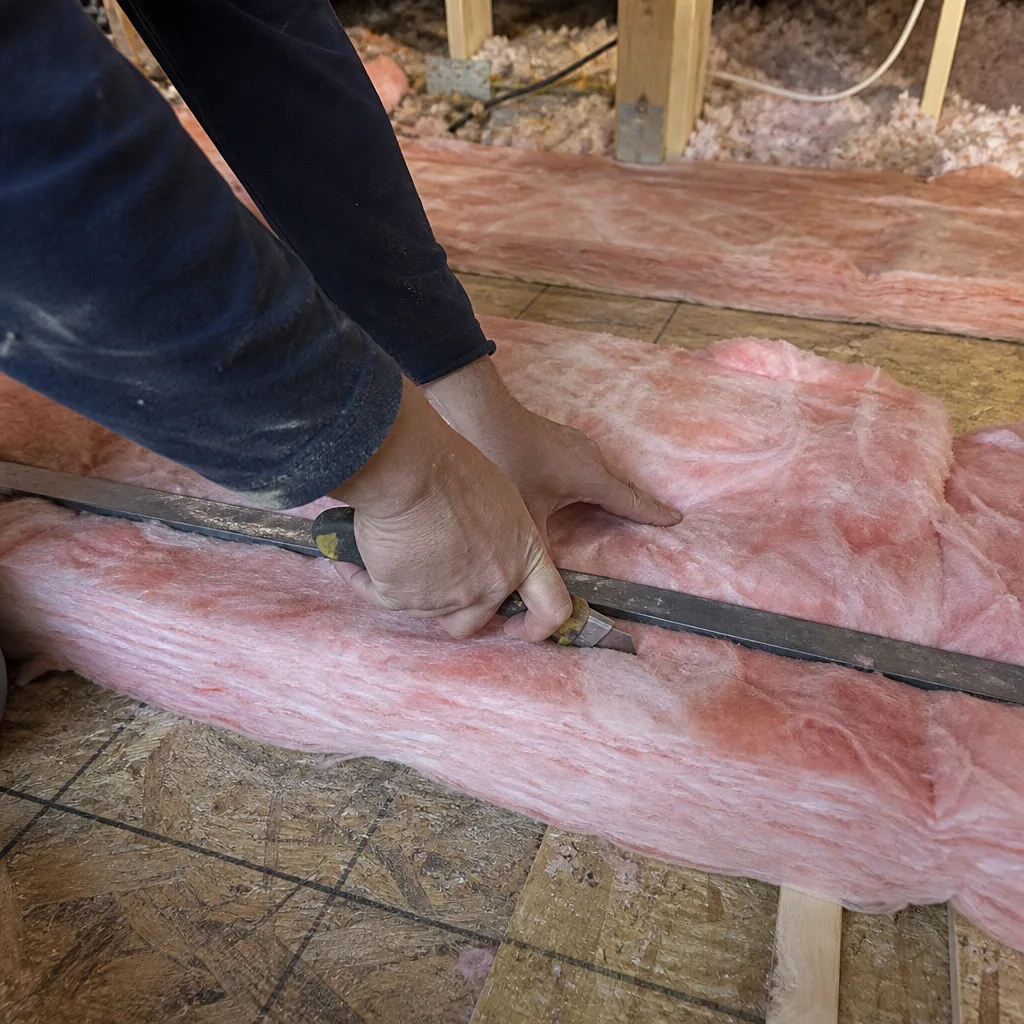
This is worth being direct about, because it’s where a lot of San Marcos homeowners get steered in the wrong direction: insulation and air sealing are not the same thing, and the order in which they’re done matters.
Air moves through pressure differentials, not through insulation batts. Fiberglass and cellulose slow the conduction of heat through a solid material. Neither material stops air from moving through a gap at a top plate or around a recessed light housing. When insulation is blown over an unsealed attic floor, the gaps are still there – they’re just harder to reach and harder to fix. We’ve opened attics in the Craddock Park neighborhood and the older streets near the university where eight or ten inches of blown cellulose was sitting directly over a top plate that had never been sealed. The homeowner paid for the insulation twice: once to install it, and again to have it moved so the air sealing could be done properly.
The Haven Standard at Envelope Insulation Co. / Topside Attic Insulation San Marcos requires that air sealing of top plates, can lights, and penetrations be completed before any insulation is added. The energy audit documents the starting point with a blower-door reading. After the air sealing scope is complete, a second reading shows the result in measurable terms. Those two numbers – before and after – are published in the documented photo record for every applicable job.
Wes Okafor has been overseeing this process on San Marcos-area homes since 2016. The before-and-after numbers are available for any customer who asks, which means the performance claim isn’t just a promise – it’s a figure you can verify.
What You Receive When the Audit Is Done
The question “what do I get” matters as much as “what does it cost.” Here’s what a properly completed diagnostic audit should produce:
- Blower-door test result in CFM50 – a single number that represents your whole-house air leakage at 50 Pascals. This is your before number.
- Duct leakage result – measured in CFM25 (cubic feet per minute at 25 Pascals), showing how much conditioned air is being lost through duct connections before it reaches a register.
- Thermal imaging photos – images of walls and ceiling planes taken under temperature differential conditions, showing voids and bypasses that aren’t visible to the eye.
- Written findings report – a document that names specific locations (not just “attic needs work”), assigns a measured value to each finding where possible, and ranks repairs by cost-effectiveness.
- Written price before any work starts – if you engage a contractor for the repair scope, that price is in writing, flat, before anyone lifts a tool. That’s Haven Standard Clause 1, and it applies without exception.
- Documented photo record – photos taken before and during the repair scope, delivered at job close, so the record of what was done is in your hands.
If a contractor offers you an “energy audit” and can’t tell you which of the above items you’ll receive in writing before you schedule, that’s a useful data point.
San Marcos Market Context – What We See in This Area
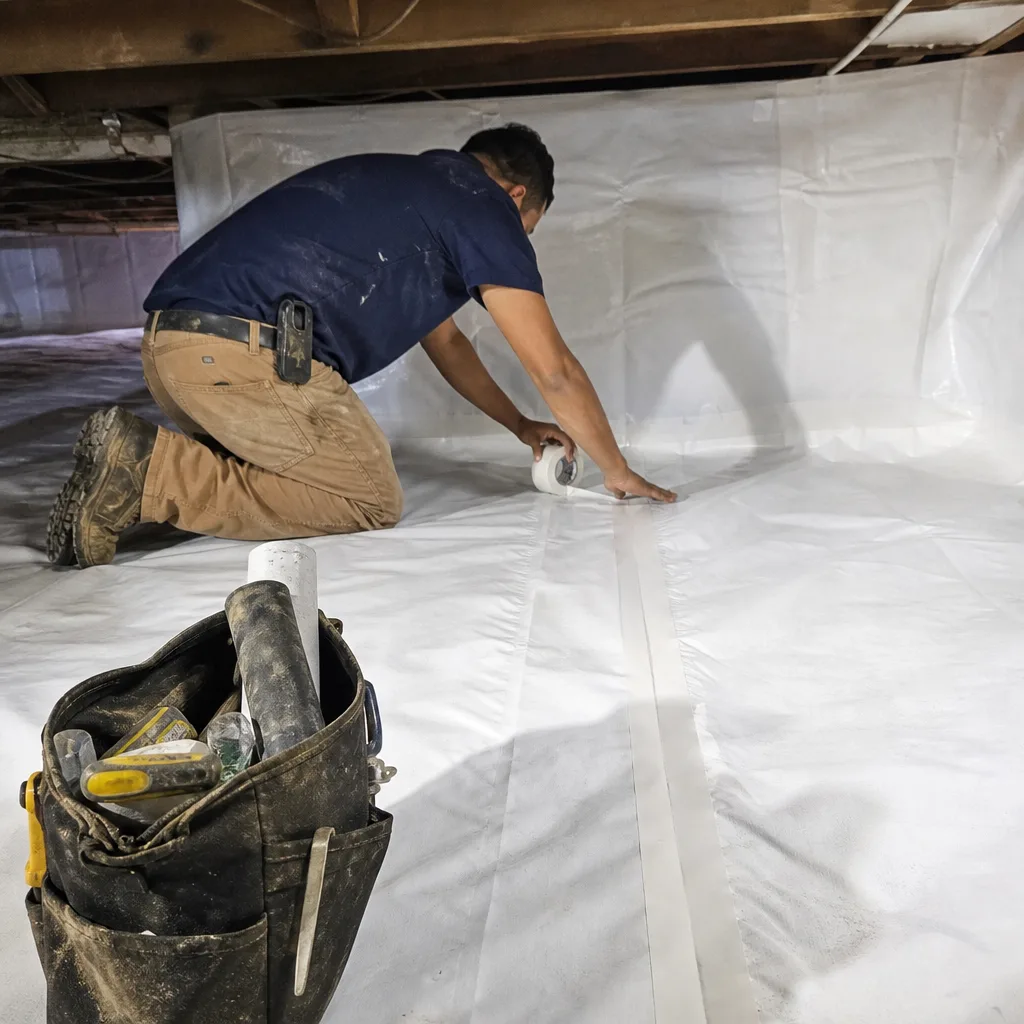
San Marcos sits between Austin and San Antonio in a climate that doesn’t get as much attention as either metro, but it has some of the most demanding building-envelope conditions in Central Texas. The combination of high summer humidity, intense solar gain on west- and south-facing roof decks, and periodic hard freezes (the kind that test attic penetrations and crawl space vapor barriers simultaneously) means a building envelope that works in one season gets tested in the opposite one a few months later.
In the older stock near Texas State – homes built between 1960 and 1985 – we commonly find original attic insulation at R-11 to R-19 on the flat ceiling plane, zero air sealing at top plates, and knob-and-tube or early aluminum wiring that requires careful coordination before any insulation work begins. Blower-door readings on these homes frequently come back above 4,500 CFM50, sometimes above 6,000 CFM50 in the worst cases.
In the master-planned subdivisions on the perimeter – Blanco Vista, Hunter’s Crossing, Trace, Crystal Falls – construction quality is generally higher, but builder-grade air sealing often means top plates were foamed only at visible gaps, not at the full perimeter. Post-2015 construction in these areas often reads between 2,000 and 3,000 CFM50 before any additional work, which is better but still leaves meaningful efficiency gains on the table.
The 9,000-plus homes Envelope Insulation Co. has sealed and insulated since 2016, many of them in Hays County and the surrounding region, give us a market-specific baseline. When an audit result comes back at a given CFM50 reading, we know what’s typical for that construction era in this ZIP code – and we know what a realistic post-sealing target looks like before we write the price.
Key Takeaways
- Home energy audits in San Marcos cost $200-$650, with most diagnostic audits (including blower-door test and written report) running $275-$450.
- Basic visual inspections ($100-$200) don’t produce the measurements you need to qualify for rebates or verify contractor work.
- The blower-door test result – your CFM50 number – is the single most important output of the audit. Get it in writing.
- Include the duct leakage test. In San Marcos’s climate, duct losses to unconditioned attic space are one of the highest-impact findings on most homes.
- Air sealing should be completed before insulation is added – the audit tells you where the gaps are; the sealing scope closes them; the post-seal blower-door reading confirms the work.
- Utility rebate programs through Pedernales Electric Cooperative may offset audit costs significantly for qualifying homes – check before you schedule.
- Any contractor you hire after the audit should provide a written price before work starts, a documented photo record, and before-and-after blower-door readings on applicable jobs.
Schedule Your Home Energy Audit in San Marcos
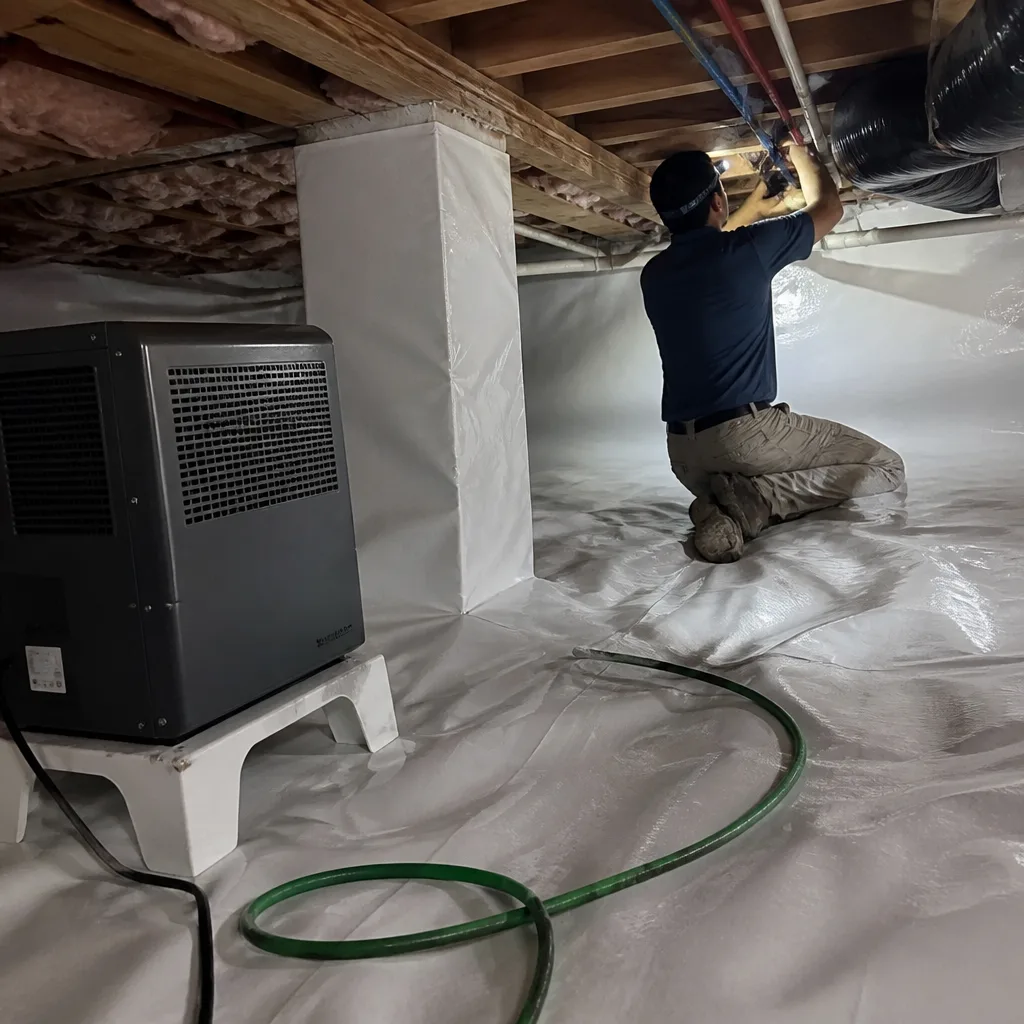
If you want a written price before anyone shows up, before-and-after blower-door numbers at the close of any air-sealing scope, and a documented photo record of the work, call Topside Attic Insulation San Marcos at (737) 337-8049. Wes Okafor and the team have been working under the Haven Standard since 2016 – written price before work starts, 365-Day Done Right Promise on every completed job, and a live person answering when you call. No voicemail loops, no callback windows measured in business days. Estimates are free, and the second opinion on any written estimate you’ve already received is free as well.
Pricing reflects the San Marcos market as of 2026. Topside Attic Insulation San Marcos offers free estimates – call (737) 337-8049.
Written by Wes Okafor, Owner at Topside Attic Insulation San Marcos (Envelope Insulation Co.), serving San Marcos, TX since 2016.
What Our Customers Say
"Turned up on time, protected the hallway, and the written scope matched what was actually done."
- Bruno S."They air-sealed the attic floor before insulating and showed me the blower-door number before and after. The upstairs is finally the same temperature as downstairs."
- Marisol D."Two other companies quoted to blow more insulation on top of what was there. These were the only ones who said the existing material had to come out first, and explained why."
- Clifford E.