

Fast, Reliable Spray Foam Insulation Across Lost Creek
Lost Creek homeowners dealing with bonus rooms that won’t hold temperature or attics hitting 150°F in July need insulation that actually seals, not just fills space. We’re Topside Attic Insulation San Marcos, and our crews work these Barton Creek corridor hills regularly - from the winding streets off Lost Creek Boulevard to the canyon-backed properties along the escarpment. Dispatch runs from our Dallas-Fort Worth office, but Lost Creek is in our standard service zone with same-week availability on most spray foam jobs. Call (737) 337-8049 for a written price before any work starts.
Why Topside Attic Insulation San Marcos Is Lost Creek’s Preferred Spray Foam Insulation Company
We’ve sealed and insulated more than 9,000 homes since 2016, and a growing share of them sit right here in Lost Creek’s 1970s-1990s custom builds. Homeowners here research thoroughly before calling - we know because they tell us they’ve already had two or three other contractors out who wanted to blow fiberglass over problems that needed sealing first.
Our reviews from Lost Creek customers consistently mention the blower-door numbers we leave behind. One homeowner off Capital of Texas Highway put it this way: “They showed me the actual CFM50 before and after. The other guys just said I’d ‘feel a difference.'” That’s Haven Standard documentation, not a feeling.
Response time to Lost Creek runs same-week for standard spray foam consultations, and we can often route a crew within 48 hours for active comfort emergencies - bonus rooms hitting 85°F while the AC runs nonstop, for instance. Our technicians know the local terrain: which homes back to the wooded canyon, where the limestone cuts create cantilevered foundations, and why a flat-slab solution from central Austin won’t work on your hillside grade beam.
Our Spray Foam Insulation Services in Lost Creek
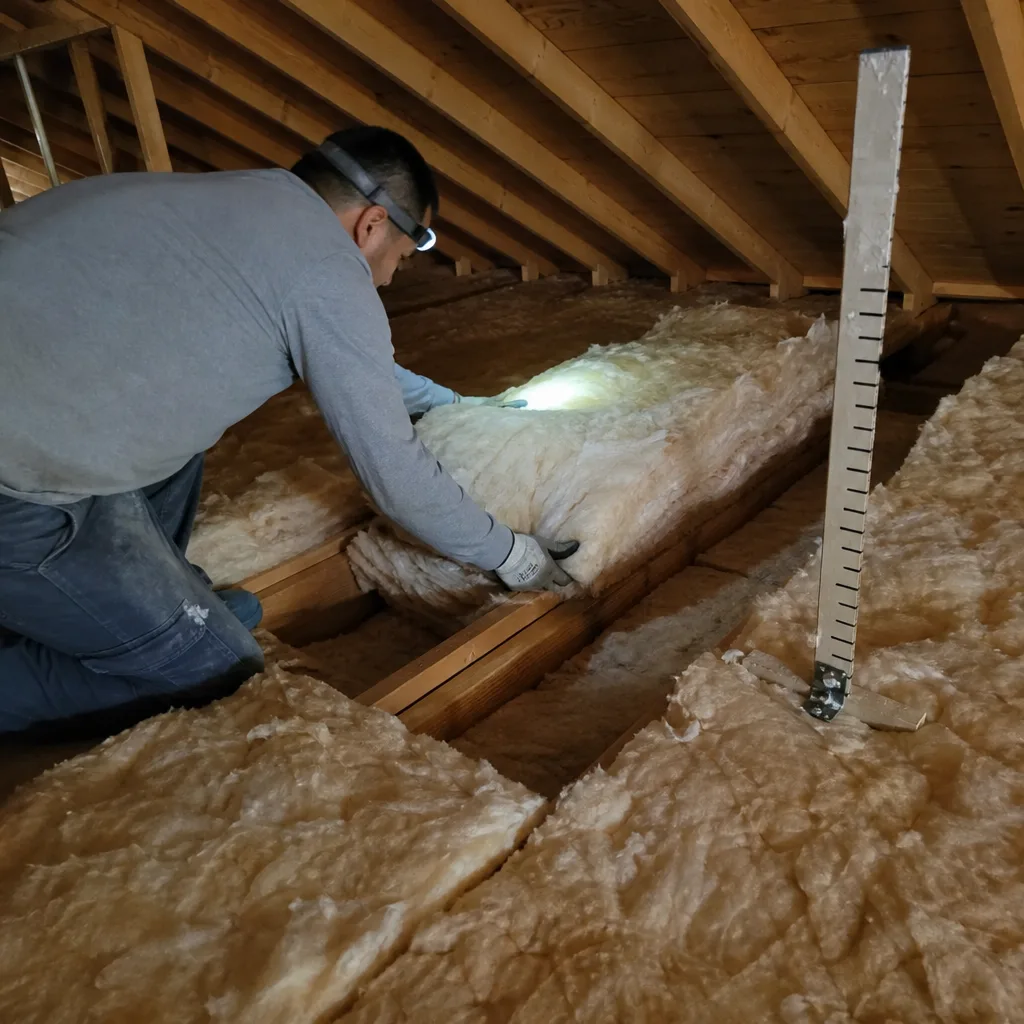
Closed-Cell Spray Foam
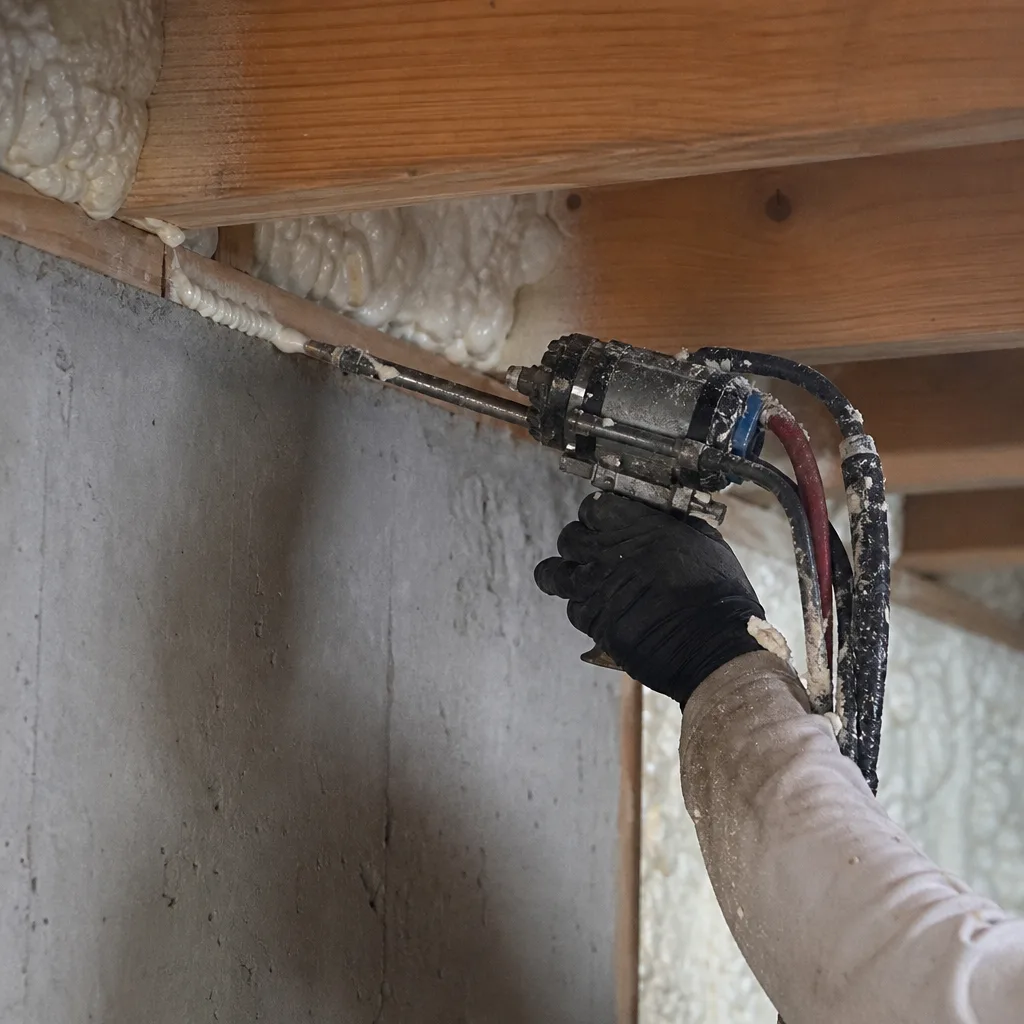
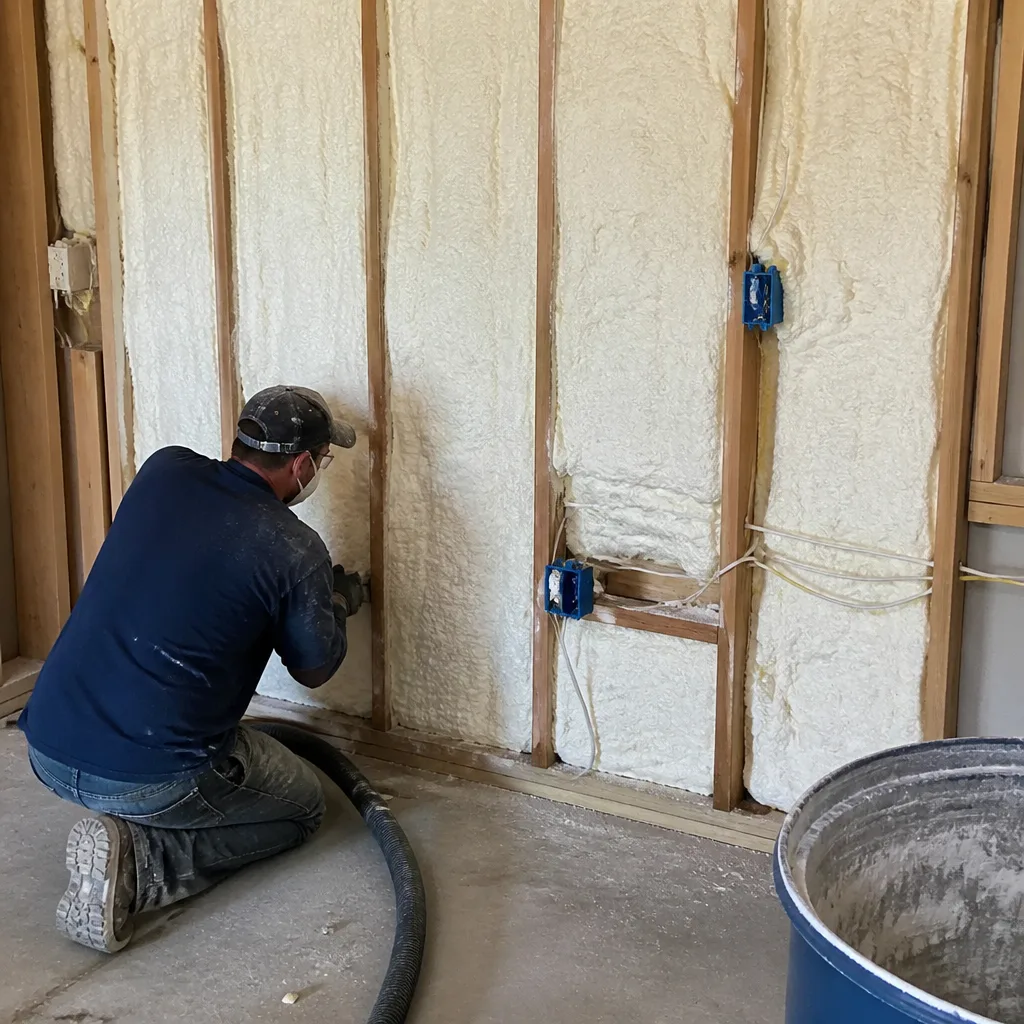
Closed-cell spray foam - a two-pound density material that cures to a rigid, vapor-retarding shell - is what we specify most often in Lost Creek’s older custom homes. The R-value per inch runs about 6.5, so we can hit R-38 in a 2×10 rafter bay without losing the structural roof assembly. More importantly for this climate, closed-cell acts as its own air barrier and vapor retarder, which matters enormously in the humid Barton Creek canyon where wall assemblies that breathe wrong trap moisture against sheathing. On that multi-level home off Lost Creek Boulevard backing to the wooded canyon, our crew converted an unsealed knee-wall cavity to closed-cell - mapping the vaulted-ceiling and exposed-beam geometry first so the foam could seat cleanly against the irregular roofline. The homeowner, who’d had bonus-room comfort issues for years, reported the space finally held temperature with far less HVAC cycling once the foam and an air barrier closed the cavity. We paired the knee-wall work with rim joist spray foam on the cantilevered hillside section, where the exposed underside had been drawing in humid canyon air.
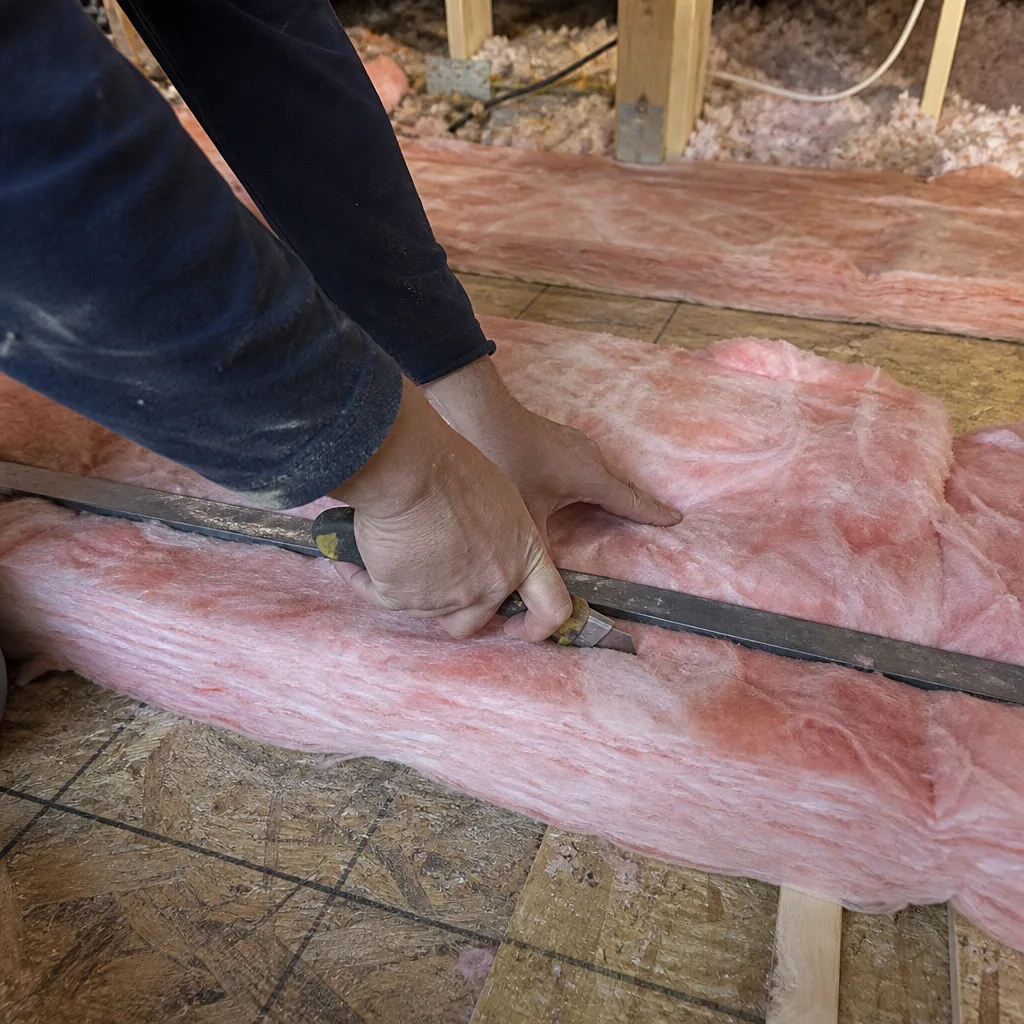
Open-Cell Spray Foam
Open-cell spray foam - half-pound density, softer after cure, vapor-permeable - has its place in Lost Creek, primarily in roof decks where we want assembly drying to the interior and in certain wall cavities with established drying paths. We don’t default to open-cell in knee-wall or rim-joist applications here; the humidity load from the canyon means vapor management needs to be intentional, not accidental. When we do use it, we specify it with eyes open about the assembly behavior.
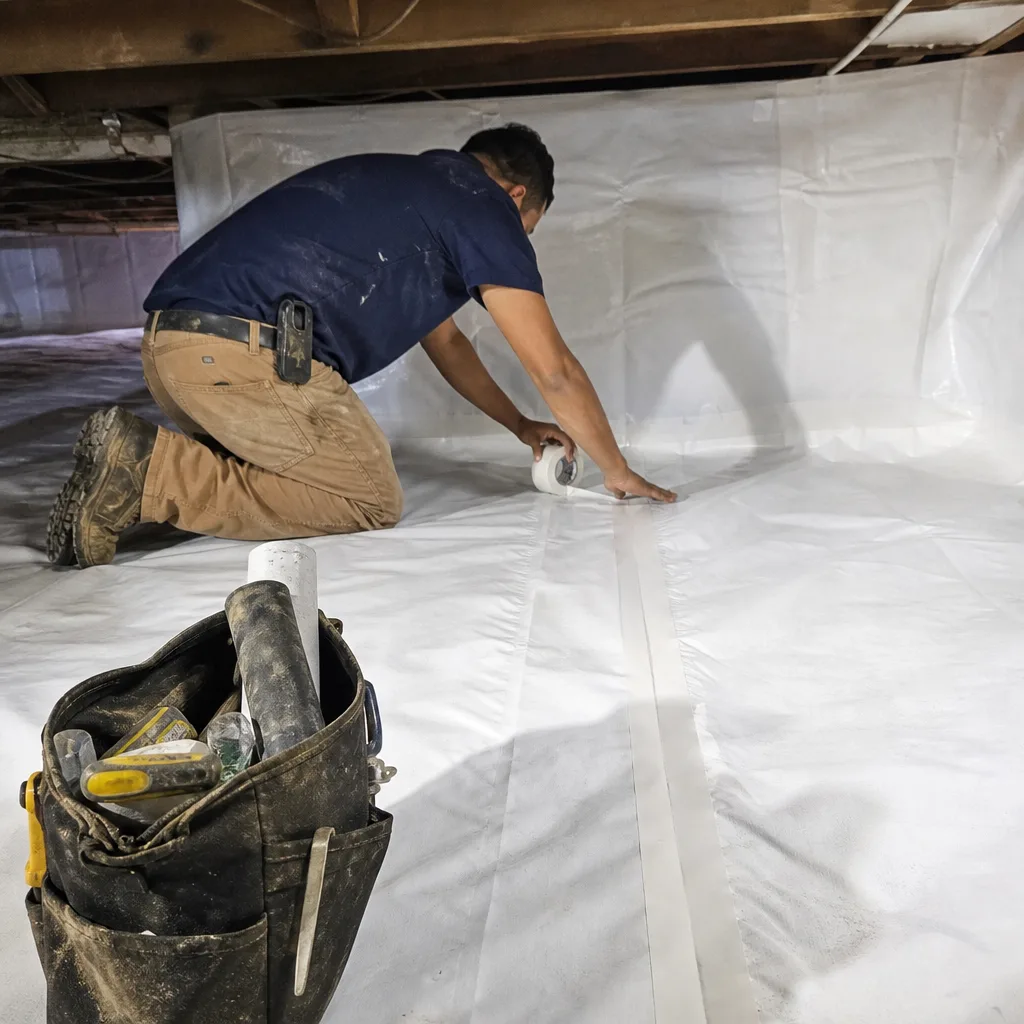
Rim Joist Spray Foam
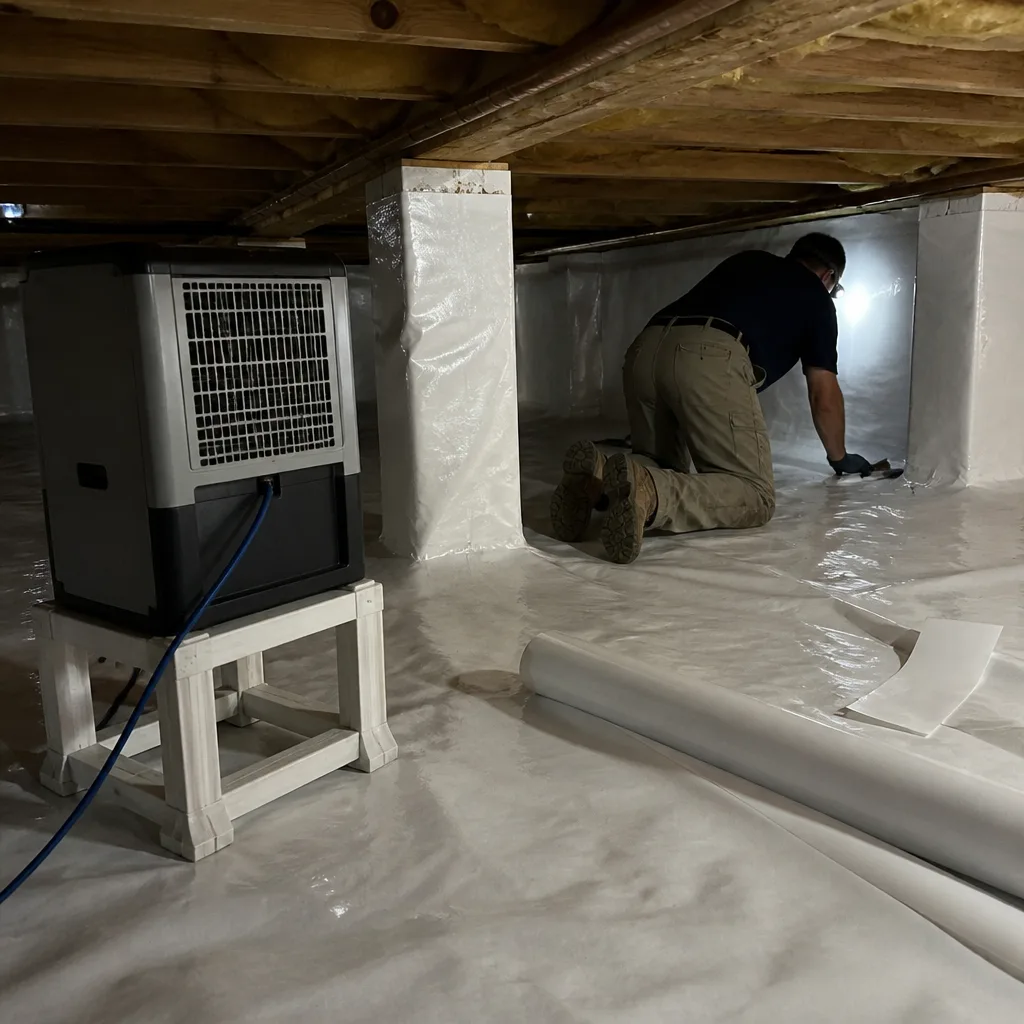
Lost Creek’s pier-and-beam and grade-beam foundations, frequently cantilevered over rocky hillside cuts, leave rim joists exposed to ambient air in ways flat-slab neighborhoods simply don’t experience. Rim joist spray foam seals the critical junction where the foundation meets the floor system - the single largest uncontrolled air leak in many Lost Creek crawl spaces and hillside basements. We see 15-20 degree temperature swings in these zones before treatment. Closed-cell is our standard specification here: it bonds to the irregular limestone-ledge substrates we encounter, it doesn’t sag, and it provides the vapor retardation this humid microclimate demands.
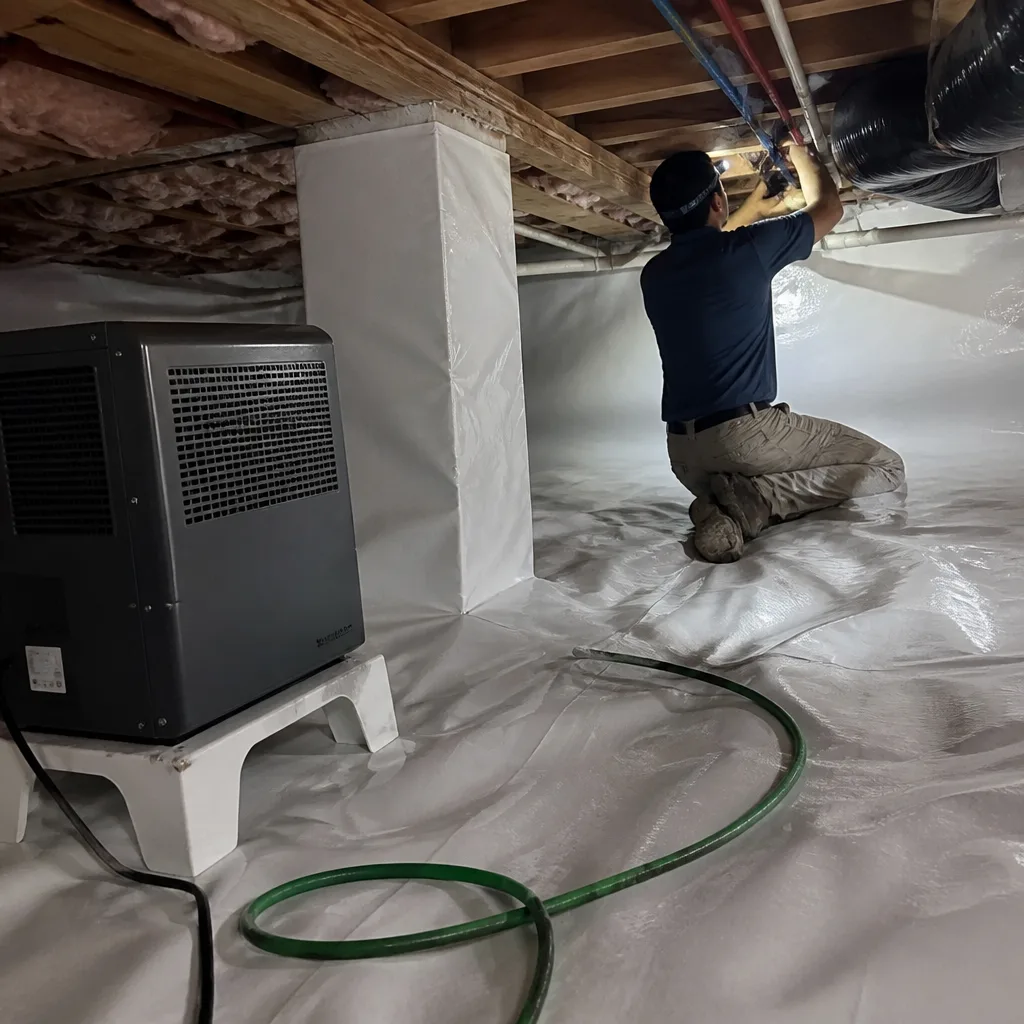
Garage Ceiling Spray Foam
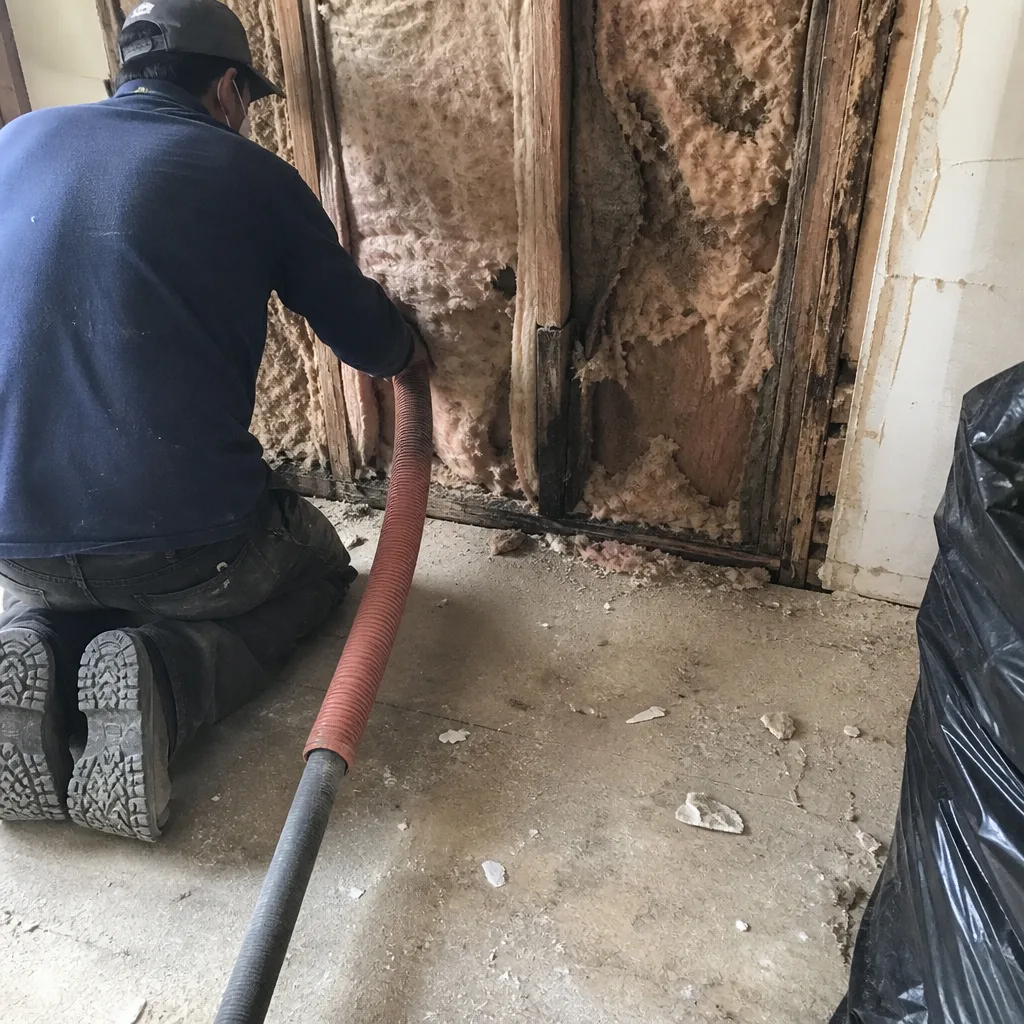
Garage ceiling spray foam in Lost Creek often serves a specific purpose: bonus rooms above garages that were never properly separated from the unconditioned space below. The original builders in this 1970s-1990s vintage frequently ran fiberglass batts between garage ceiling joists with no air barrier at the garage side. Summer heat radiates up, winter cold radiates down, and the bonus room above stays miserable year-round. We strip the old batts, seal the garage ceiling plane with spray foam, and create an actual thermal and air boundary. It’s not glamorous work, but it transforms livability.
Spray Foam Roof Deck
Spray foam applied directly to the underside of roof decking - turning the attic into conditioned space - is often the right move in Lost Creek’s complex roof geometries. Vaulted ceilings with exposed beams, multi-level rooflines, and irregular pitches make conventional attic-floor insulation nearly impossible to install correctly. Foam on the roof deck lets us treat the entire volume as conditioned space, eliminate the 150°F attic entirely, and run HVAC ductwork through a space that isn’t trying to cook it. We specify closed-cell on the roof deck in this climate zone, with careful attention to vapor-profile engineering.
What happens when you call
- 1
A real person answersNo phone trees - you reach a local pro.
- 2
You get an upfront price rangeHonest numbers before anyone is dispatched.
- 3
A background-checked tech heads outLicensed & insured, dispatched right away.
- 4
You approve before work beginsNothing starts until you say go.
 Before
 After
AfterTrusted Brands We Service in Lost Creek
We source spray foam materials from Icynene, Demilec, and CertainTeed - no proprietary lock-in that limits what’s available for your specific assembly. Our Lost Creek crews carry stock for common closed-cell and open-cell formulations, so we’re not waiting on a Dallas-Fort Worth warehouse pull to start your job. When a custom home off Bee Caves Road needed a specific Demilec high-yield closed-cell for a tight vaulted-ceiling cavity last summer, we had it on the truck the next morning. The brands matter less than the specification and the installation discipline, but having options matters when your roofline doesn’t match the textbook.
Common Spray Foam Insulation Problems We See in Lost Creek Homes
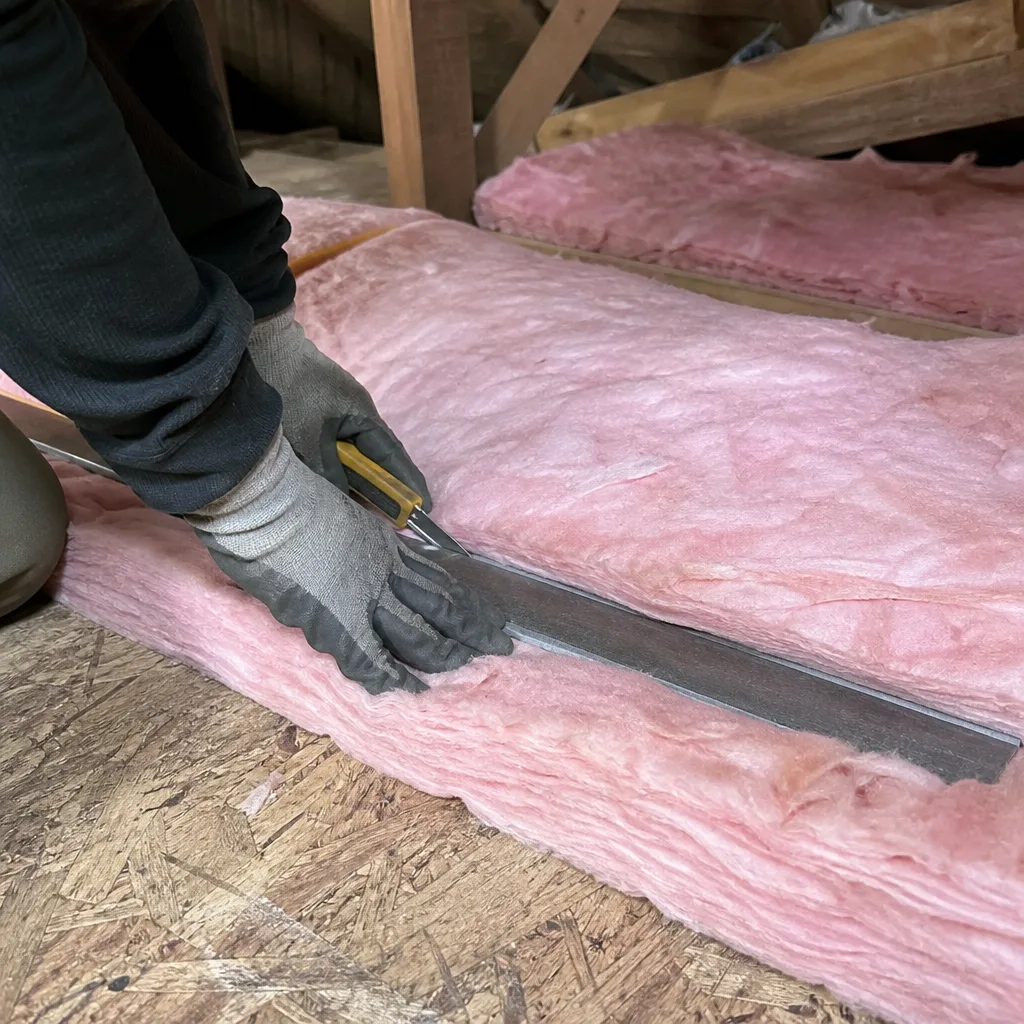
- Unsealed knee-wall batts dumping superheated air. The original fiberglass behind your bonus room knee-wall has no air barrier. 150°F attic air pours straight through it into conditioned space. Adding blown-in insulation over the attic side doesn’t fix this - the air still moves through the batt. We find this on nearly every 1980s custom build we audit in Lost Creek.
- Foam sprayed without geometry mapping on vaulted and exposed-beam assemblies. Irregular rooflines create voids at transitions that a standard spray pattern misses. Our crews map these assemblies before the rig arrives, so the foam seats against every angle change.
- Moisture-trapped wall assemblies from wrong vapor-profile choices. Lost Creek’s wooded canyon traps humidity differently than drier Hill Country towns west of here. Closed-cell or open-cell selection has to account for whether the assembly can dry, and in which direction. We specify with the local microclimate in mind, not a generic climate-zone chart.
- Cantilevered hillside foundations drawing unconditioned air. The exposed underside of floors on rocky cuts creates thermal bridges and air leaks that standard crawl-space approaches don’t address. Rim joist spray foam is the fix, but only after we’ve identified where the air is actually moving.
Pricing for Spray Foam Insulation in Lost Creek, TX
Most closed-cell spray foam jobs in Lost Creek run $1.80-$2.40 per board foot installed, with typical attic or roof-deck projects falling between $3,200 and $6,800 for the foam work alone. Rim joist sealing on cantilevered foundations usually ranges $1,400-$2,600 depending on linear footage and access difficulty. Knee-wall conversions with air-barrier installation run $1,800-$3,400 per cavity. What moves the number: the geometry complexity of your 1970s-1990s custom build, whether we need to remove existing material first, and whether blower-door-directed air sealing is bundled with the foam application. We don’t quote by phone guess - every Lost Creek job gets a site visit, a written scope, and a flat written price before any work starts. Haven Standard Clause 1. Bring us a competing written estimate and we’ll give you a free second opinion, line by line. Call (737) 337-8049 to schedule.
We Also Serve Cities Near Lost Creek
Our spray foam crews cover the full Austin metro corridor, including Lost Creek and neighboring communities. We regularly run jobs in San Marcos, Redwood, Kyle, and Lockhart - same written-price standard, same documented photo record, same blower-door verification where applicable. If you’re outside Lost Creek city limits but in the service radius, the process doesn’t change.
Serving Lost Creek, TX - Our Local Coverage Area
We’re based in the Lost Creek area and know this community well. Use the map below to see our service coverage - if you’re nearby, we can almost certainly help.
FAQs - Spray Foam Insulation in Lost Creek
Lost Creek’s 1970s-1990s custom homes were built with irregular roof geometries and knee-wall cavities that blown-in insulation simply cannot seal properly. Adding more fiberglass or cellulose over an unsealed air leak just gives the air more material to move through. Spray foam creates both the thermal layer and the air barrier in one application, which is why we specify it for the vaulted ceilings, exposed-beam assemblies, and cantilevered foundations common here. Call (737) 337-8049 and we’ll show you exactly where your home is leaking during the site visit.
Yes - in fact, spray foam is often the only practical solution for these geometries. Our crews map vaulted ceilings, multi-level rooflines, and exposed-beam transitions before the foam rig arrives, then apply material to seat against every irregular surface. Blown-in insulation relies on a flat attic floor; Lost Creek’s custom builds frequently don’t have one. The documentation you receive includes before-and-after photos of these complex areas.
The canyon setting demands attention to vapor management, but it’s not a problem if the specification is correct. Lost Creek’s humidity runs higher than drier Hill Country towns to the west, so we engineer wall and roof assemblies with intentional drying paths - typically closed-cell where vapor retardation is needed, open-cell only where we can verify drying to the interior. The wrong foam choice in this microclimate can trap moisture; the right choice, properly specified, performs for decades. We make that determination during the site audit, not by default.
Original builders installed fiberglass batts with no air barrier behind the knee-wall drywall. Superheated 150°F attic air moves freely through the batt and into your conditioned bonus room. The batt itself might even look intact from the attic side, but it’s doing almost nothing to stop air movement. Our fix: remove the failed batt, install an air barrier on the attic side of the knee-wall, then apply closed-cell spray foam to seal and insulate the cavity. The comfort change is immediate and measurable on the blower-door test. Call (737) 337-8049 for an exact scope and price.
They change where we apply it and what we specify. Cantilevered floors over rocky cuts expose rim joists and subfloor undersides to unconditioned air - a thermal bridge flat-slab neighborhoods don’t have. We treat these with closed-cell rim joist spray foam, which bonds to irregular substrates, doesn’t sag, and provides the vapor control this humid exposure demands. The hillside access can be tighter than standard crawl spaces, so we plan equipment and material staging accordingly. Every cantilevered job gets documented photos of the before condition, since most homeowners have never seen the underside of their floor system.
Ready to stop losing conditioned air through unsealed knee-walls and cantilevered foundations? Call (737) 337-8049 for a free site visit and written estimate. We’ll bring the blower-door rig, map your specific geometry, and leave you with a flat price and a documented scope - no work starts until you have both in writing. That’s Haven Standard. That’s how we operate in Lost Creek.
Written by Wes Okafor, Owner at Topside Attic Insulation San Marcos, serving Lost Creek and the Austin metro corridor since 2016.