

How Much Does Wall Insulation Cost in San Marcos?
Our Wall Insulation services in San Marcos, TX typically cost between $1.50 and $4.00 per square foot of wall area, installed – which works out to roughly $1,800 to $6,500 for a typical single-story home depending on wall access method, insulation type, and linear footage of exterior walls. Most San Marcos homeowners we work with land somewhere between $2,200 and $4,800 for a full exterior wall insulation project, with the wide spread explained almost entirely by whether walls are open (new construction or renovation) or closed (existing drywall in place).
Those numbers assume air sealing is completed before any insulation goes in – because at Envelope Insulation Co., it always is. A wall cavity that’s insulated but not air-sealed still leaks conditioned air through every top-plate gap and penetration, which is money out the door every month.
Wall Insulation Cost Breakdown (2026)
Wall insulation in San Marcos ranges widely by method and material. The table below reflects installed pricing – labor and material together – based on what we see in this market in 2026. Square footage here refers to wall area (not floor area), so a 2,000 sq ft home with 8-foot ceilings and 200 linear feet of exterior wall has roughly 1,600 sq ft of exterior wall area before windows and doors are subtracted.
| Method / Material | Wall Condition | Cost per Sq Ft (Wall Area) | Typical Job Total |
|---|---|---|---|
| Blown-in fiberglass (retrofit) | Closed walls, small injection holes | $1.80 – $2.60 | $2,100 – $3,800 |
| Blown-in cellulose (retrofit) | Closed walls, small injection holes | $1.60 – $2.40 | $1,900 – $3,500 |
| Dense-pack fiberglass (retrofit) | Closed walls, drill-and-fill | $2.00 – $3.00 | $2,400 – $4,400 |
| Dense-pack cellulose (retrofit) | Closed walls, drill-and-fill | $1.90 – $2.80 | $2,200 – $4,100 |
| Open-cell spray foam | Open walls (framing exposed) | $1.80 – $2.50 | $2,200 – $3,800 |
| Closed-cell spray foam | Open walls (framing exposed) | $3.00 – $4.50 | $3,600 – $6,800 |
| Fiberglass batts (open walls) | Open walls, new construction or gut reno | $0.60 – $1.10 | $700 – $1,600 |
| Mineral wool / Rockwool batts (open walls) | Open walls, new construction or gut reno | $1.10 – $1.80 | $1,300 – $2,700 |
| Air sealing (top plates, penetrations) | Attic access required – done before insulation | – | $350 – $900 (added line item) |
A few things these numbers don’t automatically include: patching and repainting exterior siding or interior drywall after a drill-and-fill retrofit (add $400 to $1,200 depending on finish type and patch count), any mold or moisture remediation discovered inside wall cavities (varies – we photograph and document everything we find), and disposal of existing degraded insulation in older walls where it’s present. Every job we price at Envelope Insulation Co. is a flat written price with a full scope before anyone starts – no line-item surprises when the crew finishes.
Why San Marcos Pricing Sits Where It Does
San Marcos is a mid-size market between Austin and San Antonio, which creates an interesting labor dynamic. Crews are in higher demand than in smaller Hill Country towns, but material costs track closer to the San Antonio market than the Austin premium. What that means in practice: labor rates here are firm, but you’re not paying Austin-metro markup on fiberglass or cellulose. We source from Owens Corning, Johns Manville, Knauf, Rockwool, CertainTeed, Icynene, Demilec, and GreenFiber – no proprietary product lock-in, and no upcharge for a brand you didn’t choose.
Homes in areas like Hunter’s Crossing, The Highlands, Spring Lake, Blanco Vista, and the older neighborhoods near downtown San Marcos each present different wall construction realities. Older craftsman-era homes near the square typically have 2×4 stud walls with 3.5 inches of cavity depth – which limits R-value options regardless of material. Newer subdivisions south of I-35, built after 2010, often have 2×6 framing that opens up the option of R-21 to R-23 dense-pack in a single pass. That framing difference alone can shift a project by $300 to $700.
What Affects Wall Insulation Pricing in San Marcos
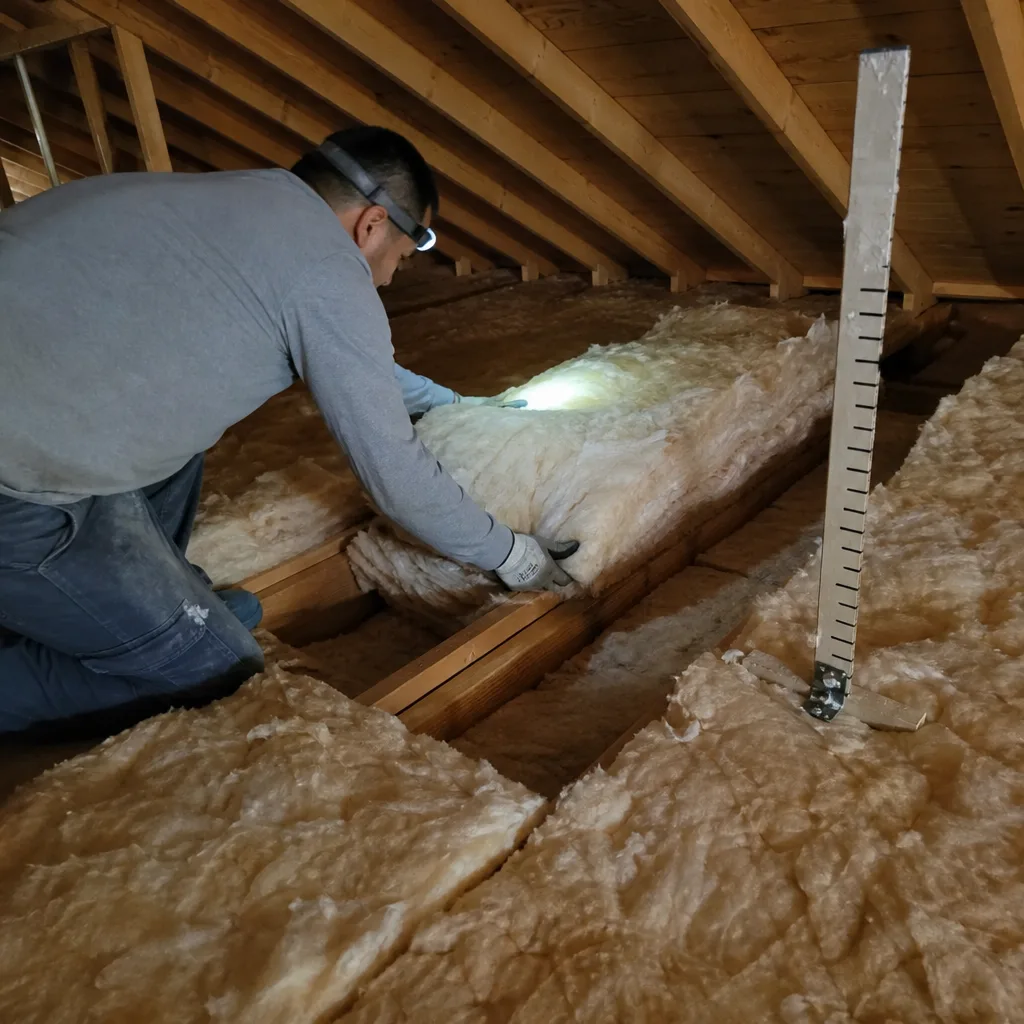
- Open versus closed walls: This is the single biggest cost driver. If framing is exposed – during new construction, a gut renovation, or after drywall removal – batt or spray foam installation is straightforward and priced at the lower end of the range. Existing homes with drywall in place require a retrofit method (drill-and-fill or injection), which takes more time per square foot and requires patching afterward. Most San Marcos homeowners are retrofitting closed walls, which is why $2,000 to $4,500 is the realistic range for most jobs we see here.
- Wall depth and stud spacing: A 2×4 wall holds R-13 to R-15 in a standard batt or dense-pack. A 2×6 wall can hold R-19 to R-23. Homes built in older neighborhoods like Dunbar and the streets surrounding Texas State University tend to be 2×4 construction, while newer growth corridors off Centerpoint Road and near Kyle are more commonly 2×6. Deeper cavities cost slightly more to fill but deliver meaningfully better thermal performance in Central Texas summers.
- Exterior cladding type: Drill-and-fill retrofit through brick veneer costs more than through lap siding. Drilling brick requires masonry bits, slower going, and more precise patching. Stucco presents its own complications. Homes with fiber cement or wood lap siding are the most straightforward. If your home has brick veneer on any elevation, budget toward the upper end of the retrofit range.
- Number of penetrations and obstructions inside the cavity: Every wiring run, blocking piece, or fire-stop inside a wall cavity creates a section the insulation has to work around – or a section that requires an additional hole to fill properly. A clean, unobstructed cavity (common in post-2000 production homes) fills faster and cheaper than a wall full of mid-century blocking. We photograph and document what we find in every cavity before closing it back up.
- Air sealing scope required: We treat air sealing as a hard prerequisite, not an add-on you can skip. In San Marcos, the most common leakage points we find are top-plate gaps where interior partition walls meet the attic floor, can light penetrations that open directly into unconditioned wall cavities, and plumbing chases that run from crawl space to attic with nothing slowing the air column. The more of those a home has, the more air sealing time is needed before insulation starts – which adds cost upfront and saves money on your Bluebonnet Electric bill for years after.
- Linear footage and home geometry: A simple rectangular footprint with four exterior walls costs less per square foot to insulate than a home with multiple bump-outs, angles, and split-level sections. Many of the newer homes in Kissing Tree and Trace subdivisions have architectural details that add wall complexity – each re-entrant corner or pop-out adds setup time. We measure every wall elevation before quoting so the price reflects your specific home, not a generic calculation off floor area.
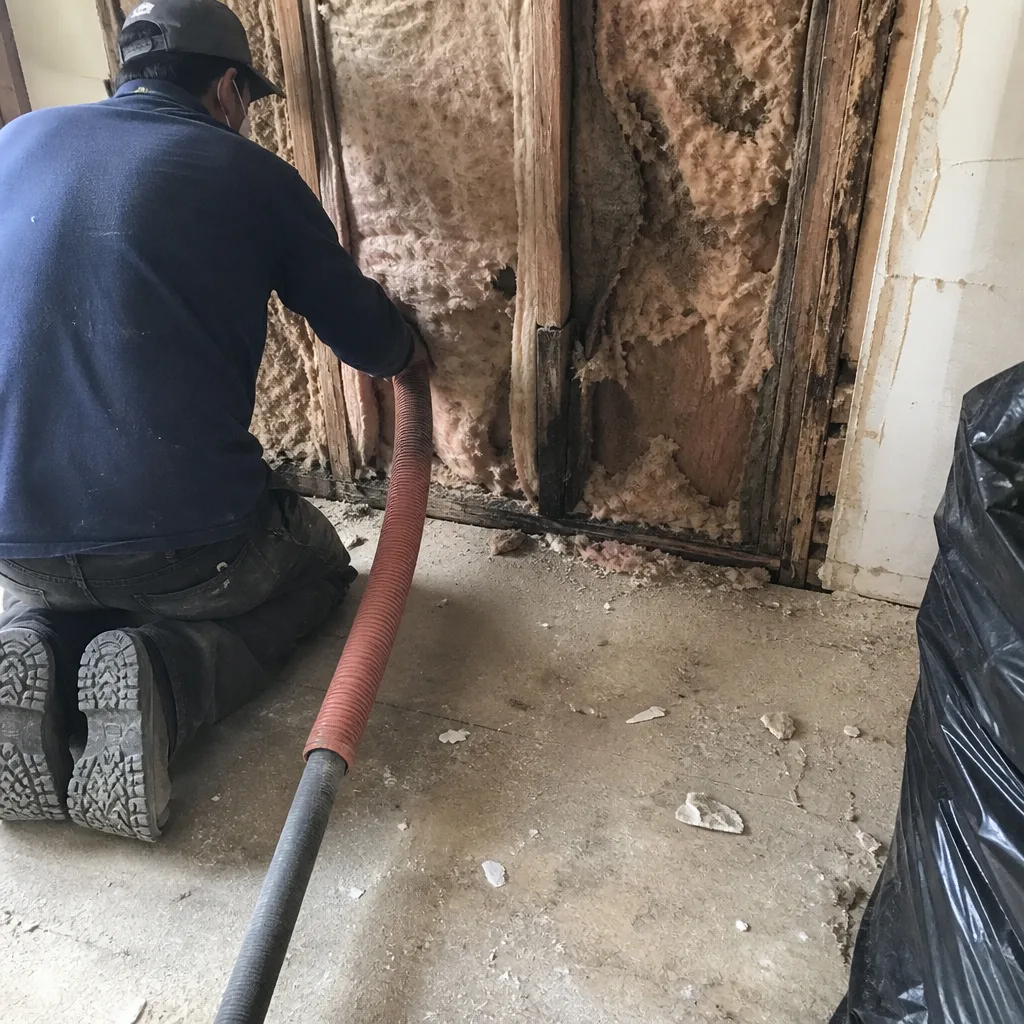 Before
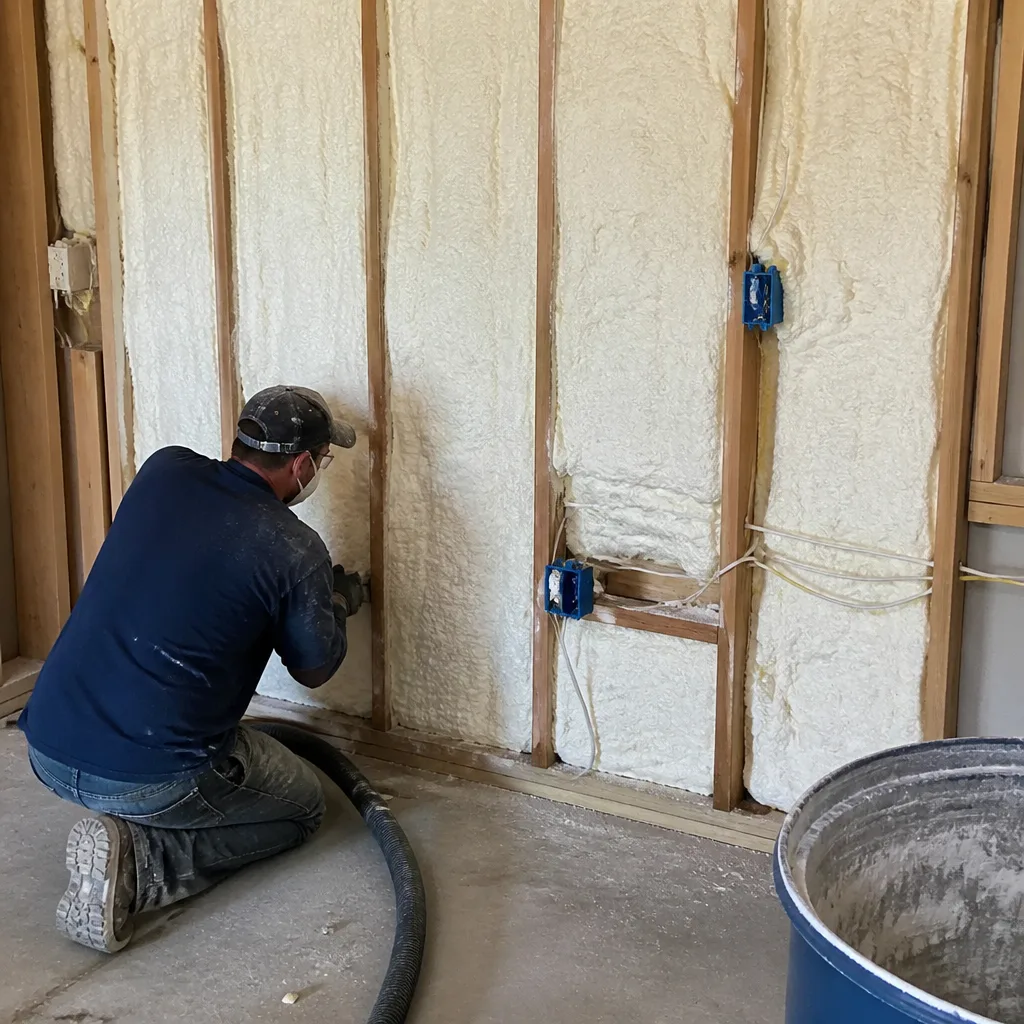 After
AfterHow to Save on Wall Insulation in San Marcos
Combine Projects When Walls Are Already Open
The most reliable way to reduce cost per square foot is to insulate walls when framing is already exposed for another reason – a bathroom remodel, a kitchen renovation, or a window replacement that requires opening up the wall cavity. If drywall is coming off anyway, switching from a drill-and-fill retrofit to a batt or open-cell spray foam install drops your installed cost substantially. We see this frequently in older homes near downtown San Marcos where homeowners are updating kitchens and utility rooms – it’s worth asking whether insulating those walls at the same time makes sense before the drywall goes back up.
Prioritize by Exposure
If a full perimeter project isn’t in the budget this year, prioritize your west-facing and south-facing walls first. In Central Texas, west-facing walls absorb the most solar heat load during the peak of the afternoon, and the difference between an insulated and uninsulated west wall is measurable in both blower-door numbers and your utility bill. We can walk through your home’s orientation and help you sequence the work so the first phase delivers the most thermal benefit per dollar spent.
Don’t Skip Air Sealing to Lower the Quote
Removing air sealing from the scope reduces the upfront cost but doesn’t improve the thermal performance in proportion. A wall that’s fully insulated but leaking air at the top plate is still moving conditioned air – it’s just harder to see. We’ve tested homes in San Marcos where wall cavity air sealing alone moved the blower-door reading by 600 to 900 CFM50 (CFM50 – cubic feet per minute at 50 Pascals of pressure, the standard unit for measuring how much air a building envelope is losing). That air movement represents real cooling load on your HVAC system. The insulation and the air sealing work together; separating them is a false economy.
Check for Utility and State Energy Incentives
Bluebonnet Electric Cooperative and Texas Gas Service both offer rebate programs that are updated periodically – the specific amounts change, so check their current program pages before your project starts. The federal Inflation Reduction Act Section 25C tax credit covers insulation and air sealing improvements at a meaningful percentage; consult your tax advisor on your specific eligibility since thresholds and requirements apply. These incentives don’t reduce the upfront invoice, but they can meaningfully reduce the net cost when you account for them at tax time.
Get a Written Second Opinion
Under the Haven Standard, we offer a free second opinion on any written estimate you’ve received from another contractor. Bring us the scope and the number – we’ll read it with you and tell you what we see. No obligation, no pressure. If you’re comparing proposals and one of them doesn’t include an air sealing line item, that’s worth asking about before you sign anything. Call (737) 337-8049 to schedule a free estimate or bring in a quote for a second opinion – someone will answer, not a voicemail system.
Don’t Delay Past the Summer Planning Window
Scheduling in San Marcos tightens every year from April through August. If you’re planning a wall insulation project, getting a written price in February or March typically gives you more flexibility on scheduling and avoids the situation where heat mitigation becomes urgent in July. There’s no manufactured urgency here – it’s just a practical observation about how the Central Texas market runs. Getting the written scope and price early costs nothing and gives you options.
FAQs – Wall Insulation Cost in San Marcos
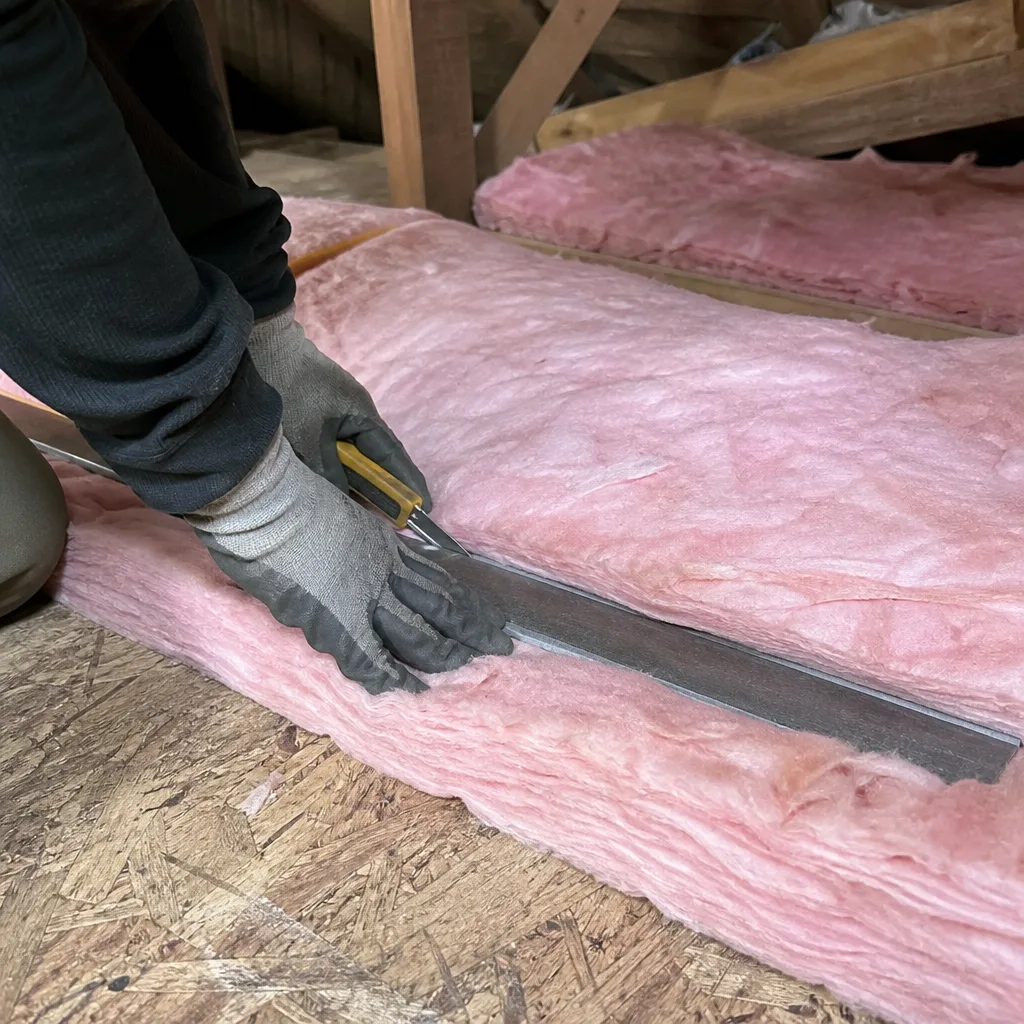
How much does it cost to insulate a 1,500 sq ft home’s exterior walls in San Marcos?
A 1,500 sq ft single-story home in San Marcos with roughly 8-foot ceilings and 160 to 180 linear feet of exterior wall typically runs $2,000 to $4,200 for a retrofit drill-and-fill project, installed, with air sealing included. If walls are already open for any reason, the same home’s exterior walls could be insulated with fiberglass batts for $900 to $1,600, or with open-cell spray foam for $1,800 to $3,000. The specific number depends on cladding type, stud depth, and how many penetrations need to be sealed. Get the written price before anyone starts – that’s Haven Standard Clause 1, and it applies to every project we price. Call (737) 337-8049 for a free estimate with a written scope.
Is spray foam or blown-in insulation better for existing walls in San Marcos?
For existing closed walls (drywall already in place), blown-in or dense-pack is almost always the right call, and it runs $1.60 to $3.00 per square foot of wall area depending on material. Spray foam – open or closed cell – requires open framing to install properly and is rarely used in closed-wall retrofits because it can’t fill a closed cavity from a small hole the way dense-pack material can. In San Marcos’s climate, dense-pack cellulose is a strong performer: it handles the humidity load from our humid subtropical summers, settles minimally, and costs slightly less than dense-pack fiberglass. Closed-cell spray foam at $3.00 to $4.50 per square foot makes the most sense in open walls where its structural rigidity and vapor-retarding properties add real value – particularly in areas prone to moisture exposure like garage walls or utility rooms. Call (737) 337-8049 and we’ll tell you which method makes sense for your specific walls.
Does wall insulation actually make a measurable difference in a San Marcos home?
Yes, and we publish the measurements. Before-and-after blower-door readings show, in a single number (CFM50 – cubic feet per minute at 50 Pascals), how much conditioned air the building envelope was losing before and after work was completed. On applicable jobs, we provide those readings as part of the documented project record. In San Marcos, where summer cooling loads are significant from May through September and Bluebonnet Electric rates have trended upward, reducing envelope air leakage through walls and their associated top-plate gaps typically produces a measurable reduction in HVAC runtime. We’ve seen wall and attic air-sealing projects in the Hunter’s Crossing and Blanco Vista areas move the blower-door reading from above 4,000 CFM50 to under 2,500 CFM50 – that’s a substantial change in how hard the system has to work to hold temperature. Call (737) 337-8049 to get a written estimate that includes what we expect to measure before and after.
How long does wall insulation installation take in San Marcos?
A typical retrofit drill-and-fill project on a single-story San Marcos home takes one full day, sometimes two if the home is larger than 2,000 square feet or has complex geometry. The time breaks down roughly as: air sealing (top plates, penetrations) takes one to three hours depending on attic access and the number of leakage points found; the actual insulation injection runs two to five hours depending on wall area and cavity conditions; patching drill holes and staging cleanup adds another one to two hours. New construction or open-wall projects with batt installation run faster – often four to six hours for a full exterior. You’ll receive a documented photo record when the crew leaves, regardless of project size. Call (737) 337-8049 for a written scope that includes a realistic time estimate for your specific home.
What R-value should wall insulation be in San Marcos, TX?
The 2021 International Energy Conservation Code as adopted in Texas recommends R-13 to R-20 for exterior walls in Climate Zone 2, which covers Hays County and San Marcos. A standard 2×4 stud wall filled with dense-pack fiberglass or cellulose reaches R-15 to R-17. A 2×6 wall can reach R-19 to R-23 with the same materials. Closed-cell spray foam in a 2×4 wall can reach R-22 to R-24 at 3.5 inches but costs substantially more per square foot. In practical terms for San Marcos, getting any exterior wall from uninsulated to R-13 or better is a significant improvement – the difference between R-15 and R-21 is meaningful but smaller than the difference between zero and R-13. We’ll show you the specific R-value the project will deliver in your written scope, so you know what you’re buying before anyone starts work. Call (737) 337-8049 for a free estimate.
Why San Marcos Homeowners Choose Envelope Insulation Co.
Since 2016, we’ve worked on more than 9,000 homes – every one with a written price before work started and a documented photo record when the crew left. That’s not a policy we adopted recently; it’s been the foundation of the Haven Standard from the first job. In San Marcos specifically, where Texas State University creates a large rental and owner-occupied mix, we work across a wide range of home ages and construction types: 1950s pier-and-beam homes near the Blanco River, 1980s slab homes in Spring Lake, and post-2010 production homes in Trace and Blanco Vista. Each requires a different approach, and the approach gets written into the scope before anyone picks up a tool.
We also don’t insulate over unsealed walls. Air sealing of top plates, can lights, plumbing penetrations, and wiring chases is completed before any insulation material is added. This is documented in the photo record. If a cavity has a moisture issue or shows evidence of pest activity, we photograph it and disclose it in writing before the project proceeds. That’s what working under the Haven Standard looks like in practice – not a feeling-based promise, but a documented process.
Learn more about our specific approach on our Wall Insulation in San Marcos service page, or visit our home page to see the full building-envelope service line we offer in Hays County and surrounding areas.
Key Takeaways
- Wall insulation in San Marcos runs $1,800 to $6,500 installed for a typical home, with most retrofit projects landing between $2,200 and $4,800.
- The biggest cost driver is whether walls are open (new construction or renovation) or closed (existing drywall in place). Retrofit drill-and-fill costs more per square foot than open-wall batt installation.
- Air sealing – top plates, penetrations, can lights – must be completed before insulation goes in. It’s not an optional add-on; it’s what makes the insulation work as intended.
- Blown-in and dense-pack materials (fiberglass, cellulose) are the correct choice for closed-wall retrofits in existing San Marcos homes. Spray foam is better suited to open framing.
- West-facing and south-facing walls deliver the most thermal benefit per dollar in Central Texas’s climate if you’re prioritizing by budget.
- Before-and-after blower-door numbers are provided on applicable jobs so you can see the measured performance change, not just take our word for it.
- Every project starts with a flat written price and ends with a documented photo record. The 365-Day Done Right Promise covers all completed work in writing.
Get a Written Estimate for Your San Marcos Home
If you want to know what wall insulation will actually cost for your specific home in San Marcos, the fastest way to find out is a free on-site estimate with a written price and written scope before anyone starts work. We measure your wall area, assess your wall construction type, identify the air sealing scope, and put a flat number on paper. No vague ranges, no “depends on what we find” after the job starts.
Call (737) 337-8049 to schedule. A live person will answer – no voicemail loop, no callback window. If you have a written estimate from another contractor and want a free second opinion, bring it; we’ll read it with you and tell you what we see. Under Haven Standard Clause 1, every job we take begins with a written price. That’s where we start.
Written by Wes Okafor, Owner at Envelope Insulation Co. (operating as Topside Attic Insulation San Marcos), serving San Marcos, TX since 2016. Pricing reflects the San Marcos market as of 2026. Topside Attic Insulation San Marcos offers free estimates – call (737) 337-8049.
What Our Customers Say
"Turned up on time, protected the hallway, and the written scope matched what was actually done."
- Bruno S."They air-sealed the attic floor before insulating and showed me the blower-door number before and after. The upstairs is finally the same temperature as downstairs."
- Marisol D."Two other companies quoted to blow more insulation on top of what was there. These were the only ones who said the existing material had to come out first, and explained why."
- Clifford E.