
Last updated September 24, 2026
Insulation Cost Breakdown: The San Marcos Homeowner’s Reference for 2026
A $1,400 attic insulation quote and a $2,200 quote for the same San Marcos house are not necessarily different prices for the same work. The lower bid may exclude the 4-6 hours of air sealing labor that determines whether your R-38 performs at R-38 or effectively degrades to R-15 within two seasons. In our experience across more than 9,000 homes sealed and insulated since 2016, the variance between contractor quotes in the San Marcos market runs 40-60% for scopes that look identical on paper but contain fundamentally different labor and material assumptions. This guide breaks every line item into explicit 2026 market ranges so you can compare what is actually being offered, not just the bottom number, and our more guides & resources cover related topics for Texas homeowners.
Quick Answer
Complete attic insulation in San Marcos typically runs $2,200-$4,800 for a 2,000-square-foot home when air sealing, material, and verification testing are included as a single scope. Crawl space encapsulation adds $1,500-$4,000 for pier-and-beam foundations common in neighborhoods like Willow Creek and Blanco Vista. The final price depends on five discrete line items: pre-installation testing, air sealing labor, material type and R-value, installation labor, and post-installation verification.
Table of Contents
- Why San Marcos Insulation Quotes Vary by 40-60% for the Same House
- The Five Line Items Every Quote Should Show
- Material Cost per Square Foot by Insulation Type
- Cost-per-R-Value Math: Comparing Real Efficiency
- Three Cost Drivers Specific to San Marcos Housing Stock
- Utility Rebates: Pedernales Electric and CPS Energy
- The Correct ROI Calculation for San Marcos Homes
- Common Mistakes to Avoid
- When to Call a Professional
- Frequently Asked Questions
- The Bottom Line
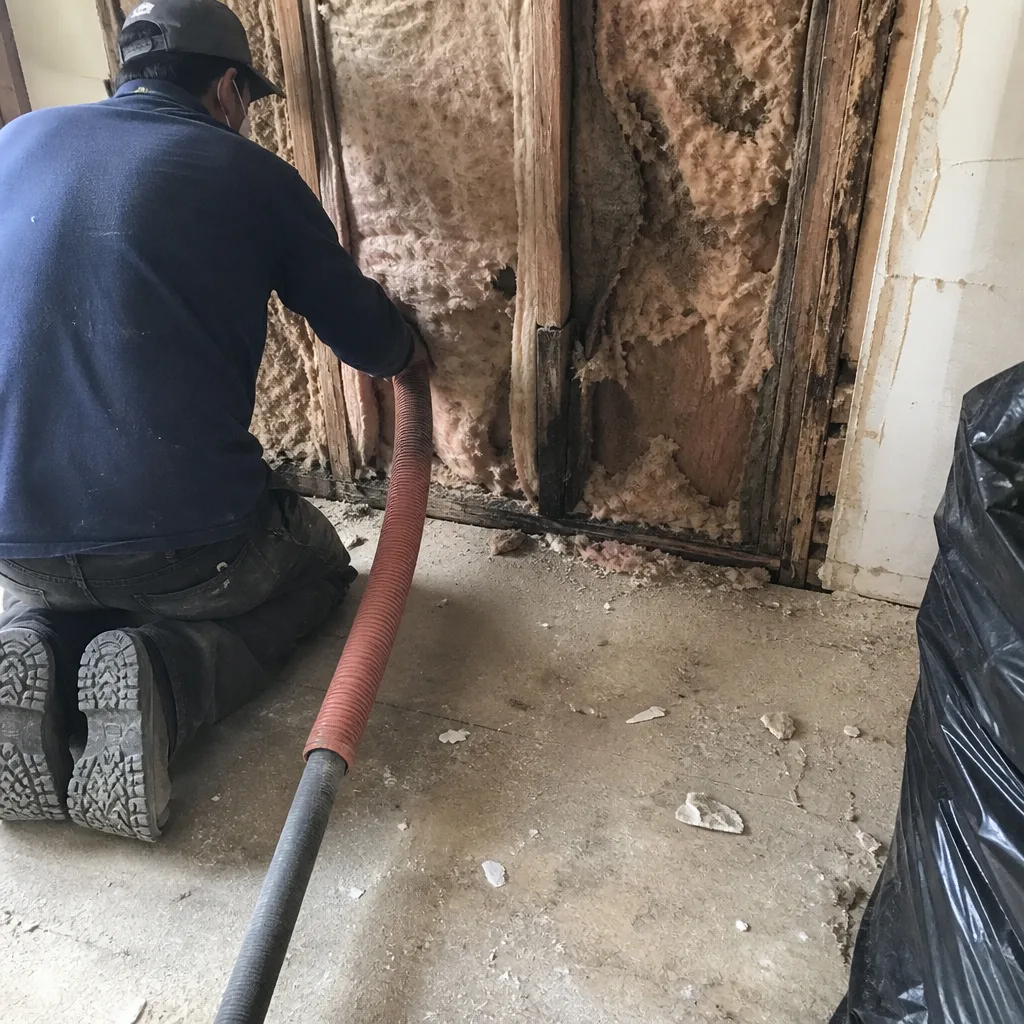 Before
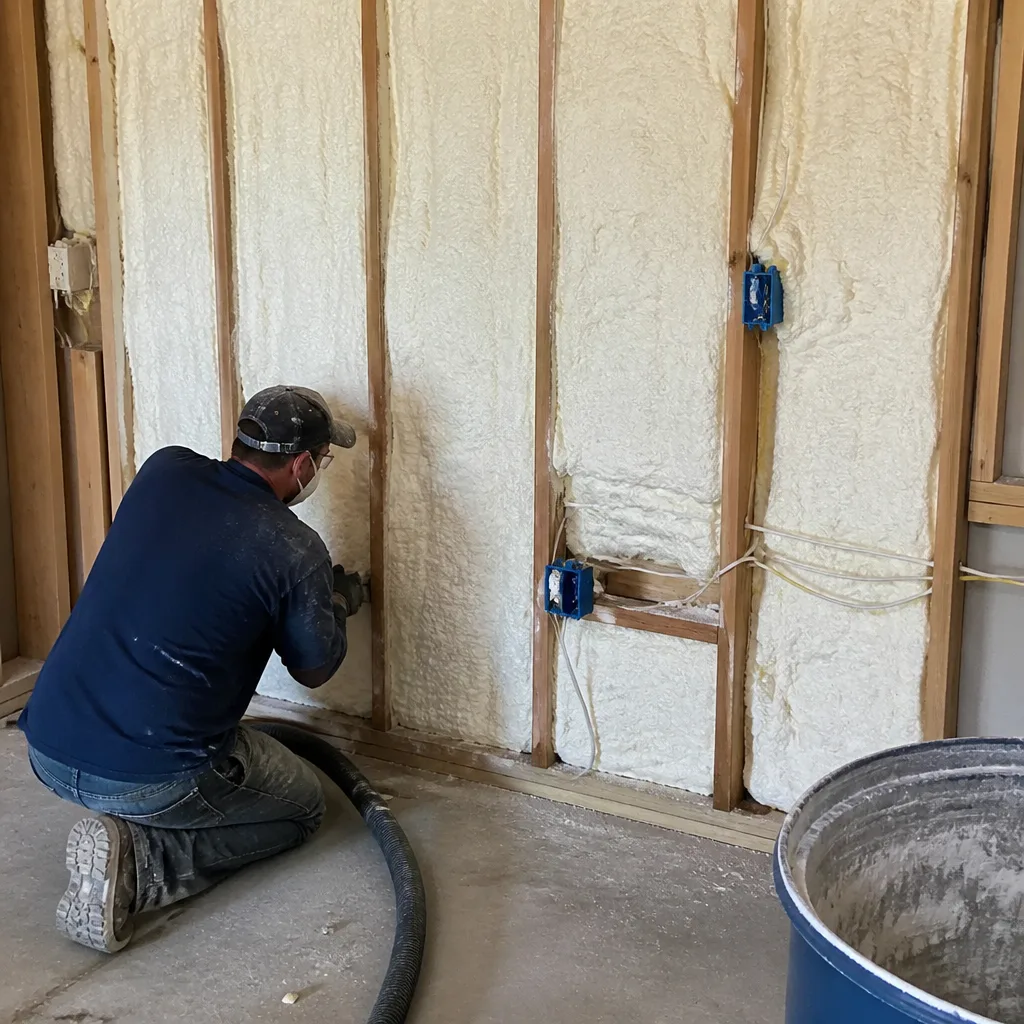 After
AfterWhy San Marcos Insulation Quotes Vary by 40-60% for the Same House
We see this every week. A homeowner in the San Marcos Historic District collects three quotes for “attic insulation to R-38” and receives bids of $1,850, $2,600, and $3,400. The natural assumption is that the $1,850 contractor is competitive and the $3,400 contractor is padding margin. Usually the opposite is true: the lowest bid is pricing material-only installation over an unsealed attic floor, while the higher bids include the preparatory work that makes the insulation perform as labeled.
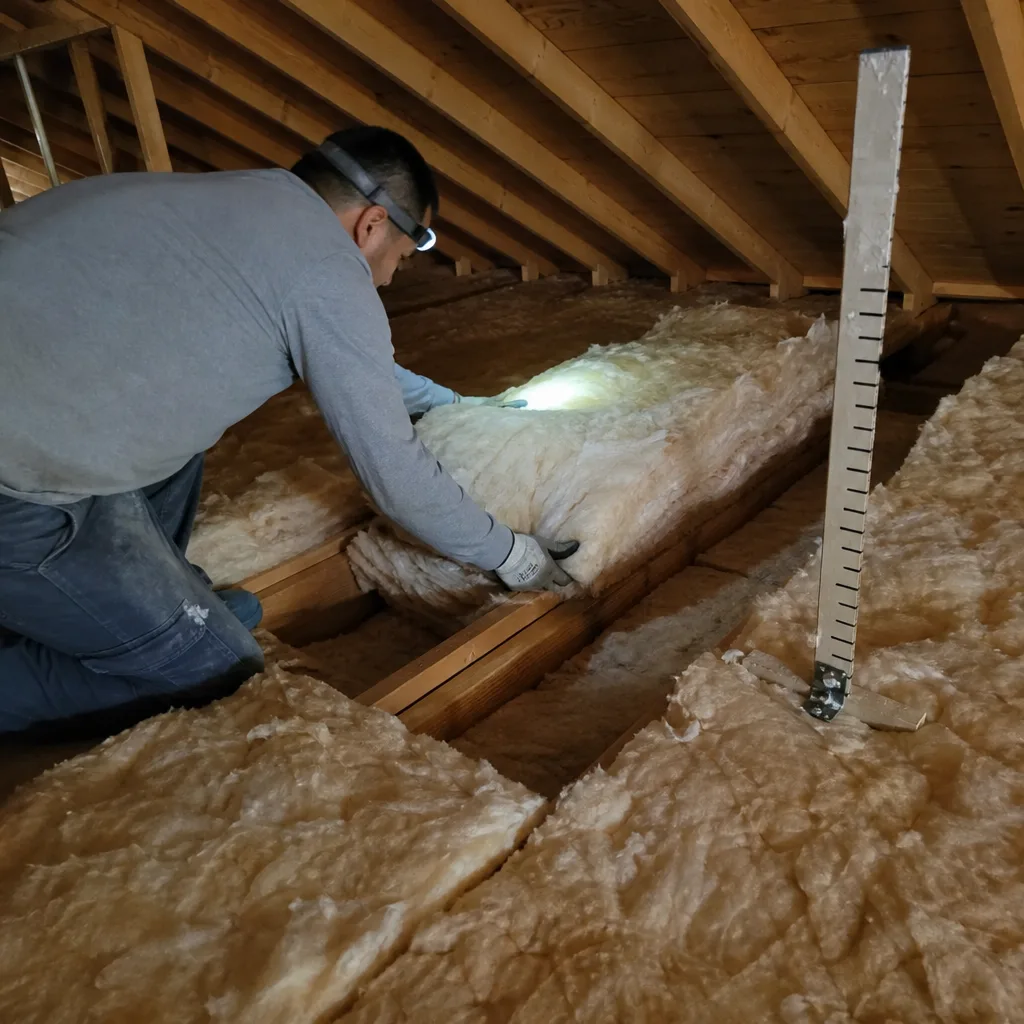
The disconnect stems from how insulation contractors in the Central Texas market define “attic insulation.” Some treat it as a commodity material installation. Others treat it as a building-envelope performance upgrade. The material-only approach blows fiberglass or cellulose over existing conditions. The performance approach begins with a blower-door test - a pressurization reading that shows, in one number, how much conditioned air your building envelope is losing - then seals top plates, can light penetrations, duct chases, and chimney bypasses before any insulation touches the attic floor.
Here is what we typically find when we open a San Marcos attic that was insulated without prior air sealing:
- Top plate gaps at every exterior wall junction, each leaking conditioned air into the vented attic
- Recessed can lights without fire-rated enclosures, creating direct thermal bypasses
- HVAC duct boots pulled away from drywall, dumping conditioned air into insulation that cannot contain it
- Bath fan housings venting into attic space rather than through the roof
In a 2024 job on a 1998-built home in the Willow Creek neighborhood, our blower-door test read 3,800 CFM50 before any work began. After four hours of air sealing and before adding any insulation, that number dropped to 2,100 CFM50. The insulation that followed actually performed at its rated R-value because the air it was meant to retain was no longer escaping through the ceiling plane. A material-only contractor would have blown insulation over those bypasses and delivered a result that looked correct but functioned poorly.
The Haven Standard requires that every job begin with a written price that specifies which approach is being taken. Under Haven Standard Clause 1: flat price, written scope, written warranty before anyone lifts a tool. If your quote does not explicitly list air sealing labor and pre/post blower-door numbers, you are not comparing equivalent scopes.
The Five Line Items Every Quote Should Show
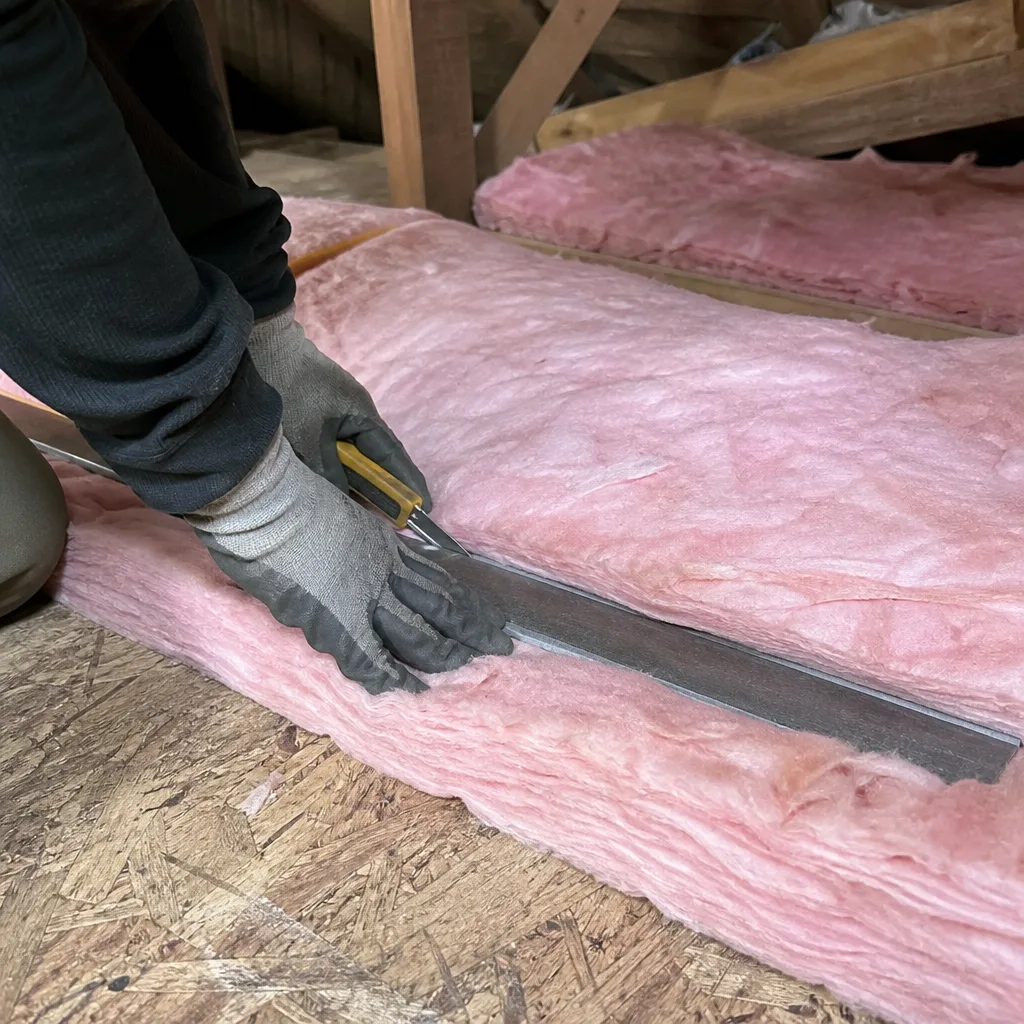
A properly structured San Marcos insulation quote in 2026 separates costs into five discrete line items. This transparency is not administrative detail; it is the only way to verify what you are actually purchasing. Here are the 2026 market ranges we observe in the San Marcos-Hays County area:
- Pre-installation blower-door test: $150-$300
This establishes the baseline air leakage rate of your building envelope, measured in CFM50 (cubic feet per minute at 50 pascals of pressure). Without this number, there is no way to verify that air sealing labor was performed or that it was effective. We publish this figure on every applicable job so homeowners can see the performance change they paid for.
- Air sealing labor: $400-$900 depending on bypass count
This covers sealing of top plates, electrical penetrations, can lights, duct chases, chimney gaps, and attic access hatches. A 1970s ranch in the Dunbar Historic District with original wiring and multiple chimney flues runs toward the higher end. A 2015 build in Blanco Vista with modern airtight electrical boxes may run lower. The labor is typically 4-6 hours for a two-person crew.
- Material cost per square foot by type
See the detailed breakdown in the next section. Material runs $0.60-$3.80 per square foot depending on type and R-value target.
- Installation labor: $800-$1,800
Covers material handling, blowing or spraying equipment operation, and cleanup. Spray foam installation requires specialized PPE and ventilation setup, pushing labor toward the higher end. Blown-in fiberglass or cellulose in open attic spaces runs lower.
- Post-installation blower-door verification: $150-$300
Confirms that air sealing was effective and that no new leaks were introduced during insulation installation. The final reading becomes part of your Documented Photo Record, included on every job we complete.
Total for a complete attic scope on a typical 2,000-square-foot San Marcos home: $2,200-$4,800 when all five line items are included. Quotes below $2,000 for this footprint typically exclude air sealing, testing, or both.
Material Cost per Square Foot by Insulation Type
Material selection in San Marcos should be driven by application, not brand loyalty. We source from Owens Corning, Johns Manville, Knauf, Rockwool, CertainTeed, Icynene, Demilec, and GreenFiber, selecting the appropriate product for each job rather than pushing proprietary lines. Here are the 2026 installed material costs per square foot at the R-values required by IECC 2021 for Climate Zone 2A, which governs San Marcos:
| Material Type | R-Value Target | Material Cost/SF | Key Characteristics |
|---|---|---|---|
| Blown fiberglass | R-38 (attic) | $0.60-$0.85 | Lightweight, does not settle significantly, higher airflow resistance than cellulose |
| Blown cellulose | R-38 (attic) | $0.55-$0.80 | Higher density, better sound attenuation, treated for fire and pest resistance |
| Open-cell spray foam | R-20 (walls) or R-38 (attic, thick lift) | $1.20-$1.80 | Air barrier and insulation in one, vapor permeable, excellent for irregular cavities |
| Closed-cell spray foam | R-20 (walls) or R-38 (attic) | $2.50-$3.80 | Vapor barrier and insulation in one, highest R-value per inch, structural rigidity |
Attic applications in San Marcos typically use blown fiberglass or blown cellulose to R-38, the IECC 2021 minimum for Climate Zone 2A. Wall applications in existing construction often use dense-pack cellulose or open-cell spray foam when wall cavities are accessible during renovation. Closed-cell spray foam is reserved for crawl space rim joists, metal building applications, or where vapor control and structural enhancement are both required.
Rockwool batts see occasional use in San Marcos for interior partition sound control or where fire resistance is specified, particularly in multi-family renovations near Texas State University. CertainTeed fiberglass batts are common in new construction where framing is open and uniform. Icynene and Demilec open-cell formulations are our typical specification for hybrid applications where air sealing and insulation must be combined in a single pass.
Cost-per-R-Value Math: Comparing Real Efficiency
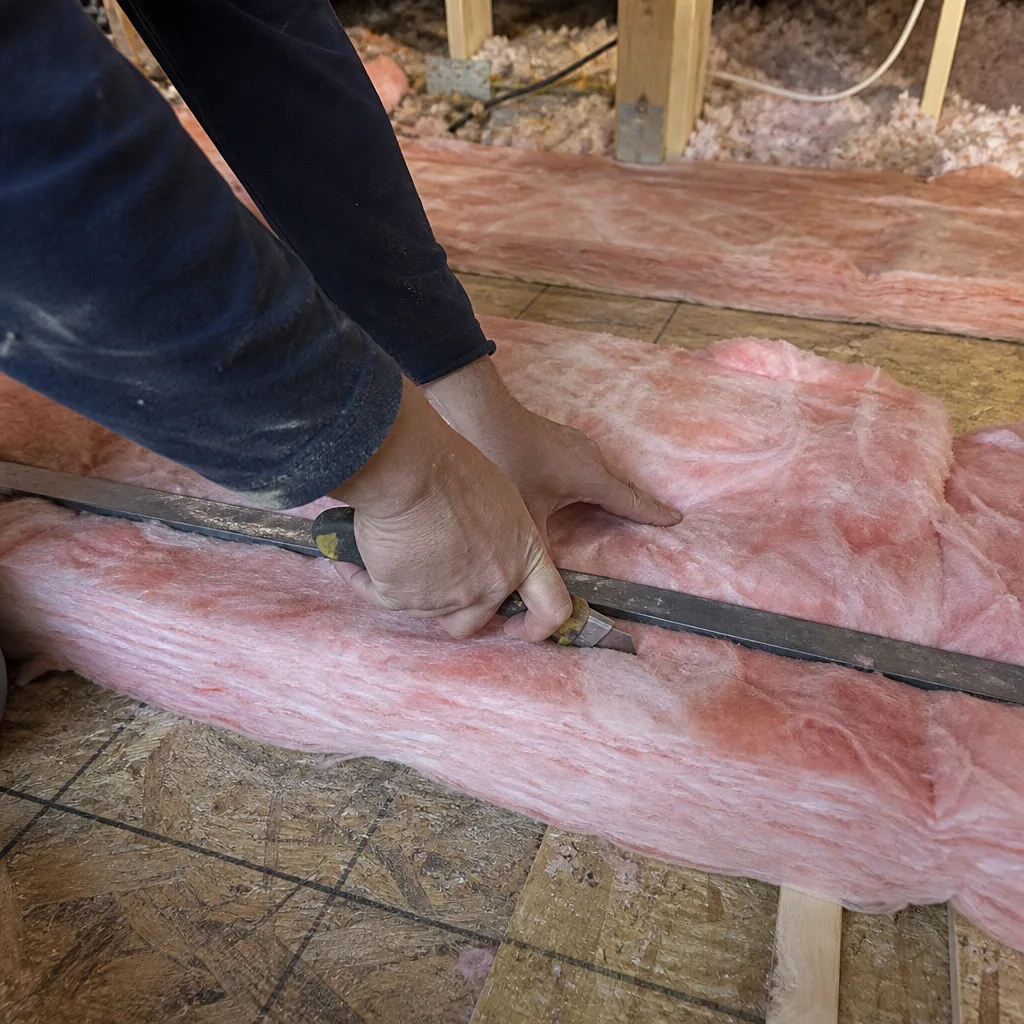
Sticker price per square foot misleads homeowners because it ignores the performance delivered. A material with lower cost per square foot but higher air permeability may deliver less effective thermal resistance in real conditions. The meaningful comparison is cost per unit of R-value, adjusted for the air sealing contribution of the installation method.
Here is the calculation for San Marcos attic applications at R-38:
- Blown fiberglass at R-38: $0.72 average material cost ÷ 38 R-value units = $0.019 per R-value per square foot. Requires separate air sealing labor ($400-$900) to achieve rated performance.
- Blown cellulose at R-38: $0.67 average material cost ÷ 38 = $0.018 per R-value per square foot. Slightly better cavity fill in irregular framing, same air sealing requirement as fiberglass.
- Open-cell spray foam at R-38: $1.50 average material cost ÷ 38 = $0.039 per R-value per square foot. Air sealing is integral to the material; no separate air sealing line item required for the attic plane itself, though can lights and penetrations still need addressing.
- Closed-cell spray foam at R-38: $3.15 average material cost ÷ 38 = $0.083 per R-value per square foot. Rarely used for full attic coverage due to cost; typically reserved for rim joists or specific moisture-control applications.
The cost-per-R-value comparison changes when you include the required air sealing labor. For blown fiberglass or cellulose, add $0.20-$0.45 per square foot (amortizing the $400-$900 air sealing cost across a 2,000-square-foot attic). The adjusted comparison becomes:
- Blown fiberglass with air sealing: $0.019 + $0.013 = $0.032 per R-value per square foot
- Blown cellulose with air sealing: $0.018 + $0.013 = $0.031 per R-value per square foot
- Open-cell spray foam (air sealing included): $0.039 per R-value per square foot
In San Marcos’s cooling-dominated climate, the air sealing contribution matters disproportionately. A blower-door reduction from 3,500 CFM50 to 2,000 CFM50 typically cuts summer air conditioning runtime by 15-22% in our measured jobs. The material with integrated air sealing often delivers faster realized savings than the lower sticker-price option with separate sealing, even when total project cost is higher.
We publish before-and-after blower-door numbers on every applicable job so homeowners can verify this math with their own home’s data rather than industry averages.
Three Cost Drivers Specific to San Marcos Housing Stock
San Marcos sits at the edge of the Texas Hill Country with housing stock spanning from 1920s bungalows in the Dunbar Historic District to 2020s builds in Blanco Vista and Willow Creek, and we detail what to watch for in older homes in our Insulation Warning Signs: A San Marcos Homeowner’s Reference Guide. Three structural characteristics consistently drive insulation cost variance in this market:
Pier-and-Beam Foundations
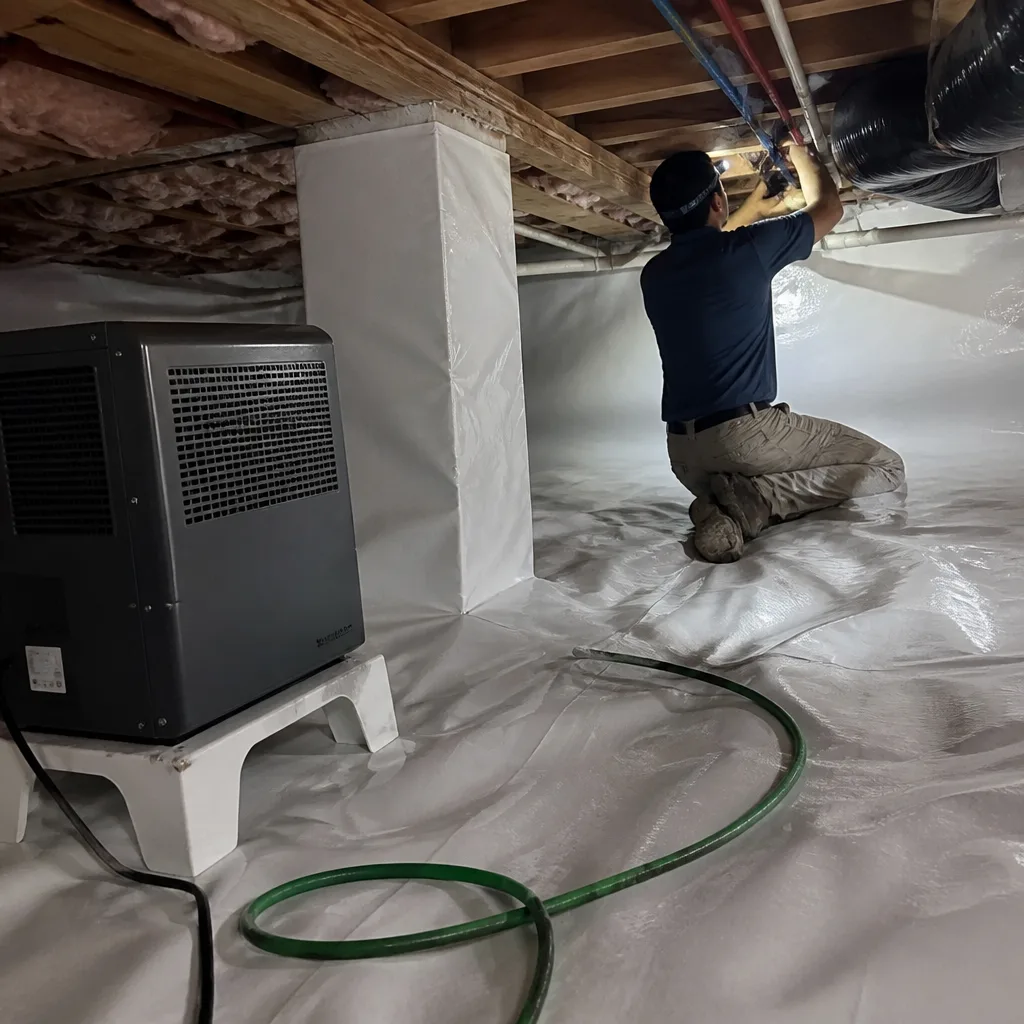
Homes built before 1980 and many custom builds through the 2000s use pier-and-beam construction with vented crawl spaces. In San Marcos’s humid subtropical climate - summer dew points regularly hitting 70°F - these crawl spaces become moisture reservoirs that degrade floor insulation and create mold conditions. Crawl space encapsulation and vapor barrier installation in San Marcos adds $1,500-$4,000 to a typical project, depending on crawl height, pier count, and existing conditions. The work includes sealing foundation vents, installing a reinforced polyethylene vapor barrier sealed to walls and piers, and conditioning the space with a dehumidifier or supply air from the HVAC system. Without this step, floor insulation above the crawl space underperforms within two to three years due to moisture saturation.
1990s-2000s Recessed Lighting
Neighborhoods like Springtown and parts of the Historic District saw extensive construction during the 1990s and 2000s, when non-IC (non-insulation-contact) recessed can lights were standard. These fixtures cannot have insulation contact without fire risk, creating thermal bypasses through the attic plane. Proper treatment requires installation of fire-rated enclosure caps - Tenmat or similar - at $15-$25 per can in labor and materials. A kitchen with eight can lights adds $120-$200 to the air sealing scope. Simply blowing insulation around these fixtures, as some contractors do, creates a fire hazard and leaves the thermal bypass intact.
Bonus Room Knee Walls
The 2000s and 2010s builds in Willow Creek and Blanco Vista frequently include bonus rooms above garages with knee walls - short vertical walls under sloped ceilings. These walls are often insulated with batts that fall out or are never sealed at the top and bottom plates, creating severe thermal leaks. Proper treatment requires removing existing material, air sealing the kneewall framing, installing rigid foam or spray foam on the attic side, and reinsulating the cavity. Labor runs 3-4 hours per kneewall section, adding $350-$600 per treated wall to the project. This is among the most commonly skipped items in low bids because the defect is hidden from the living space.
When we quote a San Marcos home, we inspect for these three conditions during our initial assessment and include them explicitly in the written scope if present. Under the Haven Standard, there is no “discovered during work” upcharge - the price you receive before work starts is the price you pay.
Utility Rebates: Pedernales Electric and CPS Energy
San Marcos straddles two electric utility territories, and rebate availability depends on your specific address. Understanding which program applies and its documentation requirements can shift your net project cost by $500-$1,500.
Pedernales Electric Cooperative (PEC) serves the majority of San Marcos addresses, particularly west of Interstate 35 and in outlying areas. PEC’s energy efficiency rebate program, as structured in early 2026, offers incentives for attic insulation upgrades that meet or exceed IECC 2021 R-value requirements. The program requires:
- Pre-installation and post-installation documentation of R-value and installation depth
- Invoice from a licensed contractor specifying material type and coverage area
- Photo documentation of installation (our Documented Photo Record satisfies this requirement)
Rebate values vary by program year funding but have historically ranged from $0.15-$0.30 per square foot of upgraded attic insulation. A 2,000-square-foot attic at $0.25/sf yields $500. PEC does not currently require blower-door testing for insulation rebates, though we provide it as part of our standard scope.
CPS Energy serves a portion of San Marcos addresses east of I-35, primarily in the Blanco Vista area and some newer developments. CPS Energy’s Home Energy Efficiency Program offers rebates for comprehensive envelope improvements, including insulation, air sealing, and duct sealing when performed together. The program requires:
- Pre- and post-work assessment by a CPS Energy-approved contractor or HERS rater
- Minimum 10% reduction in air leakage (ACH50) for air sealing rebates
- Itemized invoice with material specifications and labor breakdown
CPS Energy rebates run higher than PEC’s for comprehensive work - $800-$1,500 for combined insulation and air sealing packages - but the documentation burden is heavier. The pre-approval requirement means work cannot begin until CPS Energy confirms rebate reservation, typically a 2-3 week process.
We maintain current rebate program requirements in our office and will complete all documentation as part of our standard service. The key point for San Marcos homeowners: verify your electric utility before planning your project, as the rebate structure and requirements differ significantly between PEC and CPS Energy territories, and check our Insulation Permits, Codes & Inspections in TX: What You Need to Know for regulatory context.
The Correct ROI Calculation for San Marcos Homes
Most insulation contractors quote “payback period” - years until energy savings equal project cost. This metric is misleading because it assumes static energy prices, ignores comfort value, and cannot be verified against actual performance. The correct calculation for San Marcos homes uses verified air leakage reduction, local energy costs, and climate data to produce a savings estimate you can check against your own bills.
The formula: Verified ACH50 reduction × conditioned volume × local kWh cost × cooling/heating degree day adjustment = estimated annual savings
Here are the San Marcos baseline numbers for 2026:
- Climate Zone 2A design parameters: 2,800 cooling degree days, 1,400 heating degree days annually
- Average residential electricity rate: $0.13-$0.15/kWh (PEC territory tends toward the lower end, CPS Energy toward the higher)
- Typical pre-work ACH50 for San Marcos homes built 1980-2010: 8-12 ACH50
- Post-work target with proper air sealing and insulation: 5-7 ACH50
Example calculation for a 2,400-square-foot San Marcos home with 8-foot ceilings (19,200 cubic feet), pre-work 10 ACH50, post-work 6 ACH50:
- ACH50 reduction: 4 ACH50
- Estimated natural air changes (divide by 17, the LBL conversion factor for Zone 2A): 0.24 ACH natural
- Annual conditioned air volume lost: 19,200 cf × 0.24 × 8,760 hours = 40,300,000 cf/year
- Energy to condition that air (0.018 kWh/cf for cooling-dominated climate): ~725 kWh/year
- At $0.14/kWh: $101/year in air leakage reduction alone
This is conservative. It does not include the R-value improvement from insulation upgrade, duct leakage reduction, or the reduced cooling equipment runtime that extends HVAC lifespan. In our measured San Marcos jobs, actual utility bill reductions typically run 1.5-2.5× the air-leakage-only calculation because the insulation upgrade and equipment runtime reductions compound.
The critical element is the verified ACH50 reduction. Without pre- and post-work blower-door numbers, any ROI claim is unverifiable marketing. We provide these numbers on every applicable job as part of our standard documentation.
Common Mistakes to Avoid
- Accepting a quote that bundles all costs into a single number. You cannot verify what was included or compare against other bids. Every line item - testing, sealing, material, labor, verification - should be visible.
- Installing insulation over an unsealed attic floor. In the San Marcos climate, this is the most common error we correct. The insulation performs at a fraction of its rated R-value, and moisture from conditioned air leaking into the attic can create condensation issues in shoulder seasons.
- Ignoring the can light problem. Homes in Springtown and Willow Creek built 1995-2010 often have 12-20 recessed lights. A contractor who does not specifically address these fixtures is leaving a thermal bypass that undermines the entire project.
- Choosing material based on a neighbor’s recommendation without considering application. The cellulose that worked well in your neighbor’s vented attic with minimal penetrations may be wrong for your sealed conditioned attic with HVAC equipment.
- Skipping the post-installation verification. Without a final blower-door test, you have no documentation that the work was effective. This matters for resale, rebate claims, and your own utility bill verification.
- Assuming all contractors carry the same insurance and warranty terms. Ask for a certificate of insurance and read the warranty document before signing. The Haven Standard requires a written warranty before work starts; not all contractors operate this way.
- Neglecting crawl space conditions in pier-and-beam homes. In San Marcos’s humidity, an unencapsulated crawl space will saturate floor insulation within two to three years, making the attic investment partially wasted.
When to Call a Professional
Call a building-envelope contractor when your summer upstairs temperatures exceed downstairs by more than 8°F, when you can see floor joists in your attic through existing insulation, when your HVAC runs continuously on 95°F days without achieving setpoint, or when your energy bills have risen without rate increases. These symptoms indicate envelope failure, not equipment failure, and additional insulation without diagnosis can mask the underlying problem.
For San Marcos homeowners considering insulation upgrades, Topside Attic Insulation San Marcos offers free estimates with written pricing before any work starts. We also provide a Free Second Opinion on any written estimate from another contractor - bring us their scope and we will read it with you, line by line. Call (737) 337-8049 to schedule. A live person answers 24/7.
Frequently Asked Questions
Complete attic insulation for a typical 2,000-square-foot San Marcos home runs $2,200-$4,800 when air sealing, material, installation labor, and pre/post blower-door testing are included as a single scope. Quotes below $2,000 typically exclude air sealing or verification testing. Call (737) 337-8049 for a written estimate specific to your home - estimates are free.
Replacement is usually more cost-effective than repair when existing insulation is compressed below half its original depth, contaminated with rodent activity, or water-stained. In San Marcos’s climate, moisture damage from roof leaks or condensation is the most common reason we remove rather than supplement. Removal and replacement adds $1.00-$1.50 per square foot for disposal and surface preparation. Call (737) 337-8049 and we will assess whether your existing material can be supplemented or should be removed.
Most attic insulation projects in San Marcos are completed in a single day for crews working with blown-in materials in open attic spaces. Projects requiring extensive air sealing of top plates and can lights, or spray foam applications with ventilation requirements, typically extend to two days. We provide a specific schedule in our written scope before work starts. Call (737) 337-8049 to discuss timing for your project.
IECC 2021, adopted by Hays County and enforced in San Marcos, requires R-38 minimum for attic insulation in new construction and substantial renovations. Existing homes are not required to upgrade to current code, but R-38 represents the performance threshold where cooling-season savings become significant in Climate Zone 2A. We specify R-38 for all attic upgrades unless structural constraints prevent achieving that depth.
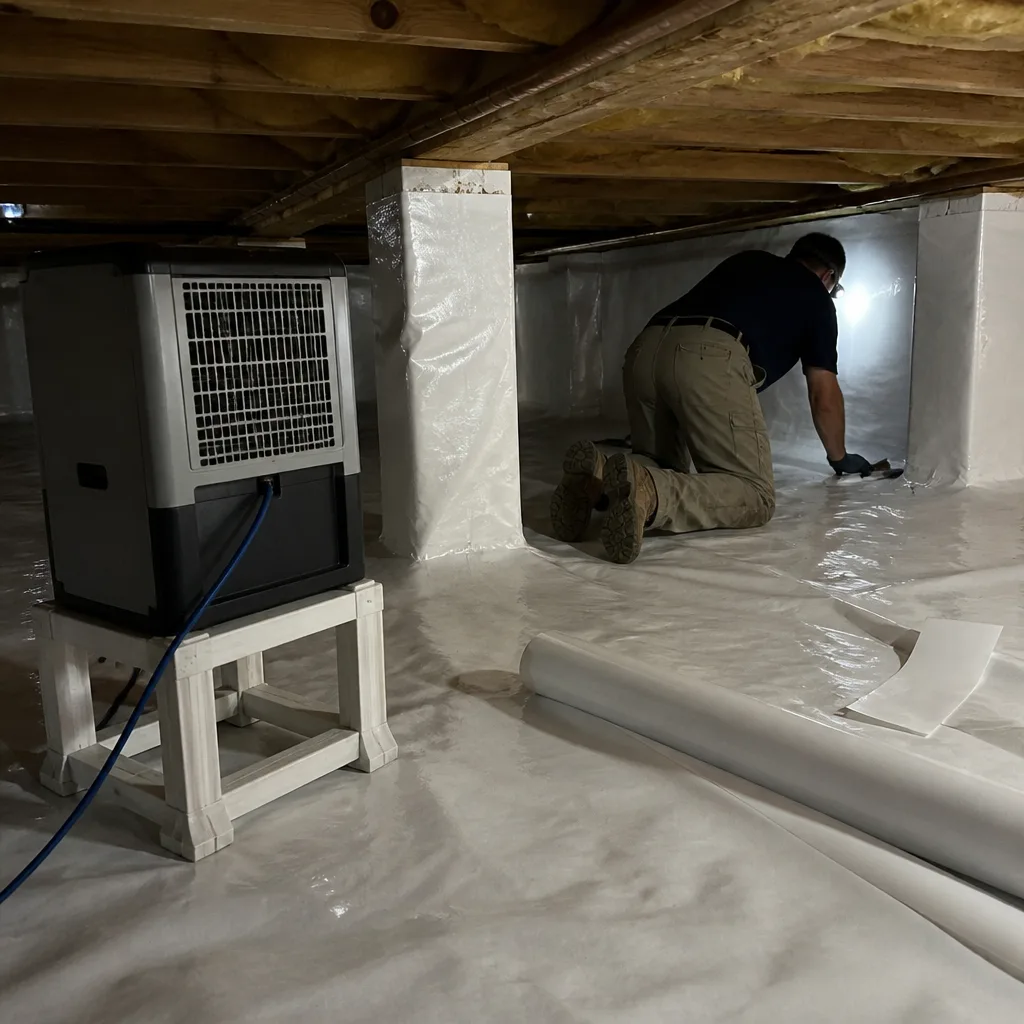
You do not need it, but in pier-and-beam San Marcos homes, skipping crawl space encapsulation leaves a significant thermal and moisture bypass that reduces the effectiveness of your attic investment. We evaluate crawl space conditions during our initial assessment and include encapsulation as a separate line item when indicated. Crawl space encapsulation and vapor barrier in San Marcos typically adds $1,500-$4,000 and is often eligible for separate utility rebates.
Read the scope document for specific line items: “air sealing of top plates, electrical penetrations, and duct chases” with labor hours listed. Vague language like “prep work” or “site preparation” typically excludes meaningful air sealing. Under the Haven Standard, we specify every penetration to be sealed and the expected blower-door reduction in our written scope before work starts. Bring us any competing quote and we will read it with you - Free Second Opinion on any written estimate.
You should receive a final invoice matching the pre-work written price, a photo record of installation areas and any conditions found, and on applicable jobs, before-and-after blower-door readings showing the verified air leakage reduction. Our Documented Photo Record is included on every job, not available on request. The 365-Day Done Right Promise applies to all completed work, with written warranty terms provided before anyone starts.
The Bottom Line
Insulation cost in San Marcos is not a single number but a function of five line items that contractors combine differently under the same label. The meaningful comparison requires explicit scope: pre-installation testing, air sealing labor, material specification, installation labor, and post-installation verification. Material efficiency is properly compared by cost-per-R-value including required air sealing, not sticker price per square foot. San Marcos’s pier-and-beam foundations, 1990s-2000s recessed lighting, and bonus room knee walls create cost drivers that honest quotes address explicitly. Utility rebates through PEC or CPS Energy can reduce net cost by $500-$1,500 with proper documentation. The return on your investment is verifiable only through measured air leakage reduction, not estimated payback periods.
Every job we have completed since 2016 - more than 9,000 homes - began with a written price and ended with a documented record. That is the Haven Standard. It is not a marketing claim; it is the structure of how we work.
Written by Wes Okafor, Owner at Topside Attic Insulation San Marcos, serving San Marcos since 2016.