
Last updated September 24, 2026
DIY vs Professional Insulation: The San Marcos Homeowner’s Decision Guide
Home Depot rents blower-door equipment in some markets, but San Marcos homeowners who go the DIY route almost universally skip the pre-installation air leakage test. That means they’re adding R-value to an envelope they haven’t characterized - the exact sequence that produces a correctly insulated, still-leaky house. In this guide, we’ll walk through what you can realistically handle yourself in a San Marcos weekend, what requires professional equipment or code compliance, where the cost gap actually closes when you factor in rentals, and how to verify that any insulation project actually moved the needle on your home’s performance. For more guides & resources, see our blog.
Quick Answer
Most San Marcos homeowners can handle three insulation tasks themselves - attic hatch weatherstripping, accessible rim joist batts, and blown cellulose top-offs with no bypass sealing required. Everything else, including blower-door testing, spray foam, permit-required work, and pre-1980 insulation removal, requires professional equipment or creates liability exposure under Texas disclosure law. The performance difference comes down to verification: without a pre- and post-installation blower-door test, you cannot know whether your DIY project reduced air leakage or simply added depth on top of existing leaks.
Table of Contents
- Three Insulation Tasks That Are Genuinely DIY-Feasible in San Marcos
- Four Tasks Where Professional Equipment or Code Creates a Hard Boundary
- Real Cost Comparison: DIY Attic Top-Off vs. Professional Quote on a 1,500 Sq Ft San Marcos Home
- The Hybrid Approach: Professional Testing, DIY Installation
- Code Compliance and Texas Disclosure Law for San Marcos Sellers
- Common Mistakes to Avoid
- When to Call a Professional
- Frequently Asked Questions
 Before
 After
AfterThree Insulation Tasks That Are Genuinely DIY-Feasible in San Marcos
We’ve worked in San Marcos homes since 2016, and three insulation-adjacent tasks consistently show up as reasonable weekend projects for competent homeowners. Each has clear boundaries. Cross them, and you’re in territory where the mistakes are invisible until your energy bill arrives.
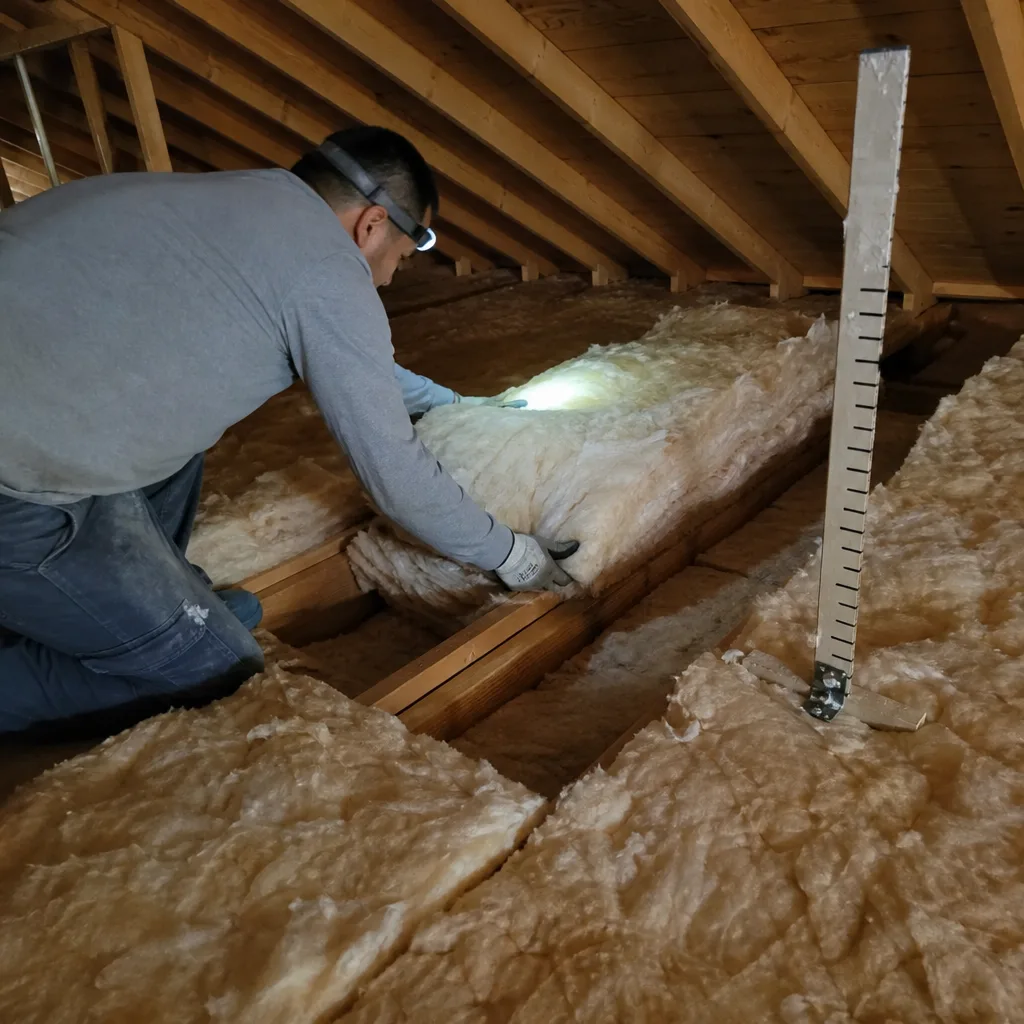
1. Attic Hatch Weatherstripping
The attic hatch is the most overlooked leak in the building envelope. In San Marcos, where summer attic temperatures routinely hit 140°F, an unsealed hatch is a chimney pumping conditioned air into the roof cavity. The fix is straightforward: adhesive foam gasket around the frame, plus insulation board glued to the hatch itself. Cost runs $25-$45 in materials. No special equipment. The only caveat: if your hatch opens into a hallway that serves as a return air pathway, consult your HVAC layout first - we’ve seen homeowners seal hatches so tightly they create pressure imbalances that starve the return.
2. Rim Joist Batt Installation in an Accessible Crawlspace
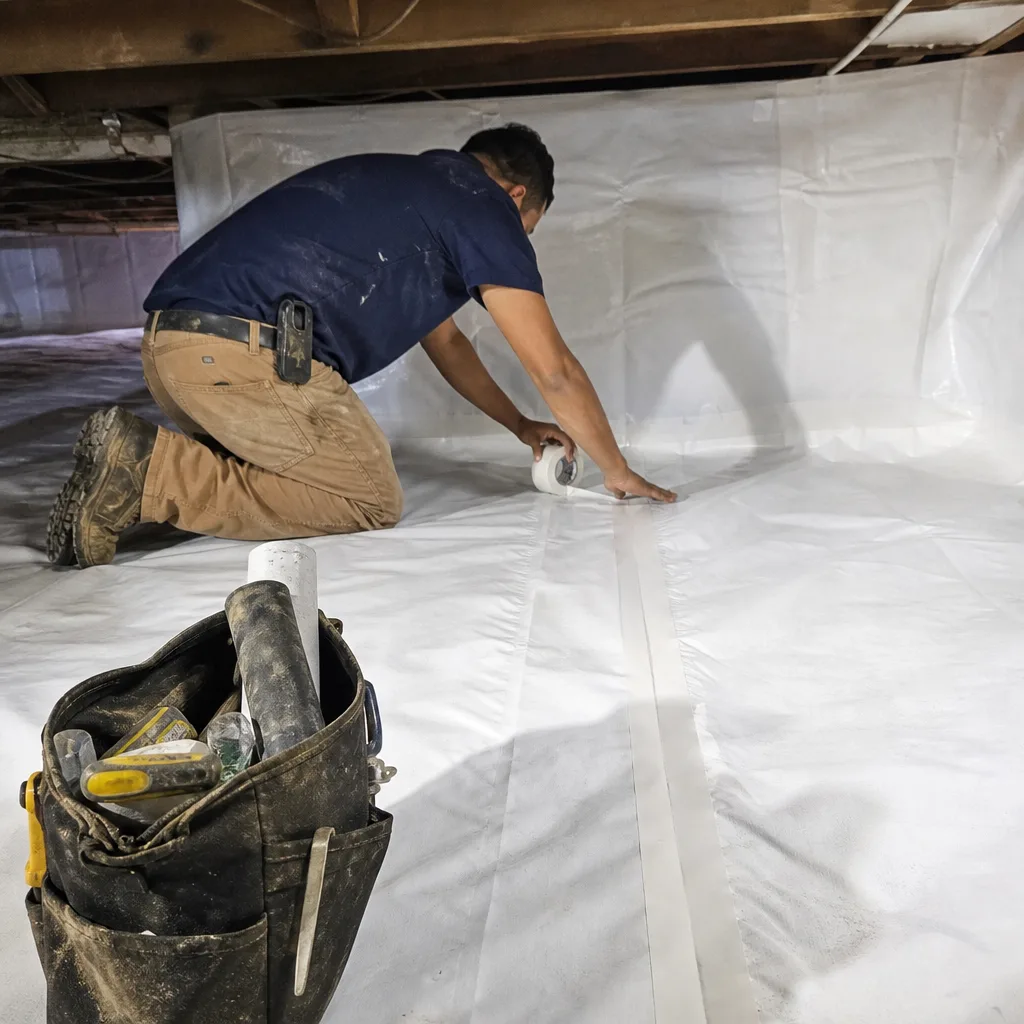
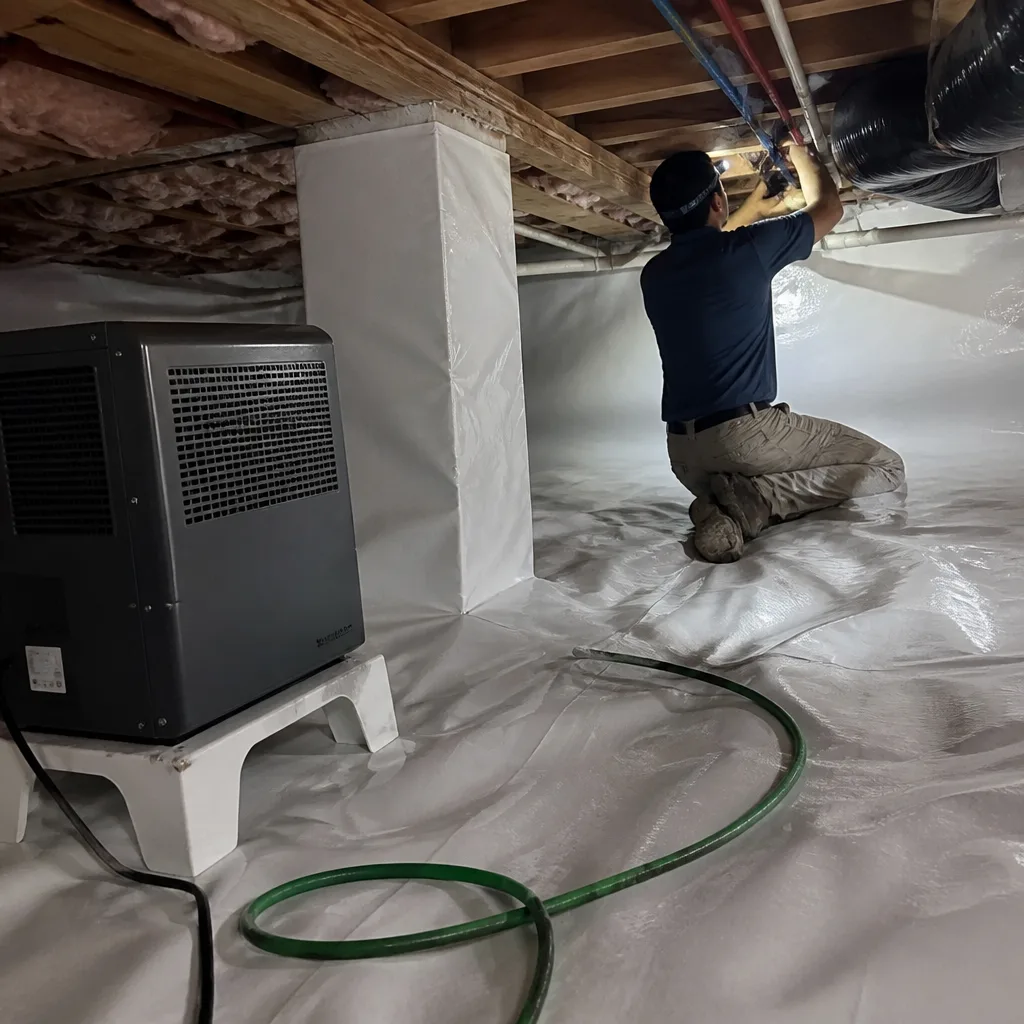
The rim joist - the perimeter framing where your floor system meets the foundation - is a thermal bypass in most San Marcos homes built before 2010. If your crawlspace has adequate headroom (30 inches or more), no standing water, and no rodent activity, fitting mineral wool or fiberglass batts into these cavities is manageable. Use mechanical fasteners; friction-fit batts sag within two seasons in the Hill Country humidity. We prefer Crawl Space Encapsulation & Vapor Barrier in San Marcos for homes with moisture issues, but dry crawlspaces with good access are legitimate DIY territory.
3. Blown Cellulose Top-Off Over Existing Insulation (No Bypass Sealing Required)
This is where homeowners most often overestimate their readiness. A blown cellulose top-off is DIY-feasible only when all three conditions are met:
- The existing insulation is dry, uncontaminated, and reasonably level - no water staining, no rodent debris, no compressed areas below R-19 equivalent.
- There are no major bypasses to seal - no open chases around flues or plumbing stacks, no dropped soffits over kitchens or baths, no recessed can lights penetrating the ceiling plane.
- The attic has solid flooring or decking for safe movement, and the roof pitch allows you to see what you’re doing without crawling over joist edges.
Renting an insulation blower from a San Marcos-area Home Depot or Sunbelt Rentals location runs $75-$125 per day. GreenFiber cellulose runs roughly $12-$15 per bag, and a 1,500 sq ft attic typically needs 25-35 bags for a meaningful top-off. The math works until it doesn’t: if you discover wet insulation, active leaks, or bypasses you can’t identify, you’ve paid for a rental and material you can’t safely install.
Four Tasks Where Professional Equipment or Code Creates a Hard Boundary
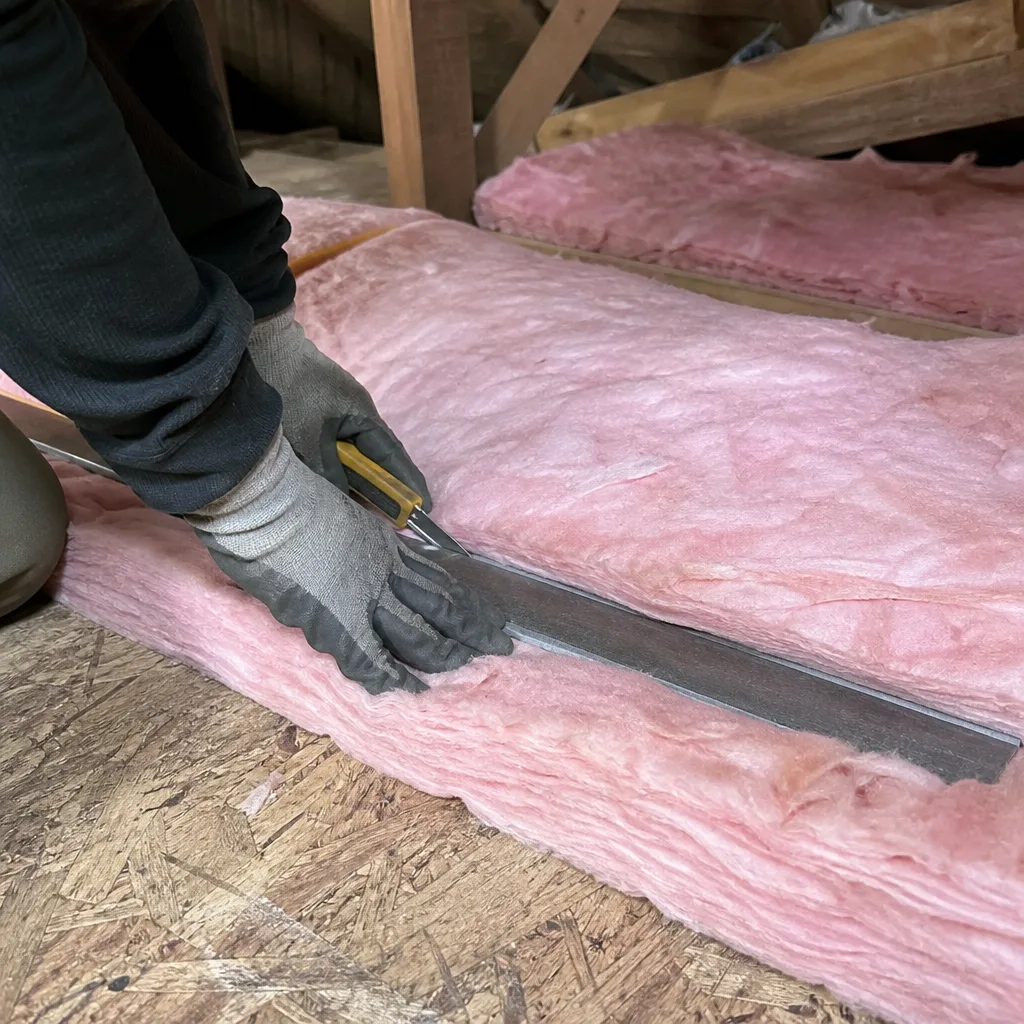
Some insulation work isn’t about skill. It’s about equipment you cannot rent at consumer rates, permits you cannot pull as a homeowner in certain jurisdictions, or liability you cannot absorb. See our guide to Insulation Permits, Codes & Inspections in TX: What You Need to Know for details.
1. Blower-Door Testing
A blower door - a calibrated fan that mounts in an exterior door frame to pressurize or depressurize the house - is the only way to measure air leakage with enough precision to guide sealing priorities and verify results. The equipment costs $3,500-$5,000 for a professional unit, and the training to operate it interpretively (not just read numbers) takes weeks. Retrotec and Minneapolis Blower Door units are available for rent in some Texas markets, but San Marcos rental inventory is thin, and the daily rate with required accessories often approaches $300. More critically, a single-point test without infrared correlation or zonal pressure diagnostics tells you little. You get a number. You don’t get a roadmap.
At Topside Attic Insulation San Marcos home, we publish before-and-after blower-door numbers on every applicable job. A typical San Marcos home built in the 1990s reads 3,500-5,000 CFM50 before air sealing and drops to 2,000-2,800 after. Without that baseline and verification, you’re insulating blind.
2. Spray Foam in Any Assembly
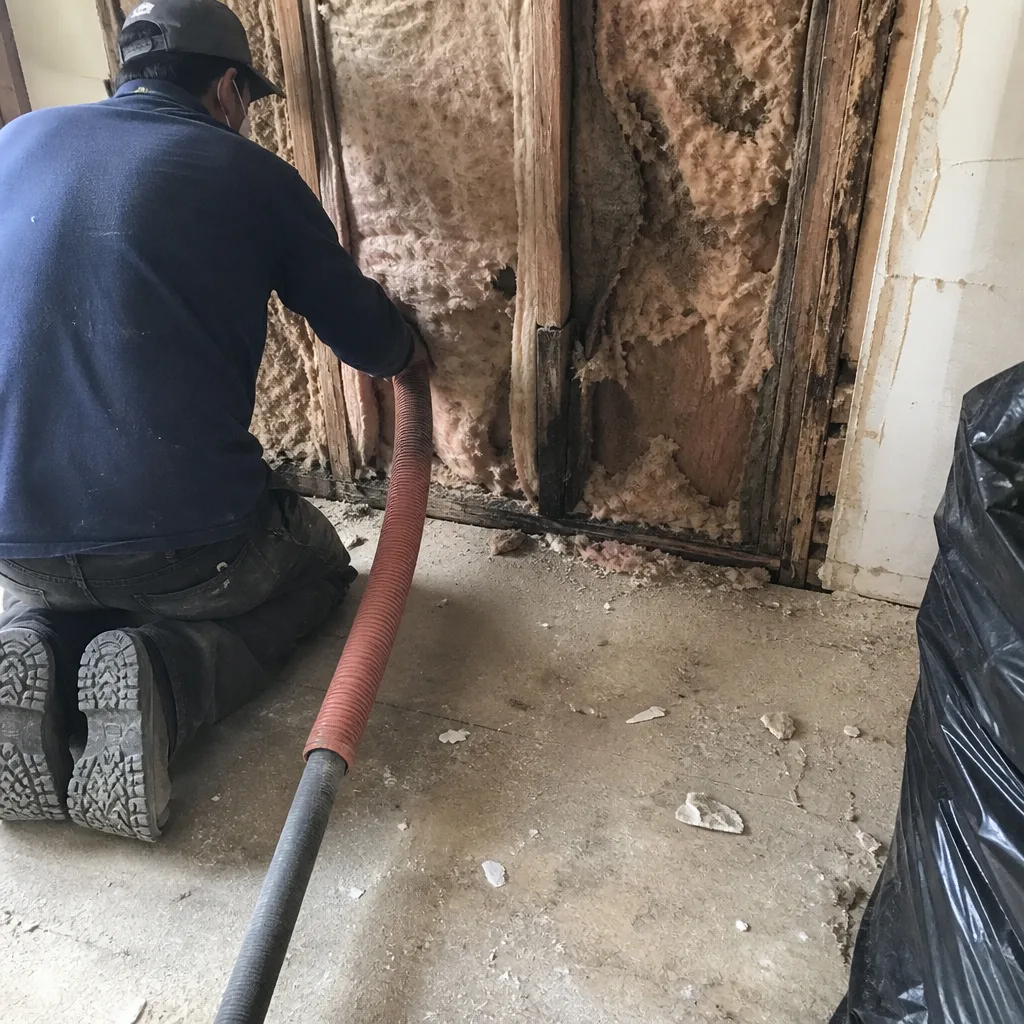
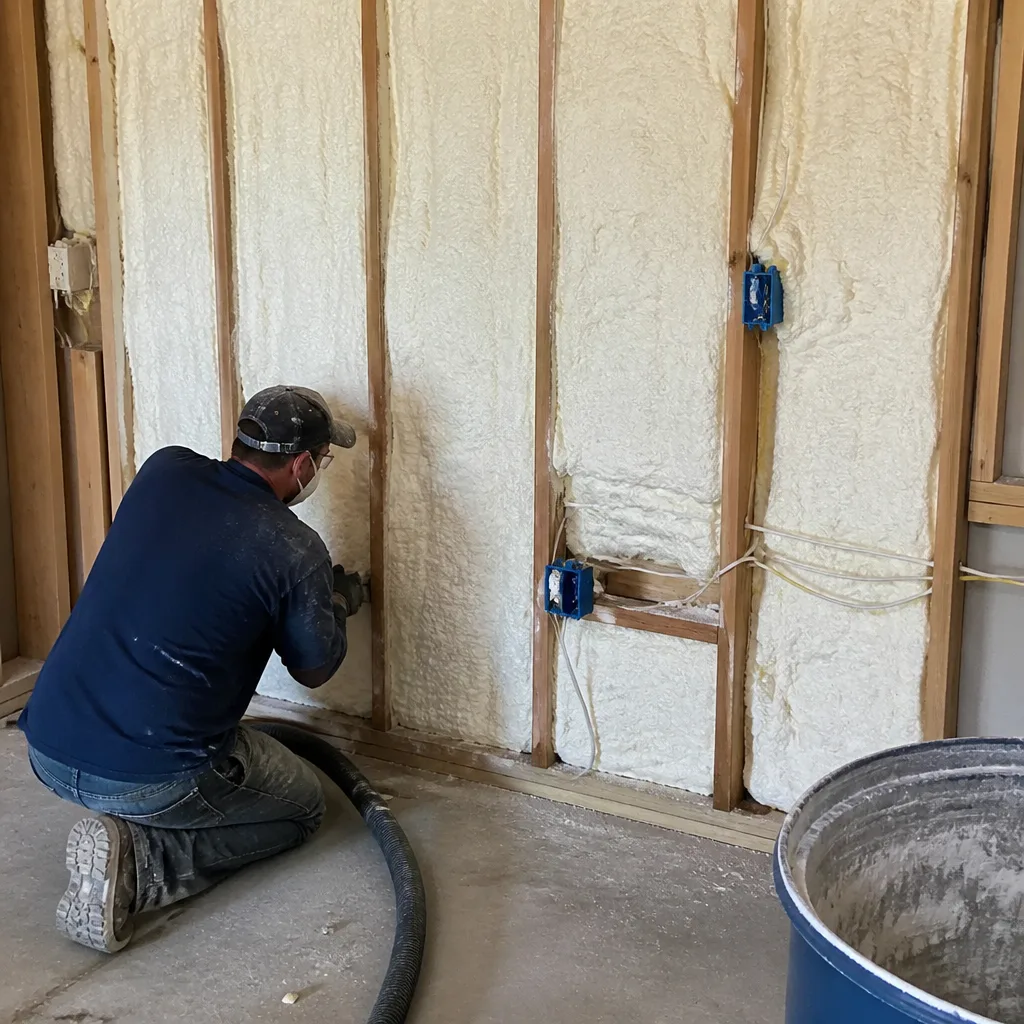
Spray polyurethane foam - whether open-cell (Icynene, Demilec) or closed-cell - requires proportioning equipment, heated hoses, respiratory protection beyond consumer-grade respirators, and real-time ratio monitoring. Off-ratio foam fails chemically: it shrinks, cracks, or produces persistent odor. The applicator certification from manufacturers like Icynene or Demilec exists because improper installation has destroyed homes. In San Marcos, we’ve been called to remove failed DIY spray foam from attics where the homeowner saved $800 on installation and spent $4,200 on remediation. Spray Foam Insulation in San Marcos is not a weekend project.
3. Work Requiring a Building Permit
The City of San Marcos requires permits for insulation work that involves:
- Removal of existing insulation in structures built before 1980 (asbestos concern)
- Alteration of fire-rated assemblies (garage ceilings, party walls in duplexes)
- Installation of spray foam in occupied spaces (ICC fire-separation requirements)
- Any work in a home that will be offered for sale within 12 months and requires TREC disclosure of modifications
Homeowners can pull their own permits in San Marcos, but the inspection schedule and correction cycle often consume more time than the savings justify. Professional contractors with established inspector relationships move through this faster, and the permit history becomes a documented asset at sale.
4. Existing Insulation Removal with Suspected Asbestos
Pre-1980 housing in San Marcos neighborhoods like Hopkins Street, Rio Vista, and the historic district east of downtown may contain vermiculite insulation (often contaminated with asbestos) or early fiberglass with asbestos paper backing. Disturbing these materials without NESHAP-compliant abatement is a federal violation. The visual identification is unreliable; lab analysis runs $35-$50 per sample, and a proper abatement for a typical attic starts at $3,500. This is not a cost to absorb speculatively, and it is not work to attempt yourself.
Real Cost Comparison: DIY Attic Top-Off vs. Professional Quote on a 1,500 Sq Ft San Marcos Home
Here’s where the price gap narrows in ways most San Marcos homeowners don’t anticipate. We’ve priced this scenario repeatedly since 2016, and the pattern holds. Our Insulation Cost Breakdown: The San Marcos Homeowner’s Reference for 2026 breaks down typical project costs in detail.
DIY Route: Itemized
| Item | Cost Range |
|---|---|
| Insulation blower rental (1-2 days) | $75-$250 |
| GreenFiber cellulose, 30 bags | $360-$450 |
| Attic access safety equipment (harness, planks, lighting) | $80-$150 |
| Personal protective equipment (respirator, coveralls, goggles) | $45-$75 |
| Weatherstripping, caulk, minor air-sealing supplies | $40-$80 |
| Disposal for contaminated or wet material (if discovered) | $150-$400 |
| DIY Total | $750-$1,405 |
Professional Route: What the Quote Includes
| Item | Included |
|---|---|
| Pre-installation blower-door test with zonal pressure diagnostics | Yes |
| Air sealing of top plates, can lights, penetrations, and bypasses | Yes |
| Blown cellulose or fiberglass to specified depth | Yes |
| Post-installation blower-door test with documented results | Yes |
| Documented Photo Record of all work areas | Yes |
| Written scope, written price, written warranty (Haven Standard) | Yes |
| 365-Day Done Right Promise | Yes |
| Professional Range (San Marcos market, 1,500 sq ft) | $1,800-$2,800 |
The gap is $400-$2,050. But the DIY total assumes no surprises, no equipment damage, no need for professional remediation of discovered problems, and no value assigned to the verification data. When we perform Attic Insulation in San Marcos, the homeowner receives a documented performance change - not just deeper insulation. In neighborhoods like Willow Creek and Blanco Vista, where new construction standards are higher and resale competition is sharper, that documentation shows up in buyer inspections as a verified asset.
The Hybrid Approach: Professional Testing, DIY Installation
There’s a middle path that preserves most DIY savings while eliminating the verification gap. We call it the “test-and-seal” hybrid, and it’s the only DIY-compatible approach we recommend without reservation.
How It Works
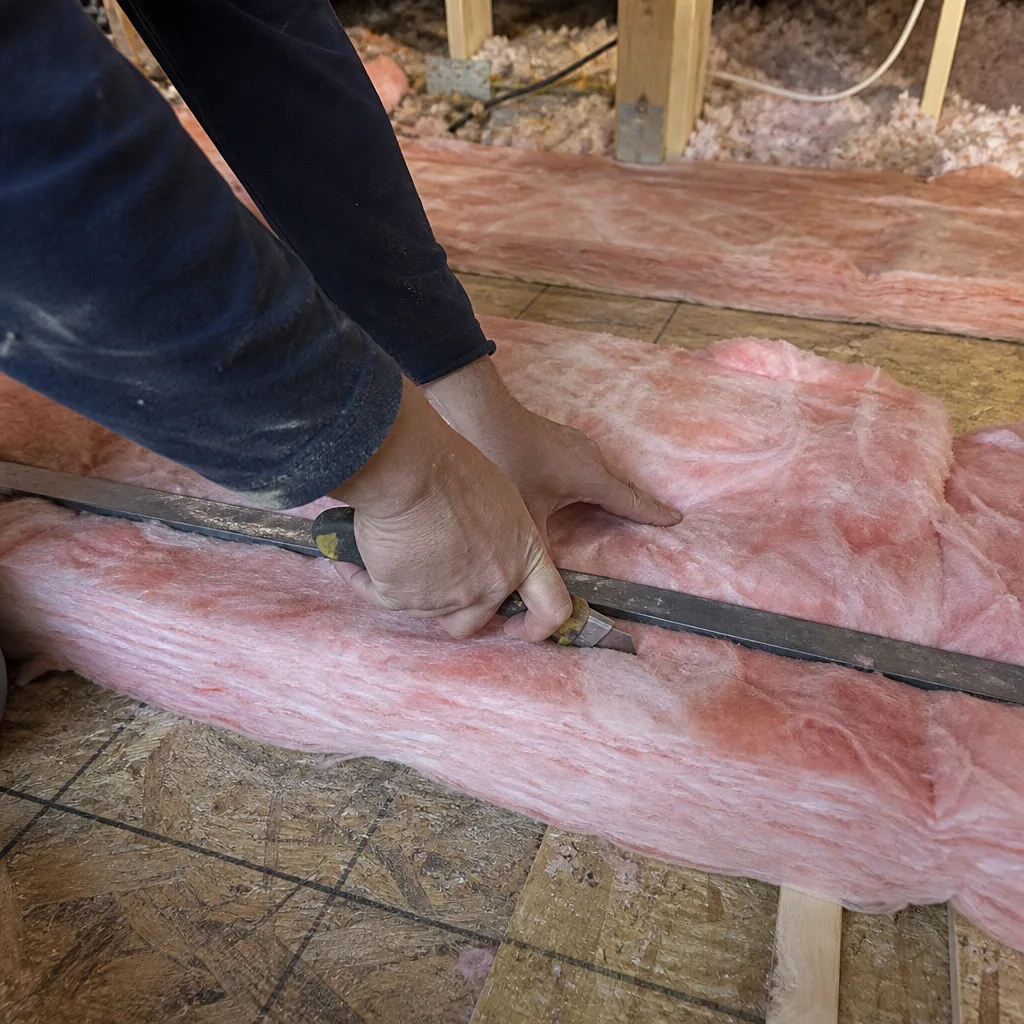
- Hire a professional for the blower-door test and targeted air sealing. In San Marcos, this runs $600-$1,200 depending on home size and leakage severity. You receive a written report with CFM50 baseline, infrared images of leakage paths, and a prioritized sealing scope.
- Complete the air sealing yourself if you’re competent with caulk, foam, and rigid board. The report tells you exactly where to work. Or have the professional complete this portion - it’s typically half a day with proper equipment.
- Rent the blower and install the blown insulation yourself. You now have a sealed envelope, a verified baseline, and a clear installation target.
- Schedule a post-installation blower-door test. Some contractors offer this as a standalone service for $250-$400. You now have documented proof of performance improvement.
The hybrid total for a 1,500 sq ft San Marcos home typically runs $1,350-$2,050 - between pure DIY and full professional - but with verification that the project actually worked. We’ve provided test-and-seal services to homeowners in San Marcos who then handled their own cellulose installation, and the post-test results are consistently better than unverified DIY because the sealing was done first, in the correct sequence.
Under Haven Standard: Have it in writing. Even in a hybrid arrangement, get the test scope and sealing scope in writing before anyone starts. The written price before any work starts applies to every engagement, including standalone testing.
Code Compliance and Texas Disclosure Law for San Marcos Sellers
This is the liability section most DIY guides omit entirely. Texas Property Code Section 5.008 requires sellers to disclose known material defects in energy systems, including insulation and weatherization. The statute doesn’t require perfection; it requires disclosure of what you know.
Here’s where DIY insulation creates exposure: if you performed work that doesn’t meet current IECC minimums - R-38 in attics for San Marcos’s climate zone, proper air sealing, no compression or voids - and you’re aware of the deficiency, you must disclose it. A buyer’s inspector who finds compressed batts, blocked soffit vents, or insulation contacting non-IC-rated can lights will flag these as material defects. Your disclosure form then requires explanation.
Professional work with permits and documentation provides a clean chain of compliance. DIY work without verification leaves you describing what you did, not what you achieved. In San Marcos’s competitive resale market, particularly in neighborhoods near Texas State University where investor buyers are meticulous about documentation gaps, this distinction matters.
The practical point: if you DIY insulation in a home you may sell within five years, keep detailed photos, receipts, and any test data. Better yet, invest in the post-installation blower-door test that gives you a defensible number.
Common Mistakes to Avoid
- Installing insulation before air sealing. This is the fundamental error. In San Marcos’s climate, a leaky attic with R-38 performs worse than a tight attic with R-30. We’ve removed perfectly good insulation from homes in the Sagewood and Springtown neighborhoods because it was installed over unsealed bypasses, trapping moisture and creating mold conditions.
- Covering recessed can lights with insulation. Non-IC-rated fixtures require clearance or protective covers. In pre-2005 San Marcos homes, these are common. Covering them creates fire risk and violates NEC. The fix is inexpensive covers or fixture replacement, not ignoring the rating.
- Blocking soffit vents with blown insulation. Attic ventilation in San Marcos’s hot-humid climate depends on continuous soffit-to-ridge airflow. Baffles are required at every soffit vent. Without them, you create moisture traps and void your shingle warranty.
- Ignoring wind-washing at gable ends. San Marcos experiences sustained south winds that drive unconditioned air through attic insulation near gable vents. Baffles or sealed blocking at gable ends prevent this; most DIYers never know to look for it.
- Using the wrong insulation type for the application. Fiberglass in a damp crawlspace absorbs moisture and loses R-value. Cellulose in contact with roof decking in an unvented assembly risks mold. Spray foam in a vented attic without proper ratio monitoring shrinks and cracks. Each material - CertainTeed fiberglass, GreenFiber cellulose, Icynene open-cell foam - has correct applications and failure modes.
- Skipping the post-project verification. Without a blower-door test or at least a thorough visual inspection with infrared, you cannot know if your work performed as intended. This is the mistake that makes all others invisible.
When to Call a Professional
Call a professional when the work involves spray foam, permits, pre-1980 materials, or any situation where you cannot verify your own results. Read our How to Hire a Insulation Contractor in San Marcos: A Step-by-Step Guide to evaluate potential contractors. Call when your attic has active leaks, rodent debris, or electrical hazards you can’t confidently assess. Call when you’re preparing to sell and need documented compliance. Call when the rental equipment cost, your time value, and the risk of redoing the work push the effective DIY price within 40% of a professional quote.
Topside Attic Insulation San Marcos offers free estimates in San Marcos - call (737) 337-8049. Every estimate includes a written scope and written price before any work starts, per Haven Standard Clause 1. We also provide free second opinions on any written estimate you’ve received; bring us the competing quote and we’ll read it with you.
Frequently Asked Questions
Most attic insulation jobs in a 1,500 sq ft San Marcos home run between $1,800 and $2,800 when air sealing and blower-door verification are included. Larger homes or those requiring insulation removal before installation typically range $2,800-$4,500. Call (737) 337-8049 for an exact quote - estimates are free, and we deliver a written price before any work starts.
No. Spray foam requires heated, pressurized proportioning equipment, real-time chemical ratio monitoring, and manufacturer-certified application training. Off-ratio foam shrinks, cracks, or produces persistent odor that requires complete removal. Icynene and Demilec both certify applicators specifically because DIY installation has caused documented building failures. This is not a negotiable boundary.
Owning basic tools (caulk gun, utility knife, staple gun) helps with weatherstripping and batt work, but blown insulation still requires a blower rental or purchase ($75-$250 rental, $2,500+ to buy). The real cost question is verification: without a blower-door test, you cannot know if your project succeeded. Professional quotes that include pre- and post-testing often close the effective cost gap when you factor equipment rental and your time.
San Marcos falls in IECC Climate Zone 2, which requires R-38 minimum in vented attics for new construction and substantial remodels. Existing homes are not required to upgrade to current code unless the work triggers a permit. However, Texas disclosure law requires sellers to report known energy-system deficiencies, and sub-code insulation may be flagged by buyer inspectors.
You cannot identify asbestos visually with confidence. Vermiculite insulation (pebble-like, gray-brown, often installed 1940-1980) has a high probability of asbestos contamination. Fiberglass with white or yellow paper backing in pre-1980 homes may also contain asbestos. Lab analysis of a sample costs $35-$50 and is the only defensible approach. Disturbing suspected asbestos without NESHAP-compliant abatement is a federal violation.
Yes. We offer standalone blower-door testing with written reports, prioritized air-sealing scopes, and post-seal verification. This hybrid approach preserves your DIY savings while ensuring the envelope is characterized and sealed before insulation goes in. Under Haven Standard, you still receive a written scope and written price for the testing and sealing portion, plus a Documented Photo Record of all work areas.
The Bottom Line
The DIY vs. professional question in San Marcos isn’t about whether you’re handy enough to blow cellulose. It’s about whether you can verify that your work actually reduced air leakage and improved thermal performance. Three tasks - hatch weatherstripping, accessible rim joist batts, and clean blown top-offs - are legitimate DIY territory. Four tasks - blower-door testing, spray foam, permit work, and suspected asbestos removal - require professional engagement. The hybrid approach splits the difference: professional testing and sealing, DIY installation, post-project verification. Whatever path you choose, sequence matters. Seal first, then insulate. Verify with numbers, not assumptions. And get the scope in writing before anyone starts.
Written by Wes Okafor, Owner at Topside Attic Insulation San Marcos, serving San Marcos since 2016.