
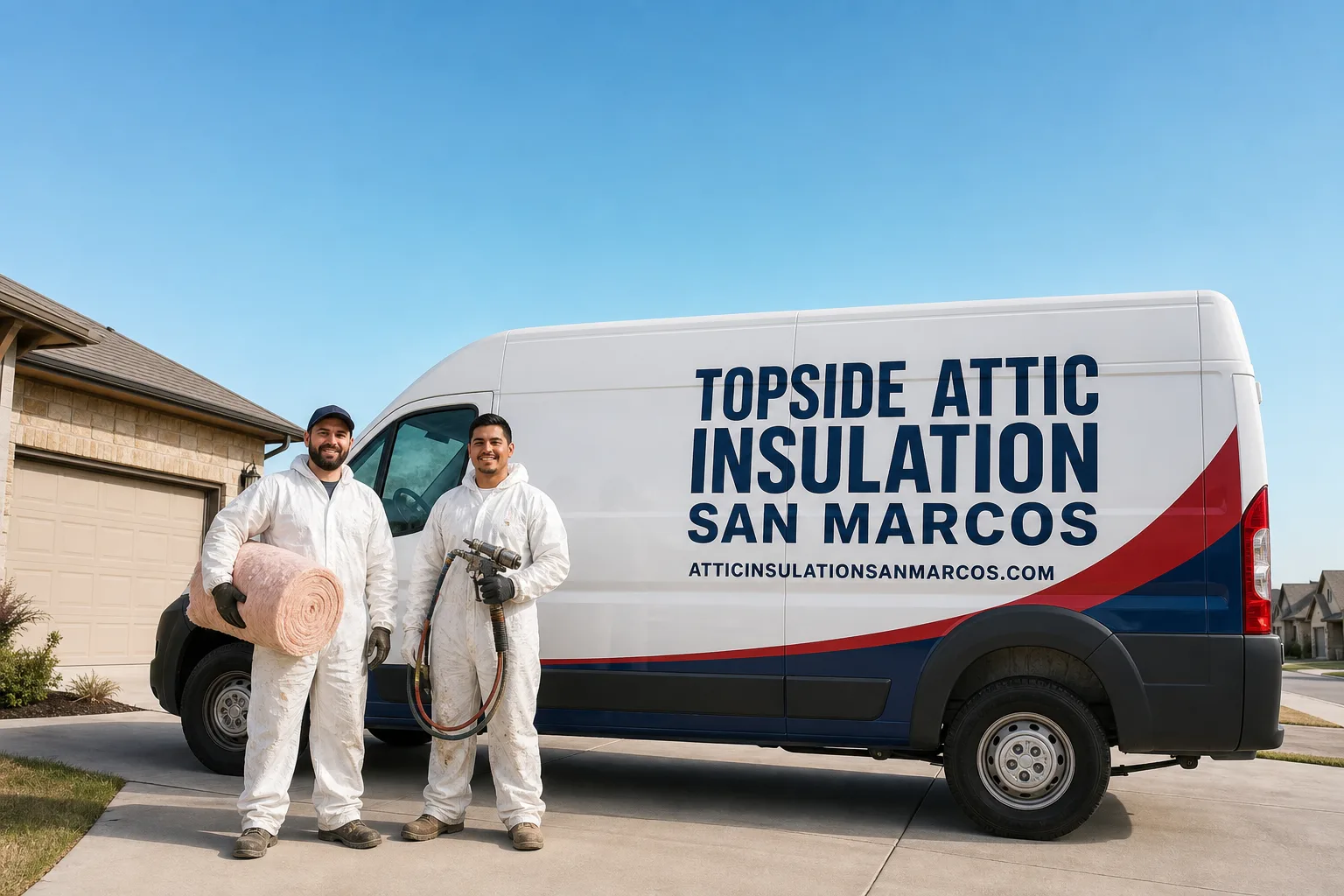
How Much Does Radiant Barrier Installation Cost in San Marcos?
Radiant Barrier Installation services in San Marcos, TX typically run between $1,400 and $2,800 for a standard single-story home with an attic footprint of 1,200 to 2,000 square feet. Most homeowners in San Marcos land around $1.50 to $2.25 per square foot of attic space when foil-faced radiant barrier is stapled to the underside of the roof decking – that range shifts depending on attic access, roof pitch, and whether any air sealing work needs to happen first. At Envelope Insulation Co., every job starts with a written price before anyone touches a tool – that’s not a sales line, it’s Haven Standard Clause 1.
Radiant Barrier Installation Cost Breakdown (2026)
Radiant barrier pricing in San Marcos breaks down by labor, materials, attic square footage, and any prep work the attic needs before installation can begin. The table below reflects what we actually see in this market as of 2026 – not national averages pulled from a cost database.
| Line Item | Typical Range (San Marcos, TX) | Notes |
|---|---|---|
| Foil radiant barrier – materials only | $0.35 – $0.55 per sq ft | Double-sided perforated foil; single-sided costs slightly less |
| Labor – standard attic access, 5/12 or lower pitch | $0.90 – $1.40 per sq ft | Stapled to rafters/decking; most homes in San Marcos qualify |
| Labor – steep pitch or restricted access (6/12 and above) | $1.40 – $1.90 per sq ft | Common in older Blanco Gardens and Willow Springs homes |
| Attic prep – debris removal, minor obstruction clearance | $150 – $400 flat | Varies by attic condition; included in written scope upfront |
| Attic air sealing (top plates, can lights, penetrations) | $400 – $900 flat | Envelope will not install insulation over an unsealed attic floor – this may be added to scope if needed |
| Combined radiant barrier + attic air sealing package | $1,800 – $3,600 for 1,200-2,400 sq ft attic | Most effective combination for San Marcos summers |
| Attic hatch or pull-down stair weatherstripping | $85 – $175 | Often overlooked; adds to overall performance |
On a 1,500 sq ft attic with standard access and no major prep needs, the all-in price for Radiant Barrier Installation in San Marcos through Envelope Insulation Co. typically runs $1,650 to $2,400. That includes materials, labor, and the Documented Photo Record we leave with you when the crew walks out. Homes in newer developments like Trace or Kissing Tree that were built with open-web trusses tend to move faster and come in at the lower end of labor rates. Older homes with board sheathing and attic storage scattered across the floor take longer and cost more.
What moves the number up is almost always one of three things: restricted attic access that forces the crew to work slower, a steep roof pitch above a 6/12, or an attic that needs air sealing before the barrier goes in. That last point matters more in San Marcos than most people expect – a radiant barrier reflects solar heat, but if conditioned air is escaping through every top-plate gap and recessed light, you’re fighting two problems with one solution. Envelope Insulation Co. treats air sealing as a prerequisite, not an optional add-on, because the building science requires it in that order.
What Affects Radiant Barrier Installation Pricing in San Marcos
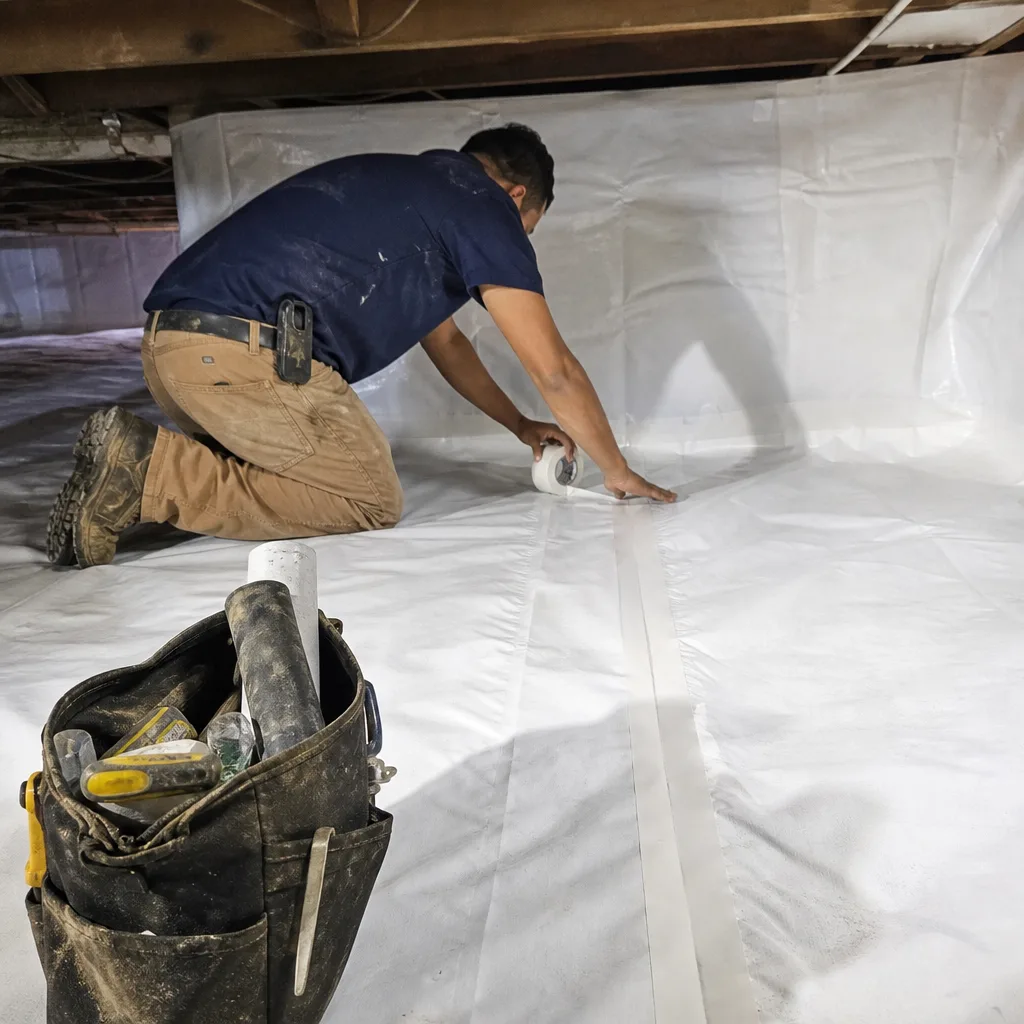
Six factors drive pricing on essentially every radiant barrier job we see in the San Marcos market. Some you can control, some you can’t.
- Attic square footage. This is the primary cost driver. San Marcos homes built between 2000 and 2020 in subdivisions like Blanco Vista and Willow Springs commonly sit between 1,400 and 2,200 sq ft of attic footprint. Every additional square foot adds material and time, so getting an accurate measurement – not a guess from the home’s living area – matters for an honest quote.
- Roof pitch and attic height. A 4/12 pitch attic with 48 inches of standing room in the center is a clean, fast job. A 7/12 or 8/12 pitch with low knee walls and no walkboards is significantly harder to work in safely. Several homes in the older San Marcos historic district and around Sessom Creek were built with steeper pitches and tighter crawl spaces – those jobs carry a labor premium that should be written into the scope before any work starts.
- Single-sided vs. double-sided perforated foil. Most residential jobs in San Marcos use double-sided perforated foil installed at the rafter underside. Perforations allow moisture vapor to pass through rather than trap condensation against the wood – in the Hays County climate, with warm humid air moving in from the Gulf spring through fall, that moisture management detail is not optional. Single-sided foil costs 10 to 15% less per square foot but is the right call in fewer situations than budget-focused bids often suggest.
- Attic air sealing condition. Under The Haven Standard, Envelope will not blow insulation over an unsealed attic floor – and the same logic applies to radiant barrier. If top plates, can lights, and utility penetrations are wide open, sealing them before installation is part of the scope. That adds $400 to $900 in most San Marcos homes but changes the blower-door number in a way that reflects in energy bills year-round, not just during peak summer cooling season.
- Existing insulation depth and condition. Installing radiant barrier in an attic that still has its original R-19 batt from a 1998 build is a different job than working in an attic that was already air-sealed and brought to R-38 or R-49. Debris on the attic floor that needs to be moved, old batt insulation that has settled and shifted, or rodent contamination requiring cleanup all affect labor time and sometimes require a separate remediation step before installation.
- Combination with other envelope work. A significant portion of our San Marcos customers combine radiant barrier installation with blown-in attic insulation or attic air sealing during the same visit. Bundled work almost always costs less per line item than scheduling two separate jobs, because mobilization, setup, and documentation time is shared. If you’re already past due on attic insulation depth – Hays County summers regularly push attic temperatures past 140°F – combining the two services in one written scope is worth asking about.
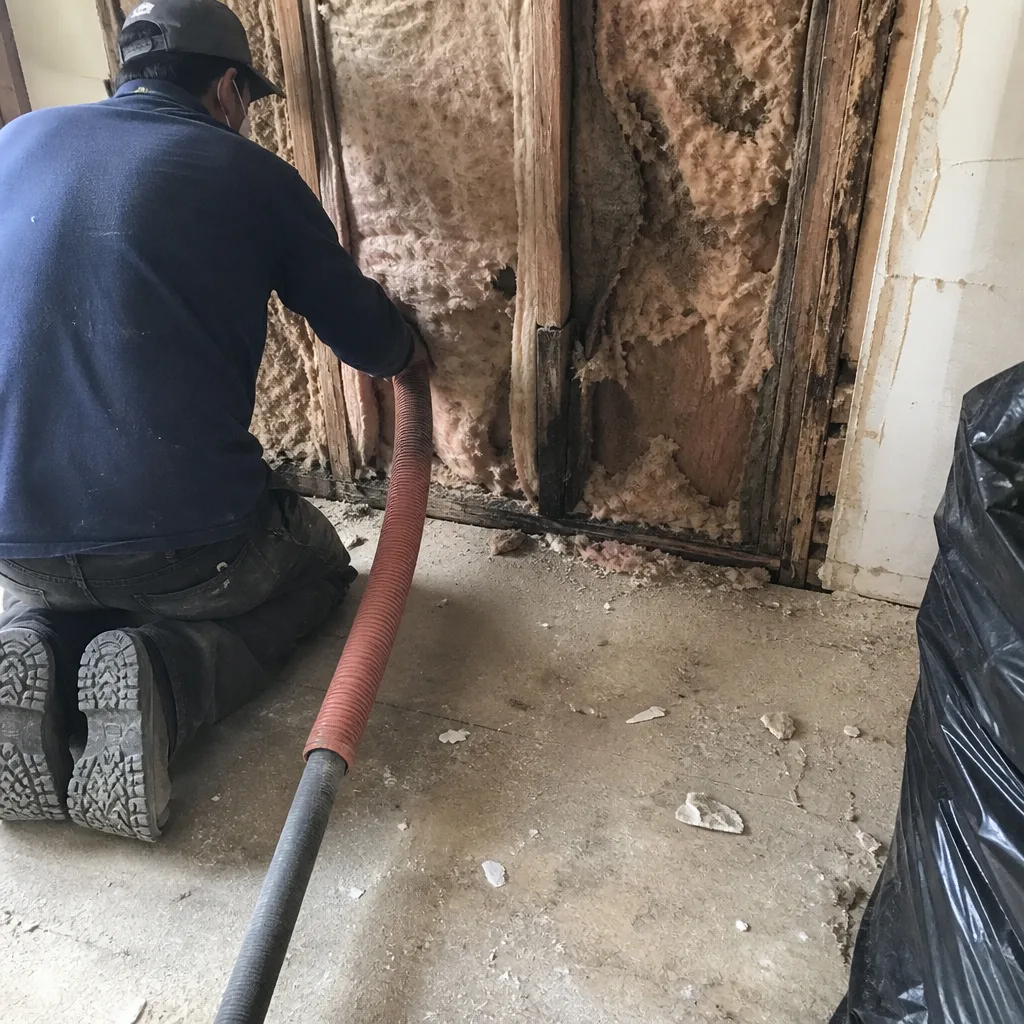 Before
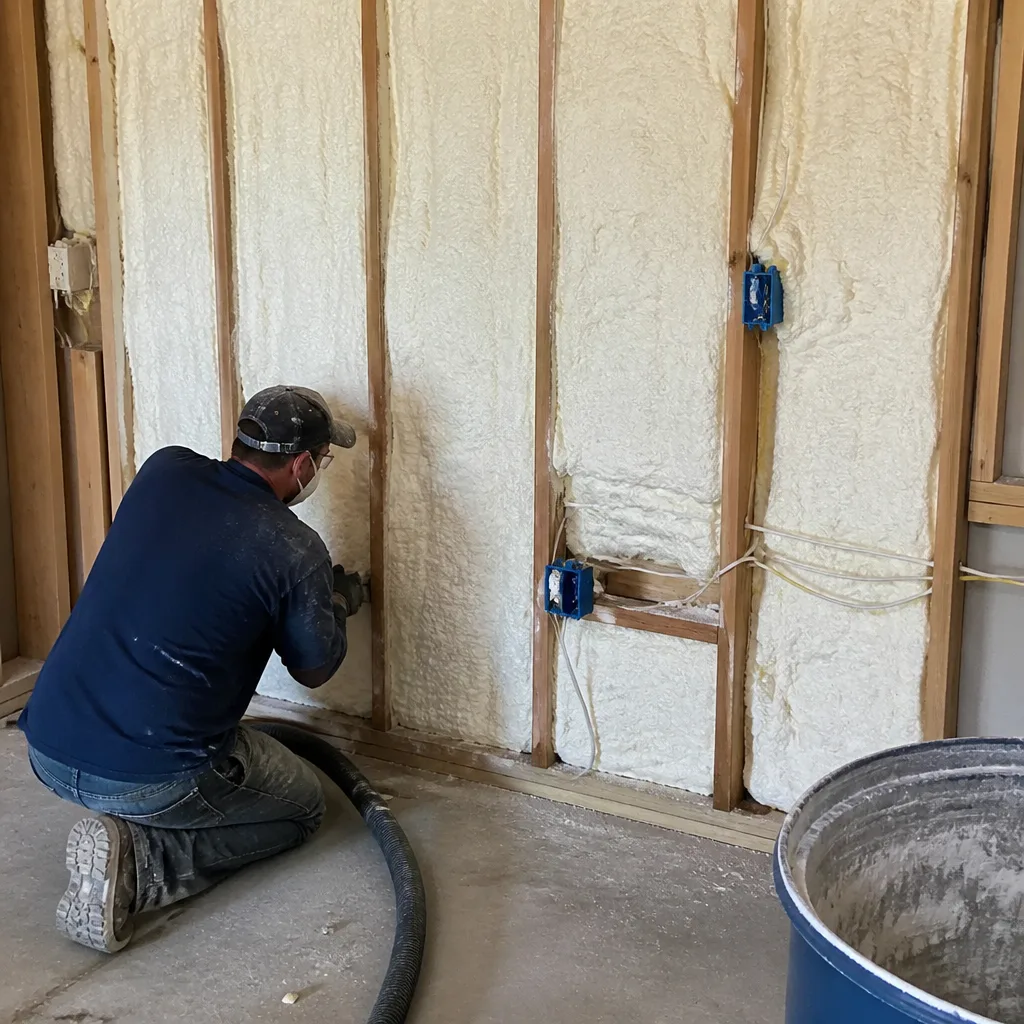 After
AfterWhy San Marcos Attics Need Radiant Barriers More Than Most
San Marcos sits in Climate Zone 2, which ASHRAE defines as hot-humid. What that means practically: from May through September, attic temperatures in an unshielded, dark-sheathed roof regularly exceed 140°F during peak afternoon hours. On a 98°F day – which San Marcos sees an average of 35 to 45 times per summer – that attic heat load radiates downward into the living space and forces your air conditioning system to run longer and harder to maintain setpoint.
A properly installed perforated foil radiant barrier, stapled to the underside of the roof decking, reflects roughly 95% of radiant heat before it can re-radiate into the attic air. Studies from the Florida Solar Energy Center (referenced in Oak Ridge National Laboratory reporting) have shown that radiant barriers in Climate Zone 2 and 3 applications can reduce attic temperatures by 20 to 30°F on peak days. In San Marcos, where HVAC systems in homes without radiant barriers commonly run 50 to 60% of the day in July, that reduction translates to measurable cooling-season savings – not a percentage we’re claiming, but one that can be tracked by comparing pre- and post-installation utility bills across a full summer cycle.
The homes that benefit most are those with west- or south-facing roof slopes and dark-colored roofing material. A significant number of homes in newer San Marcos developments like Trace and Kissing Tree were built with composition shingles in darker tones – charcoal, weathered wood, estate gray – which absorb more solar radiation than lighter alternatives. If your home fits that description and you’ve noticed the west-facing rooms cool more slowly in the evenings, a radiant barrier is doing exactly the job it was designed to do.
Radiant Barrier vs. More Attic Insulation: Which Is Right for San Marcos?
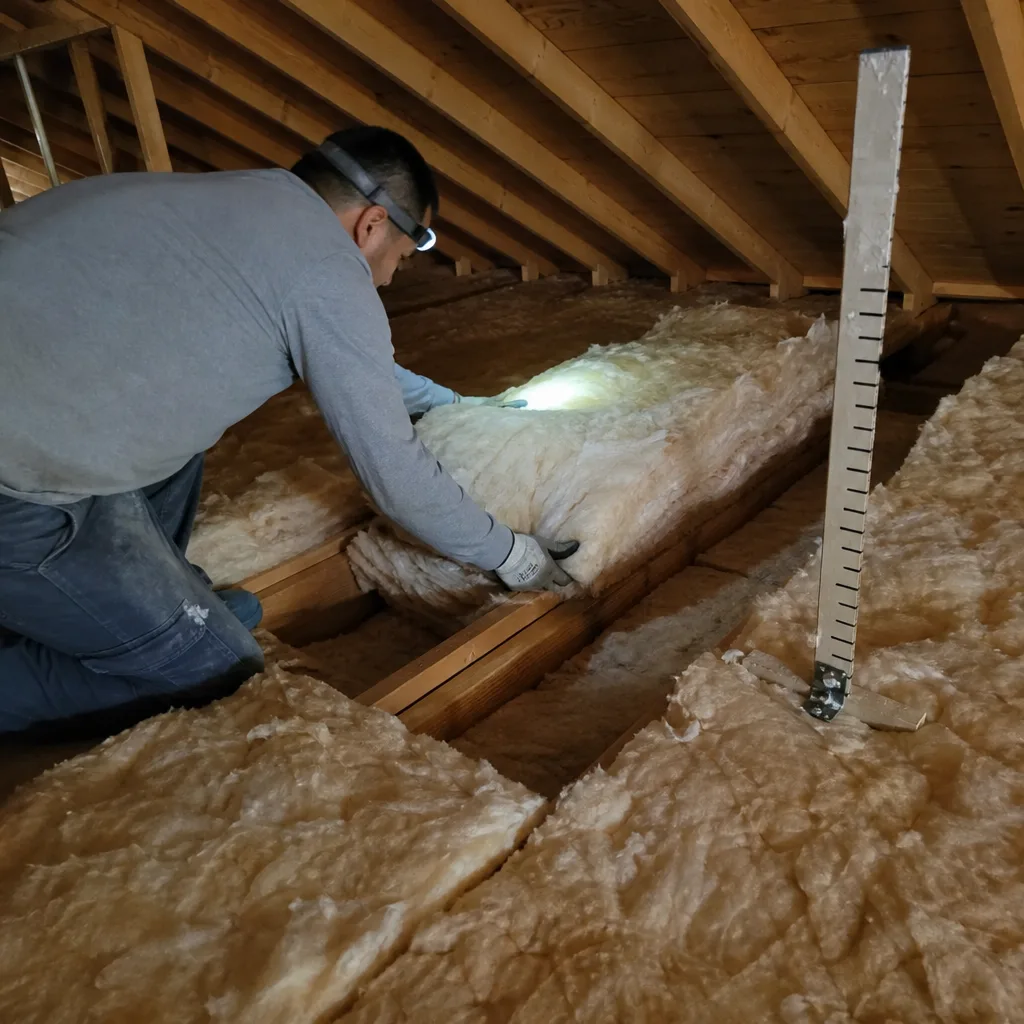
This is the most common question we hear from San Marcos homeowners researching attic performance upgrades, and the answer is usually “both, in the right order.” Here’s how to think about it.
Attic insulation (blown-in fiberglass or cellulose to R-38 or R-49) reduces the rate at which heat moves through the attic floor into the living space – this is called conductive and convective heat transfer. A radiant barrier reduces the heat load entering the attic in the first place by blocking radiant transfer from the hot roof decking. They address different mechanisms. A home with deep, well-installed insulation and no radiant barrier still has a 140°F attic pushing heat down through every square foot of insulated ceiling. A home with a radiant barrier and inadequate insulation depth reflects heat at the roof but still loses conditioned air through conduction.
The combination that consistently performs best in Climate Zone 2 conditions is: air sealing first, then insulation to code depth or above, then radiant barrier. If your attic is already at R-38 or better and the attic floor is sealed, adding radiant barrier is a high-yield next step. If your insulation is still at the original R-19 from a 1990s build, correcting that depth will likely deliver more dollar-per-dollar impact than radiant barrier alone.
Wes Okafor reviews each written scope at Envelope Insulation Co. with exactly this sequence in mind. We will tell you if radiant barrier alone isn’t the right first move for your home – that’s what the documentation-first approach is for.
How to Save on Radiant Barrier Installation in San Marcos
A few practical notes on keeping the cost reasonable without cutting the corners that matter.
- Bundle with attic insulation or air sealing. If your home needs both services, scheduling them together almost always reduces the per-service cost because crew time and mobilization are shared. A combined air seal and radiant barrier job on a 1,600 sq ft attic will typically cost less than two separately scheduled visits.
- Check CPS Energy and Hays County rebate programs. As of 2026, some Hays County homeowners are eligible for utility rebates tied to qualifying attic improvements. The program specifics change annually, so ask for confirmation in writing and verify directly with your utility before assuming the rebate applies to your specific home and installation type.
- Get a written second opinion. If you have a quote in hand from another contractor, Envelope Insulation Co. offers a Free Second Opinion – we’ll read the written estimate with you and tell you what’s in it, what’s missing, and whether the pricing is in range for the San Marcos market. That offer stands without any obligation.
- Ask about the attic hatch while we’re already up there. Attic pull-down stairs and hatches are among the worst air-leakage points in any San Marcos home built before 2010. Adding weatherstripping and a cover while the crew is already working runs $85 to $175 – a fraction of what it would cost as a standalone visit.
- Don’t skip air sealing to save money upfront. This is the one area where short-term savings reliably create long-term cost. A radiant barrier installed in a leaky attic will reduce radiant heat gain but can’t offset the conditioned air escaping through every open penetration. The blower-door number will reflect the difference – and so will the utility bill. If budget is the concern, ask us to write the scope in phases with a clear sequence.
For a no-pressure written estimate specific to your home’s attic, call (737) 337-8049. Estimates are free, the price is written before any work starts, and you’ll leave with a scope document whether or not you book the job.
What Envelope Insulation Co. Includes on Every Radiant Barrier Job
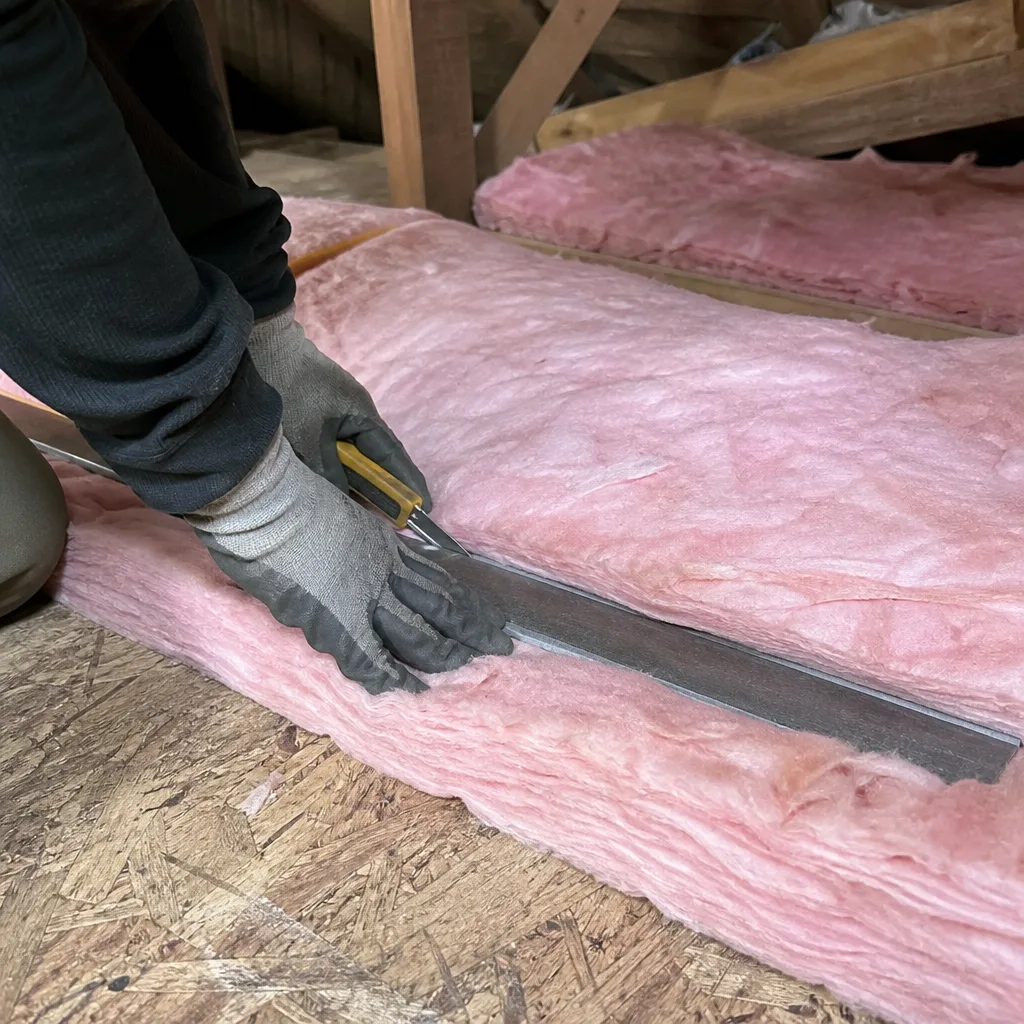
Understanding what you’re actually paying for helps you evaluate any quote – ours or anyone else’s. Here’s what a completed radiant barrier job looks like under The Haven Standard at Envelope Insulation Co.
Before work starts: a written price with a flat rate (no “plus materials”), a written scope describing exactly what will be done and in what sequence, and a written warranty. Haven Standard Clause 1 – “Have it in writing” – means no one lifts a tool until those three documents are in your hands.
During the job: a background-checked, uniformed technician on site, attic prep completed before installation begins, perforated foil installed to the underside of roof decking with proper overlap and fastening, and any air sealing work completed in sequence before the barrier goes in when it’s part of the scope.
When the crew leaves: a Documented Photo Record of the completed work, included on every job – not available on request, not an optional upgrade. On applicable jobs that included air sealing, before-and-after blower-door numbers – a pressurization measurement that shows, in a single figure, how much conditioned air the home was losing before and after the work was done.
After completion: the 365-Day Done Right Promise. If the installation isn’t right within 365 days of completion, we make it right. That’s backed by the written warranty you received before work started.
Envelope Insulation Co. has been operating under The Haven Standard since 2016 and has completed work on more than 9,000 homes – every one with a written price before work started and a documented record when the crew left. Wes Okafor leads the team and has reviewed the scope on jobs across San Marcos, Kyle, Buda, and the broader Hays County market long enough to know where the local variables actually show up in real pricing.
Key Takeaways: Radiant Barrier Costs in San Marcos
- Most San Marcos homes pay $1,400 to $2,800 for radiant barrier installation, or roughly $1.50 to $2.25 per attic square foot.
- Steep pitch, restricted access, and attic prep work push the price toward the top of that range.
- Double-sided perforated foil is the right material for Hays County’s humid climate – single-sided saves a little money but can create moisture problems in older attics.
- Air sealing should be completed before radiant barrier installation, not after. Any quote that skips this step is skipping a step that matters.
- Bundling with attic insulation or air sealing in the same visit reduces per-service cost.
- Every Envelope Insulation Co. job includes a written price, written scope, Documented Photo Record, and 365-Day Done Right Promise – before and after the work, not just the invoice.
FAQs – Radiant Barrier Installation Cost in San Marcos
How much does radiant barrier installation cost in San Marcos, TX?
Radiant barrier installation in San Marcos costs between $1,400 and $2,800 for most single-story homes, based on an attic footprint of 1,200 to 2,000 square feet and standard attic access. The per-square-foot rate runs $1.50 to $2.25 fully installed, materials and labor combined. Homes with steep pitches or restricted attic access (common in older neighborhoods near the square and around Sessom Creek) can reach $2.80 to $3.20 per square foot when labor difficulty is factored in. Call (737) 337-8049 for a written estimate specific to your home’s attic dimensions – estimates are free.
Is radiant barrier worth it in San Marcos?
Yes, for most homes in San Marcos – particularly those with south- or west-facing roof slopes and darker roofing material. San Marcos sits in Climate Zone 2 (hot-humid), and unshielded attics routinely exceed 140°F on peak summer days. A properly installed perforated foil radiant barrier reflects roughly 95% of radiant heat before it re-radiates downward. That doesn’t eliminate your cooling load, but it reduces the heat entering the conditioned space, which shortens HVAC run times in a market where air conditioners run hard from May through September. The payback period depends on your current insulation condition and how often the cooling system runs, but in our experience across the Hays County market, homes that combine air sealing and radiant barrier in a single scope see the most consistent and measurable results.
How long does radiant barrier installation take?
Most radiant barrier jobs in San Marcos take one full day for a single crew on a standard 1,200 to 1,800 sq ft attic. Larger attics – 2,000 sq ft and above, common in newer Blanco Vista and Trace homes – or attics requiring prep work and air sealing can run into a second day. The written scope you receive before work starts will specify the planned duration, so there are no surprises about scheduling.
Does radiant barrier replace attic insulation?
No – radiant barrier and attic insulation do different things and neither replaces the other. Attic insulation (blown-in fiberglass or cellulose to R-38 or R-49) slows conductive heat transfer through the ceiling. A radiant barrier blocks radiant heat from the hot roof deck before it can even enter the attic air. In Climate Zone 2, the right answer is almost always both, installed in the correct order: air seal first, insulate to proper depth, then add radiant barrier. A home with R-49 and no radiant barrier is still sitting under a 140°F oven. A home with radiant barrier and R-19 from 1998 is still under-insulated. The combination is where you see the full performance change reflected in blower-door readings and utility bills.
Can I get a radiant barrier installed at the same time as blown-in insulation?
Yes, and in most San Marcos homes it’s the more cost-effective way to approach both services. When both are part of the same written scope, the mobilization and setup time is shared across the job, which typically reduces the per-service cost compared to two separate visits. The sequence matters: air sealing of top plates, can lights, and penetrations comes first, then radiant barrier installation, then blown-in insulation on the attic floor. Envelope Insulation Co. won’t reverse that sequence – the building science on why order matters is explained in the written scope before work starts. Call (737) 337-8049 to get a combined written estimate for your home.
What’s the difference between perforated and non-perforated radiant barrier?
Perforated foil has small holes that allow moisture vapor to pass through rather than accumulate against the roof decking. In San Marcos – where summer humidity regularly runs high and attics see significant temperature swings between day and night from spring through fall – perforated foil is the standard recommendation for stapled-to-decking applications. Non-perforated foil is sometimes used in specific low-moisture applications, but in Hays County’s climate, it creates a higher risk of moisture trapping between the foil and the sheathing over time. That’s not a theoretical concern; it shows up as early wood deterioration on inspections of older attics where non-perforated products were installed without adequate ventilation.
You can read more about our approach to building envelope services on our home page, including the full list of services we provide across the San Marcos and Hays County market.
Written by Wes Okafor, Owner at Envelope Insulation Co. (operating as Topside Attic Insulation San Marcos), serving San Marcos since 2016. Pricing reflects the San Marcos, TX market as of 2026. Envelope Insulation Co. offers free written estimates – call (737) 337-8049 for an estimate specific to your home’s attic.
What Our Customers Say
"They air-sealed the attic floor before insulating and showed me the blower-door number before and after. The upstairs is finally the same temperature as downstairs."
- Marisol D."Two other companies quoted to blow more insulation on top of what was there. These were the only ones who said the existing material had to come out first, and explained why."
- Clifford E."The winter gas bill dropped by about a third. They had estimated a quarter, so they under-promised."
- Genevieve R.