
Attic Insulation Replacement in San Marcos, TX
Our Attic Insulation services in San Marcos typically run between $1,400 and $3,800 for a standard single-story home, depending on square footage, the condition of existing insulation, and whether air sealing is needed before new material goes in. Most jobs are completed in one day. The work involves removing degraded, contaminated, or underperforming insulation, sealing every air leak in the attic floor, and installing new insulation to current Texas energy code levels – so the home performs the way the HVAC system was sized to deliver.
If your energy bills have been climbing steadily, or your upstairs rooms feel ten degrees warmer than the thermostat says they should, the insulation in your attic may be the reason. Old blown cellulose that has settled into a thin grey mat, fiberglass batts that have absorbed moisture from a slow roof leak, or vermiculite-contaminated material from a mid-century build – these are not cosmetic issues. They affect how hard your air conditioner runs every summer in the Hill Country heat, and that heat here is not a mild inconvenience. San Marcos sits at the edge of the Edwards Plateau, where summer attic temperatures routinely reach 140-160°F, and insulation that was rated R-30 when it was installed may be performing at R-15 or less after years of settling, moisture intrusion, or pest activity.
At Topside Attic Insulation San Marcos, we handle full attic insulation replacement as part of the broader Attic Insulation in San Marcos service line. Every replacement job begins with a written price – flat, not estimated – before anyone enters the attic. That is Haven Standard Clause 1, and it applies to every job we do, no exceptions. Call us at (737) 337-8049 if you want a price on the page before committing to anything. The estimate is free, and it comes with a written scope.
When You Need Attic Insulation Replacement
Replacement is not always the answer – sometimes an Attic Insulation Top-Up is sufficient. But there are specific conditions where removing the existing material and starting clean is the only option that makes sense.
- Insulation damaged by a roof leak or HVAC condensate line failure. Wet fiberglass loses most of its thermal value and becomes a medium for mold growth. In San Marcos, homes in older neighborhoods like Blanco Vista or the Trace see this frequently after spring hail events open up flashing or ridge caps. Wet material must come out before anything new goes in.
- Rodent activity and contamination. Mice and roof rats use attic insulation as nesting material. Once feces and urine are present, the insulation is a biohazard and must be removed entirely. We see this regularly in homes bordering the greenbelt areas near Sink Creek and the San Marcos River corridor.
- Settled blown cellulose or fiberglass at critically low R-values. Cellulose insulation installed before 2000 may have compacted to a depth that measures R-10 or less – well below the R-38 minimum required under the current IECC code adopted in Texas. At that point, adding more on top is not effective without first assessing the attic floor condition underneath.
- Vermiculite or other hazardous legacy materials. Homes built before 1980, particularly in established neighborhoods near downtown San Marcos, sometimes contain vermiculite insulation that may carry asbestos contamination. This requires professional testing and removal before any new insulation can be installed safely.
- Pest control treatment residues or chemical contamination. Some older pest control treatments involved pumping chemicals directly into wall cavities or attic spaces. If insulation has absorbed these materials, replacement is the appropriate step before air sealing work begins.
- Post-renovation debris or construction contamination. Attic insulation that has been disturbed by HVAC replacement, solar panel installation, or roof work and left unrestored is typically better replaced than topped off, since the thermal continuity has already been broken and debris is often mixed into the existing material.
Our Attic Insulation Replacement Process
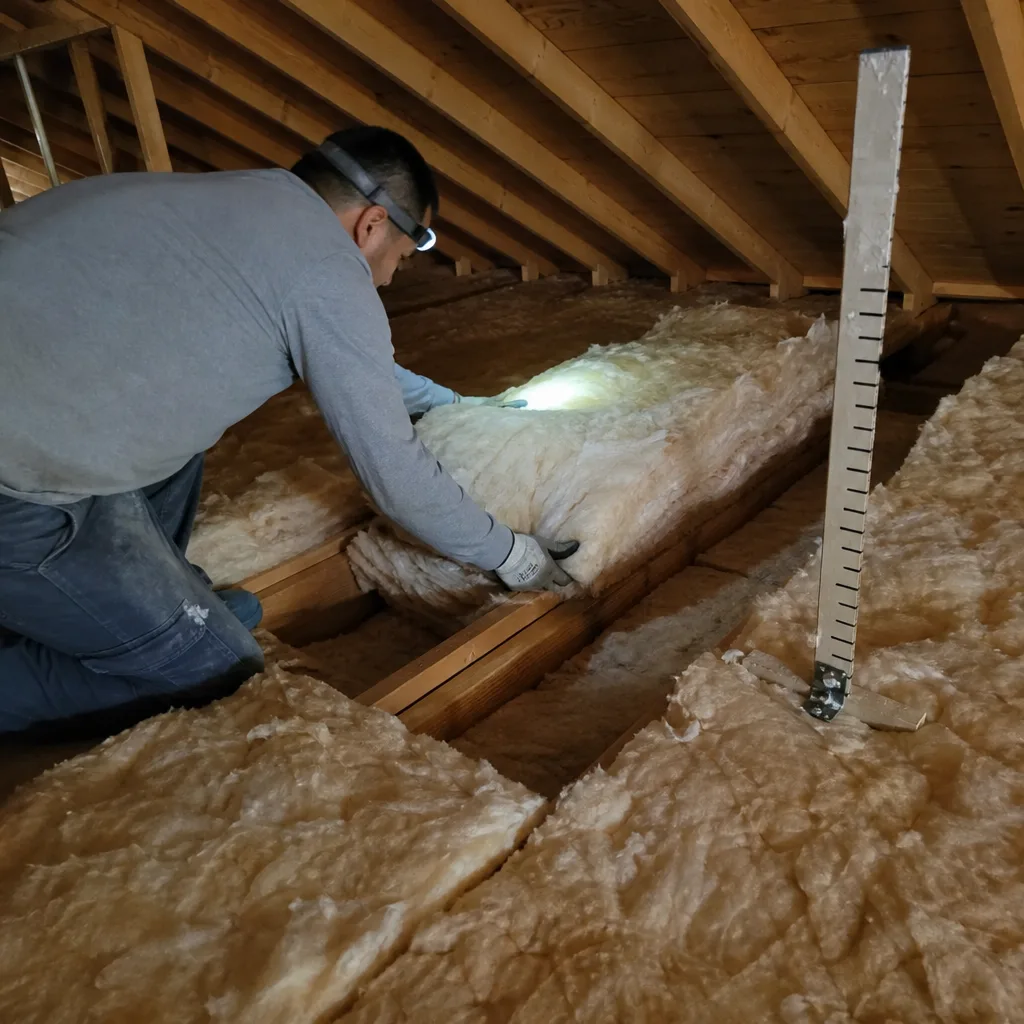
This is how we actually do the work – not a marketing outline, but the sequence a crew follows on a replacement job in San Marcos. Every step is documented.
- Pre-job assessment and written scope. Before any work begins, we inspect the attic with a moisture meter, a thermal camera where conditions allow, and physical sampling of the existing insulation depth and condition. We document what we find with photos, note the current R-value, and flag any moisture, pest, or structural concerns. The written price you receive reflects exactly what we found – not a general estimate adjusted after the fact.
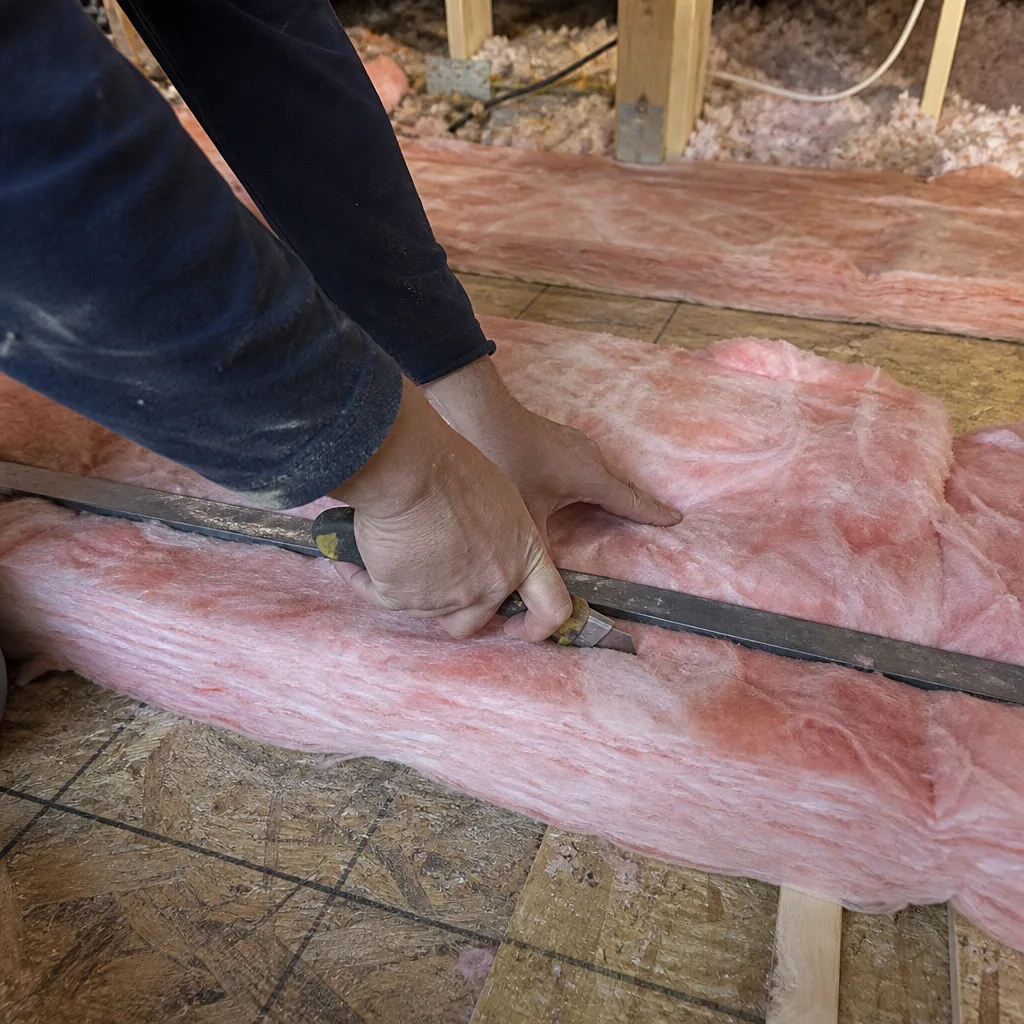
- Containment and removal. We seal the attic access point with a zipper barrier to prevent particulate from entering living space, then use a commercial HEPA-filtered vacuum system to extract the existing insulation. Contaminated or hazardous material is bagged, labeled, and disposed of according to Texas Department of State Health Services requirements. We leave the attic floor exposed and clean before moving to the next step.
- Air sealing – completed before any insulation is installed. This is the step that separates a replacement that performs from one that just looks done. Under The Haven Standard, we do not blow new insulation over an unsealed attic floor. Every top plate gap, every recessed can light penetration, every plumbing and electrical chase is sealed with two-part spray foam or fire-rated caulk before the first cubic foot of new insulation goes in. In a typical San Marcos home built between 1985 and 2005, this step closes leakage points that account for 20-40% of conditioned air loss. We measure this with a blower-door test – a pressurization reading, in CFM50, that gives you a single number showing how much air the building envelope was losing before and after sealing. Those numbers are published on your job record, not kept internally.
- Installation of new insulation to target R-value. We install blown-in fiberglass or cellulose to the depth required to reach R-38 or higher, depending on your home’s construction and the scope you agreed to in writing. We use materials from Johns Manville and Knauf, selected based on the application – neither is our proprietary product, and you will see the brand and the spec on your written scope before installation begins. Depth rulers are placed across the attic floor so the installed depth is visually verifiable and photographed.
- Post-installation documentation. Every job closes with a Documented Photo Record – attic access point sealed, depth rulers in frame, distribution pattern across the floor – so you have a visual record of what was installed and where. On jobs where a blower-door test was performed, the after reading is included in the same document alongside the before number. You receive this before the crew leaves.
- Written warranty and 365-Day Done Right Promise. The written warranty is delivered at job close, not mailed later. If anything about the work is not right within 365 days, we make it right. That promise is written into your scope document at the start – not offered after the fact.
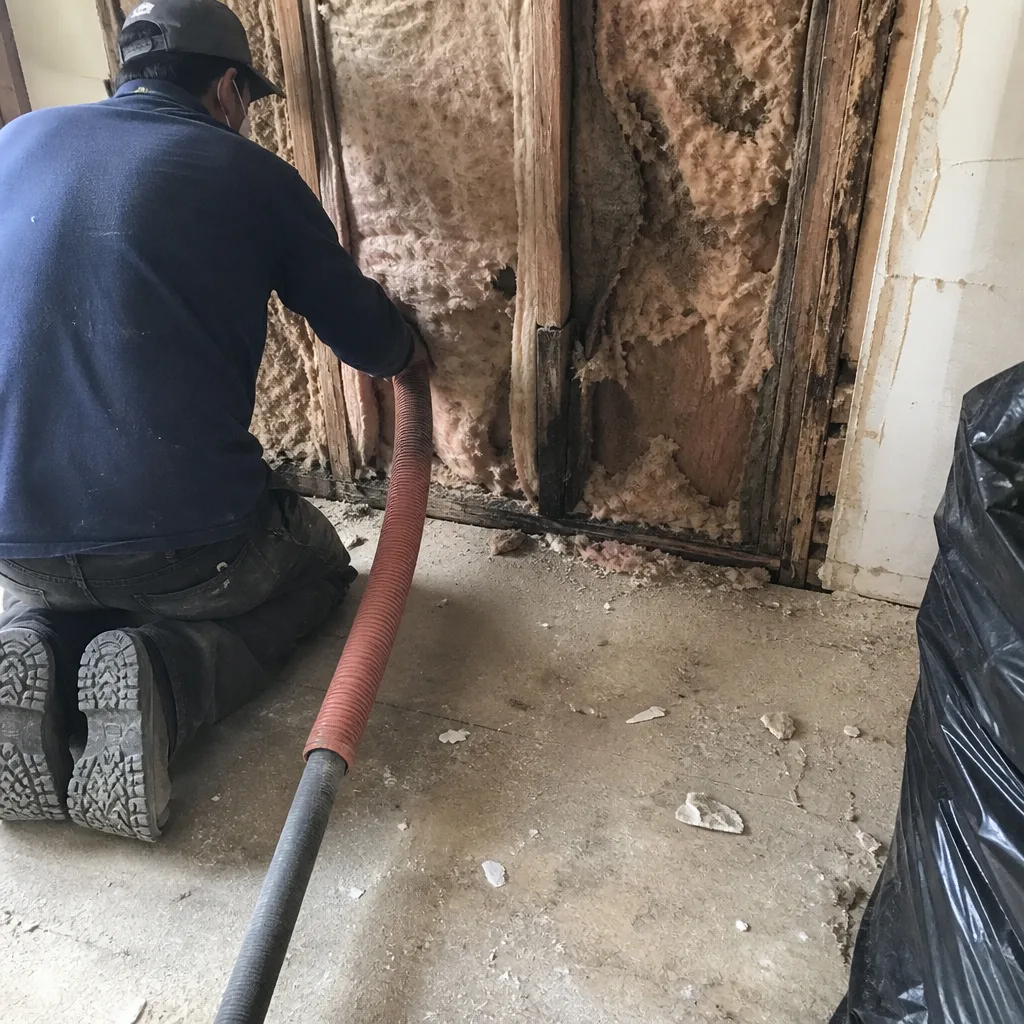 Before
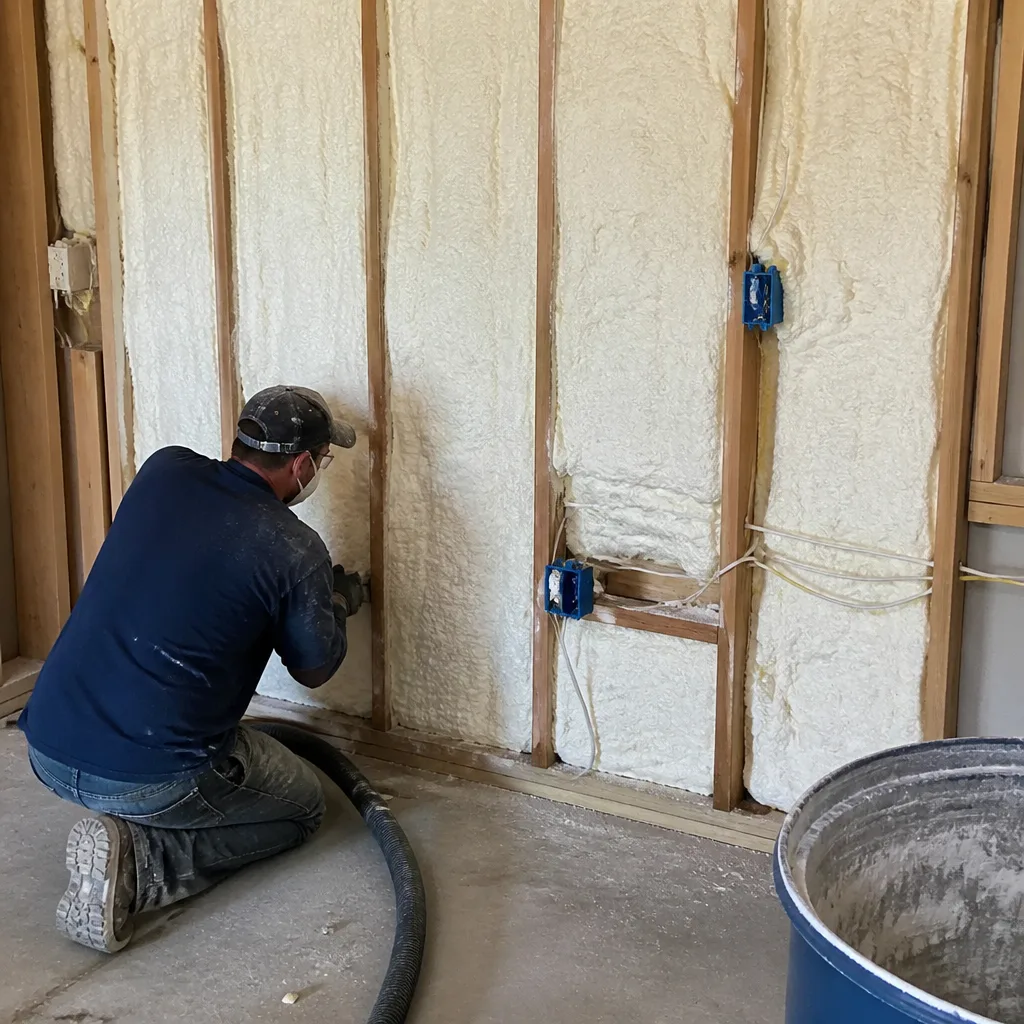 After
AfterAttic Insulation Replacement Pricing in San Marcos
Most attic insulation replacement jobs in San Marcos run between $1,400 and $3,800 for a home under 2,000 square feet. Larger homes or those with complex attic geometry – think the split-level builds common in newer developments near Kyle Crossing or the hillside lots in the Blanco Vista area – can run higher. Here is how the cost typically breaks down:
| Scope | Typical Range (San Marcos Market) |
|---|---|
| Insulation removal only (per 1,000 sq ft of attic floor) | $350 – $600 |
| Air sealing (top plates, can lights, penetrations) | $300 – $700 |
| Blown-in fiberglass or cellulose installation to R-38 | $700 – $1,800 |
| Full replacement (removal + air sealing + installation, 1,200-1,600 sq ft attic) | $1,400 – $2,800 |
| Full replacement with blower-door testing (before and after) | $1,600 – $3,200 |
| Hazardous material removal (vermiculite or chemical-treated insulation) | Quoted separately after testing – typically $800 – $2,000+ |
Several factors push a job toward the higher end of those ranges. Attic access that requires a single small hatch instead of a pull-down stair adds labor time. Homes where previous pest control or moisture damage has spread through the entire attic floor rather than a localized section require full extraction rather than partial. And homes with a high density of recessed can lights – common in San Marcos builds from the late 1990s through 2010 – take longer to air-seal correctly, because each one is a separate penetration through the thermal boundary.
Under Haven Standard Clause 1, the price you see on your written scope is the price you pay. No adjustments after the work starts based on what the crew finds once they are up there. If the scope changes, the written price changes first – before the work changes. You can also bring us any written estimate from another contractor: we offer a free second opinion on any written estimate, and we will read it with you line by line.
To get a written price for your San Marcos home, call (737) 337-8049. There is no fee for the estimate, and you will leave the call with a number on paper, not a range contingent on what we find.
FAQs – Attic Insulation Replacement
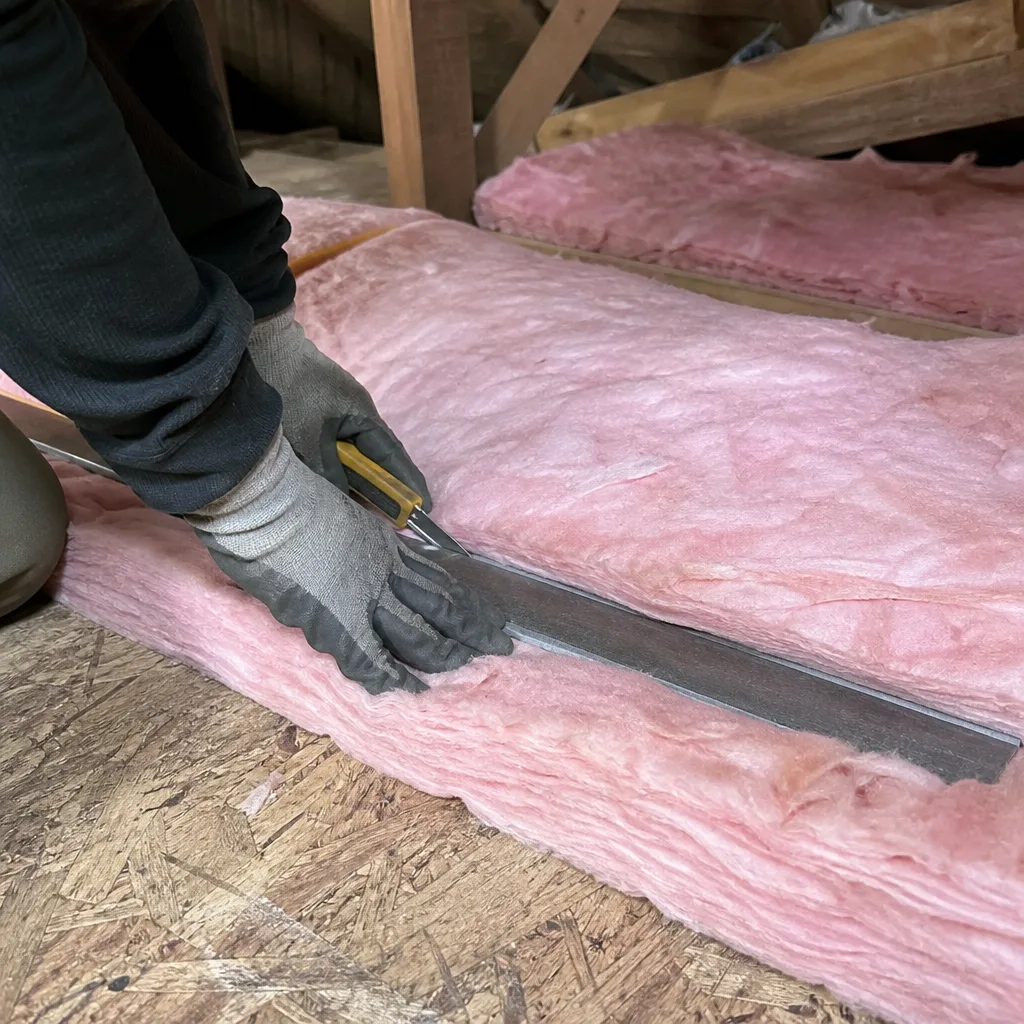
How long does attic insulation replacement take in San Marcos?
Most attic insulation replacement jobs in San Marcos are completed in one day, typically 4-8 hours depending on attic size and condition. A 1,500-square-foot attic floor with moderate contamination, standard air sealing scope, and Blown-In Attic Insulation installation generally runs 5-6 hours from access to closeout documentation. Larger homes or those with significant pest contamination or hazardous materials may require a second visit for the installation phase after removal and testing are complete. Your written scope will include a stated completion timeline before work begins.
Do I need to replace all the insulation, or can I just add more on top?
It depends on the condition of what is already there. If the existing insulation is dry, free of contamination, and structurally intact – just thin from settling – a top-up after air sealing is often the right call and costs less. But if there is moisture damage, pest activity, chemical contamination, or if the material is a legacy product like vermiculite, full removal is required. We determine this during the pre-job assessment and put the recommendation in writing before you decide. We do not remove material that does not need to be removed, and we do not leave contaminated material in place to save time. Call (737) 337-8049 and we can walk through what your situation likely requires before you commit to anything.
Why does air sealing have to happen before the new insulation goes in?
Air sealing first is the correct sequence because insulation slows the transfer of heat through solid material – it does not stop air from moving through gaps. A top plate gap or an unsealed recessed light can pass the equivalent of a fist-sized hole in your ceiling, and blown-in insulation installed without Attic Baffles & Ventilation Prep does almost nothing to stop the airflow. The blower-door numbers we record before and after sealing show this clearly: in a typical San Marcos home from the late 1990s, we regularly measure 3,500-5,000 CFM50 before sealing, and 2,000-3,000 after – a reduction that correlates directly to lower cooling loads in summer. Insulating over an unsealed attic floor does not produce those numbers. That is why Envelope Insulation Co., operating as Topside Attic Insulation San Marcos, treats air sealing as a hard prerequisite on every replacement job.
What insulation materials do you install for replacements in San Marcos?
We primarily install blown-in fiberglass and blown-in cellulose for attic replacement jobs, sourced from Johns Manville and Knauf depending on the application. For homes where a higher density product is warranted – such as attics with unusual airflow patterns or where fire rating is a consideration – we also work with Rockwool. The material specified for your job is named in the written scope before installation begins, along with the target R-value and installed depth. We do not have a preferred product arrangement with any manufacturer, so the choice is driven by what performs best for your attic’s conditions, not by margin.
What Sets Our Attic Insulation Replacement Work Apart in San Marcos
Since 2016, we have completed insulation work on more than 9,000 homes – every one with a written price before the work started and a documented record when the crew left. That is not a marketing claim; it is the Haven Standard, applied consistently because it is the only way to operate a business that can stand behind its work 365 days after the job closes.
In San Marcos specifically, we see patterns that other markets do not. The combination of Hill Country heat, older housing stock near Texas State University, and rapid new construction on the city’s northern edge toward the Hays County line means attic conditions vary significantly from block to block. A 1968 build near Belvin Street may have compressed fiberglass batts, aluminum wiring penetrations that need fire-rated sealant, and single-pane attic venting that complicates airflow calculations. A 2019 build near Kissing Tree may have adequate insulation depth but factory-punched top plates that were never air sealed before drywall went up. We assess each attic on its own terms, document what we find, and price the job accordingly – in writing, before touching anything.
The full picture of what we do in the attic sits under our Attic Insulation in San Marcos service page, which covers the broader service line including new installation, radiant barrier work, and energy audits that quantify the before-and-after performance change in dollars. Attic insulation replacement is one piece of that; when it is the right piece for your home, we do it correctly the first time or make it right within 365 days. That is in writing.
Key Takeaways
- Attic insulation replacement in San Marcos typically costs $1,400 to $3,800 for a home under 2,000 square feet, with a written price delivered before any work begins.
- Air sealing is completed before new insulation is installed – this is a hard process requirement, not an optional add-on.
- Before-and-after blower-door readings are documented on every applicable job so you can verify the performance change in a single measurable number.
- All jobs close with a Documented Photo Record and a written warranty. The 365-Day Done Right Promise is in your scope document at the start.
- Materials are sourced from Johns Manville, Knauf, and Rockwool – specified by application, not by vendor preference.
- Contaminated, moisture-damaged, or hazardous insulation must be fully removed before replacement. We assess this during the pre-job inspection and put the finding in writing.
Schedule Your Attic Insulation Replacement in San Marcos
If you think your attic insulation needs to come out and be replaced – or if you are not sure whether replacement or a top-up is the right move – call (737) 337-8049. Wes Okafor and the crew at Topside Attic Insulation San Marcos will assess the attic, document what we find, and give you a written price with a clear scope before any work is scheduled. The estimate is free. The price is flat. And the work does not start until you have both in your hand.
Written by Wes Okafor, Owner at Topside Attic Insulation San Marcos, serving San Marcos.