
Attic Baffles & Ventilation Prep in San Marcos, TX
Attic baffles – also called rafter vents or insulation dams – are the channels installed between roof rafters that keep soffit air flowing up and over your insulation toward the ridge. Without them, blown-in or batt insulation blocks the eave vents, trapping heat and moisture in the attic and defeating the entire insulation investment. At Topside Attic Insulation San Marcos, ventilation prep is completed before any Attic Insulation services go in – full stop.
San Marcos sits in a climate band that doesn’t let either problem slide. Summers push attic temps past 150°F regularly, and the hill country humidity that rolls in through spring and fall means moisture has real opportunity to accumulate in a poorly vented roof cavity. We’ve been inside thousands of attics in the area since 2016 and the pattern holds: when baffles are missing or crushed, the insulation above them is wet, compressed, or both – and the blower-door test reads it. If you want insulation that performs the way it was rated to perform, ventilation prep isn’t optional.
This page is part of our broader Attic Insulation in San Marcos service, which covers full attic assessments, air sealing, and insulation installation. If you already have a quote in hand from another contractor and want a second set of eyes on it, we’ll review it with you – written, line by line – at no charge. Call (737) 337-8049 to schedule. A live person answers every call.
When You Need Attic Baffles & Ventilation Prep
Not every attic needs new baffles, but the following conditions mean yours almost certainly does. These are the scenarios we see most often in San Marcos homes, particularly in neighborhoods like Blanco Vista, Hunter’s Crossing, and older ranch-style builds closer to the square where soffit ventilation was undersized from the start.
- Your attic has no visible channel at the eaves. If you can see insulation pressed flat against the roof deck near the soffit, there’s no baffle doing its job. Conditioned air from below is mixing with outside air and the insulation R-value is already compromised.
- You’re about to add blown-in insulation. Blow-in products like Knauf EcoSoft or fiberglass loose-fill are excellent at filling cavities – and equally good at blocking eave vents if no baffle is in place first. This is the single most common installation error we correct on second-opinion jobs.
- Your energy bills are high relative to your square footage. A 1,800-square-foot San Marcos home running $280 or more per month in July is a signal. It doesn’t always mean bad insulation – sometimes it means the attic is running 30 degrees hotter than it should because ventilation is obstructed.
- You’ve found moisture staining or soft decking near the ridge. In San Marcos, the wet springs combined with a static air pocket in the attic create conditions for condensation on the sheathing. Baffles and proper ridge-to-soffit airflow are the mechanical solution.
- The existing baffles are crushed, torn, or made of the wrong material. Cardboard baffles – still found in homes built through the early 2000s – compress under insulation weight and lose their channel. We replace them with rigid foam or plastic baffles rated for the full ventilation clearance required by code.
- A previous contractor skipped ventilation prep entirely. It happens. We document what we find when we arrive, so you have photographic evidence of existing conditions before any work begins – that’s included on every visit under the Haven Standard.
Our Attic Baffles & Ventilation Prep Process
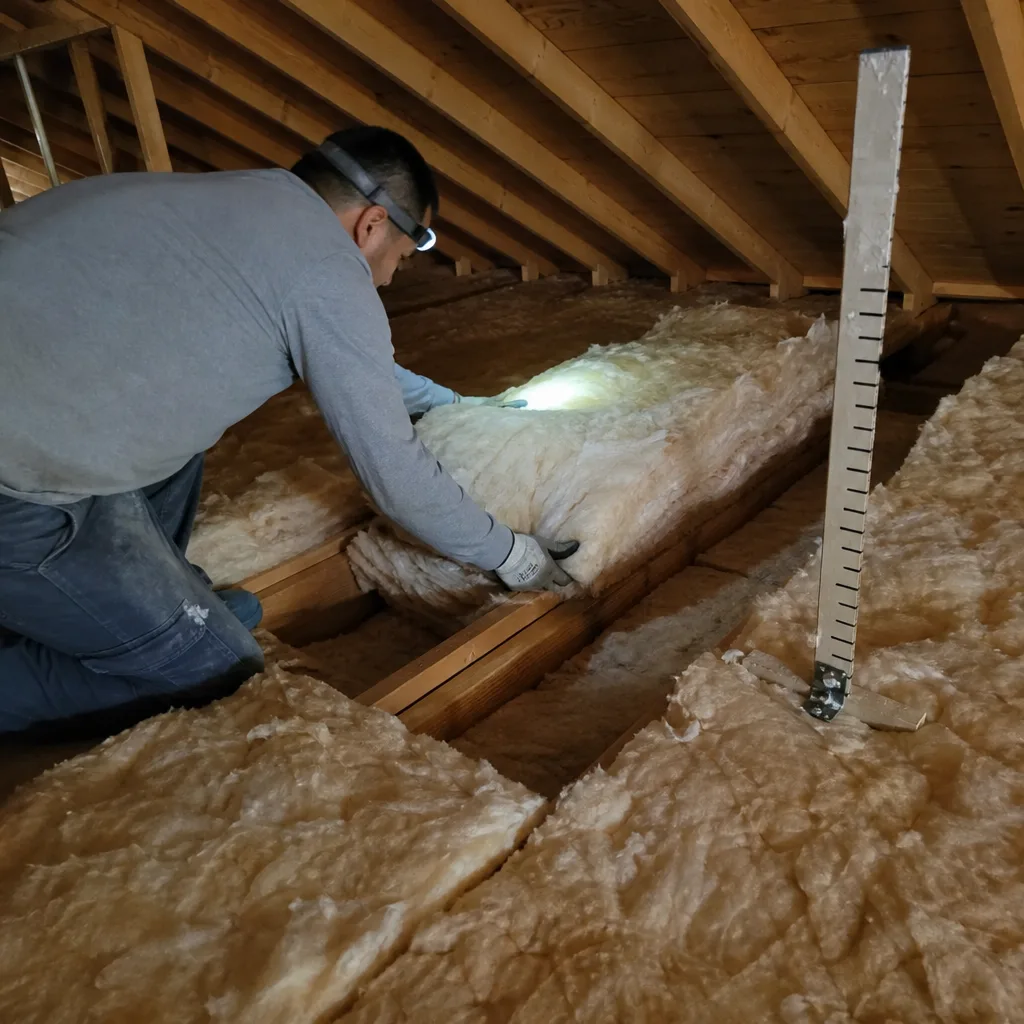
Our process starts with measurement and ends with documentation. Here’s what it looks like on a typical San Marcos job, from initial inspection through clearance for insulation to be installed.
- Written Scope Before Any Work Starts. Under Haven Standard Clause 1, you receive a flat, written price and a written scope of work before anyone touches a tool. No verbal estimates, no “we’ll see what we find and adjust.” The price you sign is the price you pay. If conditions are materially different from what we can see at quote time – which does happen in attics with failed prior insulation covering the deck – we stop, document what we found, and revise the scope in writing before continuing.
- Full Attic Inspection and Photo Documentation. Before we install or remove anything, a uniformed, background-checked technician photographs the attic floor, the eave cavities, the ridge vent, and any existing baffles. You receive this photo record. If your attic has a problem we didn’t identify in the quote, you’ll see it in the photos – dated and timestamped.
- Soffit Vent Clearing and Net Free Area Calculation. “Net free area” is the actual open space through which air can move, measured in square inches per square foot of attic floor. Building codes in Hays County generally require a 1:150 ratio (1 square inch of vent area per 150 square feet of attic floor) unless a vapor barrier is present, in which case 1:300 applies. We calculate yours. Blocked baffles reduce net free area to near zero even when the vent itself is intact – we clear and confirm.
- Baffle Installation at Each Rafter Bay. We install rigid baffles – typically polystyrene or a comparable rigid material – at every rafter bay that contacts the soffit, maintaining a minimum 1-inch airspace between the baffle top and the roof decking. In San Marcos homes with 2×6 rafters and deeper insulation targets (R-38 or R-49 common in new builds here), we size baffles to preserve that channel even after insulation is installed to full depth.
- Air Sealing of Top Plates and Penetrations. Baffles handle ventilation; air sealing handles the building envelope. These are two separate jobs and both need to happen before insulation goes in. We seal top plates, can-light penetrations, plumbing stacks, and any other attic floor bypasses using closed-cell foam or mastic, depending on the penetration type. This is the step most installers skip – we require it before we’ll run the blower.
- Blower-Door Test and Final Documentation. On applicable jobs, we conduct a blower-door test before and after air sealing. The test generates a CFM50 reading – a single number representing how much air the building envelope is losing at a standardized pressure. We publish both numbers so you can see the delta your money produced. Final photos, the baffle installation record, and the blower-door readings are compiled into a documented record delivered to you when the crew leaves.
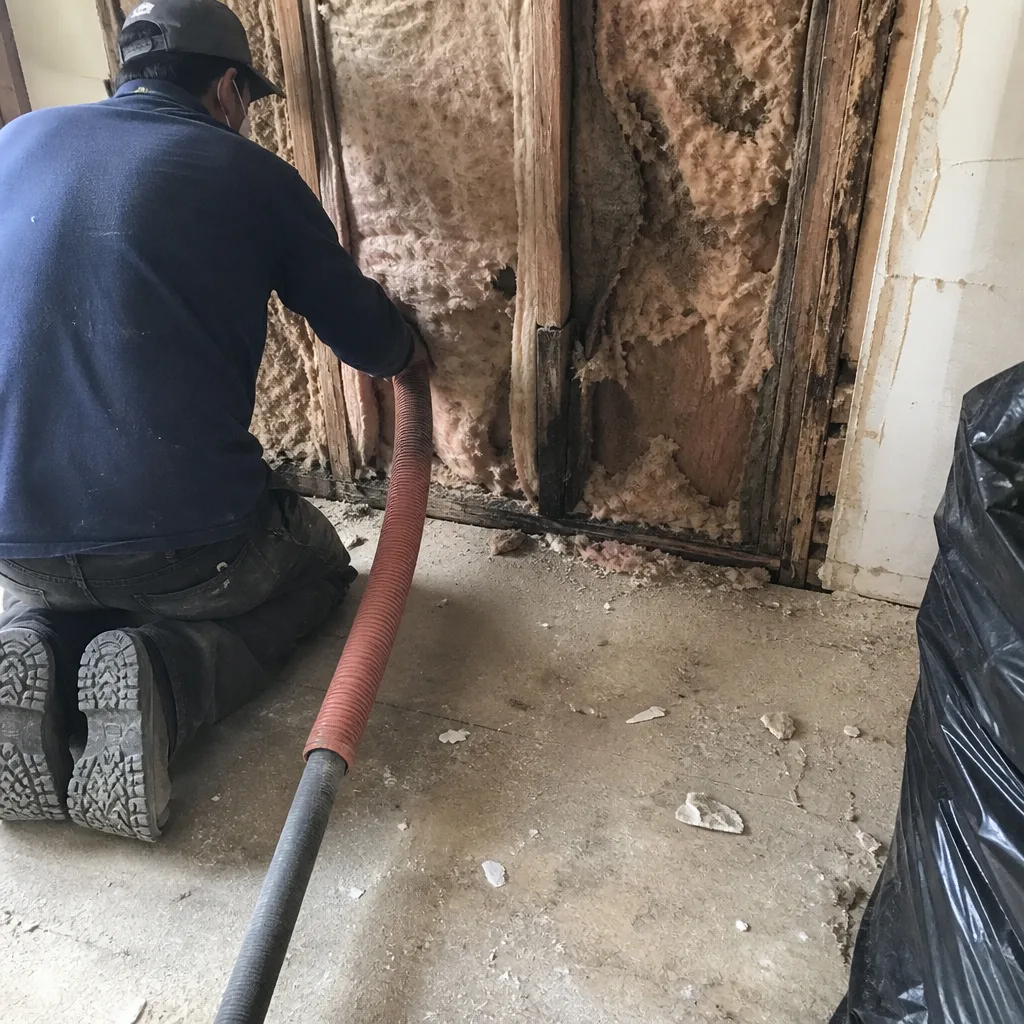 Before
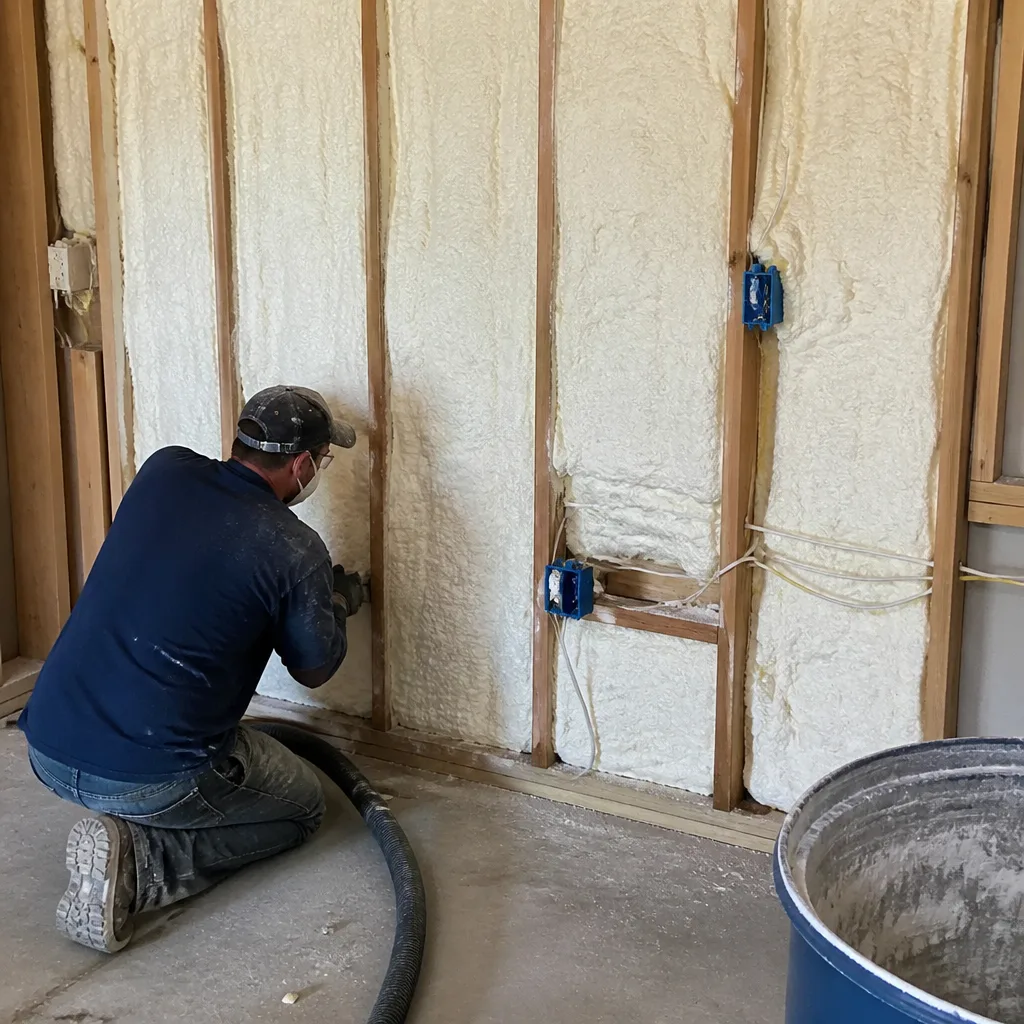 After
AfterAttic Baffles & Ventilation Prep Pricing in San Marcos
Baffle installation as a standalone service in a typical San Marcos home runs between $350 and $850, depending on the number of rafter bays, access conditions, and whether existing material needs to be removed first. When ventilation prep is bundled with a full Attic Batt Insulation job – which is how most projects are scoped – the baffle work typically adds $200 to $500 to the total project cost because setup, access, and crew time are already on site.
| Scope | Typical Range (San Marcos) |
|---|---|
| Baffle installation only (standalone, no insulation) | $350 – $850 |
| Baffle install bundled with full attic insulation job | $200 – $500 added to insulation scope |
| Crushed/cardboard baffle removal and replacement | $150 – $300 additional |
| Soffit vent clearing (blocked vents, debris removal) | $75 – $200 depending on count |
| Air sealing (top plates, penetrations, can lights) | $400 – $900 for most San Marcos attic footprints |
What moves the number: attic height and access (a tight 18-inch clearance takes longer than a walk-up attic), the number of rafter bays that need baffles (a 2,000-square-foot home with a hip roof has significantly more eave contact than a simple gable), and whether the existing insulation has to shift or be temporarily removed to reach the eaves. For a full breakdown, see our guide on How Much Does Attic Insulation Cost? (2026 Price Guide) - San Marcos, TX. We account for all of this in the written scope you receive before work starts.
We don’t adjust the price after the fact based on time. The written price is the price. If we open the attic and find something genuinely outside the original scope – say, a rodent intrusion or collapsed decking that changes the job – we stop, document it in photos, and present a revised written scope before continuing. That’s Haven Standard Clause 1, and it applies to every job we run.
To get an exact number for your home, call (737) 337-8049. We’ll schedule an on-site assessment, write up the scope, and give you a flat price before anyone starts. If you have a written estimate from another contractor, bring it – we’ll review it with you line by line at no charge.
FAQs – Attic Baffles & Ventilation Prep
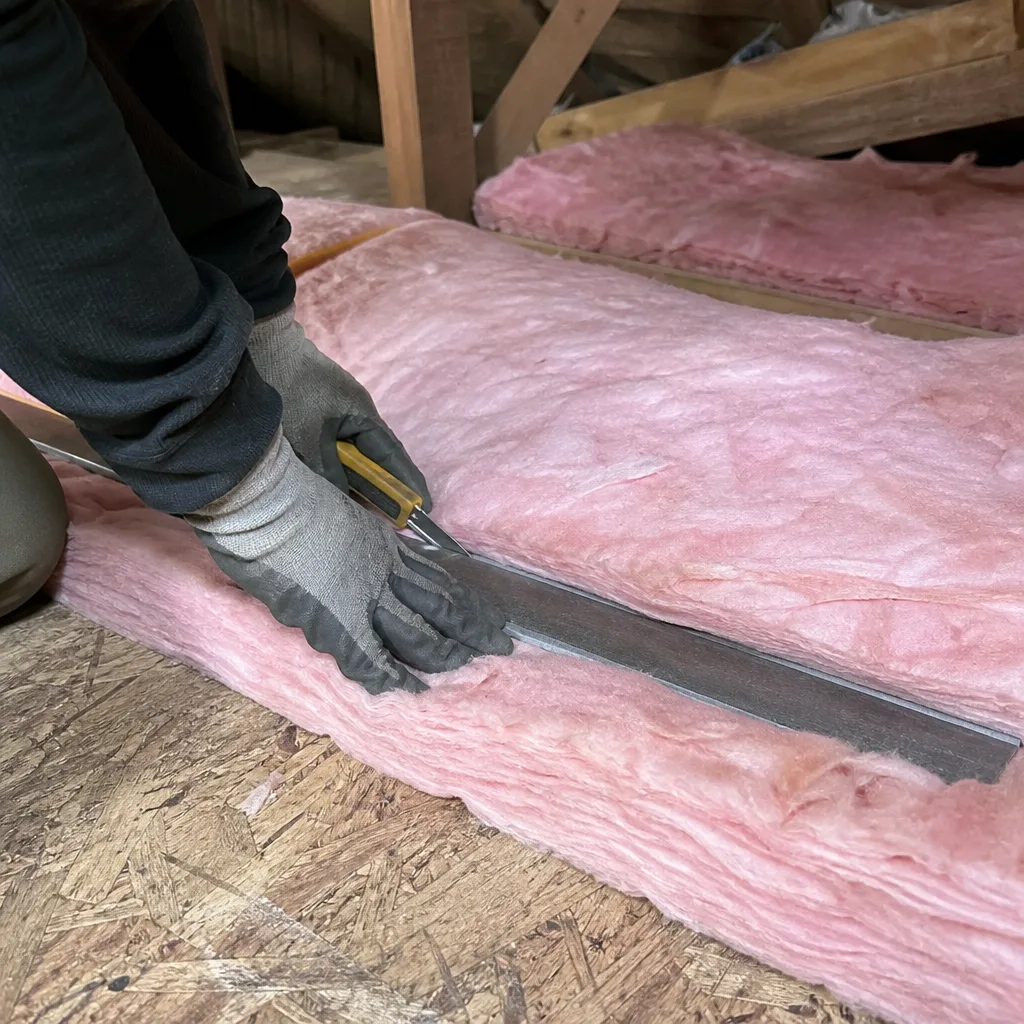
What exactly does an attic baffle do, and why does it matter before insulation goes in?
An attic baffle is a rigid channel – usually polystyrene or plastic – installed between roof rafters at the eave to keep a clear airway from the soffit vent up to the ridge vent. Without it, blown-in insulation or dense batts block that airway entirely. When the airway is blocked, attic temperatures in San Marcos summers can run 20 to 40 degrees higher than they should, which accelerates shingle wear, forces your HVAC to work against a hotter ceiling mass, and in humid conditions creates a static air pocket where moisture accumulates on the roof sheathing. The baffle costs relatively little; skipping it means the insulation it’s protecting will underperform from day one. Call (737) 337-8049 to get a written scope that includes baffle installation before any insulation goes in.
Does Hays County or the City of San Marcos have specific ventilation requirements I need to know about?
Yes. The International Residential Code, which both the City of San Marcos and Hays County have adopted, requires a minimum net free ventilation area of 1 square inch per 150 square feet of attic floor space unless a Class I or II vapor retarder is installed on the warm-in-winter side of the ceiling, in which case the ratio drops to 1:300. In practice, most San Marcos homes were built to the 1:150 standard, and blocked baffles can reduce net free area to near zero even when the vent hardware itself is intact. We calculate your actual net free area as part of the inspection and document it in the written scope.
Can I skip baffles if I already have ridge and soffit vents installed?
Not safely, no. Ridge and soffit vents are the entry and exit points for attic airflow, but baffles are what maintain the channel between them at the eave level. If insulation – even a well-installed product like CertainTeed-batts or loose-fill from a reliable source – is blocking that channel directly at the soffit, the ridge vent becomes decorative. Air enters the soffit, hits a wall of insulation, and stops. The ridge-to-soffit convection loop requires an unobstructed path the full length of each rafter bay, and that path only exists if a baffle is holding the space open.
Is ventilation prep the same thing as air sealing? Do I need both?
They’re different jobs that address different problems, and yes, you need both. Ventilation prep – baffles, soffit clearing, net free area verification – manages the intentional airflow through the attic cavity, which carries heat and moisture out of the roof assembly. Air sealing addresses unintentional airflow through the attic floor: the conditioned air escaping your living space through top plates, can-light penetrations, plumbing stacks, and other bypasses. At Topside Attic Insulation San Marcos, air sealing is a prerequisite – we won’t install insulation over an unsealed attic floor. Skipping air sealing and adding insulation over bypasses is roughly equivalent to adding a thicker blanket while leaving the window open. The blower-door test we run before and after shows, in one number, how much that sealing actually moved the needle. Call (737) 337-8049 to schedule a written assessment that covers both.
Why Topside Attic Insulation San Marcos Does This Differently
Since 2016, Envelope Insulation Co. has documented the before-and-after performance on every applicable attic job. That means blower-door readings – a pressurization test that produces a single CFM50 number showing exactly how much air the building envelope was losing before work started and after it was completed. We publish both numbers. We don’t claim we “significantly improved efficiency.” We hand you the figure.
The 9,000+ homes we’ve sealed and insulated have all started with the same thing: a written price before any work begins. Not a range. Not an estimate subject to change. A flat, written scope with a written warranty, under the Haven Standard’s 365-Day Done Right Promise. If something we did isn’t right within 365 days, we make it right – in writing, not as a favor.
We use materials sourced from Johns Manville, Rockwool, CertainTeed, and others – matched to what the attic actually needs, not what we happen to stock in the truck. No proprietary product lock-in, no upsell pressure. You can read more about how we approach the full project on our home page, or get the full picture of what an attic job looks like start to finish on our parent service page.
If you’re in San Marcos and your attic hasn’t had a ventilation assessment before the last Attic Insulation Near Me in San Marcos, TX job went in, there’s a real chance the baffles are either missing or blocked. That’s worth knowing before next July. Call (737) 337-8049, and we’ll set up a written assessment with a named technician who texts you when they’re on the way. No voicemail, no callback window measured in business days.
Written by Wes Okafor, Owner at Topside Attic Insulation San Marcos, serving San Marcos since 2016.