
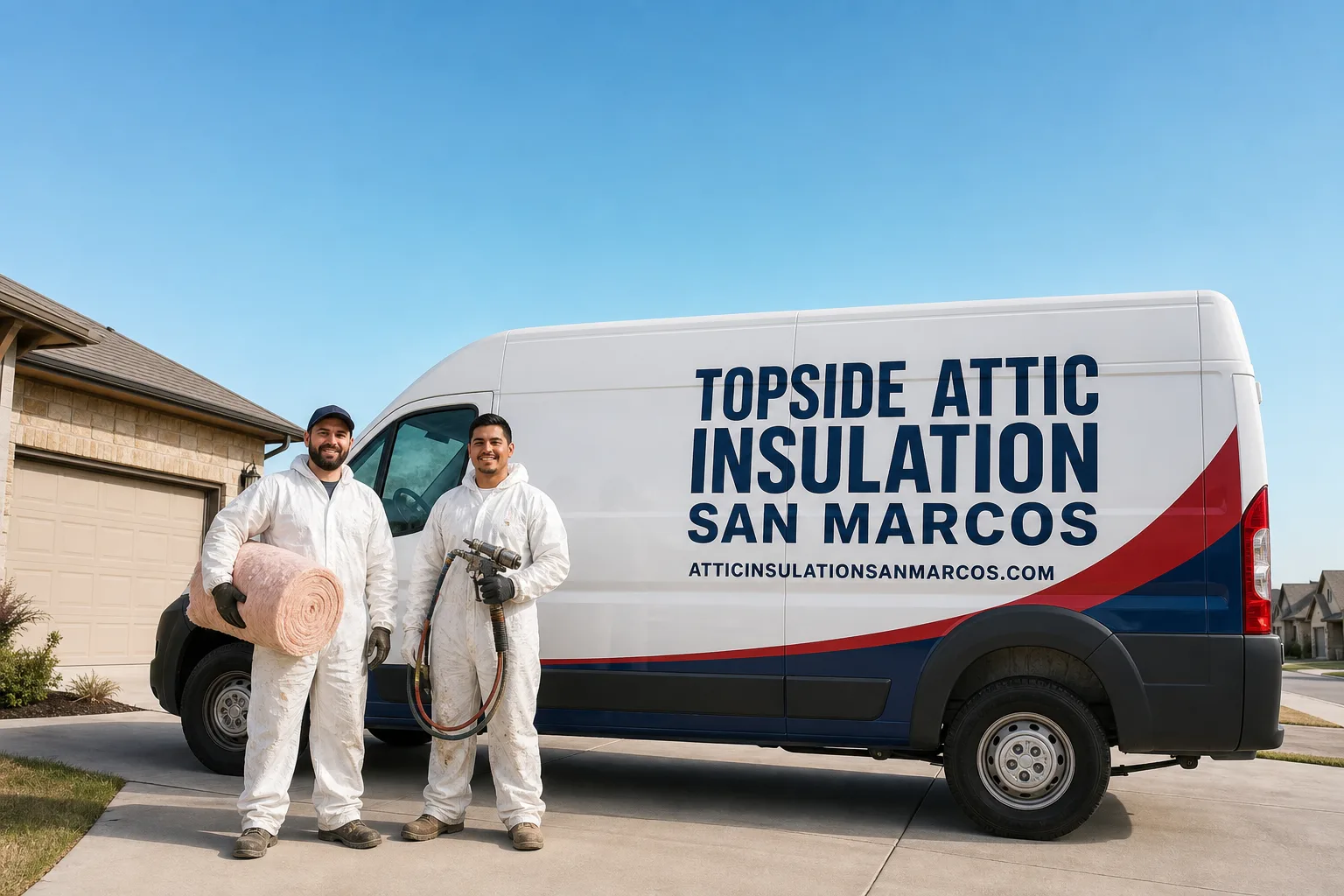
Fast, Reliable Attic Insulation Across Austin
Most attic insulation jobs in Austin run between $1,800 and $4,500 depending on whether you’re topping up settled fiberglass or converting a vented attic to a conditioned assembly, and our crews typically schedule within 48 hours of your call. We dispatch from our Austin office and carry Knauf and Rockwool materials on every truck, so we’re not waiting on a distributor run while your attic sits at 150°F. Call (737) 337-8049 for a written price before any work starts - that’s Haven Standard Clause 1, and it applies to every home we touch in Austin.
We’ve sealed and insulated over 9,000 homes since 2016, and a growing share of them are right here in Austin. The city has a specific problem that surrounding metros don’t: a municipally owned utility that pays rebates for attic work, but only if your contractor knows how to document it correctly from day one. We do. Our Attic Insulation team builds every scope around the blower-door test - a pressurization reading that shows, in one number, how much conditioned air your building envelope is losing - because without that baseline, Austin Energy won’t release your rebate check.
Why Topside Attic Insulation San Marcos Is Austin’s Preferred Attic Insulation Company
Our reputation in Austin was built on paperwork as much as performance. Homeowners in Travis Heights and Bouldin Creek started referring us after we got their Austin Energy rebates approved on the first submission, not the third appeal. We don’t guess at R-value thresholds or air-sealing benchmarks; we scope them into the written price before anyone lifts a tool.
Reviews from Austin customers consistently mention the documented photo record we leave behind and the before-and-after blower-door numbers they can show their accountant. One homeowner in North Austin wrote that our crew texted arrival updates, wore uniforms, and left her attic with photos of every sealed penetration - she had never seen a contractor document work she didn’t ask for.
Response time to Austin neighborhoods averages same-day or next-day for standard calls, and our live-answered phone line means you’re not leaving voicemail while attic heat bleeds into your living space. We know which Hyde Park bungalows have pier-and-beam floor decks that leak cooling dollars straight through the boards, and which 2003 production homes in Pflugerville have crushed flex duct buried in settled fiberglass. That local housing knowledge changes what we recommend, not just what we install.
Our Attic Insulation Services in Austin
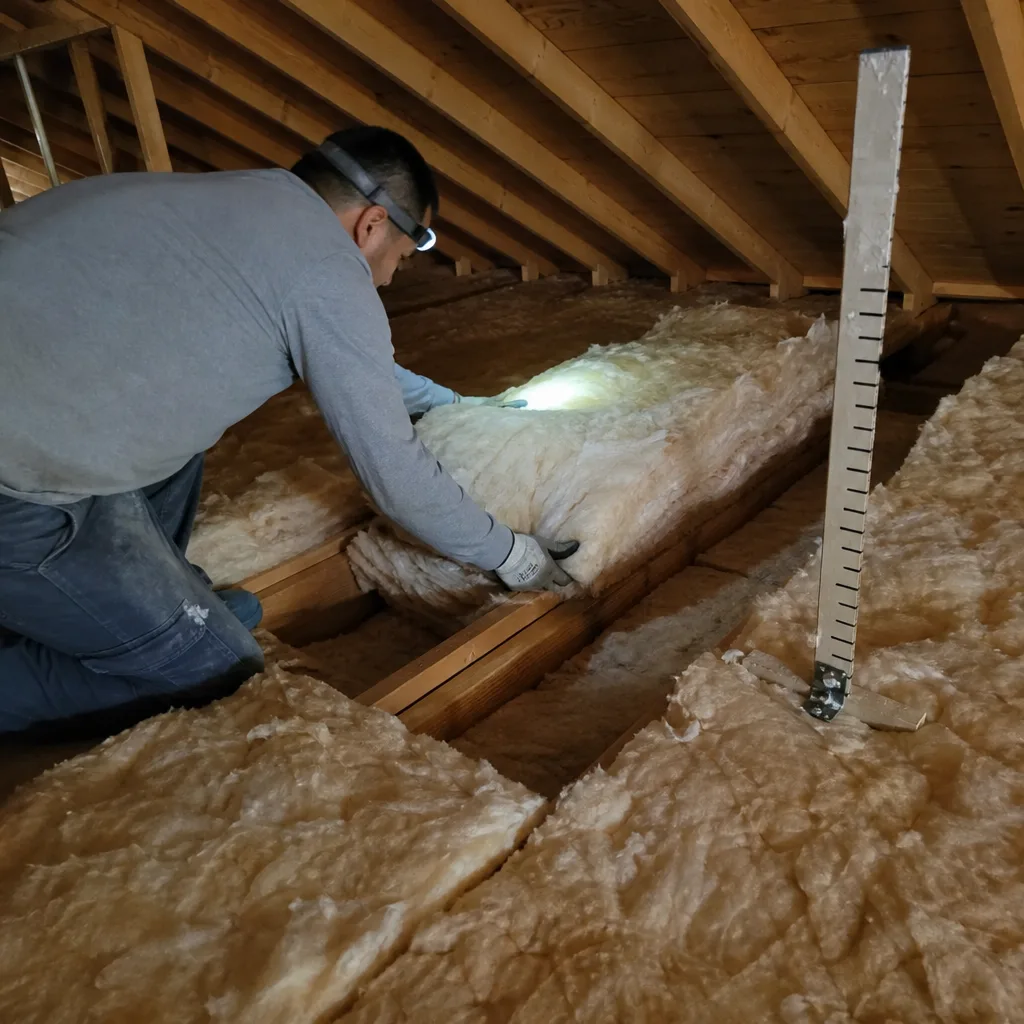
Blown-In Attic Insulation
Blown-in fiberglass or cellulose is the workhorse for Austin’s vented attics, and it’s what most 1990s-2000s production homes in North Austin and South Austin corridors were originally built with. The problem is that fiberglass settles over 15-20 years, and HVAC technicians walking through your attic to service equipment kick it aside without replacing it. We blow Knauf EcoFill or Owens Corning AttiCat to uniform depth, install baffles at every eave to maintain ventilation channel, and air-seal top plates and can-light penetrations before the first bag opens. In Austin’s 140-155°F summer attics, loose-fill without air sealing is just expensive sand.
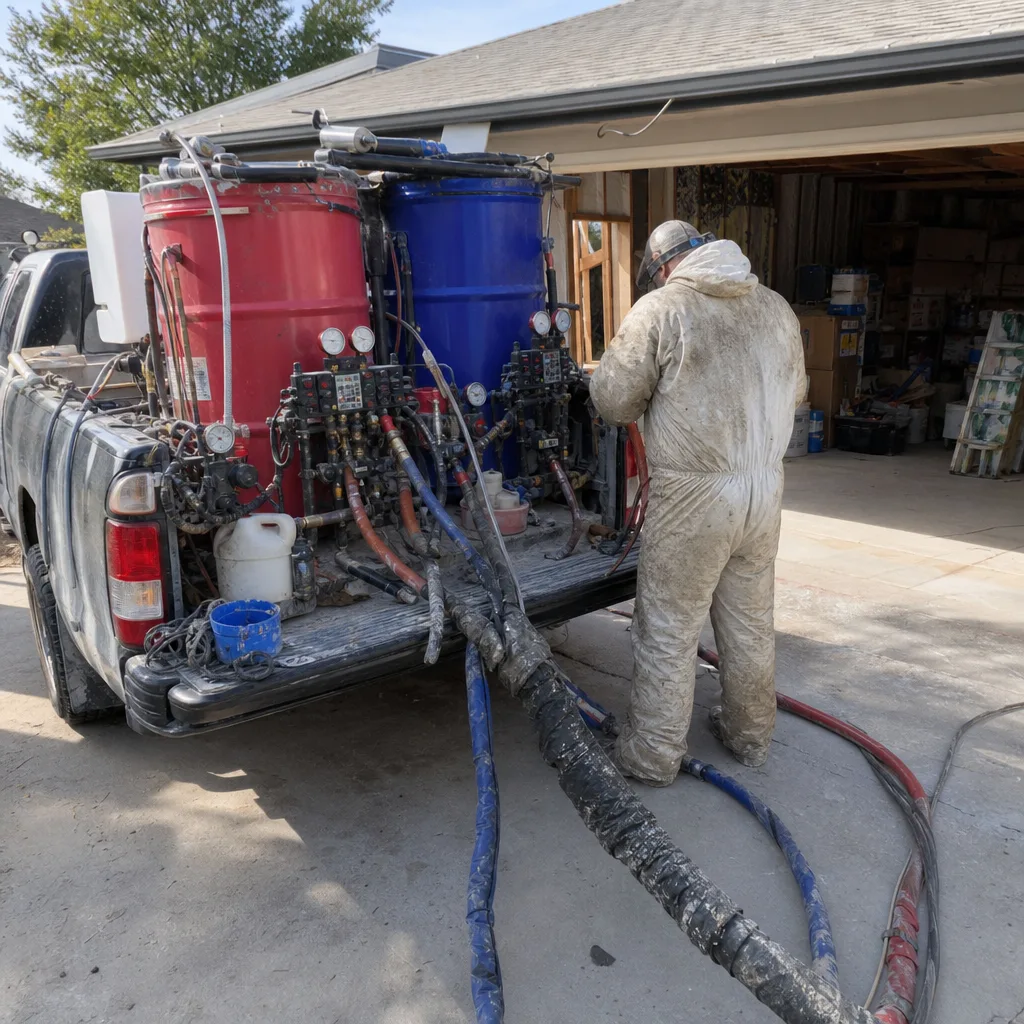
Attic Batt Insulation
Batt insulation has a specific place in Austin: knee walls in converted attics, vertical gable ends, and the occasional new-build where framers left clean, uniform joist bays. We stock Rockwool Comfortbatt for fire resistance and dimensional stability in Austin’s extreme temperature swings, but we’re direct about when batt makes sense and when it doesn’t. In most existing Austin homes with irregular framing, settled existing insulation, and decades of electrical and HVAC modifications, blown-in fills the geometry better. If your project calls for batt, you’ll get a written explanation of why.
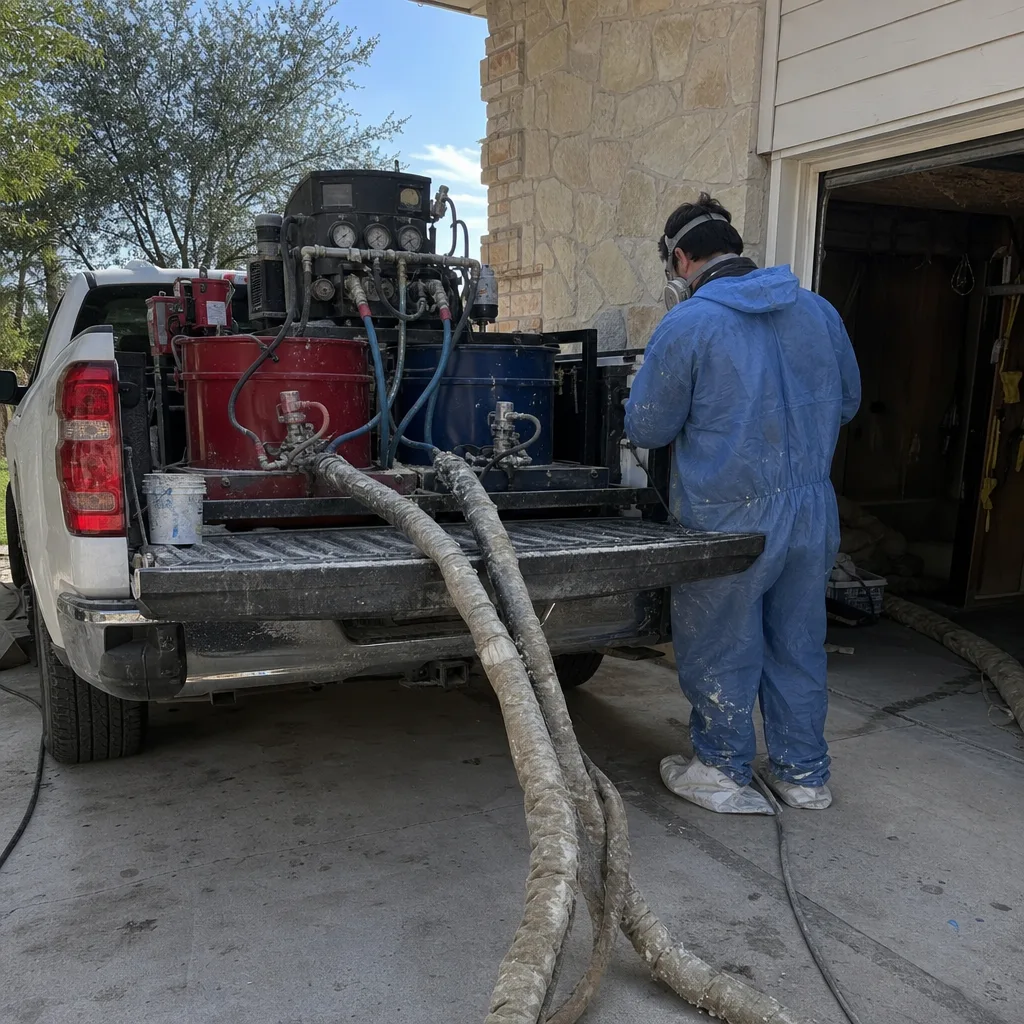
Attic Insulation Top-Up
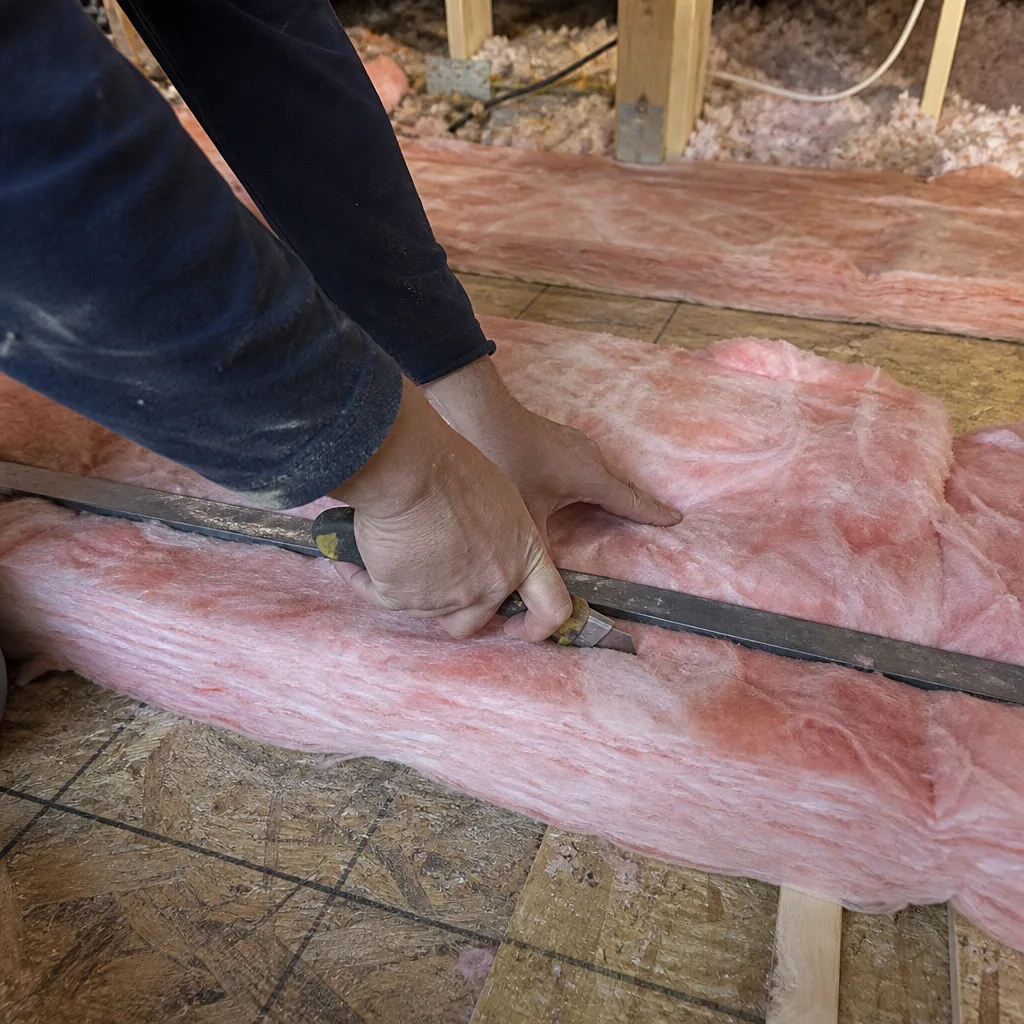
This is our most common call in Austin, especially in 1990s-2000s neighborhoods where original R-19 to R-30 fiberglass has compressed to R-8 or R-12. A top-up isn’t just dumping new material over old. We first inspect for disturbed areas, crushed flex duct, and signs of rodent activity; then we air-seal accessible penetrations; then we blow new material to the depth that hits your target R-value and, if you’re inside Austin city limits, the Austin Energy rebate threshold. Most top-ups in Austin run $1,800-$3,200 for a 2,000-square-foot footprint. Full replacement costs more only when the existing material is contaminated, wet, or so disturbed that layering would trap problems.
Attic Insulation Replacement
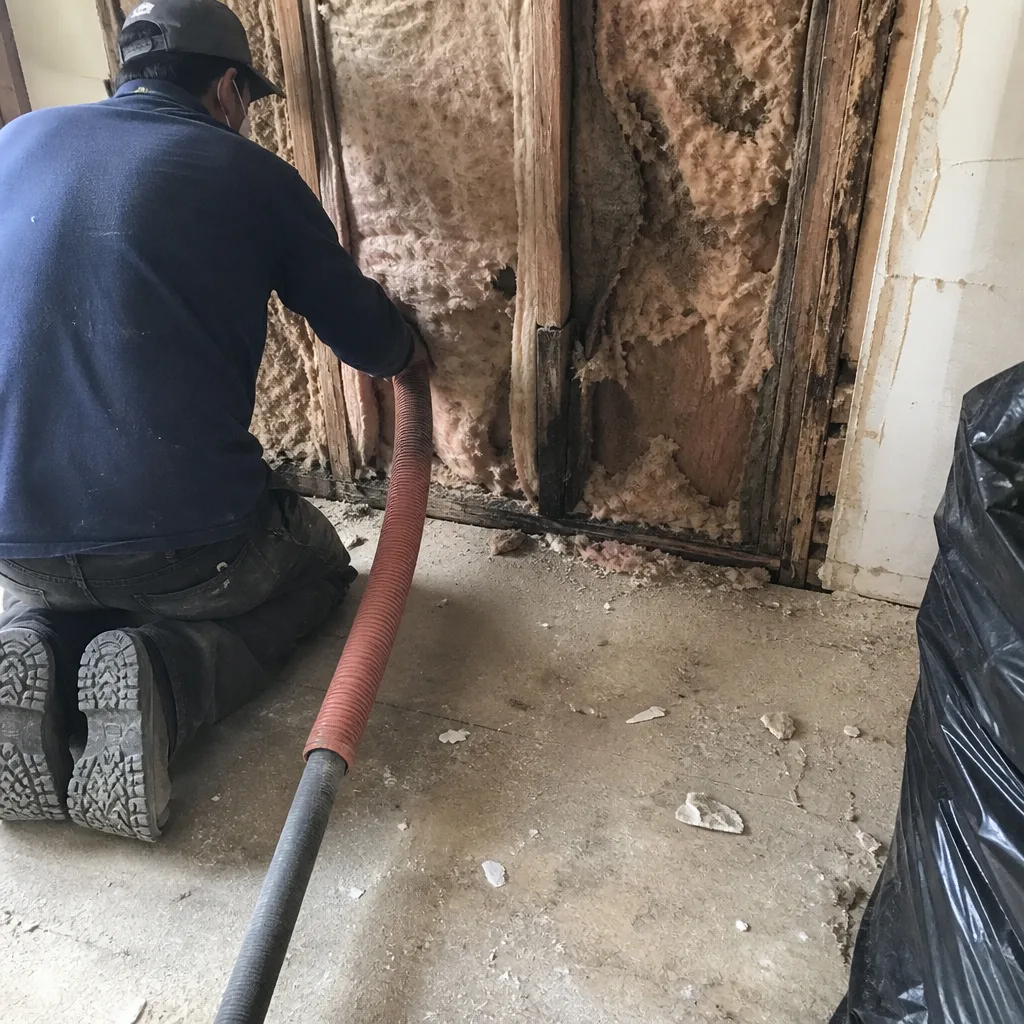
Replacement means removal of existing material, treatment of the deck, and complete reinstallation. We do this when fiberglass is urine-soaked from rodent colonies, water-stained from roof leaks, or contaminated with decades of HVAC condensation and dust. In Austin’s older stock - particularly pre-1960s bungalows in Hyde Park where no insulation was ever installed - replacement isn’t the right word; it’s first installation, often paired with floor-deck insulation and crawl space sealing because cooling dollars leak through every surface. Replacement jobs in Austin typically range $3,200-$5,800 depending on square footage and whether air sealing is scoped separately or included.
Attic Baffles & Ventilation Prep
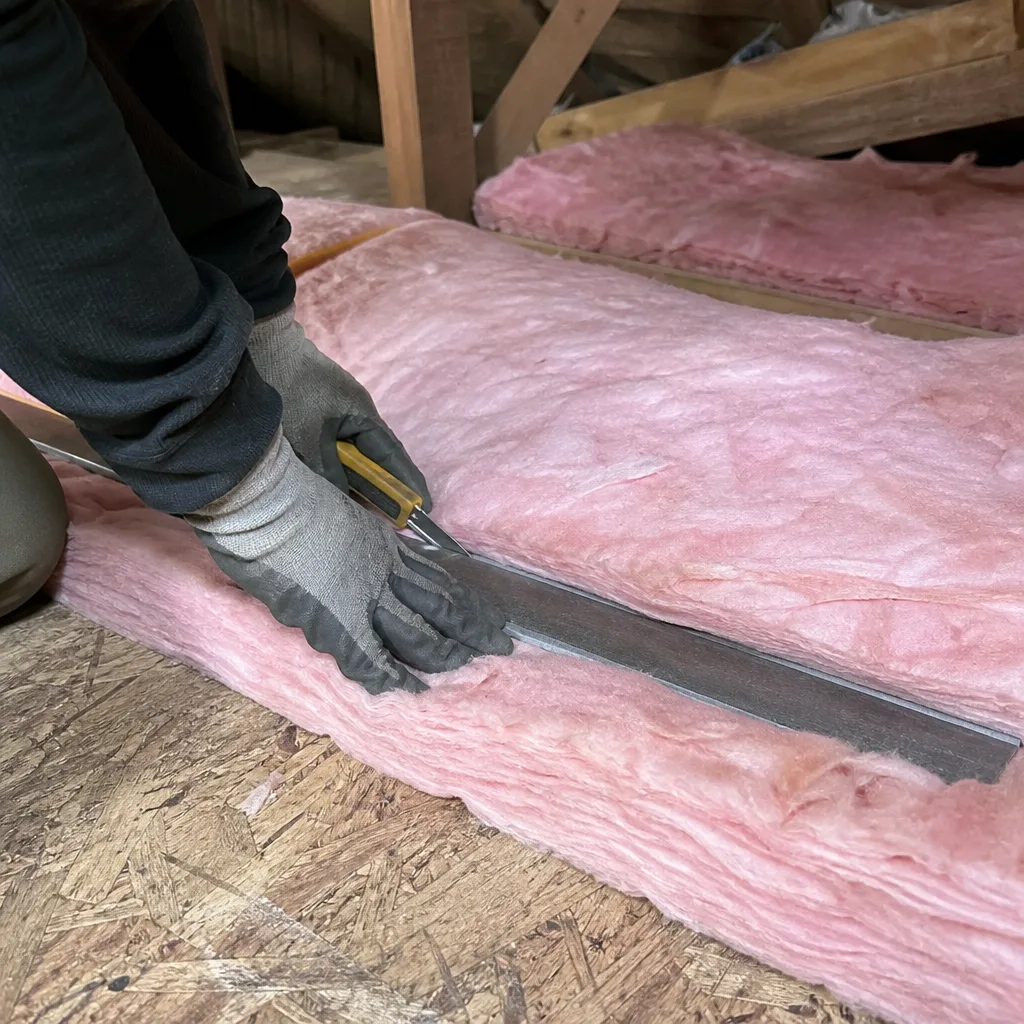
Every blown-in job in a vented attic needs baffles - foam or cardboard channels that keep insulation from blocking soffit vents and choking airflow through the rafter bay. Austin’s combination of intense solar load and occasional hard freeze means ventilation has to work in both directions: exhausting summer heat and preventing winter moisture accumulation. We install baffles at every eave, verify ridge vent continuity, and document the ventilation plan in your photo record. Skipping this step is how you get mold on the north slope and ice dam callbacks the one February it freezes.
What happens when you call
- 1
A real person answersNo phone trees - you reach a local pro.
- 2
You get an upfront price rangeHonest numbers before anyone is dispatched.
- 3
A background-checked tech heads outLicensed & insured, dispatched right away.
- 4
You approve before work beginsNothing starts until you say go.
 Before
 After
AfterTrusted Brands We Service in Austin
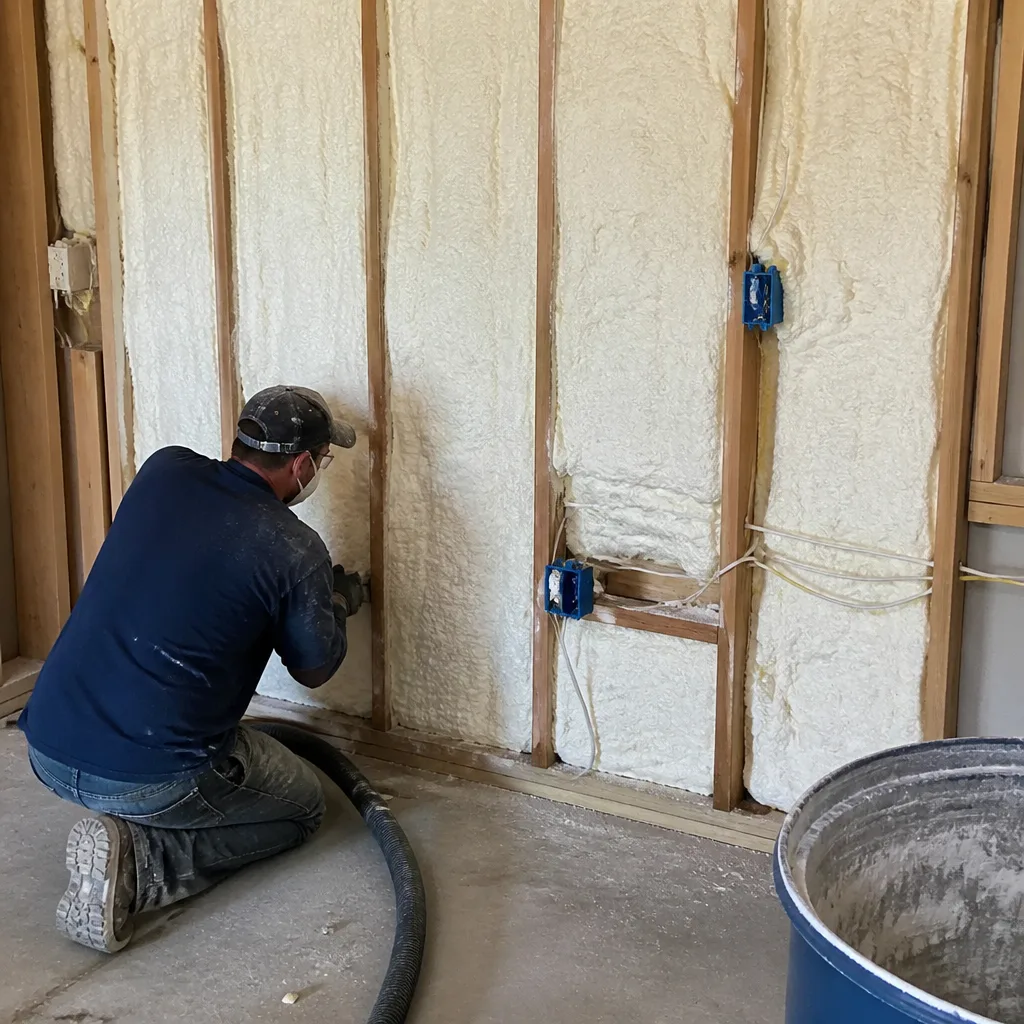
We source Knauf, Rockwool, and CertainTeed products through Austin-area distributors, which means no proprietary lock-in and no waiting on a freight line from Dallas when you need work done before next month’s electric bill. Knauf EcoFill blown fiberglass is our default for vented attic top-ups; Rockwool Comfortbatt goes in where fire rating or dimensional stability matters; CertainTeed CertaSpray closes the gap on spray foam roof-deck encapsulation jobs that have surged since Uri. We don’t push brands. We specify what performs for your assembly, document it in the written scope, and leave you with the product data sheets.
Common Attic Insulation Problems We See in Austin Homes
- Pre-1960s pier-and-beam bungalows in Hyde Park, Travis Heights, and Bouldin Creek have completely uninsulated floor decks and open crawl spaces. Homeowners call us about the attic, but the real thermal bypass is the floor - cooling dollars leak straight through the boards even when the attic looks finished. We scope floor-deck work and crawl sealing on these jobs, not just blown-in above.
- 1990s-2000s production homes across North Austin, Pflugerville, and South Austin corridors were blown to R-19-R-30 fiberglass that has since settled or been kicked aside by HVAC technicians. Meanwhile, uninsulated ductwork still runs through 140-155°F attic air, and the flex is often crushed or disconnected at the boot. We find supply temperatures dropping 8-12°F before air ever reaches the register.
- Post-Uri roof-deck encapsulation demand has outpaced certified rater capacity in Austin. Contractors who sell spray foam conversions without scoping the certified blower-door verification that Austin Energy requires are seeing rebate applications rejected on paperwork alone. We build the rater visit into day-one scope, not as a change order after the foam cures.
- Austin’s cooling-first housing psychology means homeowners ignore attic insulation until the July bill arrives, then want a quick fix before August. The smart play is fall or winter scheduling, when crews aren’t booked solid and you can verify heat retention before next summer’s load. We keep November through February slots open specifically for this.
Pricing for Attic Insulation in Austin, TX
Here’s what attic insulation costs in Austin’s current market:
| Service | Typical Range (Austin) |
|---|---|
| Attic Insulation Top-Up (blown-in, 2,000 sq ft) | $1,800 - $3,200 |
| Full Attic Insulation Replacement | $3,200 - $5,800 |
| Attic Air Sealing + Blower-Door Test | $800 - $1,800 |
| Spray Foam Roof-Deck Encapsulation | $4,500 - $8,500 |
| Attic Baffles & Ventilation Prep (per job) | $400 - $900 |
What moves you within these ranges: square footage, existing material condition, accessibility (steep roof pitch, tight scuttle, or walk-up stair), and whether air sealing is scoped separately or included. Austin Energy rebates can offset $300-$800 of qualifying attic work, but only for homes inside city limits with certified blower-door documentation. We calculate your rebate eligibility during the initial visit and build it into the written price. Call (737) 337-8049 - estimates are free, and you’ll have a flat price before anyone schedules crew time.
We Also Serve Cities Near Austin
Our crews run daily to Manor, Buda, Kyle, and Lockhart from the Austin office. Note that Austin Energy rebates apply only within city limits; homeowners in these surrounding areas on Oncor or Pedernales Electric should ask about utility-specific programs during their estimate. Same written-price standard, same documented photo record, same 365-Day Done Right Promise.
Serving Austin, TX - Our Local Coverage Area
We’re based in the Austin area and know this community well. Use the map below to see our service coverage - if you’re nearby, we can almost certainly help.
FAQs - Attic Insulation in Austin
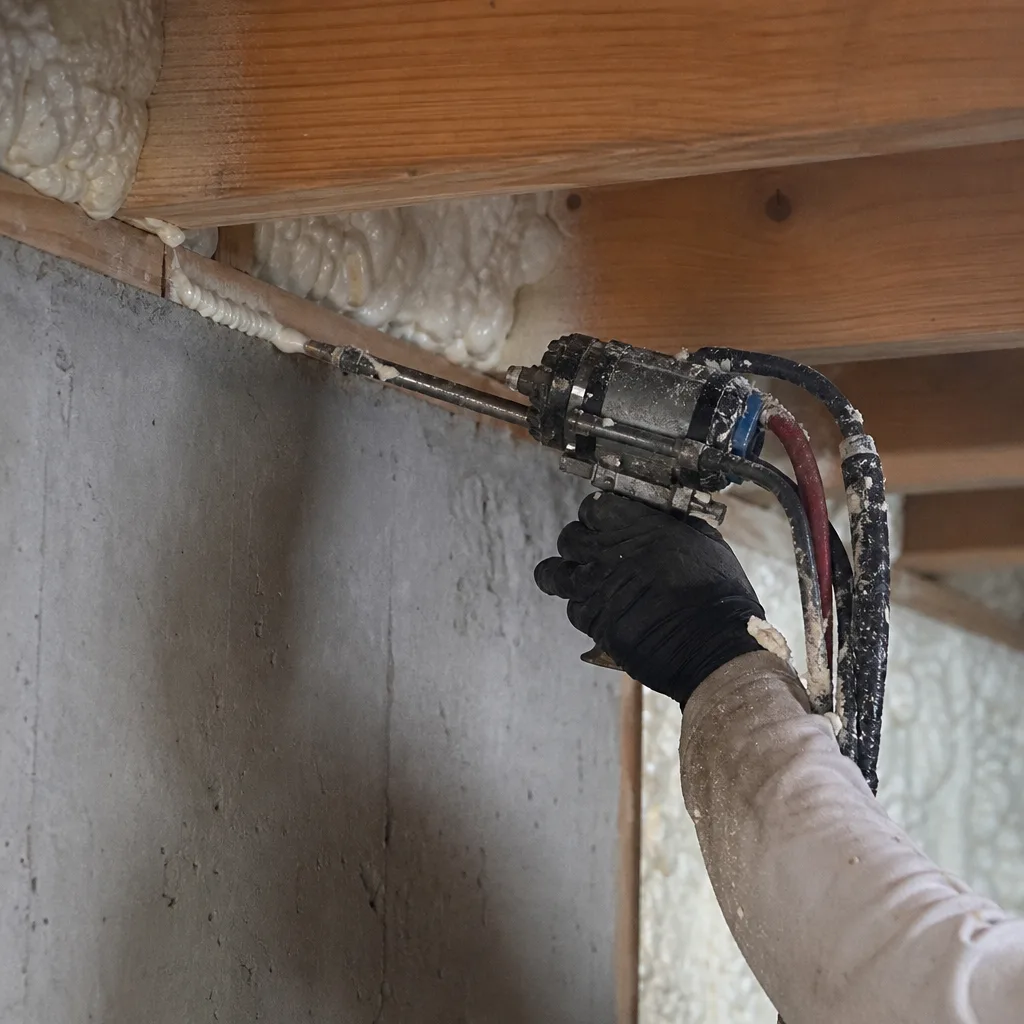
Yes, Austin Energy pays rebates for attic insulation and air-sealing upgrades, and our crews are certified to document the work they require. The rebate is available only to homeowners inside Austin city limits - not to Oncor or Pedernales Electric customers even a mile past the line - and hinges on pre- and post-work blower-door tests performed by a certified rater. We scope that rater visit into every qualifying job from day one, so your paperwork doesn’t get rejected after the crew leaves. Call (737) 337-8049 and we’ll verify your address against Austin Energy’s territory and rebate schedule.
Topping up the attic helps, but it won’t solve your biggest thermal bypass. In 1940s-1950s pier-and-beam construction, the uninsulated floor deck and vented crawl space leak conditioned air almost as fast as the attic gains heat. We regularly find these homes in Hyde Park, Travis Heights, and Bouldin Creek where the attic reads R-8 and the floor reads R-0. Our recommendation is usually a full-envelope scope: air-seal and insulate the attic, then address the floor deck or crawl space encapsulation. We won’t sell you an attic top-up and let you discover the floor problem next July. Call (737) 337-8049 for a written scope that names every thermal bypass we find.
February 2021’s Winter Storm Uri changed how Austin thinks about insulation. The city’s housing stock was designed almost entirely around cooling-season heat rejection, and when temperatures held below freezing for multiple days, that same assembly couldn’t retain warmth. Roof-deck encapsulation with closed-cell spray foam converts a vented attic to a conditioned space, bringing HVAC equipment and ductwork inside the thermal envelope. Demand surged after Uri and has stayed elevated. The catch: Austin Energy requires certified blower-door verification for rebate eligibility, and rater capacity hasn’t kept pace with contractor sales. We build the rater into our scope from the first conversation, not as a post-foam scramble. Call (737) 337-8049 to discuss whether your roof geometry and HVAC layout suit conversion.
In most 2000s production homes, a top-up is sufficient if the existing material is dry, uncontaminated, and simply settled. We inspect for three things: depth uniformity, disturbance from foot traffic or rodent activity, and moisture staining. If your attic has 4-6 inches of original fiberglass where 12-14 inches should sit, and the material is otherwise clean, we’ll air-seal accessible penetrations and blow new material to target depth. Full replacement becomes necessary when existing fiberglass is urine-soaked, water-stained, or so mechanically disturbed that layering traps problems. Most North Austin and Pflugerville homes we see qualify for top-up. Call (737) 337-8049 for an inspection and written price either way.
Austin attics routinely hit 140-155°F in July and August, with roof deck surface temperatures pushing 160°F on dark shingles. IECC Climate Zone 2 calls for minimum R-30 in vented attics, but Austin Energy’s rebate program requires R-38 or higher for incentive eligibility - and that’s the threshold we recommend for any home staying in the vented-attic configuration. If you’re converting to conditioned assembly with roof-deck spray foam, the target shifts to R-20+ at the deck plus complete air sealing, since the attic itself becomes conditioned space. The R-value you need depends on your assembly type, not just your climate zone. Call (737) 337-8049 and we’ll specify the target in your written scope.
Ready to stop paying to cool your attic? Call (737) 337-8049 for a free estimate. You’ll get a written price before any work starts, a documented photo record when the crew leaves, and before-and-after blower-door numbers on every applicable job. That’s the Haven Standard, and it’s how we’ve operated since 2016.
Written by Wes Okafor, Owner at Topside Attic Insulation San Marcos, serving Austin since 2016.