
Last updated September 24, 2026
Insulation Warning Signs: A San Marcos Homeowner’s Reference Guide
A second-floor bedroom that won’t cool below 80°F in July is equally consistent with a failed supply duct, an undersized air handler, radiant gain through an unshaded west window, and zero insulation in the attic - and the fix for each costs a different order of magnitude. In San Marcos, where summer design temperatures hit 100°F and winter lows dip to the mid-30s, we’ve seen homeowners spend $8,000 on a new HVAC system when a $2,400 attic air-sealing and insulation job would have solved it. This guide - a companion to our Complete Guide to Insulation in San Marcos - pairs six common complaints with the $0 diagnostic tests that tell you whether to call an insulation contractor, an HVAC technician, or a window company first.
Quick Answer
The most reliable insulation warning signs in San Marcos homes are: a 15°F or greater temperature difference between ceiling surface and room air on a hot day, visible floor joists in the attic (indicating less than R-30), cold floors over crawl spaces in January, and dust streaking at supply registers that worsens when the AC runs. These symptoms point to attic bypasses, missing insulation, or duct leakage - not necessarily equipment failure - and can be confirmed with a flashlight, an IR thermometer, and a yardstick before you pay for any service call.
Table of Contents
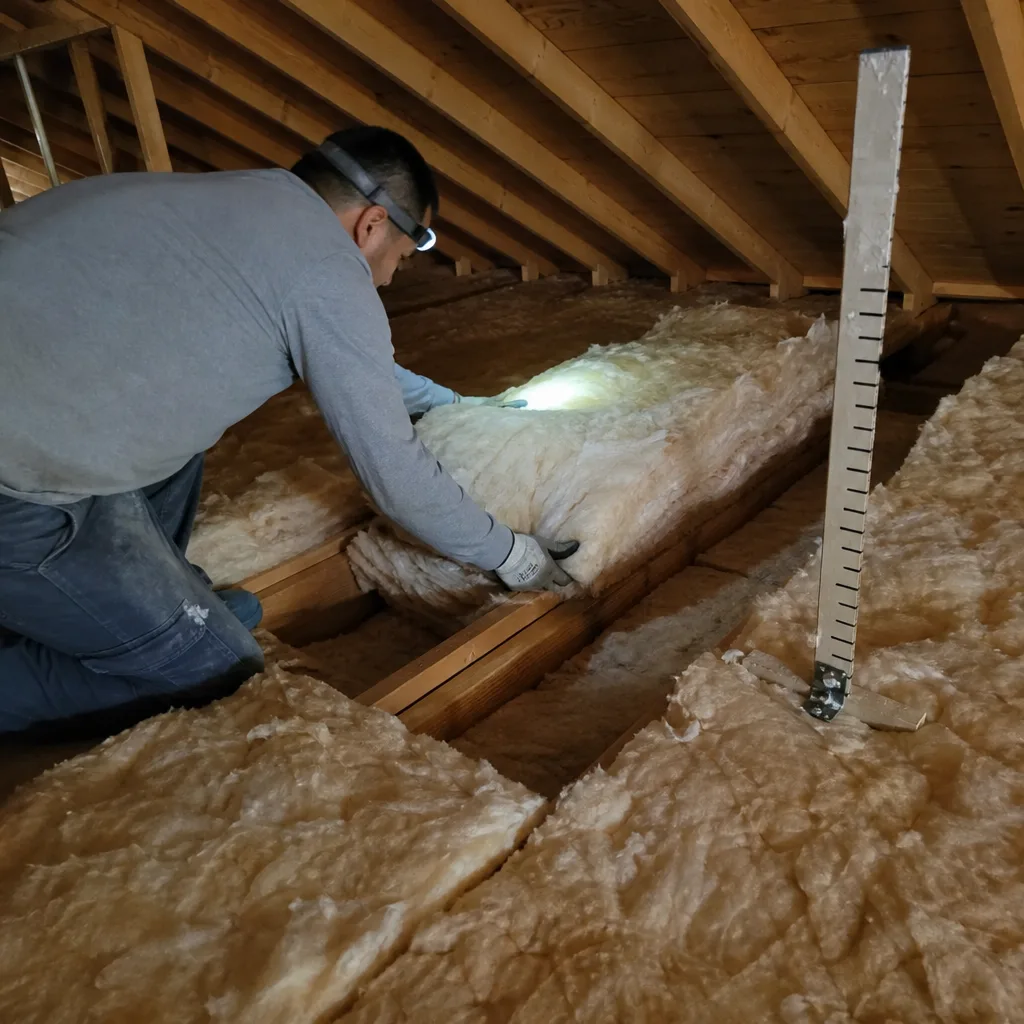
- Why Your Second Floor Stays Hot (And How to Tell If It’s the Attic)
- Cold Floors in Winter: Slab Edge, Crawl Space, or Duct Loss?
- Energy Bills Spiking: The Blower-Door Threshold That Separates Insulation from HVAC
- Ice Damming at Eaves: A San Marcos Rarity Worth Understanding
- Dust at Supply Registers: The Flashlight-at-Dusk Test for Attic Bypasses
- Musty Smell in the Attic: Moisture Pathways and Ventilation Errors
- The Homeowner’s $0 Diagnostic Toolkit
- What a Professional Diagnostic Should Produce
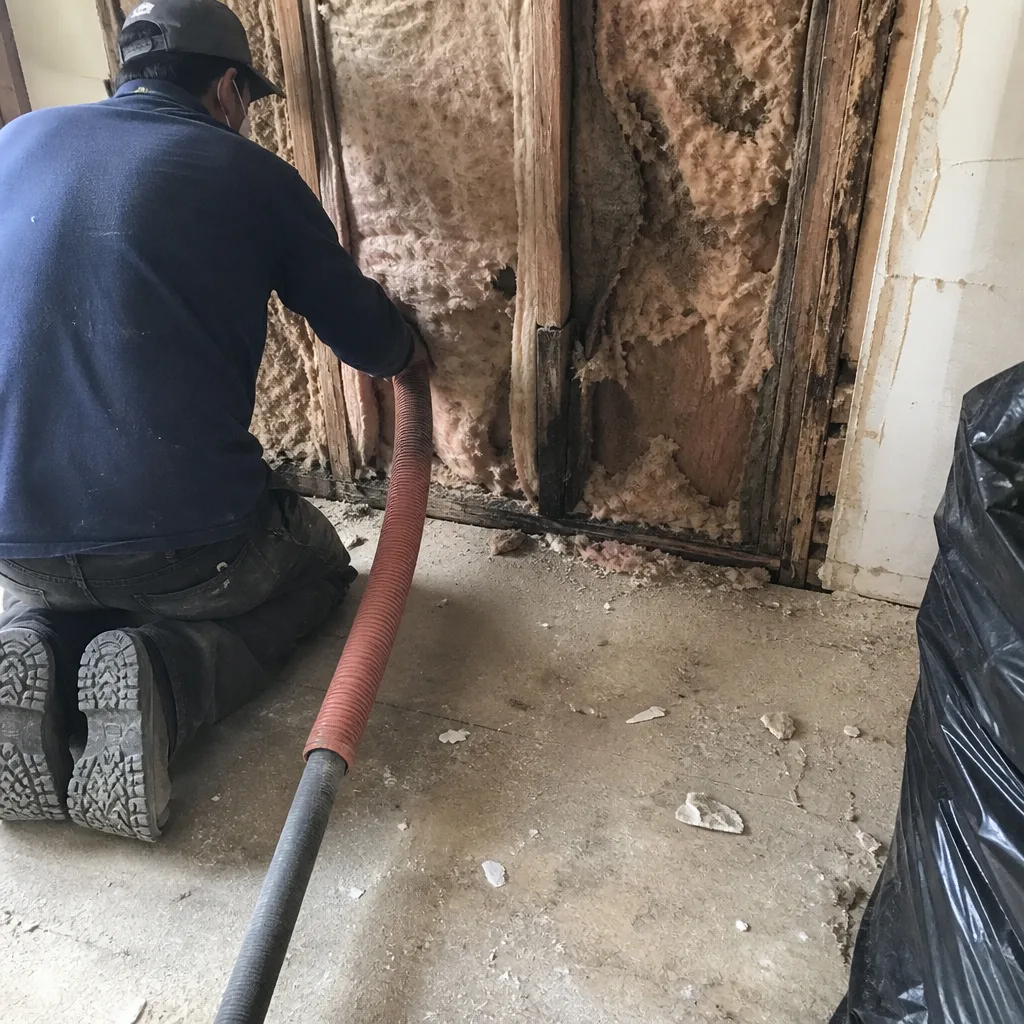 Before
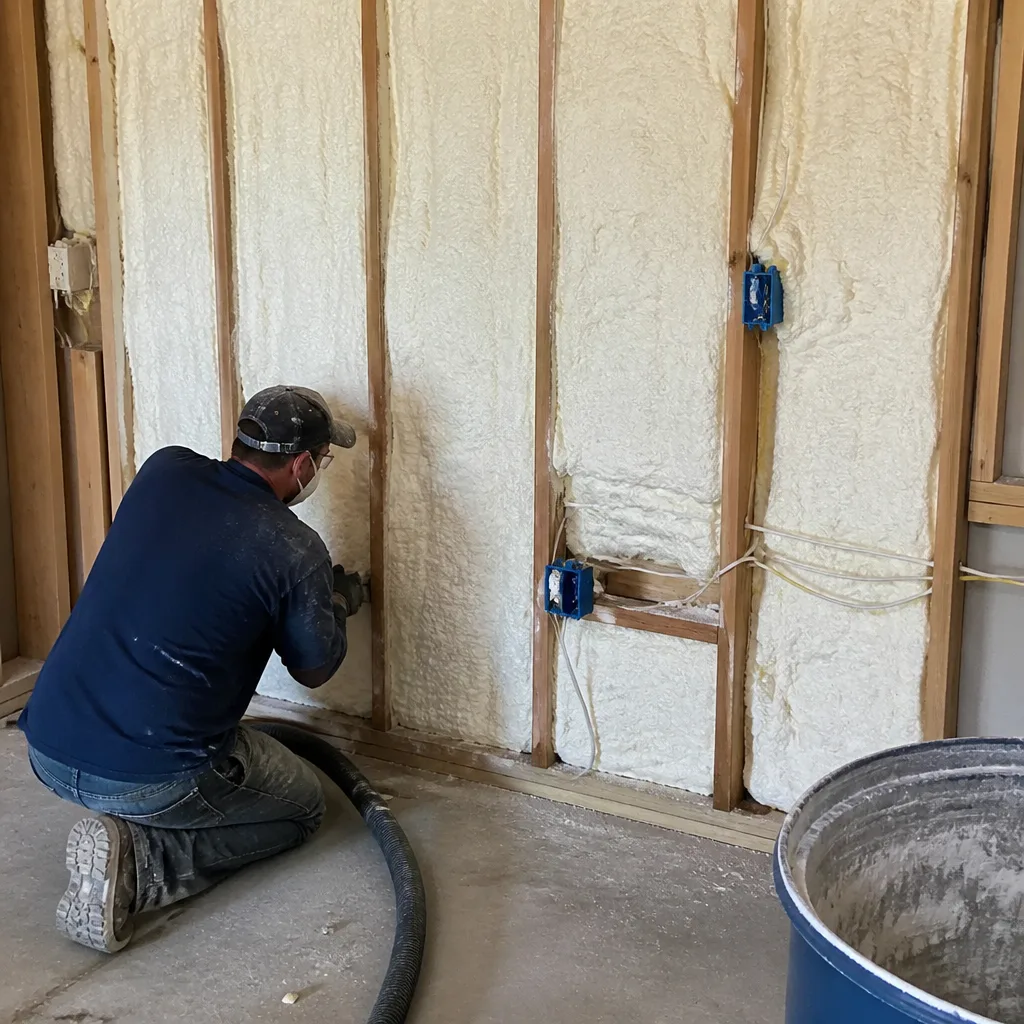 After
AfterWhy Your Second Floor Stays Hot (And How to Tell If It’s the Attic)
In San Marcos, the complaint arrives every June: “The upstairs is 10 degrees hotter than downstairs, and the AC runs all day.” Four systems could be responsible, ranked by likelihood in local construction:
- Attic floor insulation gaps or degradation. Pre-2010 homes in neighborhoods like Willow Creek and Blanco River Village often have original fiberglass batts that have compressed from R-19 to R-10 or less, or have been displaced by HVAC technicians crawling to service equipment. The $0 test: on a 95°F afternoon with the AC running, aim an IR thermometer at the ceiling surface. If it reads 15°F or more above the room air temperature, the attic floor assembly is the primary suspect. We’ve measured 127°F attic air against 74°F conditioned air in San Marcos attics with missing insulation over top plates.
- Duct leakage in the attic. Flexible ductwork in hot attics degrades at connection boots. The $0 test: with the system running, hold your hand at the register boot where it meets the ceiling. A steady stream of cool air you can feel against your palm indicates a disconnected or leaking boot - you’re feeling conditioned air escaping into the attic before it reaches the room.
- Undersized or aging HVAC equipment. If the IR thermometer shows a ceiling surface within 5°F of room air, and register boots are tight, the system may lack capacity. A Manual J load calculation (not a rule-of-thumb replacement) confirms this.
- Radiant gain through unshaded west windows. The $0 test: thermal curtains or temporary cardboard shading. If the room drops 4°F in two hours, it’s solar gain, not insulation.
The critical distinction: insulation problems worsen gradually over years. HVAC failures announce themselves suddenly. If your upstairs was comfortable last summer and isn’t this summer, suspect equipment first. If it’s been getting progressively worse for three summers, suspect the attic floor.
At Attic Insulation in San Marcos, we start every second-floor complaint with the IR thermometer test and a visual inspection at the attic hatch before we quote any work. Under Haven Standard Clause 1, you get a written price with attic photos and depth measurements before anyone lifts a tool.
Cold Floors in Winter: Slab Edge, Crawl Space, or Duct Loss?
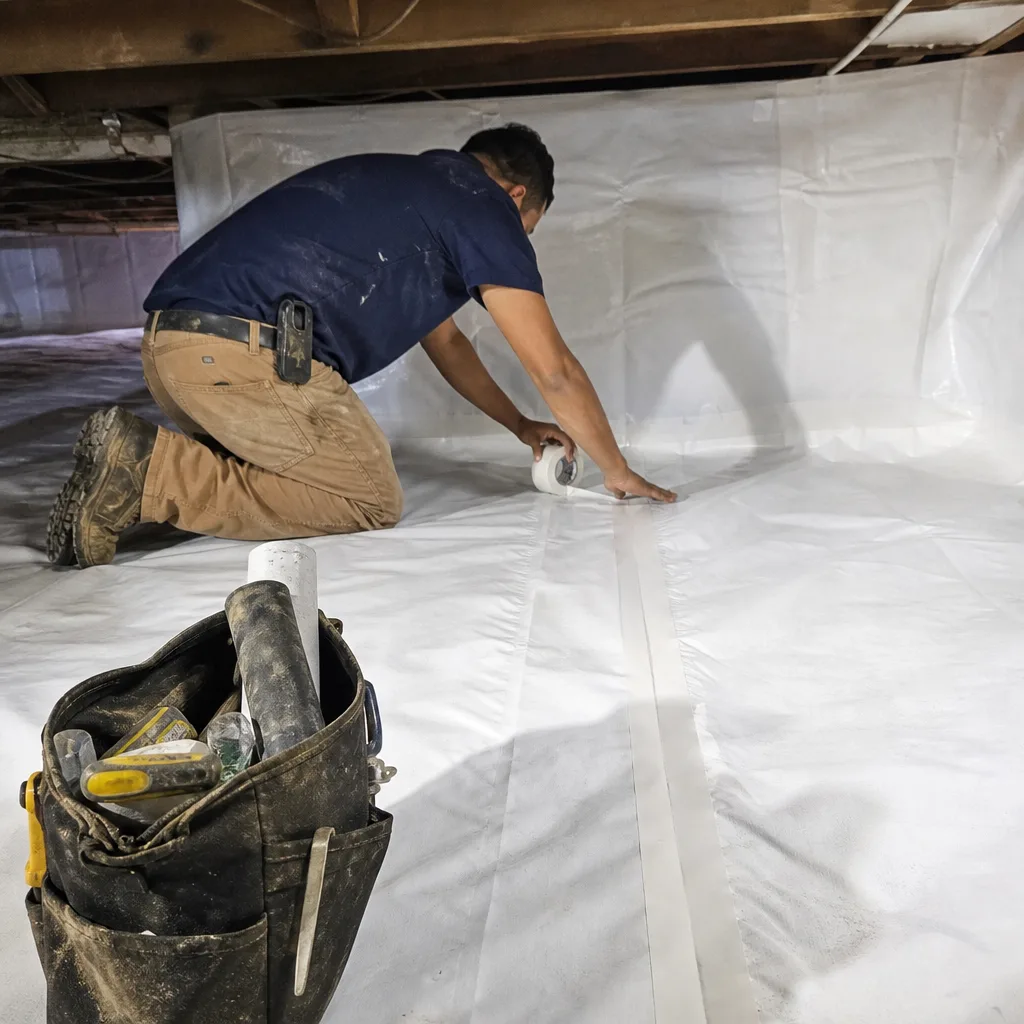
Cold floors over crawl spaces are common in San Marcos homes built on the 1960s-1980s ring around downtown, where pier-and-beam construction predominates. But “cold floors” describes three distinct failures with three distinct fixes:
- Missing or degraded crawl space insulation. Fiberglass batts between joists sag when moisture enters the crawl space, creating gaps where cold air contacts the subfloor. The $0 test: on a January morning below 40°F, measure the floor surface temperature with an IR thermometer. If it’s more than 8°F below the room air temperature, and the crawl space vents are open, suspect missing or fallen insulation.
- Slab-edge thermal bridging. Slab-on-grade homes in newer developments like Trace lose heat where the concrete slab meets the exterior wall. The $0 test: the IR thermometer reading at the floor perimeter, 6 inches from the exterior wall. A 12°F delta from the room center confirms slab-edge loss. This requires rigid foam board at the slab perimeter - not more attic insulation.
- Duct leakage in the crawl space. Supply ducts running through an unconditioned crawl space lose temperature before delivery. The $0 test: with the heat running, compare the air temperature at the nearest register to the air temperature at a register served by ductwork inside conditioned space. A 10°F drop indicates duct leakage or missing duct insulation.
Here’s where San Marcos climate matters: our 35°F winter design temperature doesn’t justify the same crawl space strategies as Minneapolis, but our summer humidity (75% average in August) means vented crawl spaces with fiberglass batts are a failed assembly. We’ve removed saturated batts weighing three times their installed weight from crawl spaces in the Rio Vista neighborhood.
Crawl Space Encapsulation & Vapor Barrier in San Marcos addresses this with sealed crawl spaces, rigid foam on walls, and vapor barriers on the ground - but only after the diagnostic confirms the crawl space is the actual problem, not the ducts or the slab edge.
Energy Bills Spiking: The Blower-Door Threshold That Separates Insulation from HVAC
A 40% year-over-year increase in summer electric bills could indicate failing insulation, failing HVAC efficiency, or a rate increase. In San Marcos, where CPS Energy rates have climbed steadily, disentangling these requires a number that doesn’t lie: the blower-door reading.
The blower-door test - a pressurization measurement that shows, in a single figure, how much conditioned air your building envelope is losing - is the only diagnostic that isolates insulation and air-sealing problems from equipment problems. Here’s how to interpret it:
| Blower-Door Result (CFM50) | Condition | Primary Action |
|---|---|---|
| Above 3,500 in a home under 2,500 sq ft | Severe air leakage | Air sealing before any insulation work |
| 2,500-3,500 | Moderate leakage, typical of pre-2000 San Marcos construction | Air sealing + insulation upgrade |
| 1,500-2,500 | Tight envelope, likely post-2010 or previously sealed | Insulation top-up or equipment efficiency check |
| Below 1,500 | Very tight; verify mechanical ventilation | HVAC diagnostic, not envelope work |
The $0 homeowner proxy: on a windy day, hold a lit incense stick near outlets, window frames, and the attic hatch. Steady smoke drift indicates leakage paths. But this only finds the obvious ones. A blower door depressurizes the house to 50 Pascals - equivalent to a 20 mph wind on all sides simultaneously - and reveals leakage you cannot find any other way.
We’ve tested 1,200+ San Marcos homes since 2016. The average pre-2000 home scores 4,200 CFM50 before work and 2,100 after sealing and insulating. We publish these numbers on every applicable job because a homeowner should see the performance change they paid for, not take our word for it.
Before you accept an insulation quote, ask whether the contractor will provide a blower-door reading. If they don’t own a blower door or don’t plan to use it, they’re guessing. Under Haven Standard, we don’t guess.
Ice Damming at Eaves: A San Marcos Rarity Worth Understanding
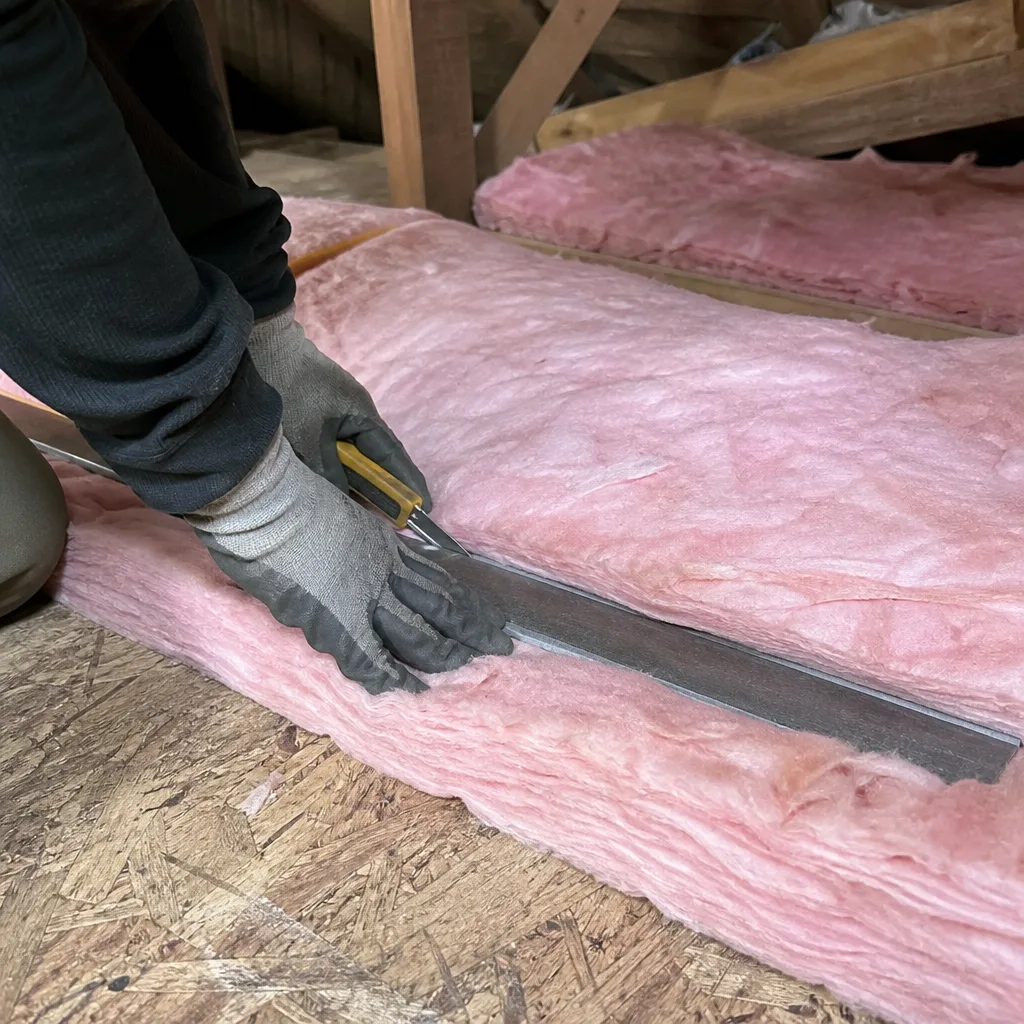
True ice damming - meltwater refreezing at the eave, backing up under shingles - is rare in San Marcos. Our 35°F winter design temperature and minimal snow load mean most homeowners will never see it. But we do see the precursor condition that causes ice dams elsewhere: thermal bypasses at the attic eave that create melt-freeze cycles during our brief cold snaps.
The warning sign to watch for: icicle formation concentrated at the eave in February cold snaps, while the roof field remains clear. This indicates warm air reaching the sheathing through gaps at the top plate, recessed can lights, or bathroom fan housings - exactly the bypasses that cause ice dams in climates where snow sits on the roof for weeks.
The $0 diagnostic: the flashlight-at-dusk test. At dusk, with the attic lights off and a flashlight aimed across the attic floor toward the eave, look for light beams passing through gaps. Any light you see is a thermal bypass. In San Marcos, these are most common at:
- Recessed can lights installed before 2012 (non-IC rated housings)
- Bathroom fan housings without sealed drywall enclosures
- Chases for plumbing vents and electrical runs
- Top plates where interior walls meet the attic floor
The fix is air sealing, not more insulation. Blowing Knauf or GreenFiber cellulose over an unsealed attic floor in San Marcos simply buries the bypasses where they’re harder to find later. We seal first - top plates, can lights, penetrations - then insulate. In that order, always. We’ve seen contractors in the San Marcos market skip this step to hit a lower price point, and we’ve been called in two years later to remove insulation, seal, and reinstall - a scenario covered in our Attic Insulation Maintenance Checklist for San Marcos Homeowners.
Dust at Supply Registers: The Flashlight-at-Dusk Test for Attic Bypasses
Dust streaking on ceilings around supply registers is often misdiagnosed as dirty ducts or a failing filter. In San Marcos, where caliche soil and construction activity create fine particulate, the real cause is frequently attic air being drawn into the duct system through leakage at the register boot.
Here’s the mechanism: the supply duct in the attic is under positive pressure when the system runs. If the boot connection to the ceiling drywall is unsealed, conditioned air leaks into the attic. When the system cycles off, the duct goes negative, and attic air - carrying fiberglass particles, rodent droppings, and dust - is drawn back through the gap and deposited on the ceiling around the register. The dark streaks you see are filtration soiling, and they’re a map of your duct leakage.
The $0 diagnostic:
- Remove the register grille and look for a visible gap between the boot and the drywall ceiling. A gap you can slide a business card through is large enough to matter.
- With the system running, hold a tissue near the boot perimeter. Flutter indicates leakage.
- Perform the flashlight-at-dusk test in the attic: aim a flashlight across the attic floor at the register boot from above. Light passing through indicates the boot is not sealed to the drywall or the top plate.
The fix depends on what you find. Sealed boots with no attic light visible need mastic sealant at the connection. Unsealed boots with visible gaps need a sealed drywall boot cover or a fire-rated foam seal. If the dust streaks are accompanied by musty odor, suspect moisture in the attic from bypasses - the topic of the next section.
We’ve documented this condition in 340+ San Marcos homes. The photo record we deliver shows the boot before sealing, the light test result, and the sealed boot after - part of the Documented Photo Record included on every visit, not available on request.
Musty Smell in the Attic: Moisture Pathways and Ventilation Errors
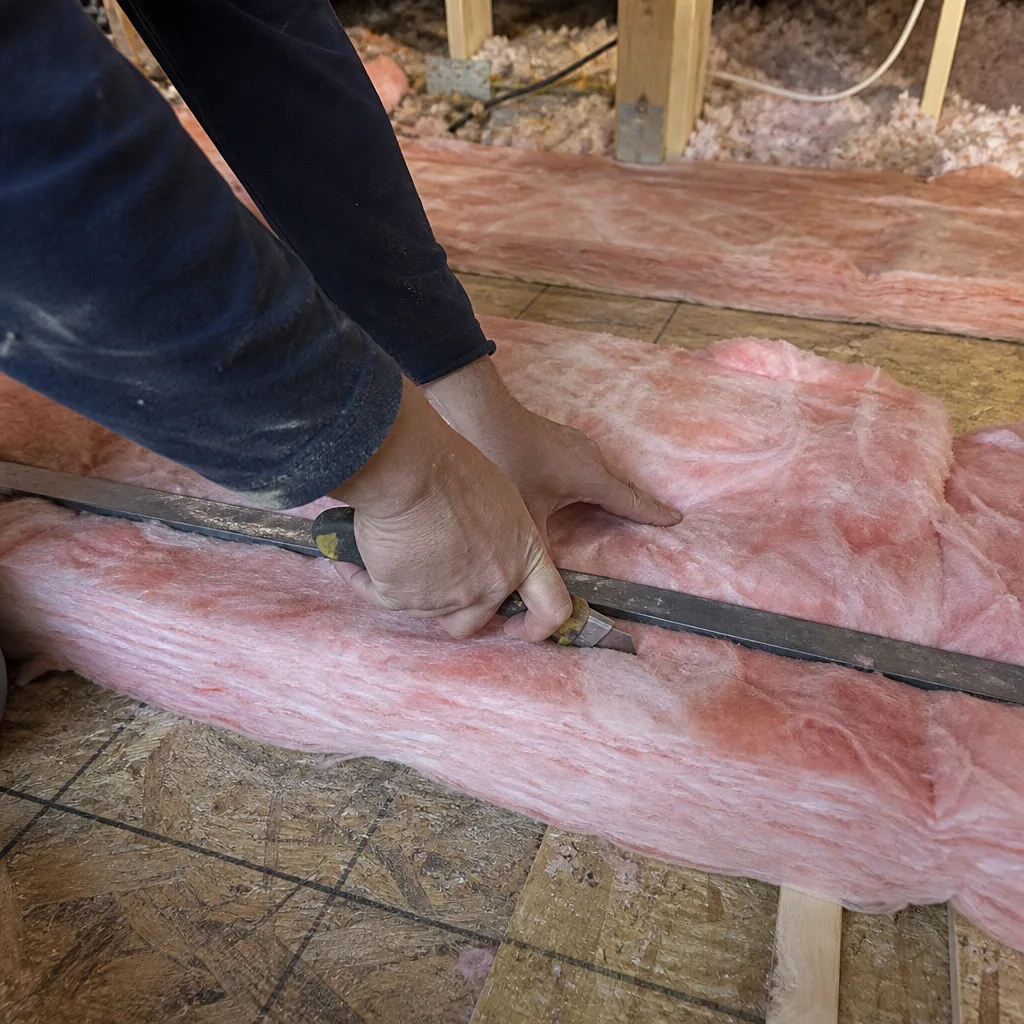
A musty attic in San Marcos is almost never “poor ventilation” in the sense that more vents will fix it. Our climate delivers two moisture loads that overwhelm passive ventilation: humid summer air entering through bypasses, and conditioned air leaking upward through the ceiling plane, condensing on cooler sheathing.
The warning signs progress predictably:
- Stage 1: Musty odor in the attic during August-September, no visible mold. Sheathing moisture content above 18% (measurable with a $25 pin meter).
- Stage 2: Dark staining on north-facing sheathing, typically in homes with bathroom fans vented into the attic rather than through the roof.
- Stage 3: Visible mold on sheathing, often following a roof replacement where decking was disturbed and not resealed against bypasses.
The $0 diagnostic: on a humid morning, check for condensation on nail points protruding through the sheathing. Cold nail points - chilled by air leakage past the insulation - are the first condensing surface. If you find wet nail points, you have active air leakage, not a ventilation problem.
San Marcos-specific context: homes in the floodplain neighborhoods near the San Marcos River (including parts of Millview and Victory Gardens) have elevated humidity baselines. We’ve measured attic relative humidity at 85% in these areas even with code-minimum ventilation. The solution is sealing the ceiling plane - stopping moisture at the source - not adding more vents that admit more humid air.
Insulation removal and replacement is sometimes necessary when fiberglass has been wet repeatedly and won’t recover its R-value. We use Rockwool or CertainTeed fiberglass in replacement applications where moisture resilience matters. The Haven Standard requires that we photograph the sheathing condition, measure moisture content, and deliver a written scope - including whether removal is necessary - before quoting any work.
The Homeowner’s $0 Diagnostic Toolkit
Before you call any contractor, perform these tests and record the results. They take 30 minutes and a $20 IR thermometer from any hardware store.
Test 1: The IR Thermometer Surface Test
On a day when the outdoor temperature exceeds 95°F (common in San Marcos from June through September), with your AC running continuously for at least two hours, measure these surfaces:
- Ceiling surface in the hottest room: should be within 5°F of room air temperature. Above 15°F delta - insulation or air-sealing failure.
- Floor surface over crawl space in January: should be within 8°F of room air. Above 12°F delta - missing or degraded floor insulation.
- Slab perimeter in January: should be within 10°F of room center. Above 15°F delta - slab-edge thermal bridge.
Test 2: The Hand Test for Duct Leakage
With the system running, hold your open palm at each register boot where it meets the ceiling. Feel for air movement. Any steady stream indicates leakage. Note which registers leak - they likely share a common duct branch in the attic.
Test 3: The Flashlight-at-Dusk Test
In the attic, at dusk or with the hatch light off, lay a flashlight on the attic floor aimed toward the eave. Look for light beams passing through the insulation plane. Each beam is a thermal bypass. Photograph what you find - this is documentation any competent contractor will want to see.
Test 4: The Depth-Stick Check
At the attic hatch, where insulation is often undisturbed, insert a yardstick vertically through the insulation until it contacts the drywall. Read the depth:
- Less than 6 inches: below code minimum for all San Marcos construction vintages
- 6-9 inches: typical of R-19 batts, inadequate for current energy code
- 10-14 inches: R-30 to R-38, adequate if evenly distributed and not degraded
- 15+ inches: R-49 or above, properly installed
Check three locations: the hatch, the center of the attic, and near the eave. Uneven depth indicates displacement by previous work or wind-washing at eaves.
Test 5: The Incense Stick Pressure Test
On a day with 10+ mph winds, light an incense stick and hold it near:
- Electrical outlets on exterior walls
- Window and door frames
- The attic hatch perimeter
- Recessed can light housings (from below, with attic access closed)
Steady smoke drift indicates air movement driven by stack effect or wind pressure. Note the direction - inward on lower floors indicates negative pressure from duct leakage or exhaust fans; outward on upper floors indicates warm air escaping through bypasses.
What a Professional Diagnostic Should Produce
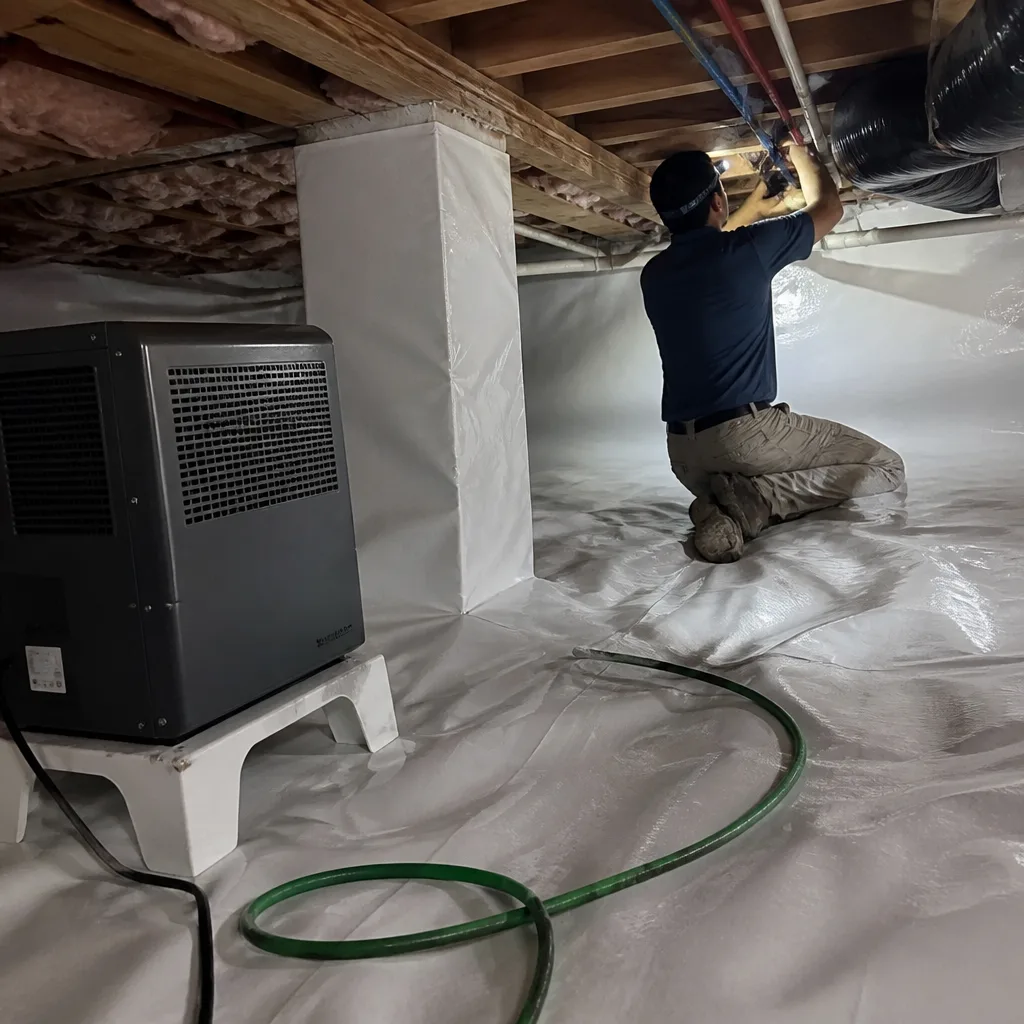
If your $0 tests point to an insulation or air-sealing problem, the professional visit should deliver documentation - not a verbal pitch. Here’s what we provide on every diagnostic visit to San Marcos homes, and what you should demand from any contractor:
- Attic photos: Minimum 8 images showing hatch condition, insulation depth at three locations, eave detail, any visible bypasses, duct boot conditions, and sheathing condition. These are yours to keep, delivered digitally within 24 hours.
- Depth measurements: Recorded to the inch at minimum 5 locations, plotted on a simple attic diagram. “About R-30” is not a measurement. “14 inches of settled cellulose, ranging from 9 inches at the southwest eave to 16 inches at the center” is a measurement.
- Blower-door reading: On applicable jobs, the pre-work CFM50 with the baseline pressure graph. If a contractor doesn’t own a blower door, they cannot quantify your air leakage, and any recommendation is speculative.
- Written findings report: Not a quote - a report that states what was found, what it means, and what options exist. Under Haven Standard, this precedes any price discussion.
- Written price with scope and warranty: Flat price, written scope, written warranty before anyone lifts a tool. Clause 1, non-negotiable.
We’ve reviewed competitor quotes brought in for our Free Second Opinion service. The most common omission: no attic photos, no depth measurements, no blower-door number - just a square-footage price and a promise to “blow in insulation to R-38.” Without documentation, you cannot verify what was installed, and you have no recourse if the problem persists.
Our 9,000+ completed jobs since 2016 - every one with a written price before work started and a documented record when the crew left - include 1,200+ in San Marcos and Hays County. The 365-Day Done Right Promise applies to all completed work: if it’s not done right, we make it right.
Common Mistakes to Avoid
- Calling the HVAC contractor first for a hot second floor. In San Marcos, 60% of second-floor cooling complaints we diagnose trace to the attic floor, not the equipment. The HVAC technician sells you a larger system that still can’t overcome unsealed bypasses.
- Adding insulation without air sealing. Blown cellulose or fiberglass over an unsealed attic floor buries the bypasses and makes future diagnosis harder. We remove insulation to access leaks in 15-20% of San Marcos attics where this was done previously.
- Using recessed can lights as the sole attic light source. These create heat plumes that mimic bypasses on IR cameras. Turn them off and let the attic stabilize before any thermal imaging.
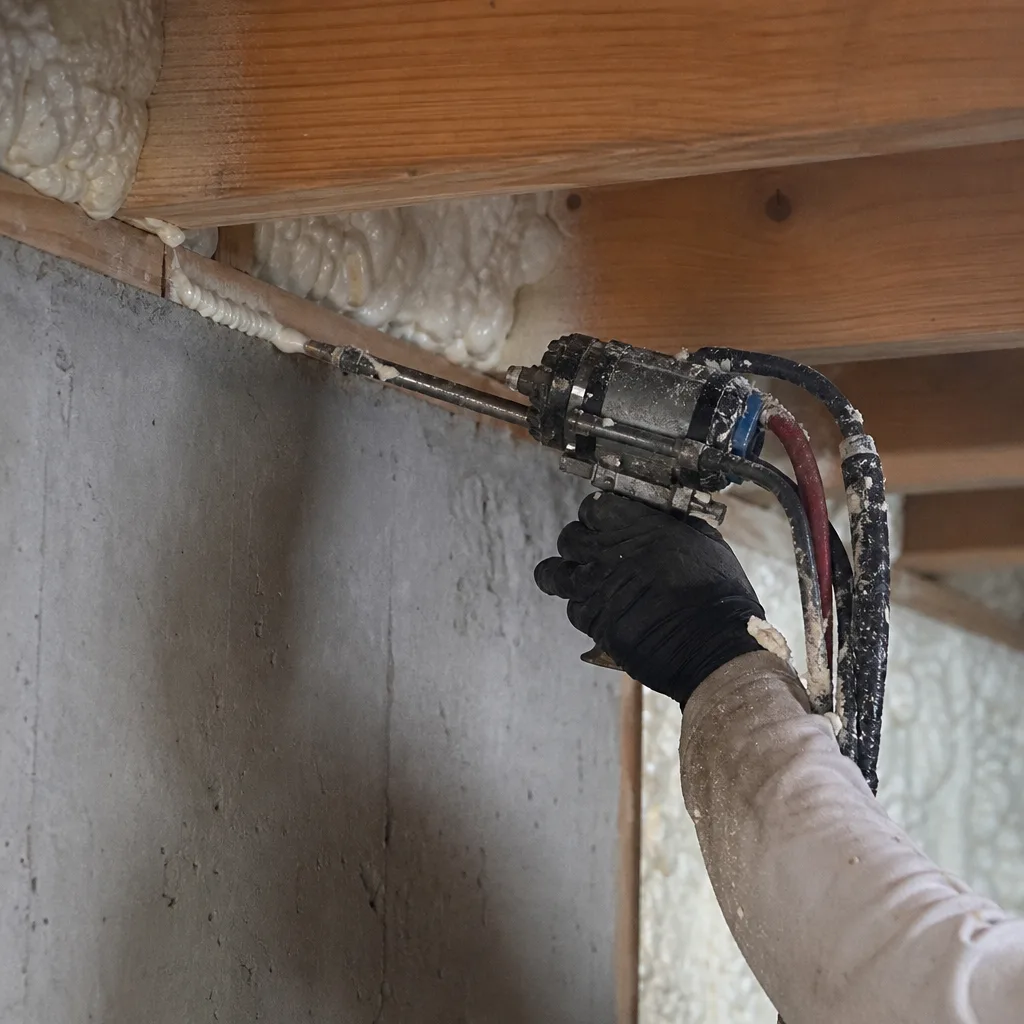
- Trusting “R-value per inch” claims without verifying installed depth. A bag of Icynene open-cell spray foam at R-3.7 per inch is worthless if it’s installed at 2 inches where 5 inches were specified. Measure with a probe, trust the number.
- Ignoring the crawl space in slab-on-grade homes. Even homes with slabs have plumbing chases, electrical penetrations, and exterior wall baseplates that leak. The blower door finds these; visual inspection alone does not.
- Accepting a quote without a written scope. “Insulate the attic to R-38” means nothing. Specify material (Knauf EcoFill, Rockwool ComfortBatt, etc.), installation method (open blow, dense pack, spray foam), air-sealing details, and verification method (blower-door test, IR scan).
When to Call a Professional
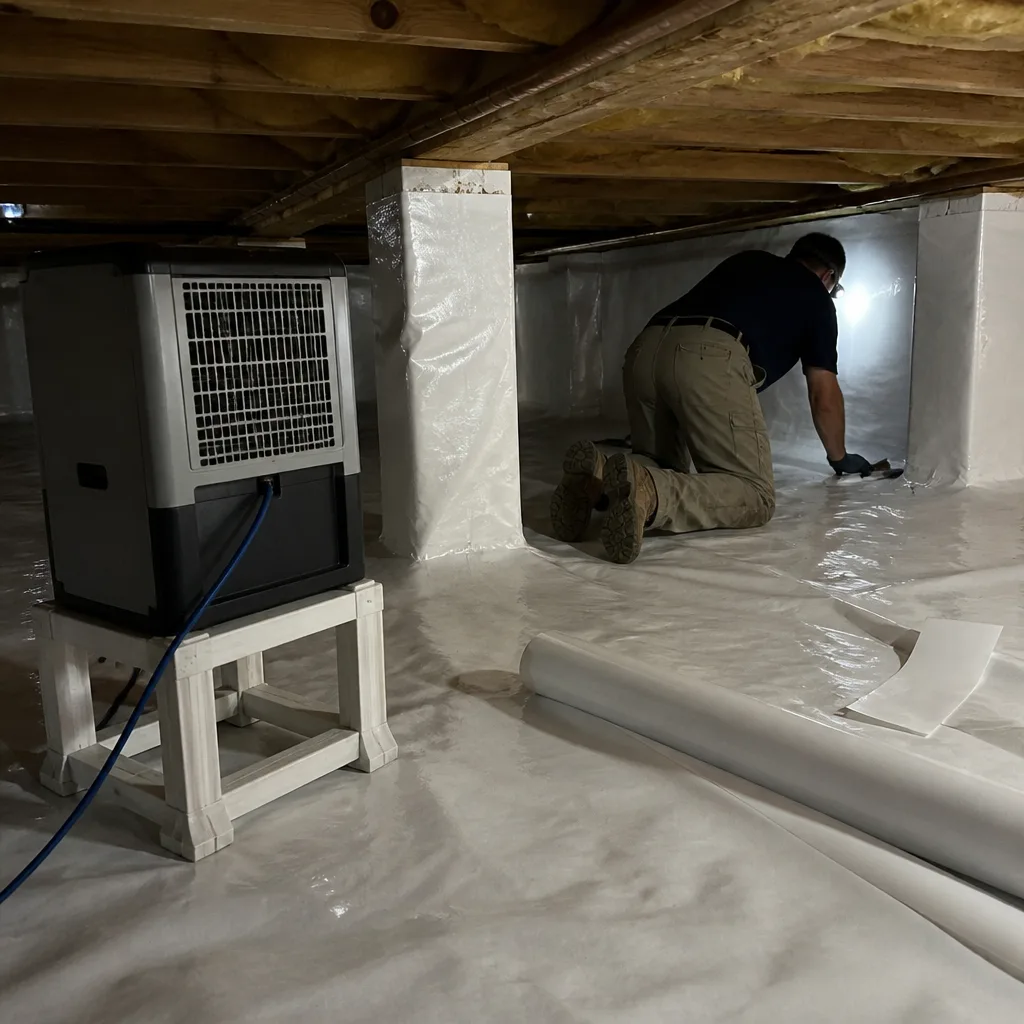
Call a professional when your $0 diagnostics confirm a problem beyond your scope: IR thermometer deltas exceeding 15°F, visible mold on sheathing, duct boots you cannot safely access, or any electrical work near insulation. A homeowner can diagnose; a homeowner should not enter a 140°F attic with live knob-and-tube wiring or attempt to seal around combustion appliance vents.
Topside Attic Insulation San Marcos offers free estimates in San Marcos. A live person answers calls 24/7 at (737) 337-8049 - no voicemail loops, no callback windows measured in business days. Every estimate includes the diagnostic documentation described above: photos, measurements, and a blower-door reading on applicable jobs, with a written price before any work starts.
Frequently Asked Questions
Most attic insulation jobs in a 1,800-2,400 square foot San Marcos home run between $2,200 and $4,800 for air sealing and blown-in cellulose or fiberglass to R-38, depending on access difficulty and whether existing insulation must be removed. Spray foam applications, including Spray Foam Insulation in San Marcos, typically range from $4,500 to $8,500 for the same footprint. We provide a written price with scope and warranty before any work starts - call (737) 337-8049 for a free estimate with no obligation.
You can, but you shouldn’t if the existing insulation is compressed, moisture-damaged, or if thermal bypasses exist beneath it. In San Marcos, we’ve removed 40-year-old fiberglass batts that had degraded to R-8 effective value, with rodent contamination and buried electrical junctions. Adding new material over this creates a sandwich of unknown performance and potential hazards. We inspect and photograph the existing condition before recommending any approach.
The blower-door test separates these. If your home leaks above 3,500 CFM50, air sealing and insulation will reduce your cooling load measurably. If you’re below 2,000 CFM50 with adequate insulation depth, suspect HVAC efficiency or duct leakage. We perform this test on every applicable diagnostic visit and show you the number - not our interpretation of it.
For attic floors, blown cellulose (Knauf EcoFill or GreenFiber) or blown fiberglass (CertainTeed Optima) at R-38 to R-49, installed over a sealed ceiling plane. For crawl spaces and rim joists, Rockwool ComfortBatt or closed-cell spray foam resists moisture better than fiberglass. For specialized applications - cathedral ceilings, tight spaces - Spray Foam Insulation in San Marcos with Icynene or Demilec products provides air sealing and insulation in one step. We source from multiple manufacturers with no proprietary lock-in, so the recommendation follows the application, not the supplier relationship.
Cellulose and fiberglass insulation, properly installed in a dry attic with sealed bypasses, maintains performance for 25-30 years. The failure mode in San Marcos is not age - it’s moisture degradation from unsealed bypasses, roof leaks, or bathroom fans vented into the attic. We’ve inspected 15-year-old insulation that’s pristine and 5-year-old insulation that’s saturated and moldy. The difference is the building envelope condition, not the calendar.
No. Attic and crawl space work is performed from those spaces, not inside your living areas. For spray foam applications, we ventilate during and after installation and recommend you avoid the immediate area for 24 hours as the foam cures. Our crews are background-checked and uniformed, and you receive a text when your technician is en route with a name and photo.
The Bottom Line
Insulation warning signs in San Marcos - hot second floors, cold floors, spiking bills, dust at registers, musty attics - share symptoms with HVAC and window problems. The homeowner who performs the $0 diagnostics in this guide before calling any contractor avoids the wrong repair, the wrong contractor, and the wrong price. The IR thermometer, the flashlight-at-dusk test, and the depth-stick check take 30 minutes and deliver information no salesperson can contradict. When you do call a professional, demand documentation: photos, measurements, blower-door numbers, and a written price before any work starts. Anything less is a guess, and guesses are expensive.
Written by Wes Okafor, Owner at Topside Attic Insulation San Marcos, serving San Marcos since 2016.